Health & WellnessS


Health

Cardiovascular Disease Risk Caused by Inflammation?

Image
© Unknown
Cholesterol in the body is carried around the bloodstream in the form of what are called 'lipoproteins'. The two main lipoproteins are so-called low-density lipoprotein cholesterol (LDL-cholesterol) and high-density lipoprotein cholesterol (HDL-cholesterol). Conventional wisdom tells us that HDL-C is a marker for cholesterol being cleared from the inside of the arteries, while LDL-C has the capacity to deposit itself in the artery wall. Because of this, HDL-C and LDL-C are often dubbed 'good' and 'bad' cholesterol respectively.

Many doctors have been encouraged to focus on LDL-C, and ensure that their patients' levels of this substance remain below a predetermined set point. However, the fact remains that no studies have ever tested the effect of treating LDL-C levels (with medication and/or diet) to below a certain point. It will seem far-fetched to some that the core strategy used in cholesterol management has not been adequately tested, and things get even more unbelievable when it turns out that LDL-C is not even a particularly good marker for heart disease.

Attention

FDA Okays GMO Carrot for Rare Gaucher Disease

GMO
© Food Freedom News
The US Food & Drug Admin. just approved a drug made from genetically modified carrots to treat Gaucher, a rare disease found mostly among Ashkenazi Jews. Out of a global population of 6.8 billion, an estimated range of 60-100,000 people carry the recessive gene for it, though not all are symptomatic.

The incidence of Gaucher is so rare, in fact, that to approve a GMO carrot for this purpose makes no sense, raising the specter of some unstated plan.

As expected when humans ingest active foreign DNA, one of the side effects of the FDA-approved drug, Elelyso®, is anaphylactic shock, among other allergic reactions.

Gaucher develops in offspring of parents who both carry and pass on a recessive gene that prevents development of an enzyme that allows "harmful substances to build up in the liver, spleen, bones, and bone marrow," explains the A.D.A.M. Medical Encyclopedia. "The substances prevent cells and organs from working properly."

The recessive gene only appears in 6-10 percent of Ashkenazi Jews, who number just over 10 million today.

Several rare genetic diseases are linked to Ashkenazi Jews, who account for 80 percent of all Jews, reports the Hebrew University of Jerusalem, "including Tay-Sachs, Gaucher disease, Bloom syndrome, Idiopathic torsion dystonia, Familial dysautonomia, Factor XI deficiency, and more. For many of these disorders in which a causative gene has been identified, a specific mutation was found to be the cause of most cases of the disease in Ashkenazi Jews."

Dr. Mercola reacted with shock to the news, writing, "I don't even want to think about the potential ramifications of this decision. Many may not know this, but Monsanto, well-known as the leader in biotechnology and genetically engineered foods, is also invested in the medical industry."

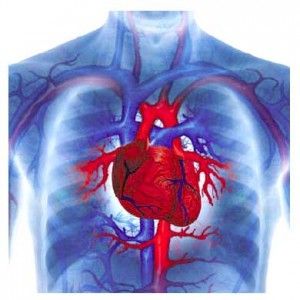
Heart - Black

Popular Antibiotic Increases Risk of Death

Image
© Unknown
That's on top of the report that antibiotics in general increase the risk of breast cancer.

Azithromycin (marketed as Zithromax) is most often prescribed to treat bronchitis, sinusitis, pneumonia, middle ear infections, and even certain sexually transmitted diseases. It can produce skin rashes, itching, swelling, difficulty breathing or swallowing, and rapid, pounding, or irregular heartbeats. But that's just the tip of the iceberg.

A study published last Wednesday in the New England Journal of Medicine finds that the antibiotic may boost the risk of death by 250 percent. The analysis found there were 47 more deaths per million in those taking azithromycin compared to those on amoxicillin (an antibiotic safer on the heart).

Attention

Shrimp At Grocery Retailers Contains Antibiotics and Carcinogens Affecting DNA

Texas Tech University researchers have found evidence of antibiotics -- one a suspected human carcinogen -- after testing farm-raised shrimp samples of international origin in imported seafood going directly to grocery store shelves.
Prawns
© Prevent Disease.com
Ron Kendall, director of The Institute of Environmental and Human Health (TIEHH) at Texas Tech, said researchers tested only the muscle tissues consumed by people. When concluded, they found evidence of three antibiotics in 30 samples tested.

Though the sample sizes were small, he said finding antibiotic residues at all is cause for concern. Todd Anderson, a professor of environmental toxicology, and instrument manager QingSong Cai conducted the shrimp analyses.

"We estimate that at least 80% of all shrimp imported to grocery retailers comes from farmed sources with similar practices," said Graham Beaton, a head toxicologist and food inspector.

"We know that 80% of all farmed shrimp comes from Asia, mostly from Thailand and China who are well known for producing 'dirty shrimp'."

Shrimp farming has changed from traditional, small-scale businesses in Southeast Asia into a global industry whose primary motive is profit. Technological advances have led to growing shrimp at ever higher densities, and broodstock is shipped worldwide.

Health

Expert Medical Panel Urges Doctors To Stop PSA Cancer Screenings

Doctor
© Photos.com
An expert US medical panel has given its final word on the PSA test, a controversial screening procedure used to detect prostate cancer in men, recommending that doctors should no longer perform the test on healthy men because they are more likely to be harmed by the test itself than be helped.

The US Preventive Services Task Force (USPSTF) gave its recommendation on the stoppage of the PSA (prostate-specific antigen) test following a public comment period. It gave the test a D rating - meaning that physicians should not offer the test because the harms outweigh the benefits.

Even after studying more than 250,000 men for more than a decade, the task force found the test likely only saves 1 life for every 1,000 men screened. They also determined that many men will get suspicious results when there is in fact no cancer at all, triggering unneeded biopsies that pose potential complications such as pain, fever, bleeding, infection and hospitalization. And even in the event cancer is detected, as much as 90 percent receive surgery or radiation even though most tumors are not life-threatening.

The task force's new recommendations are being published in the online issue of Annals of Internal Medicine. The last time the agency gave a recommendation on prostate cancer screening (2008), it concluded there was no evidence to support PSA testing for men over the age of 75.

"There is convincing evidence that the number of men who avoid dying of prostate cancer because of screening after 10 to 14 years is, at best, very small," wrote the panel.

For every 1,000 screened men, as many as 40 will suffer impotence or urinary incontinence as a side effect of treatment, two will have heart attacks or strokes and one will develop a dangerous blood clot in the legs or lungs, and as many as five of 1,000 men who undergo surgery will die within a month, said the task force in its report, after a review of scientific findings.

Health

Prostate Cancer Screening Report Sparks Debate Among Doctors, Survivors

prostate cancer
© The Associated Press/Bruce PowellA doctor assists during a 2011 prostate cancer surgery in Chicago.
A controversial new report that recommends against routine prostate screenings has sparked a wide debate among doctors, cancer survivors and patients.

The United States Preventive Services Task Force issued their final report on Monday, recommending against prostate-specific antigen (PSA) screening for prostate cancer for men of any age. The reason? Very few men actually need treatment to survive and the side effects from prostate cancer treatment do more harm than good, the task force said.

From the report:
Prostate cancer is the most commonly diagnosed non - skin cancer in men in the United States, with a lifetime risk for diagnosis currently estimated at 15.9%. Most cases of prostate cancer have a good prognosis even without treatment, but some cases are aggressive; the lifetime risk for dying of prostate cancer is 2.8%. Prostate cancer is rare before age 50 years, and very few men die of prostate cancer before age 60 years. Seventy percent of deaths due to prostate cancer occur after age 75 years.
It goes on to say:
There is adequate evidence that the benefit of PSA screening and early treatment ranges from 0 to 1 prostate cancer deaths avoided per 1000 men screened.
"Many men are harmed by prostate cancer screening," Michael LeFevre, co-chairman of the task force and professor at the Univ. of Missouri School of Medicine, said. "Very few will benefit."

Attention

Another Case of Deadly Flesh-Eating Disease in Georgia


A Georgia landscaper is battling flesh-eating disease at the same Augusta hospital as Aimee Copeland, the 24-year-old student who lost her leg to the deadly infection.

Robert Vaughn, 32, contracted necrotizing fasciitis after cutting on his groin while trimming weeds May 4, three days after Aimee Copeland sliced open her calf falling from a homemade zip line near the Little Tallapoosa River.

Vaughn went to a hospital in Cartersville, Ga., where doctors gave him a prescription for antibiotics and recommended he stay for observation, the Atlanta Journal-Constitution reported. But Vaughn, "being the man that I am," went home and watched the painful gash swell from the size of a peanut to that of a grapefruit.

He returned the next day and underwent emergency surgery.

Health

The Global Diabetes Tsunami

diabetes graphic
© n/a

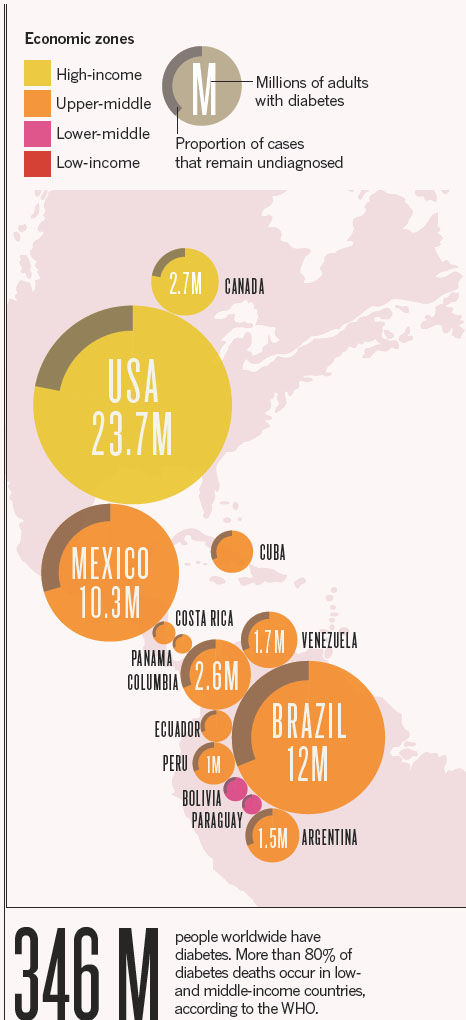
Lately there has been a flurry of media reports focusing on America's obesity epidemic, and how costs associated with America's gradual shift to a fat society will inundate the already strapped budget in the form of shadow taxation and other direct and indirect costs, which are, to put it simply, unsustainable. As the first chart below shows, the primary cost center associated with the obese conditions - diabetes - has certainly gripped a substantial portion of the US population, at last count affecting at least 10% of the population.

Yet as chart #2 shows, America, with its $23.7 million diabetes cases, actually has it good. Because when compared to countries without a social safety net, such as China and India, the US diabetes problem is child's play. With 90 million diabetes cases in China, and 61.3 million in India, or nearly half of the total 346 million worldwide diabetes cases, perhaps it is time for the developing world to worry how they plan on funding the billions of associated costs, as they assimilate more and more of the worst American habits. Because as the International Diabetes Foundation says, "In developing countries, the looming costs in human lives, healthcare expenditure and lost productivity threatens to undo recent economic gains." However since all of this is in "the future" what's the point of worrying about it now...

American diabetes is bad...

diabetes US chart link
© WHO

Health

High-ranking baboons are healthiest: study

baboon
© unknown
Just as wealth and social status are often linked to good health in humans, the animal kingdom too has its benefits for those at the top of the hierarchy, according to a US study out Monday.

After studying 27 years worth of data on baboons in Kenya, researchers found that alpha males were less likely to get sick and recovered faster from injuries than those at the lower rungs of society.

The findings were a surprise, since previous research has shown that high-ranking males face surging stress levels and often mate so regularly as to weaken their immune function.

The study authors believe that their research shows the type of stress faced by lower-ranking males - chronic stress, old age, poorer physical condition - might actually be behind the health differences in the two groups.

Pills

Should the FDA approve Big Pharma marketing drug treatments to healthy people?

This week, the U.S. Food and Drug Administration (FDA) will consider allowing an anti-HIV drug to be promoted to otherwise healthy, HIV-free people as a purely preventative measure for the first time. If approved, Gilead Sciences will be able to market Truvada to anyone who might be considered "at risk" for contracting the disease based on lifestyle and other factors (such as sexual orientation). Normally, HIV-infected patients take Truvada to slow viral replication. Under the new guidelines, doctors would begin openly touting this therapy as a glorified prophylactic to people who do not have HIV based on fear they might contract it someday (and all at the low price of just $14,000 a year).

According to Truvada's own website, treatment side-effects may include lactic acidosis, a serious medical condition that can lead to death. Truvada patients can suffer impaired kidney function and "serious liver problems" such as enlargement and hepatotoxicity. In lab tests, Truvada has also been shown to cause osteopenia or changes in bones that make them more susceptible to fractures.

Comment: Similar to Big Pharma's profiteering attempts in the UK where: Brits told that EVERYONE over 50 should take diabetes-causing statins