Health & WellnessS


Heart - Black

States pass bills allowing doctors to withhold information from pregnant patients

doctor
© Unknown
In Arizona, Republican senators have passed a bill that would allow doctors to withhold important medical information from their pregnant patients. The legislation is aimed at reducing so-called "wrongful birth" lawsuits by making it legal for doctors not to tell a pregnant patient that she, or her baby, is facing a potentially life-threatening issue.

Another "wrongful birth" bill under consideration in Kansas, though, takes the things even farther: In order to prevent women from choosing to end a pregnancy if the fetus has life-threatening medical issues, the Kansas bill allows doctors to lie outright if they discover during routine screenings that a pregnant patient has a medical condition that could affect her or her unborn child, The Daily Beast reports.

Whatever happened to "First, do no harm"?

Question

Mysterious Autoimmune Disorder Attacks Teenage Girls in Texas

Athletic, active teenage girls who excel in school are not who you would expect to fall victim to a debilitating and difficult to diagnose illness. But it is happening to a group of mostly girls, on the north side of San Antonio.

Most of them live along the I-10 West corridor between Camp Bullis all the way up to Boerne.

"She never had headaches. She was never sick or went to the doctor," said a local mother who prefers not to be identified because of the stigma attached to her daughter's rare disease. "In April 2009 she started having severe migraines," said the woman who we'll call "Cindy." She is the mother of a 15-year-old girl with neuroimmune syndrome.

Comment: Interesting that strange illnesses are targeting young, otherwise healthy, active women:
US: Mystery Teen Illness Grows in Upstate New York, More Cases Reported


Light Saber

Best of the Web: Protect Yourself from Radiation: Take Vitamin C Daily, Take Responsibility For Yourselves

Fukushima Video by The Japanese College of Intravenous Therapy

The government of Japan has failed to protect its people and is hiding the dangers of radiation from Fukushima. There are options for radio-protection that have not been disclosed.

When people cannot avoid radioactive contamination, there are safe radioprotectants that can help prevent the damage.

Video in English and Japanese with subtitles.


Comment: Chernobyl: A Million Casualties


Health

Flashback Human Sacrifice Alive Well 21st Century: Statins

Ancient Painting
© Greenmed Info.com"Polyxena dies by the hand of Neoptolemus on the tomb of Achilles" (1900 drawing after an ancient cameo).

Statin drugs concretize and institutionalize a certain myth about cardiovascular disease that the masses are only now beginning to awaken from, namely, that cardiovascular disease is caused by cholesterol and that cholesterol-suppression "therapy" reduces cardiovascular morbidity and mortality.

The 25 billion dollar-a-year commercial apotheosis of Statin drug therapy, purportedly intended to prevent and treat cardiovascular disease, represents a very real post- post-modern form of human sacrifice, implicit in the very etymolgical origin of the word "pharmaceutical":

"A Pharmakós (Greek: φαρμακός) in Ancient Greek religion was a kind of human scapegoat (a slave, a cripple or a criminal) who was chosen and expelled from the community at times of disaster (famine, invasion or plague) or at times of calendrical crisis, when purification was needed." [Source: Wikipedia]

The sacrificial dimension of the Pharmakós carries on in the nostrums and potions later named after this ritualistic object:

The term "pharmakos" later became the term "pharmakeus" which refers to "a drug, spell-giving potion, druggist, poisoner, by extension a magician or a sorcerer." A variation of this term is "pharmakon" (φάρμακον) a complex term meaning sacrament, remedy, poison, talisman, cosmetic, perfume or intoxicant. From this, the modern term "pharmacology" emerged. [Source: Wikipedia

One no longer has to look to religion for the absolutist claim to truth. Medical science has laid claim to the body in the same way that religions once laid claim to the soul. The physician today -- albeit a glorified "applied pharmacologist" -- has become the "priest of the body," capable of influencing the course of life or death by the quality, or combinations, of nostrums (s)he is able to apply to the problem (i.e. patient) at hand.]

Ambulance

Flashback How Statins Really Work Explains Why They Don't Really Work

1. Introduction

The statin industry has enjoyed a thirty year run of steadily increasing profits, as they find ever more ways to justify expanding the definition of the segment of the population that qualify for statin therapy. Large, placebo-controlled studies have provided evidence that statins can substantially reduce the incidence of heart attack. High serum cholesterol is indeed correlated with heart disease, and statins, by interfering with the body's ability to synthesize cholesterol, are extremely effective in lowering the numbers. Heart disease is the number one cause of death in the U.S. and, increasingly, worldwide. What's not to like about statin drugs?

I predict that the statin drug run is about to end, and it will be a hard landing. The thalidomide disaster of the 1950's and the hormone replacement therapy fiasco of the 1990's will pale by comparison to the dramatic rise and fall of the statin industry. I can see the tide slowly turning, and I believe it will eventually crescendo into a tidal wave, but misinformation is remarkably persistent, so it may take years.

I have spent much of my time in the last few years combing the research literature on metabolism, diabetes, heart disease, Alzheimer's, and statin drugs. Thus far, in addition to posting essays on the web, I have, together with collaborators, published two journal articles related to metabolism, diabetes, and heart disease (Seneff1 et al., 2011), and Alzheimer's disease (Seneff2 et al., 2011). Two more articles, concerning a crucial role for cholesterol sulfate in metabolism, are currently under review (Seneff3 et al., Seneff4 et al.). I have been driven by the need to understand how a drug that interferes with the synthesis of cholesterol, a nutrient that is essential to human life, could possibly have a positive impact on health. I have finally been rewarded with an explanation for an apparent positive benefit of statins that I can believe, but one that soundly refutes the idea that statins are protective. I will, in fact, make the bold claim that nobody qualifies for statin therapy, and that statin drugs can best be described as toxins.

Health

Flashback Health Groups: Statins Linked to 300+ Negative Effects

Statins
© GreenMedInfo

While annual sales of statin drugs have reached 29-billion dollars a year, globally, new concerns are being raised by a broad range of health and consumer advocacy organizations around the world regarding the growing body of clinical research indicating they may be causing far greater harm than good.

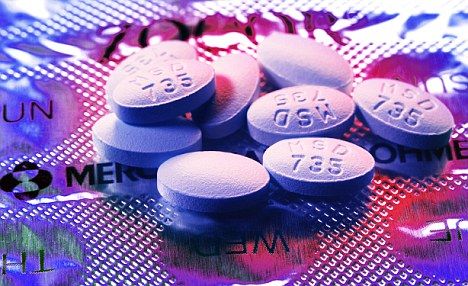
Despite the success of statin drugs for lowering cholesterol, over 300 health problems have been linked to this chemical class of drugs in peer-reviewed clinical research found on the National Library of Medicine.

GreenMedInfo.com, a biomedical research site, is offering a 63 page PDF for free and unlimited download, as part of a broad-based awareness campaign dedicated to informing consumers and health care practitioners alike of the danger represented by the indiscriminate and excessive use of this chemical class of drugs.

Heart

Flashback Confirmed Once Again: Statins Likely Harm The Heart

PLOS
© GreenMedInfo

New research published in the journal PLoS indicates that the use of the cholesterol-lowing class of drugs known as statins is associated with an increased prevalence of microalbuminuria, a well-known marker of vascular dysfunction, affecting both cardiovascular and kidney disease risk.

Microalbuminuria is known to double the risk for a cardiovascular event in patients with type 2 diabetes mellitus and is a marker for endothelial function; endothelial dysfunction may, in fact, be far more significant than elevated blood lipids in determining cardiovascular disease risk. This new finding therefore calls into question the justification for using statin drugs for primary prevention of cardiovascular disease, which is presently the standard of care in the drug-base conventional medical model.

According to the study:
Microalbuminuria (MAU) is considered as a predictor or marker of cardiovascular and renal events. Statins are widely prescribed to reduce cardiovascular risk and to slow down progression of kidney disease. But statins may also generate tubular MAU. The current observational study evaluated the impact of statin use on the interpretation of MAU as a predictor or marker of cardiovascular or renal disease...

Use of statins is independently associated with MAU, even after adjusting for bias by indication to receive a statin.

Heart - Black

Pharmageddon in the UK: Brits told that EVERYONE over 50 should take diabetes-causing statins

pills
© mail online
All over-50s should take statins to cut their risk of suffering a heart attack or stroke, researchers claim.

A major study shows the drugs - usually only given to high-risk patients - provided clear benefits among healthy ones too.

Researchers reviewed findings from 27 trials involving 175,000 people, some of whom were at low risk of heart problems.

They found that the positives greatly exceeded any side-effects from taking the drugs, such as muscle weakness, diabetes and depression.

More than eight million adults are already taking statins, with some experts predicting that one in four will soon be taking the drugs for life.

Borislava Mihaylova, of the University of Oxford, lead author of the study, said: 'In the UK, current practice is generally to give people a statin only if they have had or are considered to be at "high risk" of having a heart attack or a stroke.

Comment:


Heart

Doubt Cast on the 'Good' in 'Good Cholesterol'

good-bad-cholesterol
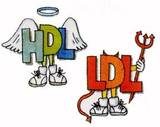
The name alone sounds so encouraging: HDL, the "good cholesterol." The more of it in your blood, the lower your risk of heart disease. So bringing up HDL levels has got to be good for health.

Or so the theory went.

Now, a new study that makes use of powerful databases of genetic information has found that raising HDL levels may not make any difference to heart disease risk. People who inherit genes that give them naturally higher HDL levels throughout life have no less heart disease than those who inherit genes that give them slightly lower levels. If HDL were protective, those with genes causing higher levels should have had less heart disease.

Researchers not associated with the study, published online Wednesday in The Lancet, found the results compelling and disturbing. Companies are actively developing and testing drugs that raise HDL, although three recent studies of such treatments have failed. And patients with low HDL levels are often told to try to raise them by exercising or dieting or even by taking niacin, which raised HDL but failed to lower heart disease risk in a recent clinical trial.

"I'd say the HDL hypothesis is on the ropes right now," said Dr. James A. de Lemos, a professor at the University of Texas Southwestern Medical Center, who was not involved in the study.

Dr. Michael Lauer, director of the division of cardiovascular sciences at the National Heart, Lung and Blood Institute, agreed.

"The current study tells us that when it comes to HDL we should seriously consider going back to the drawing board, in this case meaning back to the laboratory," said Dr. Lauer, who also was not connected to the research. "We need to encourage basic laboratory scientists to figure out where HDL fits in the puzzle - just what exactly is it a marker for."

But Dr. Steven Nissen, chairman of cardiovascular medicine at the Cleveland Clinic, who is helping conduct studies of HDL-raising drugs, said he remained hopeful. HDL is complex, he said, and it is possible that some types of HDL molecules might in fact protect against heart disease.

"I am an optimist," Dr. Nissen said.

Health

World's Oldest Antibiotic Also Shows Promise as an Anti-Cancer Therapy

Colloidal silver is a powerful healer, despite irrational FDA opposition to it.

Silver has been used medicinally throughout the ages, with great success. And now some very promising research is being done on silver as a cancer treatment. Patients have previously been treated with chemotherapy drugs containing another metal, platinum. In a head-to-head comparison against a leading platinum-based chemo drug, cisplatin, a silver-based drug was found to be just as effective - and far less toxic to normal cells than platinum. Dr. Charlotte Willans, the lead researcher, calls the research an important step in the quest for effective, non-toxic cancer treatments.

Silver also happens to be the world's oldest known antibiotic. There's written evidence that the ancient Egyptians made use of it; the ancient Greeks and Romans stored their water, wine, and other liquids in silver vessels to prevent spoiling and contamination; ancient Chinese emperors ate with silver chopsticks, and wealthy Europeans in the Middle Ages used silver utensils to protect themselves from illness (we still call our eating utensils "silverware" despite it being made from other metals these days).