Health & WellnessS


Laptop

Intense Mobile And Computer Use Leads To Sleep, Health Problems

Technology Use
© Photos.com
Technology can be addicting. You switch on your computer, log online, and are inundated by social media networks, email, games, and more. You switch on your cell phone, and you quickly receive a stream of texts, photos, videos, and other like pieces of content. It can be quite overwhelming and difficult to turn off these new devices.

A new study emphasizes the effects that intense usage of gadgets can have on a person's health. Researchers at the University of Gothenburg's Sahlgrenska Academy found that young adults who use their mobile phones or computers for a long duration of time before sleep have a greater likelihood of having sleep disturbances, stress, and symptoms of mental health.

The study, conducted by doctoral student Sara Thomée and her colleagues at the Sahlgrenska Academy of the University of Gothenburg, included four different exams that analyzed how the mental health of young adults was influenced by the use of computers and mobile phones. In particular, Sahlgrenska Academy at the University of Gothenburg works to educate students in the areas of pharmacy, medicine, odontology, and health care sciences.

In the study, the researchers had 4,100 people between the ages of 20 and 24 complete a questionnaire. They also interviewed 32 young heavy tech users. At the end of the project, the investigators found that stress, sleep disorders, and depressive symptoms were related to heavy use of mobile phones and computers.

"We looked at the effects both quantitatively and qualitatively and followed up the volunteers a year on," remarked Thomée in a prepared statement. "The conclusion is that intensive use of [tech] can have an impact on mental health among young adults."


Cheeseburger

Shareholders, Top Doctors Demand McDonald's Assess its Health Impacts

Image
© civileats.com
Today in Oak Brook, Illinois the world's most well-recognized purveyor of unhealthy food will hold its annual shareholders' meeting. Usually a forum to showcase profits made at the expense of the public's health, food advocates and health professionals will be giving the burger giant's dog and pony show pause.

For a second straight year, shareholders will vote on a resolution requiring McDonald's to publicly assess its impacts on the nation's health. The resulting report would, no doubt, be damning. After all, no fast food corporation sells more high-fat, -salt, -sugar, and -calorie junk food worldwide. No fast food corporation spends more marketing its unhealthy offerings. And perhaps no food corporation has had a greater impact on how we eat or how food is grown.

Health

'Oil Pulling' to enhance oral health and cleanse the body

oil
Most people are at least aware of the idea behind eating certain foods, exercising, and avoiding toxic chemicals to maintain overall health. Indeed, consuming powerful, health-boosting foods and avoiding unhealthy junk is a great way to stay healthy, but there are also some very specific techniques which can be utilized to achieve numerous health benefits. Among these techniques is a lesser known one called oil pulling. What is oil pulling, anyway - and what are the oil pulling benefits?

What is Oil Pulling, Anyway?

Magnify

8 Surprising Things That May Be Making Americans Fat

Image
© Jenn Huls/ Shutterstock.com
Eating too much and exercising too little, considered the root of obesity, are not the only probable culprits.

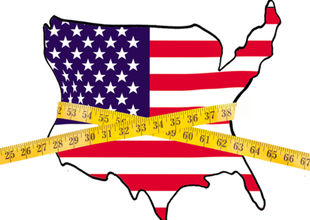
A third of the U.S. population is now overweight, making it just a matter of time before normal-size people are actually in the minority. Americans have so ballooned in size, government safety regulators worry that airline seats and belts won't restrain today's men who average 194 pounds and women who average 165 pounds, in a crash.

Not everyone agrees that obesity is always a health problem. You can be overweight and still have normal blood pressure, blood sugar, HDL cholesterol and other metabolic markers if you exercise, say some, pointing to U.S. Surgeon General Regina Benjamin, who hiked the Grand Canyon in 2010 despite her extra poundage.

Attention

Scientists Discover Radioactive Tuna Contaminated From Fukushima Nuclear Crisis

Scientists have - for the first time - discovered Bluefin tuna that were contaminated by the Fukushima nuclear crisis in Japan last year - swimming off the coast of California. Radioactive cesium ten times above the normal level was found in the fish.


Back at the crippled nuclear plant - a bulge was detected in the walls of reactor four - increasing fears that the structure holding tens of thousands of highly radioactive spent fuel rods is not sound. Should the reactor four building give way - it could trigger a nuclear disaster even worse than Chernobyl.

The discovery by researchers from Stanford University and Stony Brook University marks the first instance of radioactive materials being transported through the sea by migrating animals.

The researchers reported in the Proceedings of the National Academy of Sciences how they used the radioactive cesium in the tuna to understand the origin and timing of their migration across the Pacific, showing that the radioactivity emitted by the disaster can be used as a new tool for tracking migration patterns.

Arrow Up

Groundbreaking Research Shows How Nanoparticles Are Causing Autoimmune Diseases

New groundbreaking research by scientists at Trinity College Dublin has found that exposure to nanoparticles, commonly used in sunscreen, cosmetics and other personal care products can have a serious impact on health, linking it to rheumatoid arthritis and the development of other serious autoimmune diseases.

Nanotech
© Prevent Disease.com
The findings that have been recently published in the international journal 'Nanomedicine' have health and safety implications for the manufacture, use and ultimate disposal of nanotechnology products and materials.

Scientists at the University of Plymouth were the first to show that nanoparticles have a deadly effect on the brain and other parts of the central nervous system.

Nanotechnologies are technologies at the scale of nanometres (10-9m), where new quantum effects can alter the chemistry and physics of elements and compounds, offering possibilities in industrial applications, and for exactly the same reasons, posing unprecedented risks to health and the environment.

Titanium dioxide (TiO2) nanoparticles, found in everything from cosmetics to sunscreen to paint to vitamins, have already been found to cause systemic genetic damage in mice, according to an earlier comprehensive study conducted by researchers at UCLA's Jonsson Comprehensive Cancer Center.

The TiO2 nanoparticles induced single- and double-strand DNA breaks and also caused chromosomal damage as well as inflammation, all of which increase the risk for cancer.

Health

Can These 5 Ways of Burning Belly Fat Also Save Your Life?

Belly Fat
© GreenMedInfo
The ongoing battle of the bulge, while once considered primarily a matter of vanity, may actually be one of the best ways to reduce your risk of dying from a multitude of causes (i.e. all-cause mortality), but especially heart attack.[1]

Some studies have even revealed that abdominal obesity, known clinically as central obesity, and which is measured by the hip-to-waist ratio, may be more important than blood lipids, i.e. "cholesterol," in determining heart attack risk. [2]

So, with this in mind, the following 6 "diet tips," take on even greater relevance to your overall health.
  1. Coconut Oil - Two human studies now exist showing that dietary coconut is safe and effective in reducing midsection fat in both women and men. In the women's study, the treatment group received two tablespoons of coconut oil (30 ml), daily, over a period of 12 weeks, resulting in both a reduction in waist circumference, as well as a boost in their "good" HDL cholesterol levels. [3] In the male study, obese men received two tablespoons (30 ml) of coconut oil per day, taken in 3 divided doses, half an hour before each meal, for one month. The men experienced an average of over one inch (2.86 cm) reduction in their waist circumference, with no changes in their blood lipids. You can read the full study here.
  2. Green Tea - Green tea has been called "the medicine which grew into a beverage." Indeed, our project has identified research on over 200 health conditions that may benefit from its use, with obesity on top of the list.[4] In a 2009 study published in the journal Obesity, the consumption of catechin-rich green tea was found to be safe and effective in reducing weight in moderately overweight subjects, including an over two inch reduction in their waist circumference.[5]

Red Flag

Big Pharma: Getting Away With Murder

Image
© Salon.com
If a study comes up negative for your favorite drug, just don't publish it! 68 percent of all drug studies are swept under the carpet to keep those pesky side effects from being reported. Only 32 percent of studies come up positive, and a lot of those studies are "shortened" to limit the long-term findings. Studies cut short were found to overestimate the study drug's effectiveness and miss dangerous side effects and complications by an average of 30 percent. This would explain the amazing 85 percent drug study success rate in the hands of Big Pharma according to the Annals of Internal Medicine.

In some cases, shortened studies don't just make a drug look more effective than it ever could be, but they also turn dangerous and ineffective meds into miracle drugs, according to a study in JAMA. Studies are often cut short when researchers get "overwhelmingly convincing evidence" of a drug's effectiveness. If you want to make money with your drug, find an early spike in the data and run with it before the data dives. Get in, get the result you want, get out fast, and make lots of money.

Gear

8 Glasses of Water Invented By Plastic Water Bottle Companies With Vested Interests

Bottled Water
© Prevent Disease.com
There has never been any supporting evidence to back up the popular recommendation to drink 8 glasses of water per day. In an editorial for the June issue of Australian and New Zealand Journal of Public Health, Dr. Spero Tsindos from La Trobe University says most people get enough water from the foods and beverages -- including tea and coffee. Humans need about two litres of fluids per day -- not two litres of water specifically. He even takes his message a step further by suggesting the eight-glass-a-day rule is a myth invented by plastic water bottle companies who have made it fashionable to tote around what he says have become ubiquitous accessories.

"Health and dietary authorities currently encourage Australians to consume eight glasses, or two litres, of fluid daily for optimal health," writes Tsindos.

"This has been misinterpreted to mean two litres of water specifically and it has driven a steady growth in the use of bottled water over the years."

Tsindos believes that encouraging people to drink more water is driven by vested interests, rather than a need for better health. "Thirty years ago you didn't see a plastic water bottle anywhere, now they appear as fashion accessories."

"Research has also revealed that water in food eaten has a greater benefit in weight reduction than avoiding foods altogether. We should be telling people that beverages like tea and coffee contribute to a person's fluid needs and despite their caffeine content, do not lead to dehydration."

"We need to maintain fluid balance and should drink water, but also consider fluid in unprocessed fruits and vegetables and juices."

In an previous review published by the American Journal of Physiology, Heinz Valtin, a Dartmouth Medical School physician reported that there is no supporting evidence to back up the popular recommendation to drink eight 8 oz. glasses of water per day.

How did the 8 X 8 myth start? Valtin thinks that the notion may have started in 1945 when the Food and Nutrition Board of the National Research Council recommended approximately "1 milliliter of water for each calorie of food," which would amount to roughly 2 to 2.5 quarts per day (64 to 80 ounces).

Sherlock

Why The Incompetent Don't Know They're Incompetent

"One of the painful things about our time is that those who feel certainty are stupid, and those with any imagination and understanding are filled with doubt and indecision."

 Incompetent
© Helga Weber
The quote above comes from the philosopher Bertrand Russell. Psychological research has now shown he was right.

The Dunning-Kruger effect is the finding that the poorest performers are the least aware of their own incompetence. The effect has been:
"...replicated among undergraduates completing a classroom exam (Dunning, Johnson, Ehrlinger, & Kruger, 2003), medical students assessing their interviewing skills (Hodges, Regehr, & Martin, 2001) clerks evaluating their performance (Edwards, Kellner, Sistrom, & Magyari, 2003), and medical lab technicians evaluating their on-the-job expertise (Haun, Zeringue, Leach, & Foley, 2000)." (From Ehrlinger et al., 2008)
The reason seems to be that poor performers fail to learn from their mistakes.