Health & WellnessS


Info

Got Digestive Problems? Take it Easy on the Veggies

Image
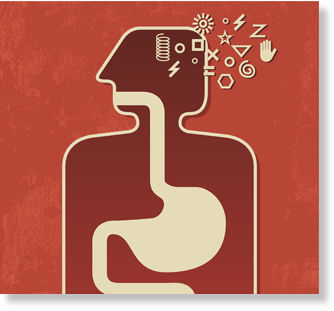
A couple weeks ago I wrote an article called FODMAPS: Could Common Foods Be Harming Your Digestive Health? I described how certain classes of foods, known as FODMAPs, are poorly digested in certain people and can lead to gas, bloating, pain and changes in stool frequency and consistency. Studies have shown that conditions like Irritable Bowel Syndrome (IBS) are associated with FODMAP intolerance, and that a low-FODMAP diet offers relief in a substantial percentage of people with IBS.

Today I've got another tip for those of you with digestive issues, including IBS, constipation, diarrhea and acid reflux: eat fewer vegetables.

Yep, that's right. Fewer vegetables.

Magnify

Embryonic Blood Vessels That Make Blood Stem Cells Can Also Make Beating Heart Muscles

Image
© Hanna Mikkola Lab, University of California - Los Angeles Health SciencesUCLA stem cell researchers have found for the first time a surprising and unexpected plasticity in the embryonic endothelium, the place where blood stem cells are made in early development. Scientists found that the lack of one transcription factor, a type of gene that controls cell fate by regulating other genes, allows the precursors that normally generate blood stem and progenitor cells in blood forming tissues to become something very unexpected - beating cardiomyocytes, or heart muscle cells.
UCLA stem cell researchers have found for the first time a surprising and unexpected plasticity in the embryonic endothelium, the place where blood stem cells are made in early development.

Scientists found that the lack of one transcription factor, a type of gene that controls cell fate by regulating other genes, allows the precursors that normally generate blood stem and progenitor cells in blood forming tissues to become something very unexpected -- beating cardiomyocytes, or heart muscle cells.

The finding is important because it suggests that the endothelium can serve as a source of heart muscle cells. The finding may provide new understanding of how to make cardiac stem cells for use in regenerative medicine, said study senior author Dr. Hanna Mikkola, an associate professor of molecular, cell and developmental biology in Life Sciences and a researcher with the Eli and Edythe Broad Center of Regenerative Medicine and Stem Cell Research at UCLA.

Health

Bacteria-Immune System 'Fight' Can Lead to Chronic Diseases, Study Suggests

Results from a study conducted at Georgia State University suggest that a "fight" between bacteria normally living in the intestines and the immune system, kicked off by another type of bacteria, may be linked to two types of chronic disease.

The study suggests that the "fight" continues after the instigator bacteria have been cleared by the body, according to Andrew Gewirtz, professor of biology at the GSU Center for Inflammation, Immunity and Infection. That fight can result in metabolic syndrome, an important factor in obesity, or inflammatory bowel disease (IBD).

The results were published in the journal Cell Host & Microbe.

"The implication at present is that it is very important to control the early environment," Gewirtz said. "We need to examine how this can be achieved -- perhaps via breastfeeding, a more diverse diet, probiotics are possibilities."

The study's results are important as instances of chronic diseases like metabolic syndrome and IBD are increasing rapidly among humans, he explained.

Health

Alzheimer's Cognitive Decline Slows in Advanced Age

The greatest risk factor for Alzheimer's disease (AD) is advancing age. By age 85, the likelihood of developing the dreaded neurological disorder is roughly 50 percent. But researchers at the University of California, San Diego School of Medicine say AD hits hardest among the "younger elderly" -- people in their 60s and 70s -- who show faster rates of brain tissue loss and cognitive decline than AD patients 80 years and older.

The findings, reported online in the August 2, 2012 issue of the journal PLoS One, have profound implications for both diagnosing AD -- which currently afflicts an estimated 5.6 million Americans, a number projected to triple by 2050 -- and efforts to find new treatments. There is no cure for AD and existing therapies do not slow or stop disease progression.

"One of the key features for the clinical determination of AD is its relentless progressive course," said Dominic Holland, PhD, a researcher at the Department of Neurosciences at UC San Diego and the study's first author. "Patients typically show marked deterioration year after year. If older patients are not showing the same deterioration from one year to the next, doctors may be hesitant to diagnose AD, and thus these patients may not receive appropriate care, which can be very important for their quality of life."

Health

Speaking Multiple Languages Can Influence Children's Emotional Development

On the classic TV show "I Love Lucy," Ricky Ricardo was known for switching into rapid-fire Spanish whenever he was upset, despite the fact Lucy had no idea what her Cuban husband was saying. These scenes were comedy gold, but they also provided a relatable portrayal of the linguistic phenomenon of code-switching.

This kind of code-switching, or switching back and forth between different languages, happens all the time in multilingual environments, and often in emotional situations. In a new article in the July issue of Perspectives on Psychological Science, a journal of the Association for Psychological Science, psychological scientists Stephen Chen and Qing Zhou of the University of California, Berkeley and Morgan Kennedy of Bard College delve deeper into this linguistic phenomenon.

Drawing on research from psychology and linguistics, the researchers seek to better understand how using different languages to discuss and express emotions in a multilingual family might play an important role in children's emotional development. They propose that the particular language parents choose to use when discussing and expressing emotion can have significant impacts on children's emotional understanding, experience, and regulation.

Health

Vaginal Pain May Mean Irritable Bowl Syndrome Or Fibromyalgia

Unexplained vulvar pain, also known as vulvodynia, affects millions of women worldwide. It can be so severe that it makes exercise, intercourse and even sitting unbearable. A new study published in the journal American College of Obstetricians and Gynecologists has now revealed that women who suffer from this painful vaginal condition have a 2 to 3 times higher risk of also developing other chronic pain conditions, such as irritable bowel syndrome, interstitial cystitis known as and fibromyalgia or musculoskeletal pain.

Michigan University researchers have found in a Health System study that these increasingly prevalent chronic pain conditions are known to be under-diagnosed and have discovered new data, which enables researchers to gain a better understanding on how they could possibly be related.

Cheeseburger

When Listening to Your Body Doesn't Work

Image
© Unknown
Hunger largely comes down to perceived energy and/or nutrient insufficiency. Your body thinks that it needs more calories and more energy, and hunger sets in to get you to eat the food that contains those nutrients. Now, if perception matches up well with reality - if you truly do need more nutrients - things are good. You need some food, you eat some food, and you stop when you've had enough. In this situation, listening to your body is a good idea. That's what all those Primal people (including me) are talking about when they tell you to "just listen to your body, maaaaaaan," because for those people, it truly is that simple. Eliminating the excess carbs, the refined sugar, the grains, and the processed seed oils while adhering to the other Primal laws regarding exercise, sleep, stress, sun, and all the rest was enough to right the ship.

But that's not everyone. Sometimes perception does not match up with reality. Sometimes your body thinks it needs more nutrients when it really doesn't, for a variety of reasons. This isn't actually an example of your body lying to you, since your body "believes" what it's saying, but the end result is the same: you eat something that you really don't need. It's a bit like how your friends and family who worry about you eating all that fat and protein try to push bran muffins and whole wheat pasta on you. They're operating under a fundamentally broken set of assumptions, but they mean well.

Cow

Vegetarianism, Eating Disorder - Study Reveals Worrisome Relationship Among Women

Weighing
© Alamy
"I can't eat that, sorry."

If you're a vegetarian, that's a refrain you're probably familiar with. Food abounds -- at work, at social gatherings -- but you don't partake because of your dietary restrictions. That mystery hors d'oeuvre or greasy teriyaki stick? Thanks but no thanks.

There are many valid reasons to be a vegetarian (see: the environment, your health, and the dismal state of the meat industry, for starters). But what if you go vegetarian to help disguise and aid an eating disorder?

New research suggests a large percentage of women with eating disorders may be doing just that.

Women suffering from eating disorders are four times more likely to be vegetarian than women without eating disorders, according to a recent study published in the Journal of the Academy of Nutrition and Dietetics.

The researchers found that 52 percent of women with a history of eating disorders had been vegetarians at some point in their lives. In contrast, only 12 percent of women without eating disorders had experimented with a vegetarian diet.

For clinicians who work with eating disorder patients, the results of the study were not surprising.

"Going vegetarian can be another way to cut out a food category, or a number of food categories, if you become a vegan," Vanessa Kane-Alves, a registered dietician with Boston Children's Hospital's Eating Disorders Program, told The Huffington Post. "It makes it easier when people ask you questions about where those foods have gone. It's a more socially aceptable way to restrict foods."

Especially as a teen, parents might be less apt to argue with you for not eating, she added.

Health

Are You Chronically Dehydrated?

Image
© rodale.comDrink up! Staying hydrated keeps every system in your body in top shape.
It's hot, and getting hotter, which means that, like most people, you need to drink more water.

Believe it or not, the simple answer to that question is probably yes. In fact, most of us function in a chronic state of dehydration. Whether it's because of your busy schedule or simply not having fresh, clean water on hand when you need it, chances are more than good that you simply don't drink enough fluids.

Arrow Up

Dramatic Health Recoveries Reported By Patients Who Took Their Doctor's Advice and Stopped Using GMO Foods

Image
© renegadehealth.com
Are genetically modified (GM) foods making you sick - I mean really sick? Up until recently, all that we could say was thank goodness you're not a lab rat; GM feed messes them up big time. GMOs (genetically modified organisms) appear to trigger the immune systems of both mice and rats as if they were under attack. In addition, the gastrointestinal system is adversely affected, animals age more quickly, and vital organs are damaged. When fed GM foods, lab animals can also become infertile, have smaller or sterile offspring, increased infant mortality, and even hair growing in their mouths. Have I got your attention?

Biotechnology corporations such as Monsanto try to distort or deny the evidence, sometimes pointing to their own studies that supposedly show no reactions. But when scientists such as French toxicologist G.E. Seralini re-­analyzed Monsanto's raw data, it actually showed that the rats fed GM corn suffered from clear signs of toxicity - evidence that industry scientists skillfully overlooked.

Comment: Read additional articles by Dr. Jeffery Smith to learn more about the health issues associated with GMO's:

Pseudo-Scientific Defense of GMO Safety is Smoke and Mirrors
GMO Researchers Attacked, Evidence Denied, and a Population at Risk
Genetically Engineered Crops May Produce Herbicide Inside Our Intestines
Genetically Modified Soy Linked to Sterility, Infant Mortality in Hamsters
Monsanto's Roundup Triggers Over 40 Plant Diseases and Endangers Human and Animal Health