Health & WellnessS


Magic Wand

Migraines hurt your head but not your brain

Image
© Unknown
According to new research from Brigham and Women's Hospital, migraines are not associated with cognitive decline.


Migraines currently affect about 20 percent of the female population, and while these headaches are common, there are many unanswered questions surrounding this complex disease. Previous studies have linked this disorder to an increased risk of stroke and structural brain lesions, but it has remained unclear whether migraines had other negative consequences such as dementia or cognitive decline. According to new research from Brigham and Women's Hospital (BWH), migraines are not associated with cognitive decline.

This study is published online by the British Medical Journal (BMJ) on August 8, 2012. "Previous studies on migraines and cognitive decline were small and unable to identify a link between the two. Our study was large enough to draw the conclusion that migraines, while painful, are not strongly linked to cognitive decline," explained Pamela Rist ScD, a research fellow in the Division of Preventive Medicine at BWH, and lead author on this study.

The research team analyzed data from the Women's Health Study, a cohort of nearly 40,000 women, 45 years and older. In this study, researchers analyzed data from 6,349 women who provided information about migraine status at baseline and then participated in cognitive testing during follow-up. Participants were classified into four groups: no history of migraine, migraine with aura (transient neurology symptoms mostly of the visual field), migraine without aura, and past history of migraine. Cognitive testing was carried out in two year intervals up to three times.

Magic Wand

"Selfish" DNA in animal mitochondria offers possible tool to study aging

Image
© Hybrid Medical Animation
Researchers at Oregon State University have discovered, for the first time in any animal species, a type of "selfish" mitochondrial DNA that is actually hurting the organism and lessening its chance to survive - and bears a strong similarity to some damage done to human cells as they age.

The findings, just published in the journal PLoS One, are a biological oddity previously unknown in animals. But they may also provide an important new tool to study human aging, scientists said.

Such selfish mitochondrial DNA has been found before in plants, but not animals. In this case, the discovery was made almost by accident during some genetic research being done on a nematode, Caenorhabditis briggsae - a type of small roundworm.

"We weren't even looking for this when we found it, at first we thought it must be a laboratory error," said Dee Denver, an OSU associate professor of zoology. "Selfish DNA is not supposed to be found in animals. But it could turn out to be fairly important as a new genetic model to study the type of mitochondrial decay that is associated with human aging."

DNA is the material that holds the basic genetic code for living organisms, and through complex biological processes guides beneficial cellular functions. Some of it is also found in the mitochondria, or energy-producing "powerhouse" of cells, which at one point in evolution was separate from the other DNA.

Health

How to Enjoy Bacon without a Gallbladder

Article removed at request of author:
Hi, you have published an article word-for-word of ours without permission, How to Enjoy Bacon without a Gallbladder.

Please note the copyright info on our site and remove the article immediately.

Thank you,
Stacy

Heart

Statin Drugs Found To Accelerate Arterial Calcification

Statins
© GreenMedInfo

Newly published research reveals that more frequent statin drug use is associated with accelerated coronary artery and aortic artery calcification, both of which greatly contribute to cardiovascular and all-cause mortality.

Published Aug. 8th, 2012 in the journal Diabetes Care, researchers studied patients with type 2 diabetes and advanced atherosclerosis and found that coronary artery calcification "was significantly higher in more frequent statin users than in less frequent users." [i]

Furthermore, in a subgroup of participants initially not receiving statins, "progression of both CAC [coronary artery calcification] and AAC [aortic artery calcification] was significantly increased in frequent statin users."

What is perhaps most alarming about this new finding is that statin drugs have already been shown to significantly increase the risk of developing type 2 diabetes, prompting the FDA on Feb. 27th, 2011, to add "diabetes risk" to the warning label of all statin drugs marketed in this country.

Now, with this latest discovery, it is safe to say, not only do statins likely induce type 2 diabetes in susceptible populations, but they also accelerate the cardiovascular complications associated with the disease -- a painfully ironic and highly concerning fact, considering that statins are supposed to reduce cardiovascular morbidity and mortality, not accelerate it.

Health

Mark's Daily Apple Defines 'Ketosis'

Image
© insearchofbalance Flickr Photo (CC)
Dear Mark,

What are ketones? How does ketosis play into the Primal Blueprint? Did our bodies evolve to run on ketones? If not, why do they exist?


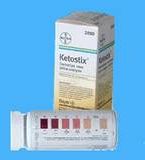
Ketones, to put it briefly, are compounds created by the body when it burns fat stores for energy. When you consume a diet very low in carbohydrates, the body responds to the significantly lowered levels of blood sugar by flipping the switch to another power source. The body converts fatty acids in the liver to ketones. Ketones, then, become the main energy source as long as blood sugar levels remain low.

Recently, researchers have discovered more about the unique mechanisms behind this energy "switch." It turns out a specific liver hormone, FGF21, is essential for the oxidation of the liver's fatty acids. Furthermore, animals who were fed a ketogenic diet over time showed "increased expression of genes in fatty acid oxidation pathways and reduction in lipid synthesis pathways." In other words, their bodies adapted metabolically and genetically to the diet.

Question

What is Ketosis?

Image
© lowcarbdiets.about.com
Question: What is Ketosis?

Answer: A lot of people are confused by the term "ketosis." You may read that it is a "dangerous state" for the body, and it does sound abnormal to be "in ketosis." But ketosis merely means that our bodies are using fat for energy. Ketones (also called ketone bodies) are molecules generated during fat metabolism, whether from the fat in the guacamole you just ate or fat you were carrying around your middle. When our bodies are breaking down fat for energy, most of the it gets converted more or less directly to ATP. (Remember high school biology? This is the "energy molecule.") But ketones are also produced as part of the process.

When people eat less carbohydrate, their bodies turn to fat for energy, so it makes sense that more ketones are generated. Some of those ketones (acetoacetate and ß-hydroxybutyrate) are used for energy; the heart muscle and kidneys, for example, prefer ketones to glucose. Most cells, including the brain cells, are able to use ketones for at least part of their energy. But there is one type of ketone molecule, called acetone, that cannot be used and is excreted as waste, mostly in the urine and breath (sometimes causing a distinct breath odor).

Comment: Learn more about the benefits of a Ketogenic Diet, read the following articles:

Solve Your Health Issues with a Ketogenic Diet
Ketogenic Diet (high-fat, low-carb) Has Neuroprotective and Disease-modifying Effects
Calorie-restricted Ketogenic Diet Effective Alternative Therapy for Malignant Brain Cancer
High-Fat Ketogenic Diet Effectively Treats Persistent Childhood Seizures
Kids with autism benefit from a ketogenic diet


Red Flag

Why PepsiCo Is Fighting GMO Labeling in California

Image
© blog.fooducate.com
Most people just think of soda when they hear the name "Pepsi." But in fact, PepsiCo is the nation's largest food company and second largest in the world. Its annual earnings top $60 billion, from a dizzying array of brands. Walk down almost any supermarket aisle (soda, snacks, cereal, juice) and you're likely to bump into a PepsiCo-owned product.

This explains why the company is the top contributor among food makers to the "No on 37" campaign in California -- a ballot initiative that would require labeling of foods containing GMO ingredients. Also, as I wrote about recently, PepsiCo is a member of the Grocery Manufacturers Association, a powerful trade group that has so far contributed $375,000 to the No on 37 campaign.

Why would PepsiCo pony up more than $90,000 just to keep Californians in the dark about what they are eating? A closer look at its "portfolio of products" (in corporate speak) reveals exactly what's at stake for the food giant.

Health

Crazy Tape On Olympians: Does it Work?

Image
© Unknown
Athletes and physical trainers swear by the stretchy tape, but the evidence is fuzzy.

Along with snazzy racing outfits and sleek warm-up gear, many Olympians at the London Games have been accessorizing with athletic tape in various hues and patterns.

On the beach volleyball court, it seemed, more players than not wore lines of tape around their knees, shoulders and even in fanned strips down their abdomens. Black, blue and patterned strips appeared on gymnasts, runners, divers, discus-throwers and even table tennis players.

So, what's up with all that tape? And is it really doing anything to help?

Anecdotally, athletes and physical trainers swear by the stretchy adhesive, known as Kinesio tape or elastic therapeutic tape. If applied correctly, they say, the tape can relieve pain from tendonitis or muscle inflammation, giving competitors an athletic boost.

Scientifically, though, very few studies have been done that truly isolate the effects of the tape compared to other measures that athletes take to treat and prevent injuries.

Until better data come in, it remains possible that the tape provides more of a psychological benefit than a physical one -- its mere presence reminding athletes to be careful with a sore area or providing confidence through a sense that something is being done to help with healing.

Comment: Evidence shows that Kinesio tape really works. Read the following forum threads to learn more:

Duct Tape in Your Emergency Kit?
Frozen Shoulder?
Shoulder pain


Question

Woman's Hair Turns to Black Fingernails, Baffling Her Doctors

Shanyna Isom has consulted every possible specialist, including a doctor in the Netherlands, but she still as no idea what is wrong with her.


The 28-year-old beautician and former University of Memphis law student has developed a condition so severe, fingernails grow from the hair follicles all over her body.

"Black scabs were coming out of her skin," said her mother, Kathy Gary. "The nails would grow so long and come out and regrow themselves. They are hard to touch and stick you."

The disease so far has affected not only her skin, but her bones and her vision. Because Isom is unable to walk without a cane, her mother helps her out of bed each day.

Doctors at Johns Hopkins Medical Center in Baltimore, where Isom is being treated, told her family that she is the only person in the world with this unknown condition.

Health

Some Patients Fear Questioning Their Doctor's Advice

Patients want collaborative relationships with their doctors but fear retribution for raising too many questions.
Image
© Alexander Raths/Shutterstock
How many times have you seen the phrase, "Discuss it with your doctor"? From Internet medical articles to TV ads selling drugs, the phrase continually pops up as if it's the simplest thing the world to do. A team of doctors and researchers who conducted focus groups with patients from the San Francisco Bay area have now published evidence that's all too familiar to people in the rest of the country: discussing medical issues with your doctor is much easier said than done.

Two major concerns mentioned by the patients were fear of losing their doctor's good will by questioning their advice and the lack of time during doctor visits.