Health & WellnessS


Cow

Do America's cows have a drug problem?

Image
Tyson Foods, the largest producer of U.S. beef, noticed that cows fed Zilmax, an animal feed additive given to cattle a few weeks before slaughter to increase their weight, were having trouble walking off the truck on their way to meet their maker. Some had trouble moving, and others just laid down with their tongues hanging out of their mouths, or sat in dog-like positions, reports The Wall Street Journal. "I've seen cattle walking down a truck ramp tippy-toed," one industry expert told the paper.

A kind of beta-agonist drug originally developed to treat asthma in humans, Zilmax alters the animals' metabolism to make them pack on lean muscle for 20 days leading up to slaughter. Introduced to the U.S. in 2007, about 70 percent of U.S. cattle now take some kind of beta-agonist drug.

Tyson has since said it would stop accepting Zilmax-fed cows for slaughter, and Merck & Co, the pharmaceutical company behind Zilmax, announced it would suspend U.S. and Canadian sales of the drug.

Bulb

Brain network decay detected in early Alzheimer's

In patients with early Alzheimer's disease, disruptions in brain networks emerge about the same time as chemical markers of the disease appear in the spinal fluid, researchers at Washington University School of Medicine in St. Louis have shown.

While two chemical markers in the spinal fluid are regarded as reliable indicators of early disease, the new study, published in JAMA Neurology, is among the first to show that scans of brain networks may be an equally effective and less invasive way to detect early disease.

"Tracking damage to these brain networks may also help us formulate a more detailed understanding of what happens to the brain before the onset of dementia," said senior author Beau Ances, MD, PhD, associate professor of neurology and of biomedical engineering.

Eggs Fried

What government tells you to eat is all wrong

Image
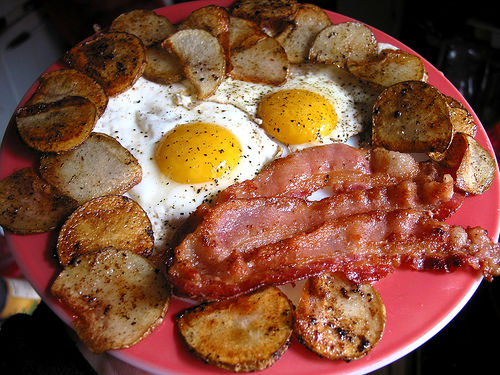
I have a hobby. When I see a healthy patient over 90 years old, I always ask them about their diet, and the answer is almost always the same: They lean over and, sounding a little guilty like the kid who got caught with their hand in the cookie jar, say something like, "Well, I hate to tell you this, but I have eaten butter, eggs and bacon all my life."

At which point I ask the female patients about their pie cooking - and they all agree they used lard.

Now this is not a rigorous scientific study, but I have been doing this for over 20 years, and the observation is remarkably consistent. The important fact, in my opinion is not what they ate, but what it implies about what they didn't eat: They did not switch to margarine. They did not use Crisco for cooking. They did not wallow in corn oil. In short, they ate natural fats, not manmade ones. In their heartland, meat and potatoes, home-cooked diet, the ratio of Omega 3 to Omega 6 oils was generally high.

I hate to keep denigrating the food pyramid, but it deserves denigrating, and once again with regard to intake of "fats." For at least 40 years, the policy wonks have pushed a low-fat diet, also promoting "heart-healthy" margarines in place of butter, and have recommended more complex carbs overtly as well as covertly (in most low-fat foods, artificial lab-derived filler carbs give the food "substance," so low-fat foods are generally high-carb foods).

During this reign of the government nutritionists, Americans have become more obese with more diabetes, metabolic syndrome and Alzheimer's dementia. The recommendations persist even in the face of massive data showing that oils derived from plants such as soybeans and corn - i.e. Omega 6 oils - create inflammation in the body and contribute to disease.

Comment: For more information on the inflammatory foods which are best avoided, see:

The Dark Side of Wheat - New Perspectives on Celiac Disease and Wheat Intolerance
Opening Pandora's Bread Box: The Critical Role of Wheat Lectin in Human Disease
The Obesity Epidemic, Courtesy of the Agricultural Industry
Why Milk Is So Evil


Take 2

5 GMO Myths Busted


Cow Skull

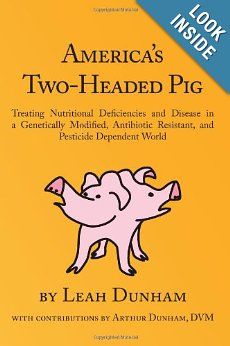
Torturing animals with Monsanto's genetically engineered feed

Image
"A Culture that views pigs as inanimate piles of protoplasmic structure to be manipulated however cleverly the human mind can conceive will view its citizens the same way - and other cultures." - Joe Salatin, Restoring Health, Wealth and Respect to Food and Farming

We associate food with at most, pleasure, at the very least, survival. It's not too different for animals. Lambs turned out on new grass move "quickly over certain grasses to get to others - to nosh on clover and mustard grass, avoiding horse nettle and fescue along the way," writes Dan Barber in A Chef Speaks Out . Wild pigs, capable of seeking out the nutrients they need," enjoy eating nuts, roots, fruits, mushrooms, bugs, rabbits, and, occasionally, dead animals."

But what happens when animals are confined in cramped, filthy environments and force-fed monoculture diets of genetically modified corn and soy?

A lot can happen. Calves are born too weak to walk, with enlarged joints and limb deformities. Piglets experience rapidly deteriorating health, a "failure to thrive" so severe that they start breaking down their own tissues and organs - self-cannibalizing - to survive. Many animals suffer from weak, brittle bones that easily fracture. Dairy cows develop mastitis, a painful udder infection. Beef cattle develop liver abscesses and an excruciating condition referred to as "twisted gut."

Coffee

Drinking coffee, tea may reduce liver disease risk

tea coffee
A new research carried out by an international team suggests that regular consumption of coffee and tea can reduce fatty liver in people with non-alcoholic fatty liver disease (NAFLD).

Headed by Duke-NUS Graduate Medical School and the Duke University of Medicine, the study demonstrates that daily consumption of four cups of coffee or tea shares a health benefit due to the caffeine present in both beverages.

The animal models of the research that was taken on mice proved the effects of caffeine on the fatty livers.

The researchers found that caffeine was able to trigger the stored lipids in the liver cells to metabolize, which then helped lower the amount of fat in the liver.

Beer

Study shows that soft drinks accelerate behavioral problems in children

child soda
New research has indicated that soft drink consumption is associated with aggression, attention problems, and behavioral abnormalities in young children.

The study was conducted by a team of researchers from Columbia University's Mailman School of Public Health, University of Vermont, and Harvard School of Public Health.

The team assessed nearly 3000 children at about 5 years old and monitored their soft drink consumption as well as behavioral manifestations.

The children were selected from the Fragile Families and Child Wellbeing Study, a prospective birth cohort that follows mother-child pairs from 20 large cities in the United States.

The children's soft drink consumption and behaviour were regularly reported by their mothers through some checklists.

Bacon n Eggs

Best of the Web: The Ketogenic Diet - An overview

Image
A ketogenic diet is based on animal fat sources.
Ketosis is an often misunderstood subject. Its presence is equated with starvation or a warning sign of something going wrong in your metabolism. But nothing could be farther from the truth, except if you are an ill-treated type 1 diabetic person.[1] Ketones - contrary to popular belief and myth - are a much needed and essential healing energy source in our cells that come from the normal metabolism of fat.

The entire body uses ketones in a more safe and effective way than the energy source coming from carbohydrates - sugar AKA glucose. Our bodies will produce ketones if we eat a diet devoid of carbs or a low-carb diet (less than 60 grams of carbs per day).[2] By eating a very low-carb diet or no carbs at all (like a caveman), we become keto-adapted.

In fact, what is known today as the ketogenic diet was the number one treatment for epilepsy until Big Pharma arrived with its dangerous cocktails of anti-epileptic drugs. It took several decades before we heard again about this diet, thanks in part to a parent who demanded it for his 20-month-old boy with severe seizures. The boy's father had to find out about the ketogenic diet in a library as it was never mentioned as an option by his neurologist. After only 4 days on the diet, his seizures stopped and never returned.[3] The Charlie Foundation was born after the kid's name and his successful recovery, but nowadays the ketogenic diet is available to the entire world and it's spreading by word of mouth thanks to its healing effects.

Water

Soft drinks and behavioral problems in young children

Americans buy more soft drinks per capita than people in any other country. These drinks are consumed by individuals of all ages, including very young children. Although soft drink consumption is associated with aggression, depression, and suicidal thoughts in adolescents, the relationship had not been evaluated in younger children. A new study scheduled for publication in The Journal of Pediatrics finds that aggression, attention problems, and withdrawal behavior are all associated with soft drink consumption in young children.

Shakira Suglia, ScD, and colleagues from Columbia University's Mailman School of Public Health, University of Vermont, and Harvard School of Public Health assessed approximately 3,000 5-year-old children enrolled in the Fragile Families and Child Wellbeing Study, a prospective birth cohort that follows mother-child pairs from 20 large U.S. cities. Mothers reported their child's soft drink consumption and completed the Child Behavior Checklist based on their child's behavior during the previous two months. The researchers found that 43% of the children consumed at least 1 serving of soft drinks per day, and 4% consumed 4 or more.

Arrow Down

Turns out, tapeworms are not a medically advised weight-loss tool

Tape Worm
© TapeWormEggs.com
File this under Advice That Should Be Obvious: Ingesting a live tapeworm is not the best way to lose weight.

Somewhere in Iowa recently, a patient told her doctor that she had bought a tapeworm on the internet and ingested it. The physician called the Iowa Department of Public Health to ask what to do for her. The department's medical director, Dr. Patricia Quinlisk, advised to prescribe an anti-worm medication.

Quinlisk recounted the incident Thursday in a weekly email to public-health workers around the state. She noted that websites have been selling tapeworms as a weight-loss tool, and she warned against the practice.

"Ingesting tapeworms is extremely risky and can cause a wide range of undesirable side effects, including rare deaths," she wrote. "Those desiring to lose weight are advised to stick with proven weight loss methods; consuming fewer calories and increasing physical activity."

Tapeworms are parasites that can live in the intestines of animals and humans. They can be accidentally ingested in undercooked meat. Quinlisk said that a century ago, hucksters often sold tapeworm eggs in pill form as a weight-loss aid.