Health & WellnessS


Health

Early deaths from pollution in the U.S. total 200,000 annually

Those who live in a particularly smoggy city in the US are able to see the pollution that surrounds them on a daily basis. But a recent study from the Massachusetts Institute of Technology (MIT) reveals that people who live in all types of environments are at risk of pollution-related death.

The study, published in the journal Atmospheric Environment, saw a team from MIT's Laboratory for Aviation and the Environment track emissions from sources including industrial smokestacks, automobile tailpipes, marine and rail activities, and heating systems around the US.

Image
Residents of Baltimore, MD, face the highest early emissions-related death rates.
In order to ascertain how many early deaths are a result of air pollution, the researchers used emissions data from the Environmental Protection Agency's National Emissions Inventory, which is a catalog of emissions sources.

Beer

What if beer companies told the truth?

Image
Would some of their labels say, "Brewed with pure Rocky Mountain spring water, GMO corn syrup, and fish bladder"?

If you like to kick back now and then with a cold one, you may not have given much thought to what's in the bottle or can. Perhaps you were reassured by ads with wholesome images of sparkling mountain streams and barley rippling in the breeze, or by slogans like "Budweiser: The Genuine Article."

The reality is far less appetizing. The list of legal additives to beer includes:
  • MSG
  • Propylene glycol (it helps stabilize a beer's head of foam, though in high quantities it can cause health problems)
  • High-fructose corn syrup (HFCS)
  • Calcium disodium EDTA
  • Caramel coloring
  • FD&C blue 1, red 40, and yellow 5
  • Insect-based dyes
  • Glyceryl monostearate
  • Isinglass (see below)

Info

Aspartame and GMOs: What you really need to know about the science and health risks

Image
Coca-Cola claims diet drinks promote weight loss, but studies show that artificial sweeteners actually contribute to weight gain.

In response to a plunge in sales of artificially sweetened sodas last week, Coca-Cola announced plans to roll out an ad campaign to win back popular favor for its aspartame-containing beverage, Diet Coke. (Diet Pepsi, which also contained aspartame, saw its sales fall 6.2 percent in 2012 while regular Pepsi sales fell little more than half that amount.)


The safety of aspartame, which the FDA approved for human consumption in 1981, has long been in dispute, before, during, and after its approval by the FDA. The simmering controversy is notable for the parallels between aspartame's safety and regulatory history, and that of another controversial industrial food product - genetically modified foods also known as GMOs.

Eye 1

UNICEF Surveils, Defames health sites over vaccines

Image
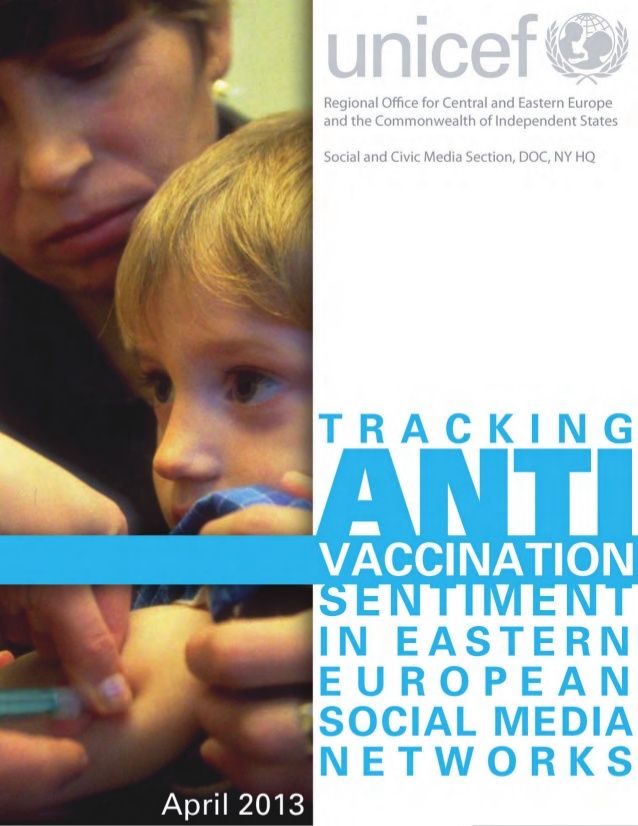
A stunning new report reveals that the United Nations Children's Fund (UNICEF) has been monitoring independent health sites and their users in an attempt to identify 'anti-vaccine influencers' and their effect on lackluster vaccine uptake.

A newly fashioned United Nations Children's Fund (UNICEF) working paper tracking "the rise of online anti-vaccination sentiments in Central and Eastern Europe" identifies independent health websites, including GreenMedInfo.com, Mercola.com, NaturalNews.com and VacTruth.com, as contributing to lackluster vaccine uptake.

The UNICEF report, titled "Tracking anti-vaccination sentiment in Eastern European social media networks," obtained data using "state-of-the-art social medial monitoring tools," and confirmed that parents are using social media networks to decide whether to vaccinate their children

Cookie

Gluten Sensitivity & Nerve Damage

A recent paper published in the Journal of Neurology, Neurosurgery, and Psychiatry discusses a strong connection in patients with facial palsy induced by gluten.
Recurrent peripheral facial paralysis (PFP) is an uncommon disorder that often occurs in the setting of family history. In 2001, we observed a patient with recurrent PFP who manifested symptoms of coeliac disease (CD) several months later. Because of this observation and because neurological disorders may be the only manifestation of atypical forms of CD...
What is Facial Palsy?

Facial palsy is a disorder characterized by paralysis of muscles in the face. It can be caused by a Herpes virus, and in sometimes caused as a result of inner ear infections. New research links gluten intolerance to this neurological disorder.

Gluten Sensitivity & Nerve Damage

There are numerous studies linking gluten intolerance issues with damage to the nervous system. Some doctors believe that the primary way that this protein induces damage is through nerves.


Ambulance

Kyrgyzstan scrambles to contain bubonic plague outbreak following death of 15yo boy

bubonic plague
© The Learning Company, Inc.Bubonic Plague
Kyrgyzstan officials have scrambled to control the spread of bubonic plague that killed a rural boy last week amid reports three more people have showed possible symptoms of the disease.

The easternmost district of Ak-Suu in the Central Asian country was on lockdown while police guarded the hospitals where 15-year-old Temirbek Isakunov was treated and died last Thursday.

The emergency ministry said three more people from the same village as the victim were hospitalised on Tuesday on suspicion of being infected with the deadly disease.

"Residents of Sary-Kamysh ... came to the hospital at 12:30am," the ministry said in a statement.

"They are now under medical care."

Question

Why the U.S. Is Building a High-Tech Bubonic Plague Lab in Kazakhstan?

Central Reference Laboratory
© Ben DaltonThe Central Reference Laboratory, in Almaty, Kazakhstan, is due for completion in 2015
In 1992, Dr. Kanatjan Alibekov, a biologist from the Soviet Union, boarded a flight in Almaty, then Kazakhstan's capital, for New York. When Dr. Alibekov - now known as Ken Alibek - sat down with the CIA, he had a terrifying secret to reveal: that bio weapons program the Soviet Union stopped in the 1980's hadn't actually stopped at all. He knew this because he had led Moscow's efforts to develop weapons-grade anthrax. In fact, he said, by 1989 - around the time that Western leaders were urging the USSR to halt its secret bioweapons program, known as Biopreparat - the Soviet program had dwarfed the US's by many orders of magnitude. (This is disregarding the possibility that the US was also developing some of these weapons in secret, and, like Russia, still is.)

One big problem, he added, was that, like the stockpiles of nuclear weapons left in the dust of the Soviet Union, the materials and the expertise needed to make a bioweapon - anthrax, smallpox, cholera, plague, hemorrhagic fevers, and so on - could still be lying about, for sale to the highest bidder. Of those scientists, Alibek told the Times in 1998, ''We have lost control of them."


Evil Rays

The hidden dangers of deodorant sprays: Headaches, eczema, asthma and even fatal heart problems

  • Inhaling large doses of chemicals from deodorant aerosols can be fatal
  • Canister fumes may cause skin reactions, allergies and heart problems
  • Teenage boys are particularly in risk zone due to common over-use
Image
Dangerous over-use: Inhaling chemicals from deodorant aerosols can cause skin reactions, aggravate allergies and may trigger fatal heart problems
Walk past a teenage boy and you'll almost certainly be left with the lingering smell of spray deodorant - 50 per cent of children now use deodorant by the age of 11, according to one survey, with self-consciousness about body odour often spurring them to spray to excess.

For most teenage boys, only the market leader Lynx will do.

Thanks to its insistent marketing campaigns - including the slogan: 'Get the look that gets the girl' - the deodorant is the world's best-selling male grooming product, sold in 60 countries and boasting eight million users in the UK alone.

Donut

Food addiction does exist: Sugar-laden junk activates the same region of the brain affected by heroin and cocaine

  • Some experts believe that it is not appropriate to term food as 'addictive' as it is essential to life and not something that people can be weaned off
  • But a new study has found that high-sugar snacks activate the nucleus accumbens, an area of the brain that is also stimulated by hard drugs
Image
A study Boston University found that high sugar snacks activated an area of brain called the nucleus accumbens that is also stimulated by class A drugs
Some experts believe that it is not appropriate to term food as 'addictive' as it is essential to life and not something that people can be weaned off.

But a new study has found that high sugar snacks activate areas of brain that are also stimulated by hard drugs such as cocaine and heroin.

Attention

Boy dies of bubonic plague in Kyrgyzstan - a hundred people quarantined

A 15-year-old herder has died in Kyrgyzstan of bubonic plague - the first case in the country in 30 years - officials say.

The teenager appears to have been bitten by an infected flea.

The authorities have sought to calm fears of an epidemic and have quarantined more than 100 people.
Image
Bubonic plague can be treated with antibiotics if diagnosed early
Bubonic plague, known as the Black Death when it killed an estimated 25 million people in Europe during the Middle Ages, is now rare.

World Health Organisation epidemic disease expert Eric Bertherat told the BBC there were about 400 cases of bubonic plague reported in 2012.

He said Africa accounted for more than 90% of cases worldwide - especially Madagascar and the Democratic Republic of Congo.

Dr Bertherat said that bubonic plague in Central Asia was usually transmitted by fleas attached to small wild mammals, which meant that only those who lived in rural areas and worked outside for long hours were in danger of being affected.

"Because bubonic plague is such a rare event, local medical staff are not prepared to diagnose the disease and treat it appropriately," he said, "which means the first patient usually dies without even a diagnostic.

"If secondary cases occur, medical staff are aware and better able to treat patients with antibiotics."