Health & WellnessS


Question

The Kenyan Tetanus Shot: Vaccine conspiracy or racist population control campaign?

Image
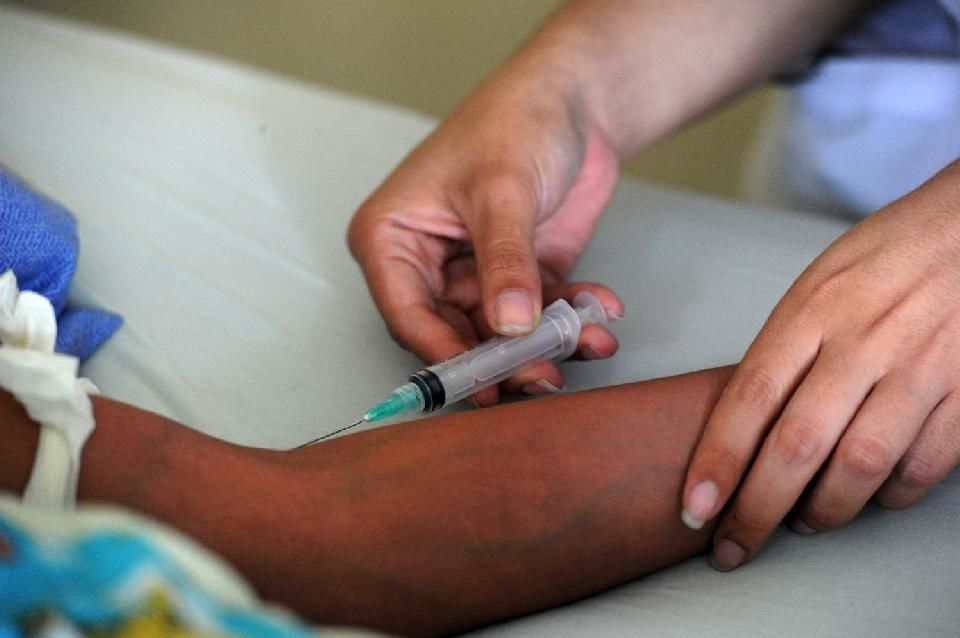
Government funded tetanus vaccines, Keynan Catholic Bishops and miscarriages. How are these things connected to one another?

When Catholic bishops in Kenya issued a press release last month questioning their government's internationally-funded tetanus vaccine campaign directed at women and girls and warned that it might be laced with an experimental contraceptive that makes them miscarry their babies, it was barely mentioned by the mainstream media outside of Kenya. The BBC carried a brief story that dismissed the allegations as "unfounded" and suggested that even raising such questions was dangerous as it could frighten people from a "safe and certified" lifesaving vaccine.

The few bloggers that gave the bishops any attention were mostly accusatory, like the "friendly atheist" who compared them to Muslim fundamentalists who had somehow got it into their paranoid heads that the West was trying to render them infertile.
"If beggars believe that these men think that one day they'll get high-fives from their Maker despite the death and suffering they willfully [sic] created," he concluded.
The larger Catholic church was silent and no human rights groups rushed to investigate the bishops' claims, so the whole controversy seemed to evaporate like smog - a backward, African version of a wacky vaccine conspiracy theory, with Catholic anti-birth control overtones. What could poor, black women have to fear from uber-rich white philanthropists and global organizations bearing health-giving pharmaceuticals after all?

Comment: The 'labyrinth of Gates' funded vaccines':


Bacon n Eggs

Study finds high-fat diet may ward off aging in body and brain

Coconut
© National Post
A study out of Denmark seems to have found something good can come out of a high-fat diet. The study was conducted while looking at the effects of a high-fat diet on Cockayne syndrome, a premature aging disease.

The hope is such a diet can not only help children with Cockayne syndrome, who more often die of old age related symptoms somewhere between 10 and 12, but also help others.

That is what the study found could happen.

"Our study suggests that a high-fat diet can postpone aging processes," lead author of the study, Professor Vilhelm Bohr of the Center for Healthy Aging at the Univ. of Copenhagen, said in a press release.

"A diet high in fat also seems to postpone the aging of the brain. The findings therefore potentially imply that patients with Alzheimer's and Parkinson's disease in the long term may benefit from the new knowledge."

Cut

Debunking the myth: 'We need GMOs to feed the world'

Image
The reality of food waste
Do we really need Monsanto's GMOs to feed the world? Looking at the research and the studies, the answer is quite clear. Let's take a look at the 8 proofs that we most certainly do not need GMOs to feed the world:

One Organic Rooftop Farm Can Feed 9000 People

One organic rooftop farm can feed 9000 people. They don't use pesticides, herbicides, or fungicides, and they provide fresh produce to their community year-round [1]. This is a big slap in the face to the biotech companies who lie, saying that GMO is needed to feed the world. This is only one urban farm bucking the system.
"Several of the high profile advocates for conventional agricultural production have stated that the world would starve if we all converted to organic agriculture. They have written articles for science journals and other publications saying that organic agriculture is not sustainable and produces yields that are significantly lower than conventional agriculture." ~ Avery (2000) Trewavas (2001)
Are these claims really true?

Comment: Additional articles debunking the 'GMO's will save the world' myth:
Organic agriculture's recently recognized benefits for improving food security don't depend on a boost from genetically modified (GM) technology. While the chemically-based systems that GM requires could be cleaned up with organic techniques, there's no clear reason to degrade organic standards to accept the downsides that come with biotech-produced crops as they are currently managed.

Recently, there have been renewed efforts to pressure organic agriculture to abandon one of its foundational principles and accept genetically modified crops. While there may be nothing inherently wrong with contemplating a theoretical overlap between biotech crop genetics and organic farming systems, there's not a compelling set of reasons to do so, either.
  • GMO's: The "Sound Science" of deception

    So, people are hungry because there is not enough food. "Sound science" and technology are needed to grow more food and the owners of the seed patents, proprietary chemicals, the grain processors and meat packers will give the technology and food to those who need it? Sure.

    People are hungry because they are poor and they are poor because the corporate system has outsourced their jobs, ruined their local economy and taken their land away.

    Farmers cannot feed people when seeds are patented and cost more than they are worth.

    Farmers cannot feed people when the crop protection chemicals they must use poison the water and the air.

    Farmers cannot feed people when local markets are destroyed by a global food system and when the "sound science" they are told will make them profitable and help them feed the hungry turns out to be a lie.

    GMO's are safe and they hold the promise of feeding the world. Really? On very rare occasions the "sound science" gets debunked by those behind the science.
    GMO's will not feed the world "If anyone tells you that GM is going to feed the world, tell them that it is not... To feed the world takes political and financial will." - Steve Smith, head of GM company Novartis Seeds UK (now Syngenta), public meeting on proposed local GM farm scale trial, Tittleshall, Norfolk, UK, 29 March 2000.


Sun

New study confirms Vitamin D can improve brain disorders including dementia

sunshine vitamin D
Vitamin D has been shown to improve a number of brain disorders, including dementia and its most severe form, Alzheimer's disease,1 the latter of which now affects an estimated 5.2 million Americans.2

The latest mortality statistics places Alzheimer's in the top three killer diseases in the US, right behind heart disease and cancer.3 Vitamin D deficiency is also rampant. Researchers estimate that half of the general population is at risk of vitamin D deficiency or insufficiency.

Among seniors, that estimate reaches as high as 95 percent. While certainly not the sole cause of dementia, evidence suggests vitamin D may be a very important factor for successful prevention.

A wide variety of brain tissue contains vitamin D receptors, and when they're activated by vitamin D, it facilitates nerve growth in your brain. Researchers also believe that optimal vitamin D levels boosts levels of important brain chemicals, and protect brain cells by increasing the effectiveness of glial cells in nursing damaged neurons back to health.

Vitamin D may also exert some of its beneficial effects on your brain through its anti-inflammatory and immune-boosting properties, which are well established.

Comment: One important thing to understand is that if your low vitamin D levels persist in spite of taking supplements, a magnesium deficiency may be one of the reasons your body is not absorbing Vitamin D. Most people are deficient in magnesium because the mineral has been deficient in the soils for decades, so supplemental magnesium is imperative as it is critical for metabolic processes, cell growth and reproduction and is involved in hundreds of enzyme processes affecting every aspect of life.

Low vitamin D levels correlated with magnesium deficiency

Magnesium: The Spark of Life


Alarm Clock

UN organizations sterilizing millions of girls & women under cover of an anti-tetanus vaccination program in Kenya

Image
© American Spirit / Shutterstock.com
Kenya's Catholic bishops are charging two United Nations organizations with sterilizing millions of girls and women under cover of an anti-tetanus inoculation program sponsored by the Kenyan government.

According to a statement released Tuesday by the Kenya Catholic Doctors Association, the organization has found an antigen that causes miscarriages in a vaccine being administered to 2.3 million girls and women by the World Health Organization and UNICEF. Priests throughout Kenya reportedly are advising their congregations to refuse the vaccine.

"We sent six samples from around Kenya to laboratories in South Africa. They tested positive for the HCG antigen," Dr. Muhame Ngare of the Mercy Medical Centre in Nairobi told LifeSiteNews. "They were all laced with HCG."

Health

Researchers finally acknowledge link between anesthesia and memory loss

surgery
University of Toronto researchers discover why anesthetics cause prolonged memory loss

If you ever suspected that things weren't quite right after going under anesthesia - you were right!

Anesthetics are serious business. Students taking their clinical internships who happen to prick their fingers by accident get rushed to the emergency room. And one mistake during the procedure can have tragic results like one woman who felt the pain of her entire surgery, but couldn't speak or move.

Royal College of Anaesthetists spokesperson Dr Keith Myerson once said that it's a scientific balancing act to relieve pain and create loss of consciousness, while at the same time minimizing the drug effects - reduced supply of oxygen to the blood and the brain.

Health

Venezuela in the midst of the worst tropical disease outbreak in 25 years

injection
Venezuela is in the grip of one of the worst outbreaks of tropical diseases in decades, and the response by public health authorities has been slow and inefficient, two non-governmental groups reported Tuesday.

In 2014, Venezuela had over 150,000 recorded cases of dengue, malaria, and Chikungunya, the report said.

The country also had 1.2 million fever episodes without a precise diagnoses, according to the report by the Health Observatory and another group called We Defend the Epidemiology of Venezuelan Society.

The epidemic is one of the worst in 25 years, said former health minister Jose Felix Oletta, who was among the authors of the report.

"And we're still in the expansion phase, this problem will continue," Oletta told AFP.

Comment: As in the grand tradition of all vaccines, even if there were one for these tropical diseases it wouldn't work. Vaccination is not immunization.


Light Saber

Meditation, yoga and support groups benefit health at the cellular level

meditation
During meditation we process the deep tracks of our unconscious mind that will lead into better self-understanding
Practising mindfulness meditation, yoga or being involved in a support group have positive impacts at the cellular level in breast cancer, a new study finds.

The study, conducted at Canadian cancer centres, found that breast cancer survivors who practised meditation and yoga or took part in support groups had longer telomeres, part of the chromosome thought to be important in physical health.

Comment: There have been numerous studies showing the benefits of meditation and yoga - for more information see: Modern science confirms yoga's many health benefits and Reprogramming inflammation with meditation.

One type of meditation that is exploding in popularity is the Éiriú Eolas Stress Control, Healing and Rejuvenation Program. It is an ancient breathing and meditation program which helps to rejuvenate and detoxify the body and mind and can be learned here for free.

Face life with Éiriú Eolas, a stress relief program


Syringe

How do ebola vaccines "work"?

Image
With so many factors at stake here, Ebola's air-borne transmission might become more aggressive in the near future. A nasal vaccine sounds like the kind of thing which might help in that regard.
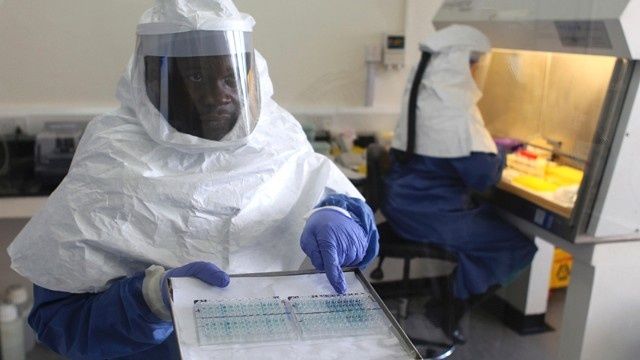
Two experimental vaccines against Ebola are currently being tested to see whether they are safe to use in people, and health officials have said that millions of doses could be available by the end of next year. But how do the vaccines work?

Both vaccines essentially consist of a harmless virus that has been "spiked" with a protein from the Ebola virus, said Derek Gatherer, a bioinformatics researcher at Lancaster University in the United Kingdom who studies viral genetics and evolution.

If a person is given the vaccine, "the body thinks it's being infected with this rather innocuous virus, [and] part of the virus happens to be the Ebola protein," said Gatherer, who is not involved in work on the Ebola vaccines. This prompts an immune response, and the body develops antibodies against the Ebola protein, Gatherer said. [How Do People Survive Ebola?]

Ideally, if a vaccinated person were later exposed to the real Ebola virus, these antibodies would be ready to fight off the infection before it could take hold.


Comment: Yes, wishful thinking at its best. There are several reasons why this might NOT be such a good idea:

1) If the vaccine fails - and vaccines have a solid track record of failure - those who were used as guinea pigs would be predisposed to infection.

2) A vaccine may exert selective pressure on the virus to produce "mutants" capable of being more pathogenic. See a perfect example here: Fail: Infant Hep B vaccines perform shamefully; time to end them? See also: 3) The Black Death which killed scores of people around the world was an Ebola-like virus: Black Death found to be Ebola-like virus and Finally catching up - Could the Black Death actually have been an Ebola-like virus?

4) Mother nature doesn't need our help to create a deadly mutated virus: New Light on the Black Death: The Viral and Cosmic Connection.

5) With so many factors at stake here, Ebola's air-borne transmission might become more aggressive in the near future. A nasal vaccine sounds like the kind of thing which might help in that regard.


Comment: Do you really trust a company with such a history of fraud and bribery with your life? If you are not aware already, you may want to read up on the dangers of vaccines: Also, isn't it interesting that pharmaceutical companies are busily "reinventing the wheel" while multiple experimental Ebola vaccines already exist? An "arms race" for profits?


Cheeseburger

GMO food: Consciousness changed

Image
© worldwideinfoforum.com
In the age of rapid marketing campaigns, viral slogans and mass multimedia, companies have reinvented and deepened their consumer reach. Indeed, companies are now able to tout their products and services to consumers in ways limited only by imagination. Even political candidates have jumped on the band wagon with brand Obama winning 'Marketer of the year' in 2008. Where is it all leading? Have we reached advertising burnout? Have our minds reached full saturation with ads, slogans and clever tag-lines?

Nowadays, quick searches of the Internet will unknowing attract a battalion of advertisements rushing towards you like mosquitoes on a humid summer evening. These ads are typically composed of companies eager to show off their stuff not caring if they annoy you with their pop-up ads or targeted email advertising. Every company has their emblem or logo plastered over products and packaging like mini billboards showing off their newborn creations like proud mothers and fathers.