
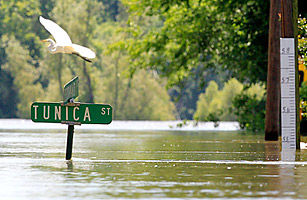
© Sean Gardner/ReutersA crane flies over a street sign near a rule measuring the height of the floodwaters in feet, in St. Francisville, Louisiana May 17, 2011. Scores of U.S. heartland rivers from the Dakotas to Ohio have flooded following a snowy winter and heavy spring rains, feeding near-record crests on the lower Mississippi River.
To be sure, the Mississippi River's floodwaters are destructive. Many people along the spillways opened to alleviate the surge are likely to lose their homes. The water may also destroy oyster beds, especially in Lake Borgne, between the Mississippi River and the Gulf of Mexico. Longer-term effects won't be clear for several months. But, says Alex Kolker, a geologist at the Louisiana Universities Marine Consortium, it may be an opportunity to let nature help resolve a man-made problem. "It's going to be a fascinating time," says Kolker.
Only a year ago, the worst oil spill in American history slathered millions of gallons of oil across Louisiana's coast. The muck covered the tall, bamboo-like cane and short grass that stitches together the vegetation that makes up the wetlands south of New Orleans, preventing them from receiving oxygen. Many experts feared it would take years for the wetlands to recover, and that Louisiana's core seafood industry - especially the oysters, which unlike shrimp and fish cannot run away from hint of oil - was imperiled. Such sediment is crucial: the loss of vegetation quickens erosion of soil and islands.







Comment: The debate about global warming is far from settled. For a more balanced perspective on Climate Change see:
Climate Change Swindlers and the Political Agenda