Earth ChangesS


Info

Rare Triple Sky Treat: Lunar, Solar Eclipses in June and July

Eclipse
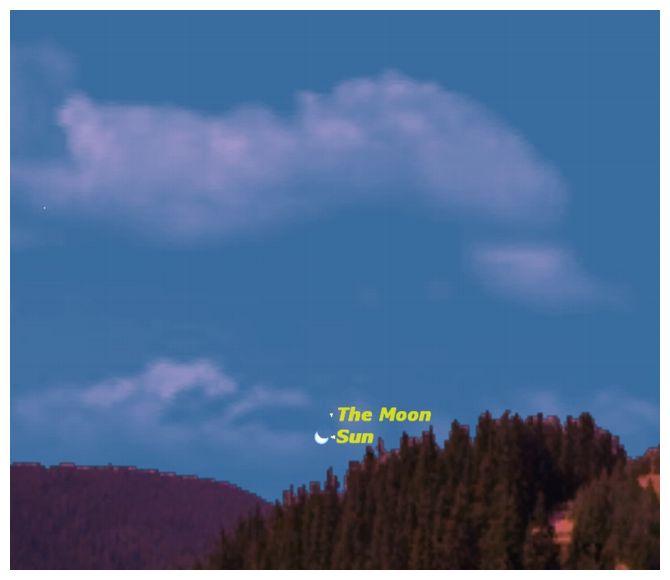
© Starry Night SoftwareShortly before midnight on June 1 in Tromsø, Norway, the partially eclipsed sun will hang just above the northern horizon.
Over the next month, the world will experience three eclipses: two partial solar eclipses a month apart and one total lunar eclipse exactly in between, and it all starts with a so-called "midnight" eclipse of the sun.

A solar eclipse at midnight? How is such a thing possible?

It can happen near midsummer in the high Arctic, the land of the midnight sun. And it will happen next week on June 1 and 2, visible in the northernmost reaches of North America, Europe, and Asia.

These two solar eclipse sky maps available here detail what observers could see during some of the upcoming eclipses of the sun and moon in June.

Cloud Lightning

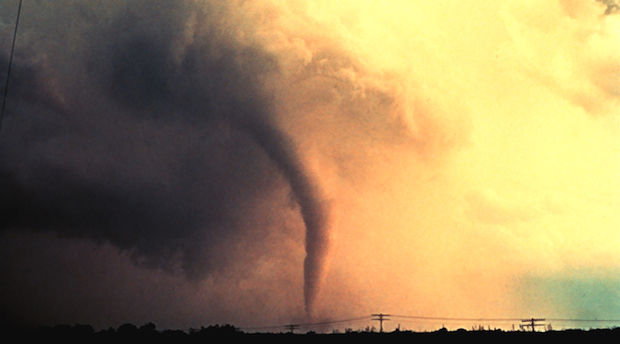
US: The Weather Phenomena Causing 2011's Tornado Explosion

Meteorologist Jeff Masters says that while it might not be climate change, the tornadoes are just one of many weird weather phenomena this year that may be signaling major shifts in the climate.
Image
© NOAA
From April 25 to 28, 2011, a fierce and deadly storm system produced a total of 327 confirmed tornadoes in 21 states from Texas to New York, and even isolated tornadoes in Canada. Alabama was struck particularly hard. These April 2011 tornadoes killed at least 344 people people in the Southeast, Midwest, and Northeast. Then--on May 22, 2011--the deadliest single tornado since 1953 struck Joplin, Missouri, with at least 124 people now confirmed dead and more than 1,000 people reportedly injured. Shortly before the tornado struck Joplin, EarthSky spoke to meteorologist Jeff Masters of Weather Underground. He explained some of the science that has caused these fierce 2011 tornadoes in the U.S.

In particular, he said, the location and strength of the jet stream played a role.

"The jet stream, which is that powerful river of air aloft over the country, turned out to be very strong this year. It had very high wind speeds in it. And it was moving over tornado alley, where we tend to get cold, dry air from Canada colliding with warm, moist air from the Gulf of Mexico. The combination of those contrasting air masses, and then the very powerful jet stream, was just the perfect storm of conditions to make a lot of tornadoes."

Arrow Up

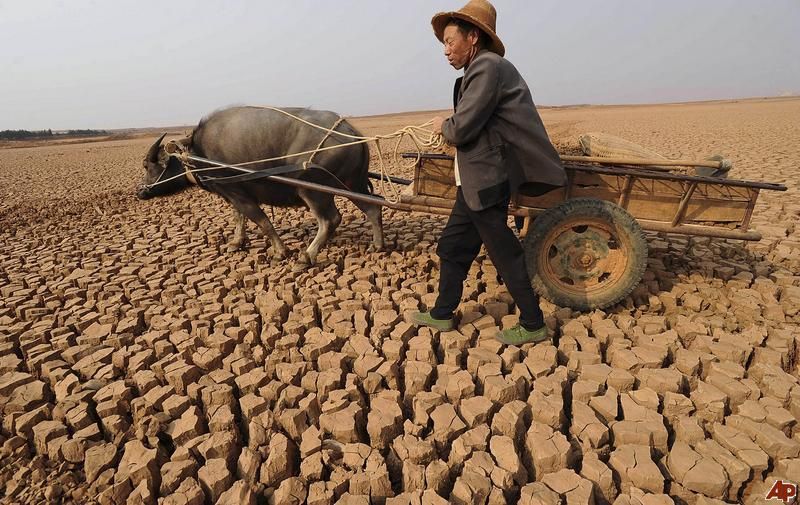
China drought ignites global grain supply concerns

Image
© Associated Press
A prolonged drought in China could hit grains output in key growing regions, further squeezing global supplies and putting upward pressure on prices, but plentiful domestic wheat stocks will act as a cushion and keep import volumes low.

Analysts are closely watching the weather in China, warning any further supply shocks in the grain markets would fuel a further rally in U.S. corn and wheat futures, already stoked by harsh crop weather in the United States and Europe.

"Parts of China have been too dry and if we did see crop failures in that part of the world they are going to look to the global market for supplies," said Luke Mathews, a commodity strategist with Commonwealth Bank of Australia in Sydney.

"They are going to be looking to North America and Europe and there is significant amount of concern whether those particular countries will be able to satisfy those needs."

Bizarro Earth

NASA sees a 14-mile-wide eye and powerful Super Typhoon Songda

Typhoon Songda became a Super Typhoon in the evening on May 26, 2011 (Eastern Daylight Time) was it reached a Category 5 status on the Saffir-Simpson Scale. NASA satellite data shows that the monster storm with a 14 mile-wide eye has weakened due to adverse wind conditions today and is still a powerful Category 4 typhoon.

Image
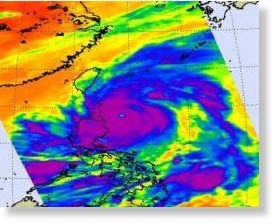
© NASA/JPL, Ed OlsenThis infrared image of Super Typhoon Songda was captured by the AIRS instrument on NASA's Aqua satellite on May 27, 2011, at 5:05 UTC (1:05 a.m. EDT). At this time, Songda was a Category 4 storm. The purple areas indicate very strong thunderstorms with heavy rainfall and there is a large area of them that surround the visible eye. Taiwan is northwest of the storm.
The Atmospheric Infrared Sounder (AIRS) instrument on NASA's Aqua satellite captured an infrared image of Super Typhoon Songda on May 27, 2011 at 5:05 UTC (1:05 a.m. EDT). At that time Songda was a Category 4 storm. The infrared image showed a large area of very strong thunderstorms with heavy rainfall surrounding the eye of the storm. The eye is almost 14 miles (12 nm/22 km) in diameter and those thunderstorms were dropping rainfall as much as 2 inches (50 mm) per hour.

On May 27 at 1500 UTC (11 a.m. EDT), Typhoon Songda's maximum sustained winds were near 125 knots (143 mph/231 kmh) down from its peak of 140 knots (161 mph/260 kmh) which it reached late on May 26. Sondga has tracked north-northwest but is expected to turn to the north-northeast.

Bizarro Earth

US: East Coast on storm alert after overnight blast

Severe thunderstorm watches were issued for much of the East Coast on Friday, marking a stormy start to the Memorial Day weekend after overnight storms covering an even broader swath left 3 people dead in Atlanta and flooded homes in New England.

Areas from the Carolinas up into New England were told by the National Weather Service that 70 mph winds and 2-inch hail would be possible through early evening.

Image
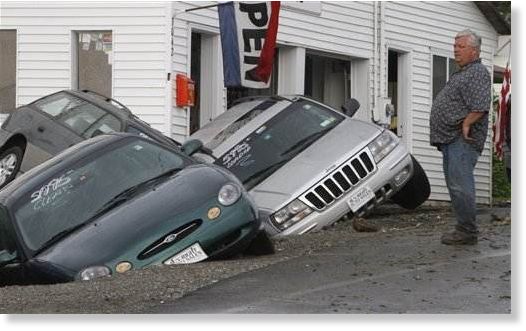
© Toby Talbot / APRene Crete looks over damaged cars at Buy Right Auto on Friday in East Montpelier, Vt. Schools and roads are closed across central Vermont as heavy overnight rains caused flooding that overflowed riverbanks.
"Damaging winds and large hail are the main threats, however isolated tornadoes cannot be completely ruled out," weather.com reported.

Bizarro Earth

Five Years On, Indonesia's Mud Volcano Still Erupting

Lusi
© AFP
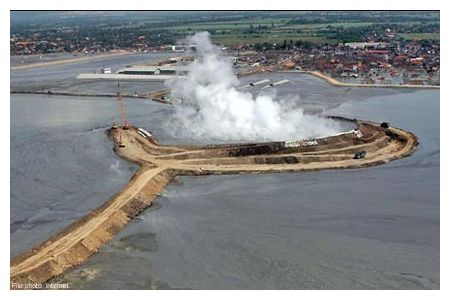
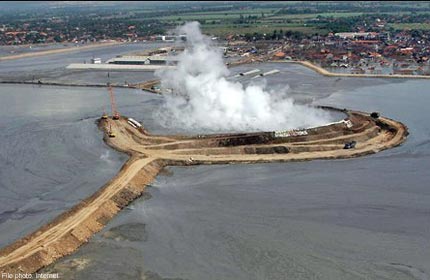
Porong - "Lusi" the mud volcano is slowing down five years after it engulfed fields, homes and factories in a heavily populated part of Indonesia, but experts say the danger may last for decades.

Almost every minute another jet of thick, boiling, foul liquid shoots into the sky followed by a white cloud of vapour, adding to the vast lake of mud which now covers more than 700 hectares (1,730 acres) of Java island's Sidoarjo district.

"My whole life is buried here. I've lost everything: my house and the warung (streetside food stall) I opened just before the disaster," said Harwati, a 35-year-old widow and mother-of-two who now guides tourists around the disaster zone.

"Since then, life has been really hard. It's difficult to find a job."

She is one of some 40,000 people who have been forced out of their homes by the inexorable ooze, which appeared without warning on May 29, 2006 in the middle of a rice field.

Gradually, the mud has swallowed 12 villages, 30 factories, dozens of shops and a busy highway near the country's second largest city of Surabaya. Twelve people have been killed, but many more lives have been wrecked.

As the mud continues to flow, a row over its cause also festers with some experts and victims accusing a local gas drilling company of sparking the torrent - an allegation it denies.

Bizarro Earth

Canada: Sinkholes Have Residents Fleeing Quebec City Neighborhood

Sinkhole
© CBC/Radio-CanadaQuebec City officials said experts will be on this Charlesbourg district site Friday to find out what's causing sinkholes.
Officials in Quebec City are trying to figure out what's caused dozens of sinkholes to appear in a north-end neighbourhood.

They served evacuation papers on Wednesday to about 15 homes and one business in the city's Charlesbourg district.

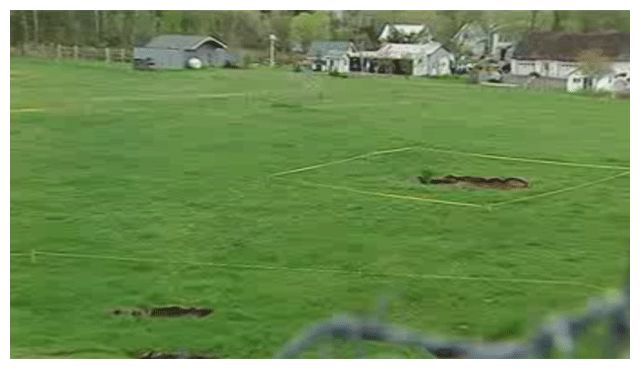
Almost 40 holes between five and eight metres wide appeared in the last week. The holes were mostly found in a field, but another was in a resident's driveway. One is big enough to fit a car.

"The field is is like, there is nothing, no trees or anything and you see everywhere some holes, some deeper than others, like 30 or 40 holes everywhere on the field. You can see this is not normal. You can see this is a problem on this land," said city spokesperson François Moisan.

Phoenix

US: Wildfire in southeast Arizona burns nearly 50,000 acres

Image
© www.inciweb.org
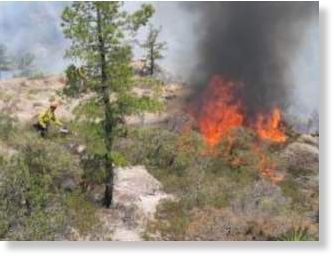
An evacuation order has been lifted for residents of some communities near a southeast Arizona wildfire.

The Forest Service said Friday that fire crews will stay around Paradise and the Southwest Research Center to patrol the area for fires.

The U.S. Forest Service says west to southwest winds at 10 to 18 mph are expected with gusts of 25 to 30 mph.

Low humidity and slightly cooler temperatures are expected.

Meanwhile, the Horseshoe Two fire has risen to nearly 50,000 acres and is 40 percent contained.

Snowman

US: Late snowfall could hurt Memorial Day mountain tourism


Grand Lake - It is nearly June and Colorado's mountains still look as though we're at the beginning of March.

"This is what it looks like all winter out here," Pat Randall, a store owner in Grand Lake, said.

The snow that has kept falling in the high country has made for a different spring.

Independence Pass opened Thursday, but Mt. Evans Road is only halfway open and Trail Ridge Road is still closed because of all the late snow. Arapahoe Basin and Aspen are still open for skiers.

Bizarro Earth

The volcanic glass cloud: How tiny shards created by heat of Iceland eruption have 'rained' on Scotland

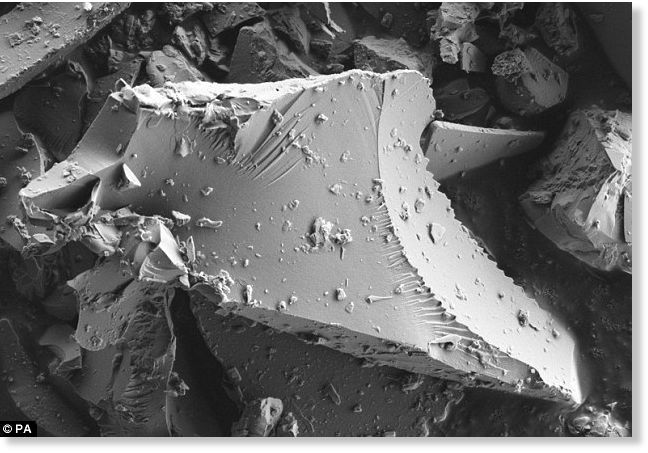
Scientists have released photographs of what they believe are volcanic glass particles from Iceland which fell on Scotland this week.

The samples were taken from a car windscreen in Aberdeen and analysed at the city's James Hutton Institute.

The images of the tiny particles were taken using a scanning electron microscope.
Image
© PASharp: One of the fragments of glass that rained on Aberdeen is shown under a microscope

Scientists said it was 'highly likely' the glass particles, which are part of the ash constituents, came from the Grimsvotn volcano which started erupting on Saturday.

Commercial glass is created by heating silica, or sand, to an extremely high temperature. Sand scorched by lava could do the same.

The largest of the particles found is 0.03mm across, with the smallest measuring just 0.002mm wide.

The institute also analysed samples given to them by the Scottish Environment Protection Agency (Sepa) taken in Lerwick, Shetland, which matched the particles taken from the car window.