Earth ChangesS


Sun

Late Heatwave to Make Britain Hotter Than Hawaii

UK Beach
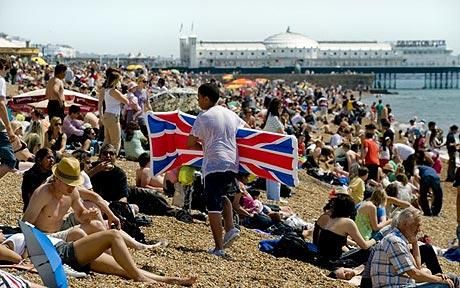
© Christopher PledgerWarm weekend will represent the highest October temperatures for 26 years
Britain will be hotter than Hawaii this week with temperatures predicted to reach 82.4F (28C) as soon as Wednesday.

Met Office forecasters say the hot spell will last until Sunday after a weather system which usually bakes Greek and Turkish beaches was pushed thousands of miles northwest by high pressure.

The warm weekend will represent the highest October temperatures for 26 years.

Temperatures will peak from Wednesday to Sunday, with between 78.8F (26C) and 82.4F (28C) expected daily in the south, with up to 78.8F (26C) in the north and 75.2F (24C) in Scotland.

Cloud Lightning

Second Typhoon Bears Down on Philippines in Space of Four Days

Typhoon Nalgae
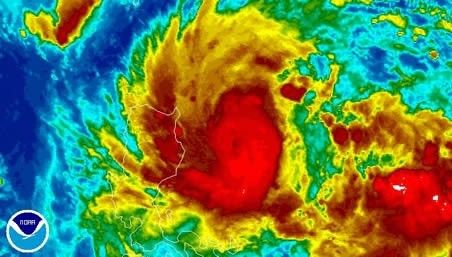
© NOAATyphoon Nalgae approaches the northern Philippines at 2:30 p.m. EDT.
Just four days after Typhoon Nesat (locally known as Pedring) ripped across the northern Philippines, a second dangerous typhoon threatens the same region. Intensifying Typhoon Nalgae (locally known as Quiel) is poised to tear through the northern part of Luzon island tonight (Saturday morning and afternoon local time).

Packing 135 mph maximum sustained winds, Nalgae reached category 4 strength this morning. The Joint Typhoon Warning Center reports Nalgae "intensified rapidly" over the last 24 hours and predicts some additional strengthening. At landfall, its peak sustained winds may reach 145 mph, capable of significant destruction.

Attention

US: Sinkhole, Cracks Spark Fears of Landslide in San Pedro California

Cliff-side neighborhood may be shifting once again


A well-known stretch of San Pedro along the Pacific that is prone to land movement may be in danger of a landslide.

Right now, residents say they're just waiting to see what happens.

The city has given the go-ahead to plug sewer lines and move power poles, preparing for the worst.

Snowman

US: New York City Area Weekend Snow Possible

NY cold map
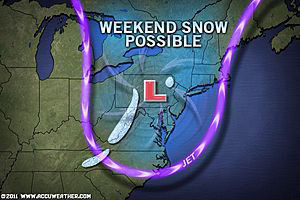
© accuweatherSharply colder temperatures across the Northeast this weekend will bring the possibility we'll see our first snowflakes of the season. Snow is expected mostly at higher elevations. Staten Island is more likely to get some rain.
Snow on Staten Island this weekend? It's a distinct possibility, though frost is more likely, according to AccuWeather meteorologist Brian Edwards. The weather-reporting service headquartered in State College, Pennsylvania, says the greater New York City area can expect its first real taste of winter as sharply colder temperatures blast across the Northeast over the next few days.

The cold air is expected to visit the Great Lakes area tonight and Friday before it moves into the Middle Atlantic region. "Temperatures will fall to levels more like late November from Buffalo and Rochester, N.Y. through Pittsburgh, Pa. and Charleston, W.Va.," Edwards said.

High temperatures will be stuck in the 40s, and may be accompanied by winds gusting to 30 miles per hour - which will make the temperatures seem much colder than the thermometer indicates.

Fish

Tool-using tuskfish captured for the first time on video

Biologist records sequence that shows Palau fish using rock to crush a clam

A fish using tools to crack open a stubborn clam shell has been caught on video for the first time.

The clip, shot in 2009 off the Pacific island of Palau, shows an orange-dotted tuskfish (Choerodon anchoago) digging a clam out of the ocean floor and carrying the clam in its mouth to a rock. Next, the fish repeatedly tosses the clam against the rock to crush it.


Cloud Lightning

Projected Path Of Category Two Hurricane Ophelia

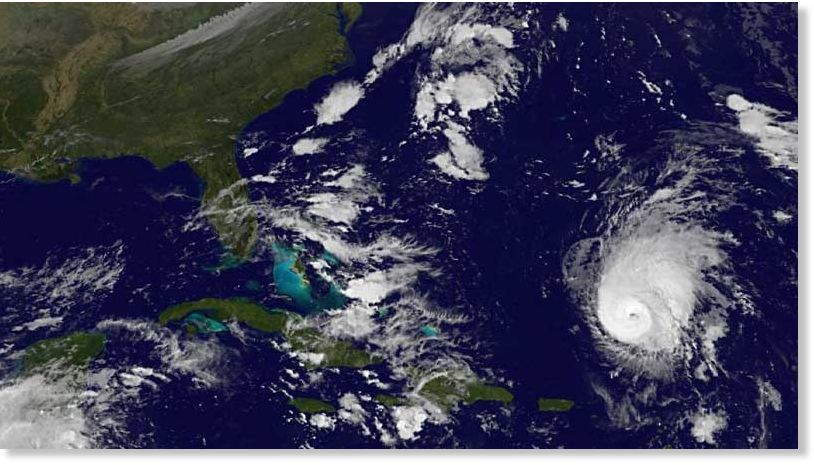
Ophelia strengthened into a Category Two hurricane over the Atlantic Ocean on Friday morning, forecasters said, and is expected to threaten the British overseas territory of Bermuda during the weekend. Some additional strengthening is forecast during the next 48 hours.

Image
© GOES satelliteOphelia is clearly visible (right) in this GOES satellite image from Friday
Ophelia first emerged as a low pressure system in the far eastern Atlantic on September 16 before it strengthened into a tropical storm on September 20 as it headed towards the Caribbean. It eventually degenerated into a remnant low on Sunday but became better organised again on Monday and Tuesday, re-establishing itself as a Tropical Storm on Wednesday.

Bizarro Earth

Indonesia: Infamous Mount Tambora is rumbling again

Skies darkened, temperatures plunged, crops failed, and disease and famine ensued. These and other strange phenomena afflicted people around the world in 1816, known as "The Year without a Summer." We now know that the great eruption of Mount Tambora, in Indonesia, the previous year had triggered these changes. With Mount Tambora rumbling again this month, are we about to experience another global catastrophe?
Image
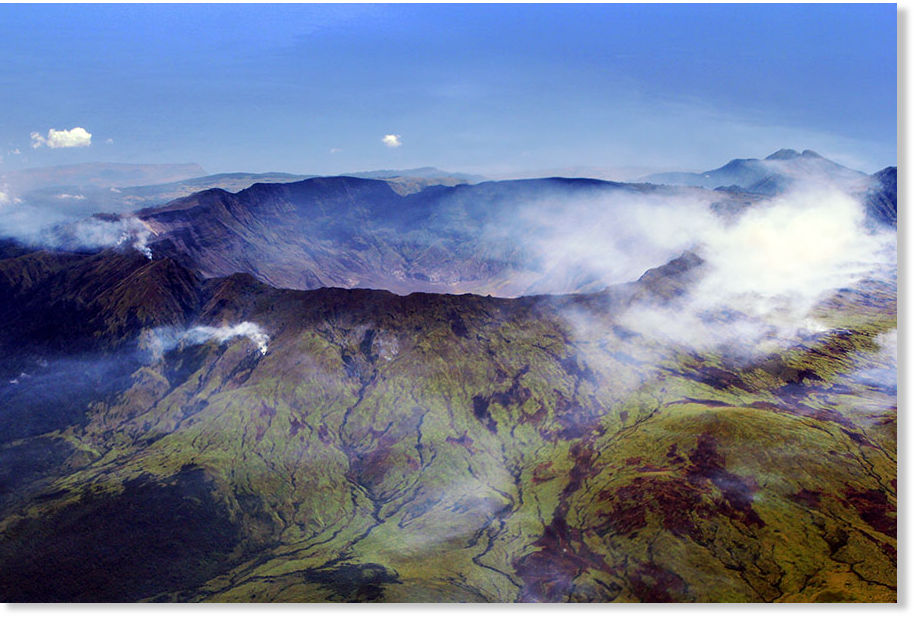
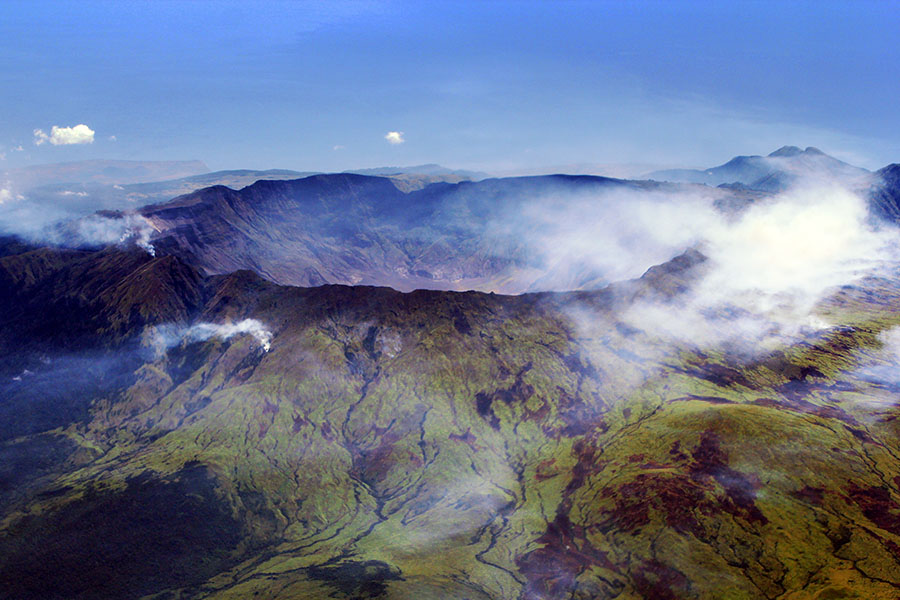
© Jialiang Gao /peace-on-earth.orgMount Tambora caldera
Before we answer that, let's examine the 1815 eruption and its remarkable effects. Mount Tambora became restless in 1812 and in April 1815 produced a series of major explosions that peaked on April 10-11. Large ash plumes rose to great heights, and pyroclastic flows swept down the flanks for several days, wiping out entire villages. When the pyroclastic flows reached the sea, they triggered tsunamis that further devastated the surrounding areas.

The eruption was massive, rated as a 7 on the Volcanic Explosivity Scale of 0-8. By comparison, the volume of magma it erupted was about 40 times greater than that of the 1980 eruption of Mount St. Helens and 10 times greater than that of the 1991 eruption of Pinatubo.

Bizarro Earth

Eruption At Sakurajima Volcano, Japan September 27

Sakurajima (桜島?) is an active composite volcano (stratovolcano) and a former island (now connected to the mainland) of the same name in Kagoshima Prefecture in Kyūshū, Japan. The lava flows of the 1914 eruption caused the former island to be connected with the Osumi Peninsula.

The volcanic activity still continues, dropping large amounts of volcanic ash on the surroundings. Earlier eruptions built the white sands highlands in the region.


Bizarro Earth

Italy: Mount Etna Erupts For Fifteenth Time This Year

The Mount Etna volcano in Sicily, Italy, erupted for the fifteenth time this year late on Wednesday.

Throughout 2011, activity at Sicily's Mount Etna has been characterised by paroxysms: short, violent bursts of activity. Each event has included volcanic tremors, ash emissions, and lava flows centered around the New Southeast Crater, just below the summit.


Bizarro Earth

Ethiopia: Eruption Continues At Nabro Volcano In Eritrea

Satellite imagery suggests that the eruption of Nabro Volcano in northeast Africa, which began in June 2011, is continuing.

The volcano is located on the edge of the Danakil Desert, a remote and sparsely populated area on the border between Eritrea and Ethiopia, and few eyewitness accounts of the eruption are available.

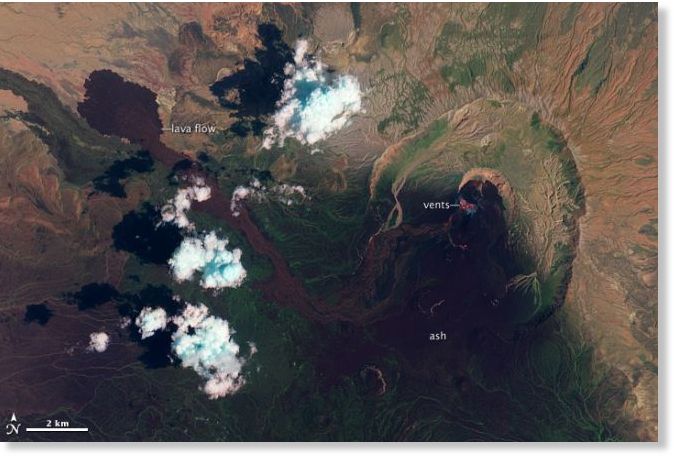
Orbiting instruments such as the Advanced Land Imager (ALI) aboard Earth Observing-1 (EO-1), which acquired these images, may be the only reliable way to monitor Nabro.

Image
© NASA / Robert Simmon
The images show the volcano in false-color (top) and natural-color (lower) on September 28, 2011. Heat from vents in Nabro's central crater is visible as a red glow in the false-color image. Another hotspot about 1,300 meters (4,600 feet) south of the vents reveals an active lava flow. A pale halo surrounding the vents indicates the presence of a tenuous volcanic plume. South of Nabro's crater, the dark, nearly black areas are coated with ash so thick it completely covers the sparse vegetation. On either side of this region is a thinner layer of ash with some bright green vegetation (exaggerated in false-color) poking through.