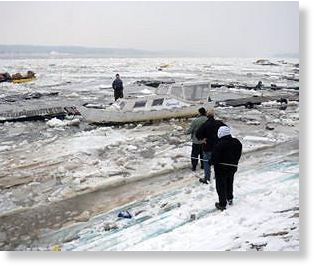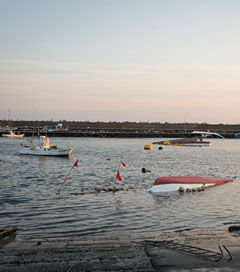
© Ko Sasaki / The New York TimesFishing boats and other debris are dispersed at the Oharai Port after a tsunami struck the area following Friday's massive earthquake in Ibaraki prefecture, Japan, March 12, 2011.
In the age of constant crisis coverage, it is easy to forget that disasters don't just end once the cameras move on. On the contrary, they morph into new situations, sometimes improved, but often more complex and severe. In the case of Japan's earthquake-tsunami-nuclear catastrophe, part of that tripartite disaster floated out to sea as debris where it has been drifting for months to destinations unknown.
According to Japan's Ministry of Environment's Waste Management Division, the 9.0 magnitude temblor and tsunami generated some
25 million tons of debris in total, literally sucking the lives of thousands of people and their belongings out to sea. Since last March, the remains of destroyed buildings, vehicles, broken furniture, fishing boats, nets and miscellaneous flotsam has been adrift in the north Pacific vastness. But how much was pulled into the ocean and where it will end up, no one can really say for sure.
Scientists and experts in Canada and the United States and, in particular, the Hawaiian islands, recognizing the potential for a fourth leg to Japan's triple disaster, are trying to forecast a possible debris path as they prepare for what could be headed their way.