Earth ChangesS


Camcorder

'Roll Clouds' Filmed in Texas, Montana 29-30 May


Comment: See also:
Bizarre, Giant Tubular Cloud Rolling Across the Sea
Our changing atmosphere: Photos and video footage of gigantic rotating 'Roll Clouds'
'Horizontal Tornado' Captured By Amateur Videographer


Snowflake

Coldest June day in decades for Sweden as temperatures drop as low as -6 C

rain
As several record low temperatures for the month of June were recorded across Sweden the last couple of days, the Met Office now says the blustery, rainy weather is here to stay until at least next weekend.

On Friday morning, the town of Börtnan in northern Sweden had survived night temperatures of minus 6 degrees Celcius - the coldest June temperature in Sweden for the past two decades.

Question

What Do GMO Seeds Have to Do With Bee Die-Offs in the Corn Belt?

Image
© panna.org
In the last few weeks beekeepers have reported staggering losses in Minnesota, Nebraska and Ohio after their hives foraged on pesticide-treated corn fields. Indiana too, two years ago. What's going on in the Corn Belt?

No farmer in their right mind wants to poison pollinators. When I spoke with one Iowa corn farmer in January and told him about the upcoming release of a Purdue study confirming corn as a major pesticide exposure route for bees, his face dropped with worn exasperation. He looked down for a moment, sighed and said,
"You know, I held out for years on buying them GE [genetically modified or engineered] seeds, but now I can't get conventional seeds anymore. They just don't carry 'em."
This leaves us with two questions: 1) What do GE seeds have to do with neonicotinoids and bees? and 2) How can an Iowa corn farmer find himself feeling unable to farm without poisoning pollinators? In other words, where did U.S. corn cultivation go wrong?

The short answer to both questions starts with a slow motion train wreck that began in the mid-1990s: Corn integrated pest management (IPM) fell apart at the seams. Rather, it was intentionally unraveled by Bayer and Monsanto.

Comment: To learn more about the serious negative impact of pesticide use among bee populations and the growing issue of 'colony collapse disorder' read the following articles:

Silent Hives: Colony Collapse Disorder and Pesticides
More Evidence Rises Of Role Pesticides Play In Bee Colony Collapse
Honeybee Colony Collapse Disorder Finally Explained: Too Many Chemicals
A Last (Chemical) Gasp for Bees?
Bayer in the Dock Over Pesticide Linked to Colony Collapse Disorder
If Bees Disappear, We'll All Be Stung


Bizarro Earth

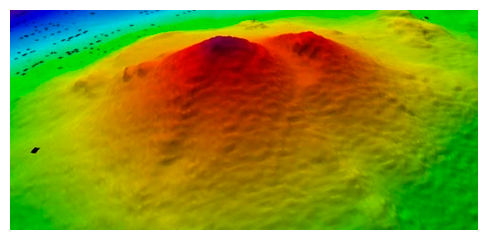
New String of Underwater Volcanoes Found in New Zealand's Bay of Plenty

Underwater Volcano
© NiwaA sonar image of the Tangaroa Seamount.
Scientists are saying the Tanagaroa seamount off the Bay of Plenty coast should be declared off limits to commercial exploitation by fishing and mining.

A group of Wellington scientists have just confirmed volcanic activity on the deep water seamount.

Niwa principal scientist Malcolm Clark says they have discovered new hydrothermal vents, which create chimney-like structures.

"Some of the venting we found was very high temperature, black smoker type situations, where the temperature is several hundred degrees Celsius," says Malcolm.

He has just returned from taking the first biological samples of the animals which have adapted to Tangaroa's unique environmental conditions.

The top of the seamount is nearly a kilometre below the ocean's surface.

"These are species which are adapted to live in quite extreme conditions, high levels of hydrogen sulphide which is toxic to most life forms, quite high temperatures, they're deep, there's no light, they're under quite high pressure," says Malcolm.

The research will help agencies protect these habitats from fishing or mining.

"These seamounts and deep sea areas in general are sites of deep sea trawling for species like orange roughy and they're also of interest for seabed mining," says Malcolm.

Nuke

Nuclear Savages

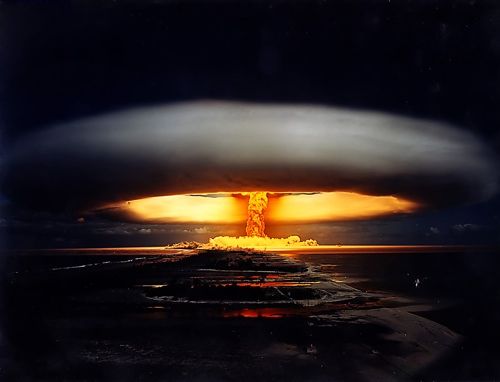
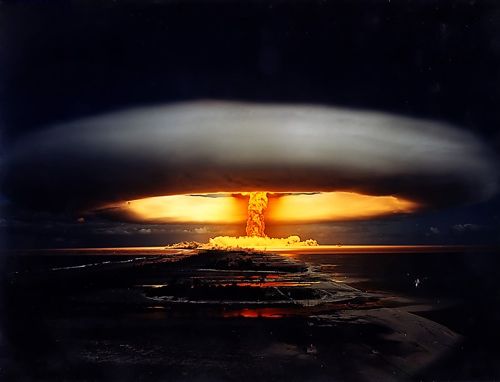
Bravo nuke test
© n/a
Human Rights, Environment and Nuclear Disaster

Are you wondering about the disconcerting contradictions in the nuclear news in recent weeks?

Following the release of a May 2012 report, newspapers around the world posted headlines announcing that the World Health Organization concludes that Fukushima radiation emissions pose minimal health risk. Based on an assessment of reported emissions of radioiodine and cesium up through September 2011, Japan's nuclear meltdown poses no serious cancer risk, except for localized exposures around Fukushima prefecture, which may result in increased risk of thyroid cancer.

In the same week, Japanese press reported the alarming news that TEPCO's assessments of total radioiodine releases were some 1.6 times greater than the Japanese Government's assessment while, on the same day, the Japanese government issued a reassuring statement that "while gross releases of iodine-131 and cesium-137 are actually far greater than originally estimated, the public can rest assured, as releases to the sea have not resulted in contamination beyond the plant's immediate area because the mixing power of ocean currents has dispersed the substances beyond the limits of detection in seawater samples"

Meanwhile, the US press reported findings from a study published in The Proceedings of the National Academy of Sciences demonstrating that by August 2011, cesium-134 and cesium-137 from Fukushima was present in the tissue of Pacific blue fin tuna, as evidenced samples taken off the coast of San Diego, in Southern California. In the media storm that followed this report, government experts with the US Food and Drug Administration proclaimed no need for public panic, as radiation levels were detectable but simply too low to be hazardous and independent scientists explained why the presence, even at small levels, was so alarming and noted the need for additional monitoring.

As has been the norm in this most recent nuclear disaster, contradictory information abounds, with alarming news countered or contradicted by reassurances that muddy the water, yet achieve the goal of containing and controlling an impotent public.

Nuke

Nuclear Tuna Made Harmless by the Media

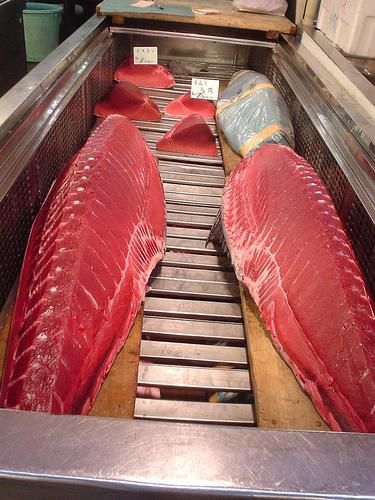
tuna
© tokyofoodcast
NPR shouldn't trivialize the risk of radioactive tuna from the Fukushima nuclear disaster.

Yesterday, National Public Radio (NPR) ran a story asserting that cesium-137 from the Fukushima nuclear accident found in Bluefish tuna on the west coast of the U.S. is harmless.

It's not harmless. The Fukushima nuclear accident released about as much cesium-137 as a thermonuclear weapon with the explosive force of 11 million tons of TNT. In the spring of 1954, after the United States exploded nuclear weapons in the Marshall Islands, the Japanese government had to confiscate about 4 million pounds of contaminated fish. Radiation from Fukushima spread far and wide. Like American hydrogen bomb testing, the Fukushima nuclear accident deposited cesium-137 over 600,000 square-miles of the Pacific, as well as the Northern Hemisphere and Europe. With a half-life of 30 years, cesium-137 is taken up in the meat of the tuna as if it were potassium, indicating that the metabolism holds on to it.

Bizarro Earth

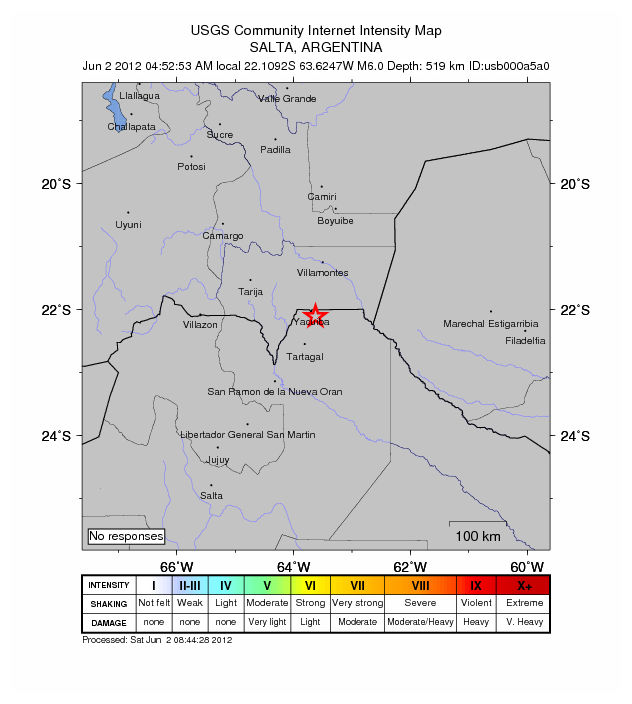
USGS: Earthquake Magnitude 6.0 - Salta, Argentina

Argentina Quake_020612
© USGSEarthquake Location
Date-Time
Saturday, June 02, 2012 at 07:52:53 UTC

Saturday, June 02, 2012 at 04:52:53 AM at epicenterTime of Earthquake in other Time Zones

Location
22.109°S, 63.625°W

Depth

519.6 km (322.9 miles)

Region
SALTA, ARGENTINA

Distances

8 km (4 miles) SE of Yacuiba, Bolivia

54 km (33 miles) NNE of Tartagal, Salta, Argentina

131 km (81 miles) ESE of Tarija, Bolivia

1469 km (912 miles) NNW of BUENOS AIRES, D.F., Argentina

Bizarro Earth

Japanese seismologists warn seismic tension is building on a tectonic plate east of Tokyo


Phoenix

Record-setting New Mexico fire expected to burn for weeks

NM wildfire
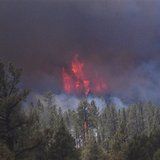
© AP Photo/U.S. Forest ServiceThis image provided by the U.S. Forest Service shows a May 29, 2012 photo, of the massive blaze in the Gila National Forest, seen from Neighbors Mountain directly east of Glenwood, N.M. Fire officials said Wednesday the wildfire has burned more than 265 square miles has become the largest fire in New Mexico history.
Reserve - A smoky haze hangs over the rugged canyons and tree-covered expanses of southwestern New Mexico as the largest wildfire in the state's recorded history marches across more of the Gila Wilderness.

The virtually unchecked wildfire is fueling experts' predictions that this is a preview of things to come as states across the West contend with a dangerous recipe of wind, low humidity and tinder-dry fuels.

The Whitewater-Baldy blaze has charred more than 190,000 acres, or nearly 300 square miles, in Gila National Forest and has become the largest wildfire burning in the country.

Gov. Susana Martinez viewed the fire from a New Mexico National Guard helicopter Thursday and saw the thick smoke shrouding some of the steep canyons that are inaccessible to firefighters. She described the terrain as "impossible," saying there was no way for firefighters to directly attack the flames in the rugged areas of wilderness.

"It's going to keep going up," she said of the acreage burned. "Be prepared for that."

Attention

A Last (Chemical) Gasp for Bees?

Image
© Brian Wolfe
Colony collapse disorder threatens food crops valued at $15 billion a year. New research says farm chemicals put our food system at risk.

Newly published scientific evidence is bolstering calls for greater regulation of some of the world's most widely used pesticides and genetically modified crops.

Earlier this year, three independent studies linked agricultural insecticides to colony collapse disorder, a phenomenon that leads honeybees to abandon their hives.

Beekeepers have reported alarming losses in their hives over the last six years. The USDA reports the loss in the United States was about 30 percent in the winter of 2010-2011.

Bees are crucial pollinators in the ecosystem. Their loss also impacts the estimated $15 billion worth of fruit and vegetable crops that are pollinated by bees in the United States.

The studies, conducted in the United States, France, and the United Kingdom, all pointed to neonicotinoids, a class of chemicals used widely in U.S. corn production, as likely contributors to colony collapse disorder. The findings challenged the EPA's position - based on studies by Bayer CropScience, a major producer of the neonicotinoid clothianidin - that bees are only exposed to small, benign amounts of these insecticides.