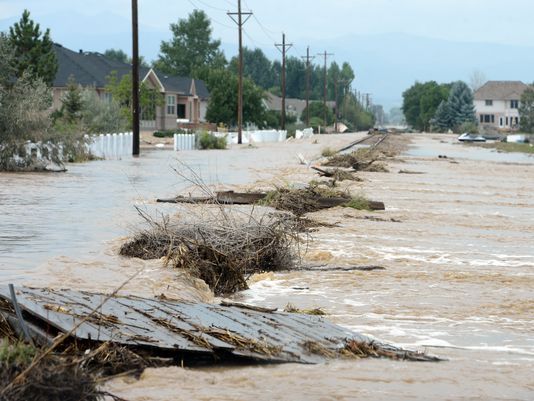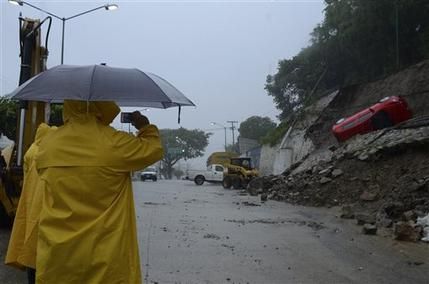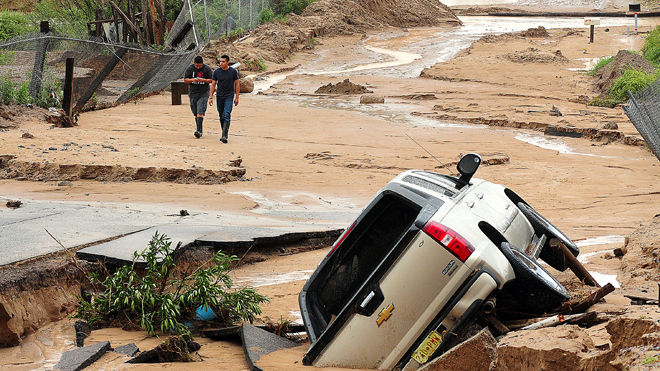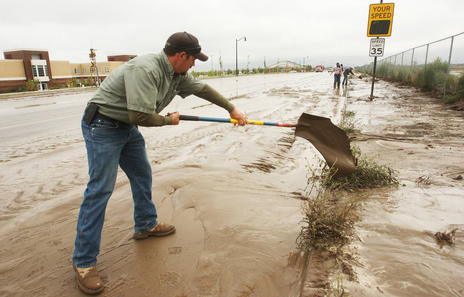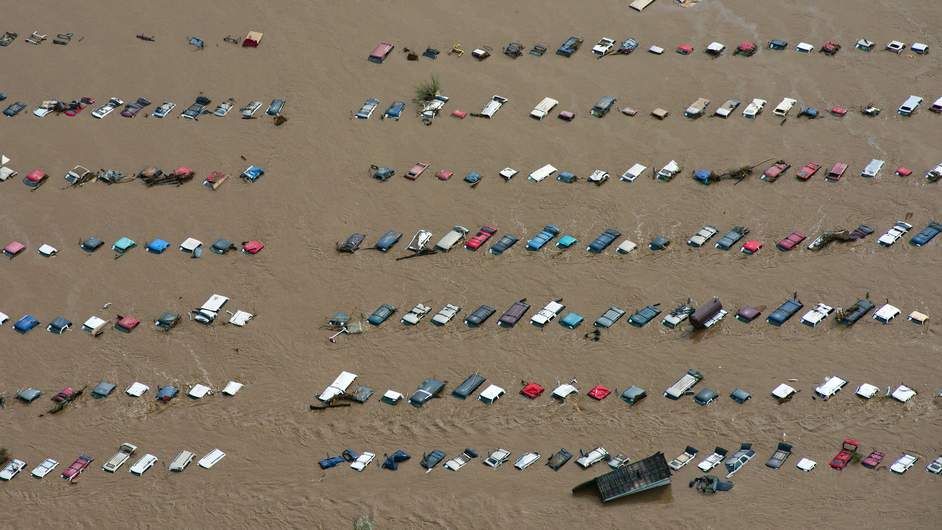
© Sky NewsVehicles submerged in floods along the Sough Platte River near Greeley
Thousands of people trapped by floods that swept through towns in north Colorado have been warned to leave or risk weeks without food, electricity and running water.
Authorities have carried the message into canyon communities and towns where stranded residents eager to escape the Rocky Mountain foothills used every means possible to attract the attention of rescuers.
Boulder County Sheriff Joe Pelle warned National Guard helicopters and truck convoys would not go back for people who insisted on staying.