Earth ChangesS


Attention

Tragic Error: The cities that climate change will hit first?

climate change
© Leonard Bernstein and Gene Thorp/The Washington Post
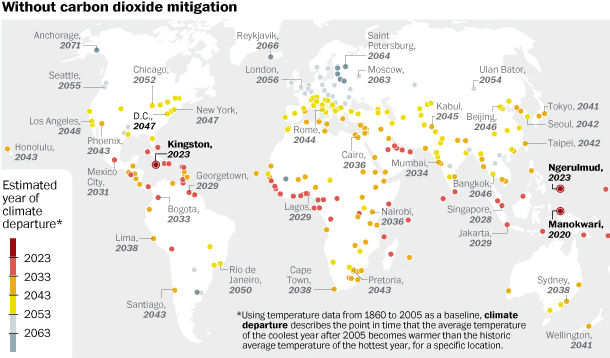
Climate scientists sometimes talk about something called "climate departure" as a way of measuring when climate change has really changed things. It's the moment when average temperatures, either in a specific location or worldwide, become so impacted by climate change that the old climate is left behind. It's a sort of tipping point. And a lot of cities are scheduled to hit one very soon.

A city hits "climate departure" when the average temperature of its coolest year from then on is projected to be warmer than the average temperature of its hottest year between 1960 and 2005. For example, let's say the climate departure point for D.C. is 2047 (which it is). After 2047, even D.C.'s coldest year will still be hotter than any year from before 2005. Put another way, every single year after 2047 will be hotter than D.C.'s hottest year on record from 1860 to 2005. It's the moment when the old "normal" is really gone.

Comment: Not a word about the cities that will be buried under ice when the impending Ice Age rebounds on Earth.


Bizarro Earth

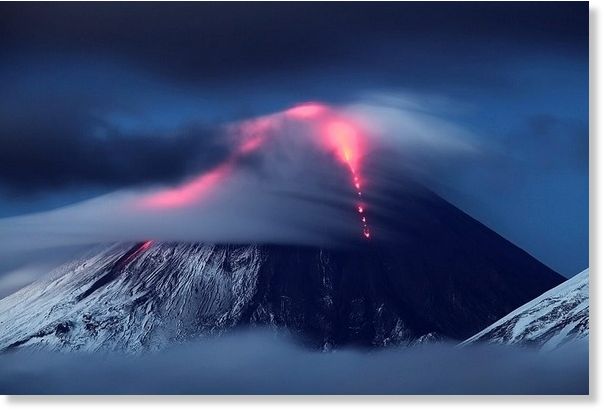
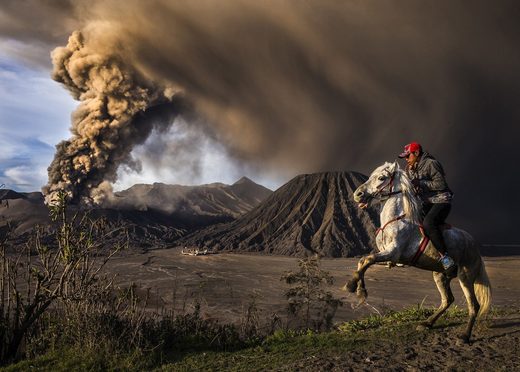
Eurasia's highest volcano Klyuchevskoi spews ash up to 3.7 miles

Image
Eurasia's highest volcano, Klyuchevskoi, on the Kamchatka Peninsula in Russia's Far East, churned out ash to a height of six kilometers (3.7 miles) on Thursday morning, local Emergencies Ministry's department reported. "The cloud of ash moved in the eastern direction from the volcano," the department said in a statement adding that the cloud of ash posed no danger to residential areas.

The statement warned all tourism companies operating in the region against holding tours in the areas located near the volcano, which can also pose threat to aircraft. Klyuchevskoi's most powerful eruption was registered between January and May of 2005. Following that eruption, the volcano "sank" by 50 meters (about 165 feet), from 4,800 meters (about 16,000 feet) to the current 4,750 meters (15,845 feet). Kamchatka lies within the Pacific's volatile 'Ring of Fire.' - Voice of Russia

Arrow Down

Madagascar bubonic plague warning


Madagascar faces a bubonic plague epidemic unless it slows the spread of the disease, experts have warned.

The Red Cross and Pasteur Institute say inmates in the island's rat-infested jails are particularly at risk.

The number of cases rises each October as hot humid weather attracts fleas, which transmit the disease from rats and other animals to humans.

Madagascar had 256 plague cases and 60 deaths last year, the world's highest recorded number.

Bubonic plague, known as the Black Death when it killed an estimated 25 million people in Europe during the Middle Ages, is now rare.

Ice Cube

South Dakota blizzard kills 20,000 head of cattle; shutdown leaves ranchers in the cold

Like in a scene from an apocalyptic parable, dark carcasses of cows and steers lie motionless in silent clusters across swaths of South Dakota. An early blizzard caught ranchers off guard this week in the state, killing as many as 20,000 head of cattle, a state official says. But ranchers say they are the real victims.


Snowflake Cold

Shutdown worsens historic blizzard that killed tens of thousands of South Dakota cattle

Snowfall Rapid city
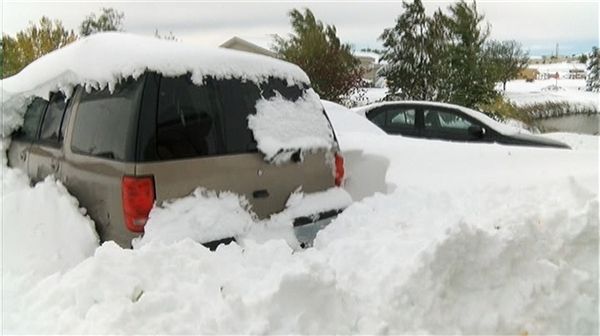
© KNBN-TVRapid City and many other parts of South Dakota recorded record snowfall totals for the entire month of October in just three days over the weekend.
An unusually early and enormous snowstorm over the weekend caught South Dakota ranchers and farmers unprepared, killing tens of thousands of cattle and ravaging the state's $7 billion industry - an industry left without assistance because of the federal government shutdown.

As many as 75,000 cattle have perished since the storm slammed the western part of the state Thursday through Saturday with snowfall that set records for the entire month of October in just three days, state and industry officials said.

Across the state, snow totals averaged 30 inches, with some isolated areas recording almost 5 feet, The Weather Channel reported.

The South Dakota Stock Growers Association estimated that 15 percent to 20 percent of all cattle were killed in some parts of the state. Some ranchers reported that they lost half or more of their herds.

Megaphone

129 climate science scandals

1. NEW! 1010-gate (aka Splatter-gate) NoTricksZone and media silence (NoTricksZone) and Pachauri sensitize children (NoTricksZone and media bias (WUWT). Hate, intolerance, and violence are embedded in the psyche of the environmental movement, as the following promo video illustrates.


Ice Cube

Current sunspot cycle weakest in 190 years

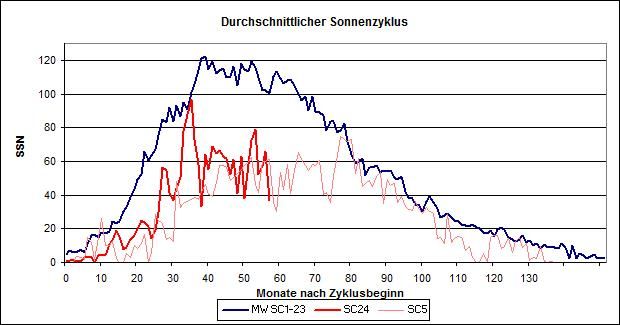
Currently solar activity is especially low. Solar sunspot number (SSN) in September was at 36.9, and thus was just 36% of the usual mean value 58 months into the cycle. The sun continues to remain in an unusually weak cycle 24, which was characterized by a 1-2 year delayed start in November 2008. The following graphic shows the mean value (blue) and the current cycle (red) and the very similar sunspot cycle SC5 (light gray) which occurred during the Dalton Minimum of the early 19th century:
The average solar cycle
© Frank Bosse and Fritz Vahrenholt Dark blue shows average sunspot cycle; red shows current cycle 24 and light gray shows SC5. Horizontal axis is the number of months after the start of cycle. -

Eagle

Bald eagle attacks pets in Michigan neighborhood

Image
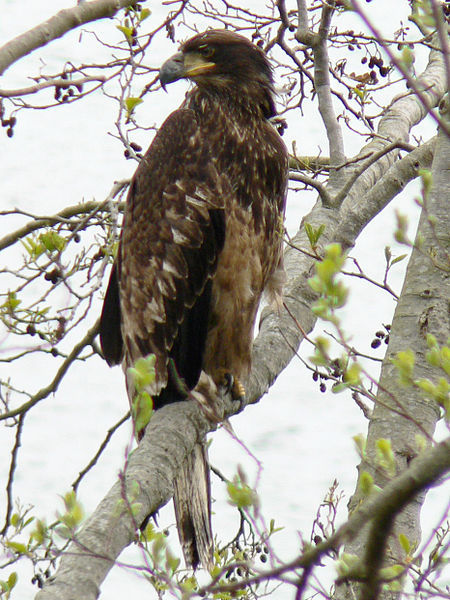
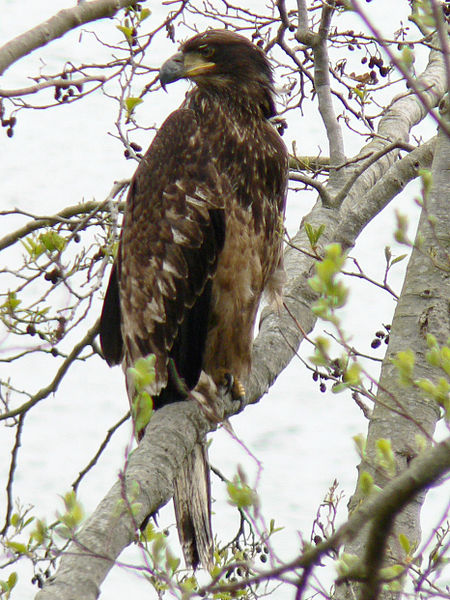
© Walter Siegmund, Wikimedia Commons.Bald Eagle, first year juvenile

A Michigan woman said a young bald eagle took up residence in her neighborhood and has been terrorizing her dogs.

Tami Bieri of Sebewaing said the bird, which her young daughter dubbed Derrick, has become a "nuisance bird" that poses a threat to her small dogs, WNEM-TV, Saginaw, reported Wednesday.

"I left my two dogs outside and my smaller dog was attacked by an eagle. And then as the eagle was taking off with the dog, my Jack Russell attacked the eagle and both dogs got away," Bieri said.

Bieri said local and state officials told her there is nothing they can do about the bird because bald eagles are federally protected.

"I've called the [Department of Natural Resources], the Sebewaing police, and they pretty much say there's nothing they can do because the eagle's not injured," Bieri said.

Karen Cleveland, a bird expert with the Michigan Department of Natural Resources, said residents can use non-violent methods to let the eagle know he is not welcome in the neighborhood.

"Clap your hands and yell at the bird when you see the bird around, bang on a pot when you see the bird around, go out there with an umbrella, flap the umbrella opened and closed to try and spook the bird off just so it doesn't feel settled around people," Cleveland said.

Snow Globe

Due to too much ice: Alaska village grapples with collapse in walrus harvest

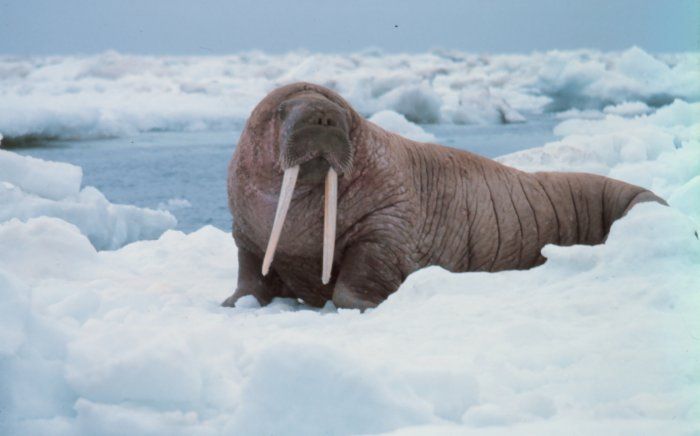
Walrus on the ice
© Unknown
Gambell - For as long as many here can remember, hunters in this Eskimo village where the mountains of Siberia are clearly visible have managed to kill enough walruses to provide food that lasts through the brutal Arctic winter.

But after harvesting only 108 walruses this year - one sixth the average - the island community of 690 residents is rushing to find alternate sources of food before winter sets in. Other towns have offered donations of reindeer and fish, but tribal officials say it isn't enough to offset the shortage. Villagers say they can't afford to shop at the one full-service store because prices there can be three times as high as on the mainland.

"If it continues like this, we will seriously starve," said Jennifer Campbell , a 38-year-old mother of five whose family caught two walruses this year, down from as many as 20 in normal years. In August, Alaska Gov. Sean Parnell declared an economic disaster for Gambell and its sister village of Savoonga on St. Lawrence Island, freeing up more state resources such as possible grants to help the stricken communities.

State and federal marine experts, meanwhile, say the collapse of the walrus harvest is another example of how wild weather is altering life in native villages like these that still follow a subsistence lifestyle. Rick Thoman , a climatologist with the National Weather Service in Fairbanks, said the Arctic's warming climate is likely to make it harder for such villages to catch enough walruses and other prey animals and fish, which scientists say are likely to fall in number in coming years due to diminished ice.

But this past spring, the village had the opposite problem: The coldest winter to hit the state in decades meant the Siberian Yupik Eskimo hunters on the island, which lies just 36 miles from Russia's Chukchi Peninsula, weren't able to maneuver their boats past unusually thick ice in the Bering Sea as the walrus herds migrated past.


Comment: Despite the author's efforts to concentrate on global warming in the whole article, the fact is that there is a cold change underway.


Ice Cube

100mph winds to batter Britain! Indian summer ends as UK set for '-3C Arctic plunge'

Image
© PAForecasters warned of a “dramatic change” from today

Forecasters warned of a "dramatic change" from today as warm conditions make way for a Polar blast.

They said fierce winds at sea will whip up huge waves triggering potentially disruptive flooding in coastal regions.

The Met Office issued a severe weather warning for winds in the East today and warned of 100mph gusts in the Scottish Mountains.

The Environment Agency warned people not to walk along coastal paths and avoid driving on sea roads at risk of flooding.

It warned 5ft waves along the east coast will send waves crashing over seafront promenades and flooding local roads.

The mercury is expected to plunge today bringing temperatures "dramatically" lower than enjoyed over the past week.

The Met Office warned parts of Scotland will shiver in overnight lows of -3C (27F) while thermometers in the South will struggle to rise out of single figures.

Spokesman Laura Young said: "On Thursday the risk is of strong winds and waves, which could cause disruption in eastern coastal regions.

"There is also the risk of hail and some potentially heavy rainfall mainly in the East and South-east, people should be aware of coastal disruption.

"Over the next couple of days it is going to feel much colder and there is the risk of localised gales.

"Over the high ground in the hills there will be some wintry showers and a dusting of snow."