Earth ChangesS


Question

Early warning debacle - Hamburg, Germany issues first storm warning AFTER cyclone hits city!

Powerful autumn storm St. Jude (dubbed Christian in Germany) swept across England and the North Sea Sunday and Monday, leaving a path of destruction in its wake. Especially hard hit were England, Northern France, Holland and the North German coast.

The storm claimed 14 lives in Europe.

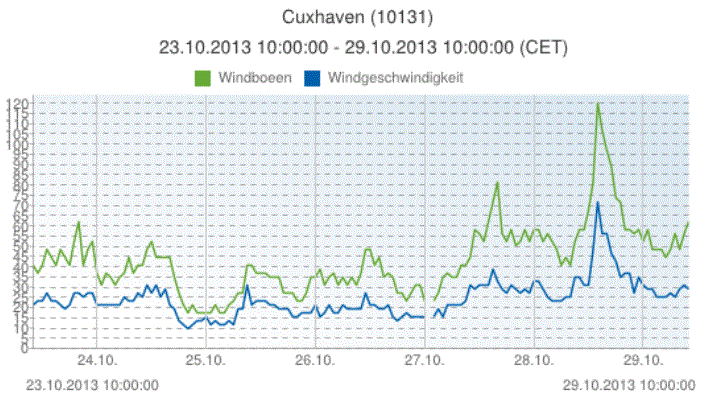
Particularly hard hit was the north German port city of Hamburg, which saw wind gusts of up to 120 km/hr. That in itself is not an unusual event for the city, as North Sea storms of this magnitude occur about every 5 or 10 years. What was unusual and devastating, however, was how the city waited until the storm was raging over the city at peak fury before issuing any storm warning at all. Hamburg is governed by a coalition of socialists and environmental greens.

Meteorologist Dominik Jung of wetternet.de here writes that even though Storm Christian had been forecast for days, Hamburg city officials remained deeply asleep and did not wake up to issue any storm warning until 2:26 pm Monday afternoon. By that time the storm was already raging at its peak and the city had plunged into chaos. See wind speed chart below.
Windspeed Hamburg
© wetter24.de/html Wind speed measured at a weather station near Hamburg. Green curve – wind gusts. Blue curve - wind speed.

Bizarro Earth

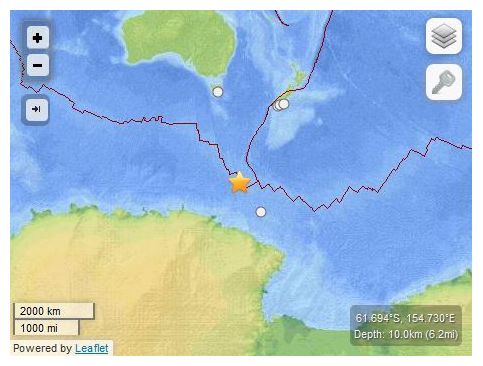
USGS: Earthquake Magnitude 6.0 - Balleny Islands region

Balleny Island Quake_291013
© USGS
Event Time
2013-10-29 10:37:55 UTC
2013-10-29 20:37:55 UTC+10:00 at epicenter

Location
61.694°S 154.730°E depth=10.0km (6.2mi)

Nearby Cities
645km (401mi) NW of Young Island,
1912km (1188mi) SSW of Invercargill, New Zealand
1961km (1219mi) SSW of Gore, New Zealand
2032km (1263mi) SSW of Dunedin, New Zealand
2150km (1336mi) S of Hobart, Australia

Technical Details

Arrow Up

Yellowstone National Park: Large magma reservoir gets bigger

Image
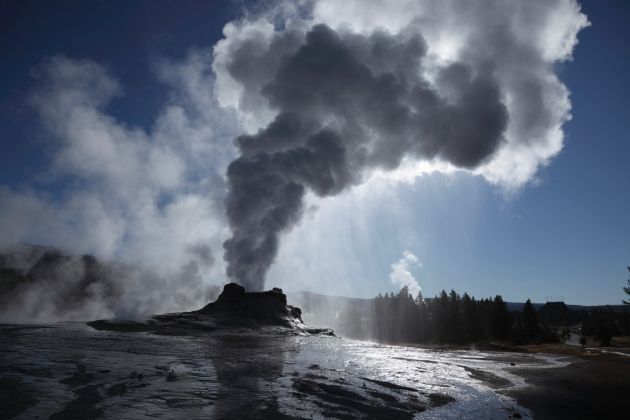
© Martin Rietze/Westend61/CorbisThe Castle Geyser at Yellowstone National Park is a dramatic manifestation of a giant magma reservoir — which turns out to be two and a half times larger than previously thought.
But earthquakes, not eruptions, are Yellowstone's most serious geological risk.

The reservoir of molten rock underneath Yellowstone National Park in the United States is at least two and a half times larger than previously thought. Despite this, the scientists who came up with this latest estimate say that the highest risk in the iconic park is not a volcanic eruption but a huge earthquake.

Yellowstone is famous for having a 'hot spot' of molten rock that rises from deep within the planet, fuelling the park's geysers and hot springs1. Most of the magma resides in a partially molten blob a few kilometres beneath Earth's surface.

New pictures of this plumbing system show that the reservoir is about 80 kilometres long and 20 kilometres wide, says Robert Smith, a geophysicist at the University of Utah in Salt Lake City. "I don't know of any other magma body that's been imaged that's that big," he says.

Smith reported the finding on 27 October at the annual meeting of the Geological Society of America in Denver, Colorado.

Yellowstone lies in the western United States, where the mountain states of Wyoming, Montana and Idaho converge. The heart of the park is a caldera - a giant collapsed pit left behind by the last of three huge volcanic eruptions in the past 2.1 million years.

Bizarro Earth

Zhupanovsky volcano erupts in Russia - last erupted in 1959


A new eruption started this week at the Zhupanovsky volcano, about 70 km northeast of the capital of Kamchatka, Petropavlovsk-Kamchatsky, which last erupted in 1959. It is a complex volcano composed of several overlapping cones aligned on a roughly east-west oriented axis. The new eruption comes from the same vent that has been also the site of all known historical eruptions, located west of the highest point of the volcanic massif.

Igloo

Global warming?... Chile hit with worst cold spell in 80 years

Iceage
© The Daily Caller
Anyone looking to get some delicious Chilean fruit this winter is going to be disappointed, as the worst frost in more than 80 years has damaged 50 million boxes of fruit exports - causing the country to declare a state of emergency in its agricultural sector.

The Chilean Fresh Fruit Exporters Association said that freezing temperatures throughout mid-September hit the country's fruit growers with the coldest frost since 1929.

Temperatures fell to an average of 19 degrees Fahrenheit for an average of seven hours in several of the Chile's growing regions, contributing to a huge drop-off in fruit exports.

Chilean growers exported about 282 million boxes of fruit last year, and experts believe that exports will fall short of that by about 50 million boxes for this year. However, when production increases are taken into account, the total frost damage to fruit production could be closer to 60 million or 65 million boxes.

The wine industry was hit hard by the frost as well.

Blue Planet

Best of the Web: 2013 is Strange: Extreme weather events, 'Earth Changes', and other strange phenomena in October

Image
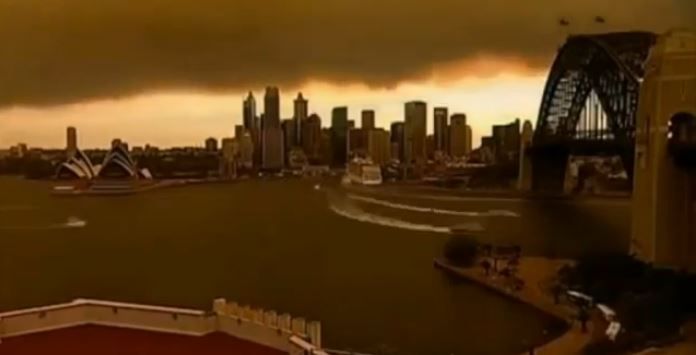
Fireballs raining from the sky, strange lights appearing on the horizon, tornadoes touching down everywhere, major earthquakes, volcanic eruptions, wildfires blocking out the sun, sunsets appearing to happen in the wrong place, mass animal deaths from sudden cold in both hemispheres, deepwater fish turning up where they shouldn't... the following video captures just some of the extreme weather events, 'earth changes', and other strange phenomena on the Big Blue Marble during the past month.


Cloud Lightning

Eleven dead as storm lashes northern Europe

Image
© AFPA handout picture from the London Fire Brigade shows firefighters standing outside three houses collapsed in a gas explosion suspected to have been caused by a gas main damaged by a falling tree in Hounslow, west London, on October 28, 2013
At least 11 people were killed on Monday as a fierce storm tore across northern Europe, causing mass disruption to transport.

Four people were killed in Britain and three in Germany as heavy rain and high winds battered the region. The storm also claimed two victims in The Netherlands, one in France and one in Denmark.

Rough conditions at sea also forced rescuers to abandon the search for a 14-year-old boy who disappeared while playing in the surf on a southern English beach on Sunday.

British Prime Minister David Cameron described the loss of life as "hugely regrettable".

Winds reached 99 miles (159 kilometres) per hour on the Isle of Wight off the southern English coast, according to Britain's Met Office national weather centre, while more than 500,000 homes in Britain and France were left without power.

Heavy rain and winds of 80 mph elsewhere brought down thousands of trees and left hundreds of passengers trapped in planes at Copenhagen airport.

Better Earth

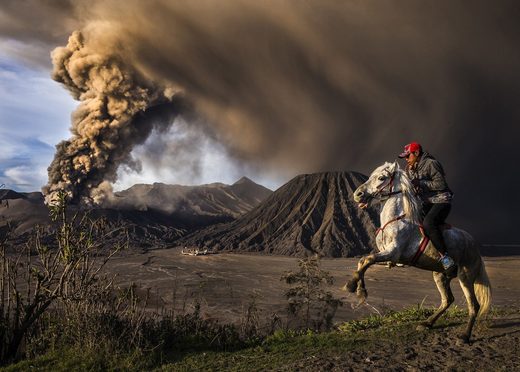
Astronaut spies mount Etna eruption from space

Image
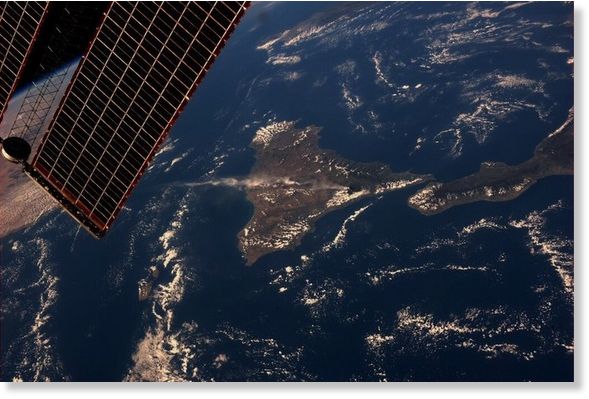
© Karen L. Nyberg (via Twitter as @AstroKaren)NASA astronaut Karen Nyberg snapped a picture of ash billowing from Mount Etna on Oct. 26, 2013.
NASA astronaut Karen Nyberg spied a plume of ash from the volcano trailing over Sicily from her post aboard the International Space Station on Saturday (Oct. 26).

She posted a photo of the phenomenon on Twitter, writing: "Our view of Mount Etna erupting. October 26."

At 10,900 feet (3,329 meters), Italy's Mount Etna is Europe's tallest volcano and one of the world's most active. Though it is almost continuously spewing gas or lava, the last major eruption at Mount Etna was in 1992.

Mount Etna's latest spurt of activity over the weekend sent a bright stream of lava shooting into the air, while ash clouds could be seen across much of eastern Sicily, according to the BBC. The haze forced the nearest airport and airspace to close temporarily, but none of the mountain towns that surround the volatile peak had to be evacuated, the BBC reported.

Earlier this year, Nyberg's Canadian colleague, astronaut Chris Hadfield, snapped a picture of ash spewing from Mount Etna while he was on board the space station after one of the volcano's paroxysms (short, violent bursts of activity).

Cloud Lightning

Earth's mysterious gamma ray flashes

lighenting
© Paul YoungLightning produced by thunderstorms could also be generating Terrestrial Gamma-ray Flashes
Electron avalanches could be generating some of the highest energy radiation bursts ever discovered on Earth.

The study in Geophysical Research Letters, suggests bursts known as terrestrial gamma ray flashes (TGF), are possibly produced by dark lightning generated by an avalanche of electrons.

TGFs were first detected by chance by NASA's Earth-orbiting Compton gamma ray telescope in 1994.

Compton was searching for gamma ray bursts from exploding stars in deep space, when it unexpectedly began detecting very strong bursts of high energy x-rays and gamma rays, coming from Earth.

"These bursts last about a thousandth of a second, so they're very short and they're very bright," says the study's lead author Professor Joseph Dwyer of the Florida Institute of Technology.

"In fact they're so bright, that they temporarily blind spacecraft."

The flashes were originally thought to be coming from the top of Earth's atmosphere, but spacecraft measurements and energy modelling show they're coming from altitudes below 20 kilometres.

"People now know they're coming from deeper down, from thunderstorms at about the same altitudes where aircraft fly," says Dwyer.

"We've been struggling to figure out how thunderstorms could generate these flashes."

Snowflake Cold

Snow leaves thousands without power in Russia

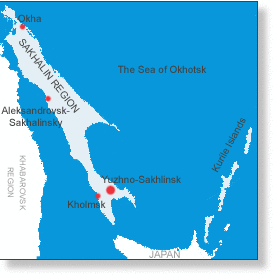
Nearly 17 thousand people were left without electricity in the Sakhalin region (Russia's Far East, a big island north of Japan) as a result of wet snow on the wires that disconnected the power lines. This was reported today by the Ministry of Emergencies. Power lines are currently under emergency repair work. (10-27-2013)
Image
Thanks to Argiris Diamantis for this link