Earth ChangesS


Camera

Photographer captures electrifying shot of horizontal lightning in Bangkok, Thailand

Image
High voltage: A horizontal streak of lightning forks across the Bangkok skyline
This is the powerful photo of a horizontal streak of lightning that was captured by a photographer in Bangkok, Thailand.

Saranya Chalermchai, 32, waited for over an hour on the 23rd floor of a building after setting up her camera to capture the split-second shot.

Taken amidst a magnificent storm in the capital city, the photo shows a fork of lightning streak across the sky.

Saranya, a Bangkok native, posted the photo on the National Geographic website to the acclaim of other users.

Explaining the shot, she said: "I was in friend's apartment (on the) 23 floor.

Igloo

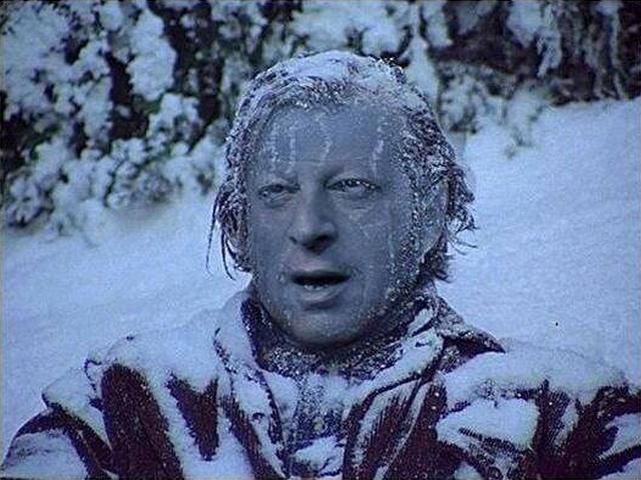
Brutal Arctic outbreak predicted for the U.S.

Image
We are about to enter a very interesting period, and while I know that many of you like the cold, this next Arctic outbreak could be dangerous and even historic. I put out an article about a week ago and then one before that that basically restated that I thought that mid to late January going into February could end up being dangerously cold for the central and eastern U.S. While I have really been putting myself out on the line over these last few weeks, I am now getting a lot of forecast model support to back up what I saw coming several weeks ago. Like I said on the Facebook page, the GFS model did not handle the last Arctic outbreak that well in predicting this in the long-range, so I absolutely had no reason to believe that anything would be different this time. Yet again, many fell into the trap of using the GFS as their model of choice for their long-range forecast, and they got burned. See, weather and climate works in cycles, and you have to be able to see those cycles. If you miss that, then you're left depending on a model that dictates your forecasts, and those forecasts can change A LOT! You're at the mercy of the forecast models, and I try to never put myself in that situation.

Now that I'm getting the support of the forecast models and we're much closer to the event, I want to show you what the models are predicting. In fact, if what the forecast models are predicting for the last week of January going into February comes to fruition, then we have a historic Arctic outbreak on our way that would give us brutal cold. The Canadian model also supports a big East Coast storm later in January, which I really think could happen. From the way things are starting to look, this cold pattern could lock in, which would continue into February, and we could also move into a very stormy pattern. Many of you have commented on the Facebook page (yes, I take the time to read almost all of your comments and messages) that you were disappointed that you didn't get any snow with this last Arctic outbreak. I'm really thinking things will be different this time. No, I'm not saying that Miami, FL will get snow, but I do think many areas in the Southeast and up the East Coast will.

Ice Cube

Return of the polar vortex? Stratospheric trifecta signals extreme cold for February

It now appears that the stratosphere will kick off a number of indices that deem February to be the coldest prolonged period of winter thus far. In today's post, I will address multiple indices that favor a significantly colder than normal February.

Part I: The Stratosphere

- First Warming
Image
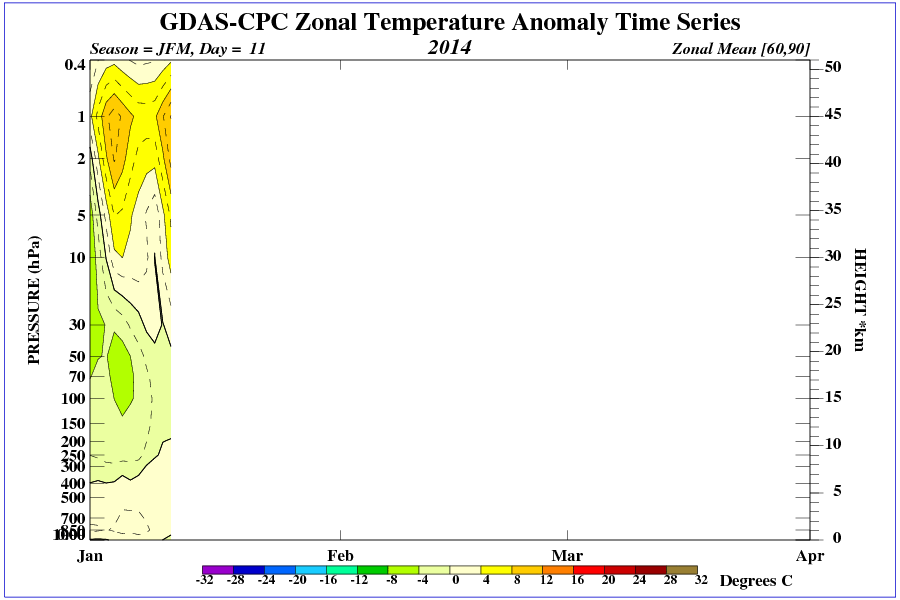
In the opening days of January, we saw a stratospheric warming event occur. This event was minor, as the chart above (depicting temperature anomalies in the upper latitudes) shows. Nevertheless, this first warming event, coupled with the ongoing warming event is helping to destabilize the polar vortex in the stratosphere. So far this winter, the stratospheric polar vortex has been resistant to any and all attempts to be put down. We can attribute this to the positive phase of the Quasi-Biennial Oscillation (QBO), which is unfavorable for a weak polar vortex. These two first warmings are just tastes of what is to come. While the first warming was minor, it seems to have shaken up the vortex at least a bit, and this ongoing warming event right now is most likely helping with some slight (at the very least) destabilization of the polar vortex.

Bizarro Earth

Peru's El Misti volcano - signs of volcanic unrest, earthquake swarm during 14-15 January

The volcano experienced an earthquake swarm during 14-15 January, IGP reported in its latest bulletin. An increase of approx. 25% in seismic activity overall with respect to last year's average was calculated, but IGP stresses that this activity is still low and does not suggest new activity in a near future.

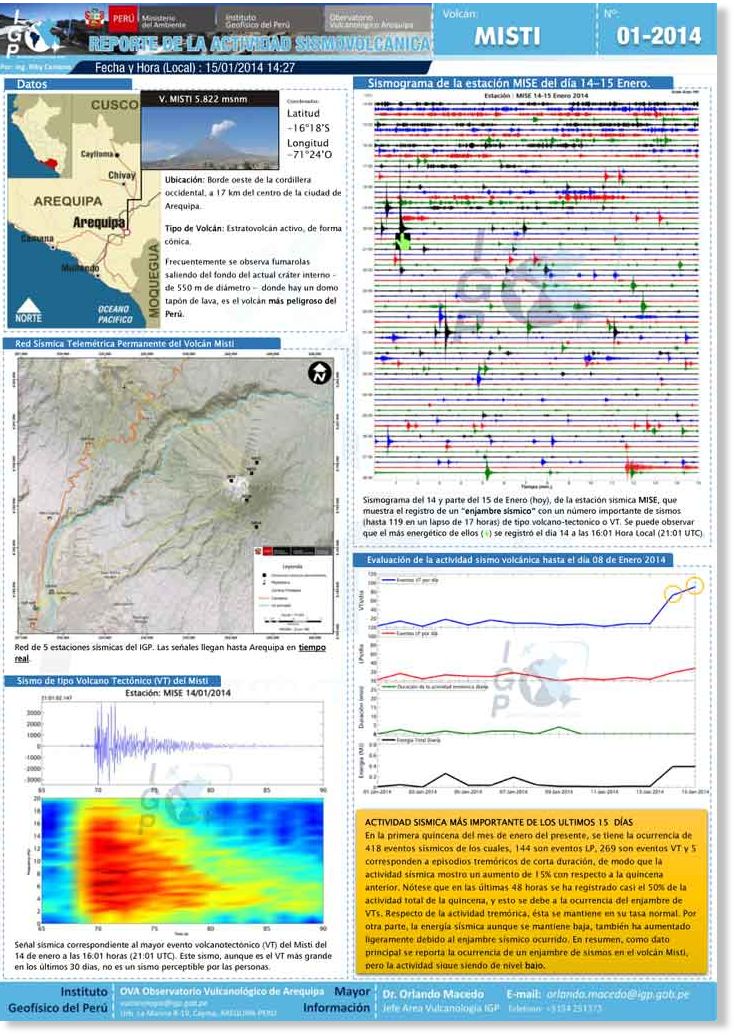
According to the report, a total of 418 seismic events were recorded during the first half of January, most of them during the swarm that occurred on 14-15 Jan when almost 120 quakes were registered within 17 hours. From these events, 144 were so called long-period quakes (internal fluid movements), 269 volcano-tectonic earthquakes (internal rock fracturing) and 5 short pulses of tremor (internal vibration).
Image
The report of IGP showing the signals of the seismic swarm at EL Misti volcano in Peru
El Misti, which is only 17 km from the center of Arequipa city, is one of the countries major and most active volcanoes. Due to its closeness to a large city and its history of explosive eruptions, it is also one of the most dangerous volcanoes in South America, and clearly one that deserves being closely monitored.

Bizarro Earth

Eruption of Shyhzerli volcano causes earthquake in Azerbaijan

Image
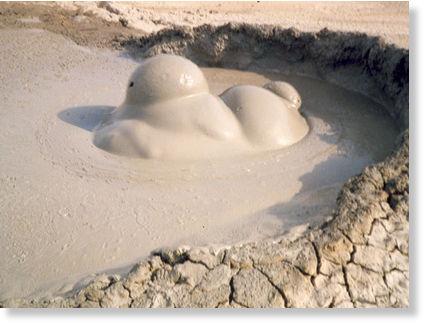
Eruption of the Shyhzerli volcano - one of the most active and largest mud volcanoes in Azerbaijan, occurred due to an earthquake, head of the Mud Volcanoes Department of Geology Institute of Azerbaijani National Academy of Sciences (ANAS), Professor Adil Aliyev told Trend on Jan. 17.

"The earthquake, which occurred at about 18 kilometres away from the volcano towards Shamakhi caused eruption of the Shyhzerli volcano. An earthquake occurred two or three days before the eruption," the scientist said.

The earthquake and the eruption did not occur on the same day, but sometimes such cases happen, Aliyev said.

"For example, 15 minutes after the Shamakhi earthquake that destroyed the city in 1902, there was a strong eruption of the Shyhzerli volcano. Such strong earthquakes result in the volcano erupting the same day. Volcanos may also erupt a day or two days after, when the seismic wave reaches it. We have found out that the volcano itself should be ready to erupt, there should be enough energy. The earthquake simply contributes to its eruption," the scientist said.

Igloo

Gulf Stream mysteriously slowed in 2009

Image
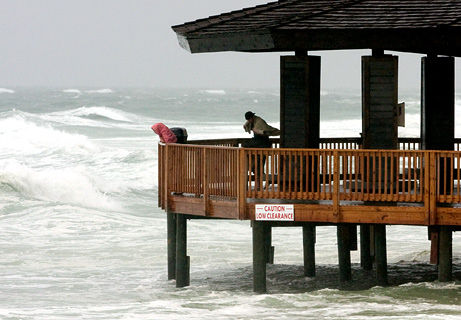
© Mari Darr-Welch/AP High tides lash a Destin, Florida, pavilion—usually on dry land—ahead of tropical storm Claudette on August 17, 2009.
The immediate cause of the unexpected rise has now been solved, U.S. officials say in a new report (hint: it wasn't global warming). But the underlying reason remains a mystery.

Usually, predicting seasonal tides and sea levels is a pretty cut-and-dried process, governed by the known movements and gravitational influences of astronomical bodies like the moon, said Rich Edwing, deputy director for the Center for Operational Oceanographic Products and Services at the U.S. National Oceanic and Atmospheric Administration (NOAA).

But NOAA's phones began ringing this summer when East Coast residents reported higher than predicted water levels, much like those associated with short-term weather events like tropical storms. But these high seas persisted for weeks, throughout June and July.

The startling rise caused only minor coastal flooding - but major head scratching among scientists.

Cloud Grey

China starts televising the sunrise on giant TV screens because Beijing is so clouded in smog

Image
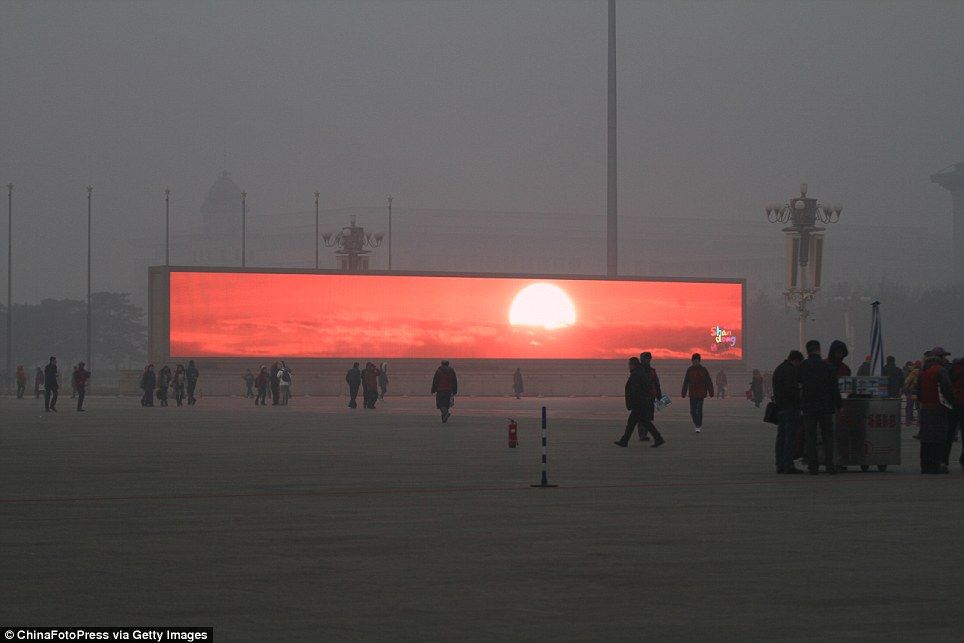
Virtual sunlight: The LED screen shows the rising sun in Tiananmen Square which is shrouded with heavy smog on January 16, 2014 in Beijing, China. Beijing Municipal Government issued a yellow smog alert this morning
The smog has become so thick in Beijing that the city's natural light-starved masses have begun flocking to huge digital commercial television screens across the city to observe virtual sunrises.

The futuristic screens installed in the Chinese capital usually advertize tourist destinations, but as the season's first wave of extremely dangerous smog hit - residents donned air masks and left their homes to watch the only place where the sun would hail over the horizon that morning.

Commuters across Beijing found themselves cloaked in a thick, gray haze on Thursday as air pollution monitors issued a severe air warning and ordered the elderly and school children to stay indoors until the quality improved.

The air took on an acrid odor, and many of the city's commuters wore industrial strength face masks as they hurried to work.

'I couldn't see the tall buildings across the street this morning,' said a traffic coordinator at a busy Beijing intersection who gave only his surname, Zhang. 'The smog has gotten worse in the last two to three years. I often cough, and my nose is always irritated. But what can you do? I drink more water to help my body discharge the toxins.'


Arrow Down

Golfer swallowed up by 12-foot sinkhole in Waterloo, Illinois

Image
Mike Peters, Hank Martinez, and Ed Magaletta call to Mark Mihal in the sinkhole
  • 43-year-old mortgage banker Mark Mihal was playing golf with three friends
  • He was at the 14th hole of the Annbriar golf course in Waterloo, Illinois
  • Noticing a depression in the ground, he walked over and ground gave way
  • He became trapped in the 12-foot sinkhole and had to be rescued
  • Mr Mihal suffered a broken shoulder and torn tendons after the fall
A claustrophobic mortgage banker has told the story of how a round of golf ended up with him plunging into a sinkhole that opened as he walked across the 14th hole.

Mark Mihal, 43, and his partner Mike Peters, were easily beating regular opponents Ed Magaletta and Hank Martinez during a game in early March last year.

Mr Mihal and Mr Peters had both outdriven the other pair on the 14th hole of the Annbriar golf course in Waterloo, Illinois.

Each landed the ball nicely on the fairway, leaving Mr Magaletta and Mr Martinez at the edge of the woods trying to clear a bunker.

But while Mr Mihal was waiting for Mr Peters to hit his second shot, he noticed a shallow, bathtub-size depression in the grass of the fairway.

It was out of place on the well-kept course, and looked as if it would be tricky to play out of.

He walked over and stepped into the depression - and promptly vanished.

Eye 2

Like frogs and bats, snakes now face deadly new epidemic

Image
© USGS National Wildlife Health Center
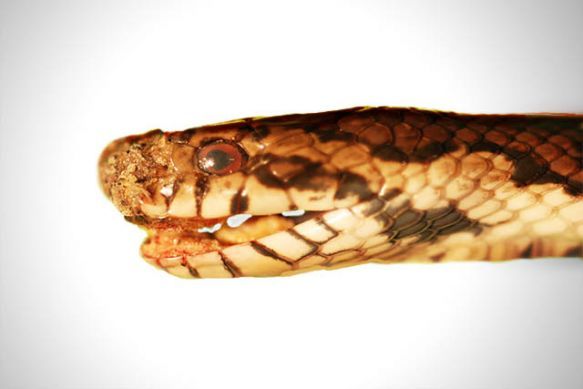
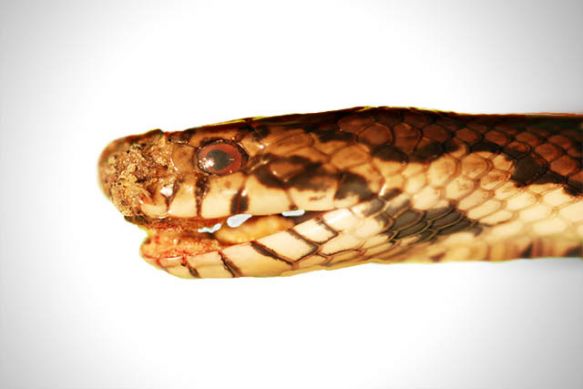
Snake Fungal Disease could send some species spiraling into an "extinction vortex," said one expert.

Somewhere in the back of our minds, we all worry about the sort of nightmare pandemic envisioned in films like Contagion or The Hot Zone, with some horrific new disease sweeping across the continents and mowing down human victims like so much hay. But wildlife biologists worry more than most, because they've already seen emerging diseases devastate two major animal groups.

Now it seems to be happening yet again, while the two other wildlife pandemics are still raging unresolved: Over the past two decades, the chytrid fungus has contributed to the extinction of perhaps 100 amphibian species - including some of the most colorful, charismatic frogs in the world - with many more extinctions now being predicted. White nose syndrome, another fungal disease, first discovered in 2006, has already killed off 6 to 7 million North American bats and now threatens some species with extinction. No reliable remedy is known for either disease.

The victims of what seems to be a new epidemic are snakes, and they may prove even harder to save, because they are widely unpopular and because populations in many areas tend to be small and scattered. Wildlife biologists first noticed the new pathogen in 2006, among New Hampshire's only surviving population of the timber rattlesnake.

The first victim turned up dead in early June, from a severe fungal infection in the mouth. Other victims displayed skin lesions around the head and, in one case, a severely swollen eye. Within a year, half the population was dead.

Info

White Spot Syndrome outbreak detected in Ernakulam shrimp farms, India

Image
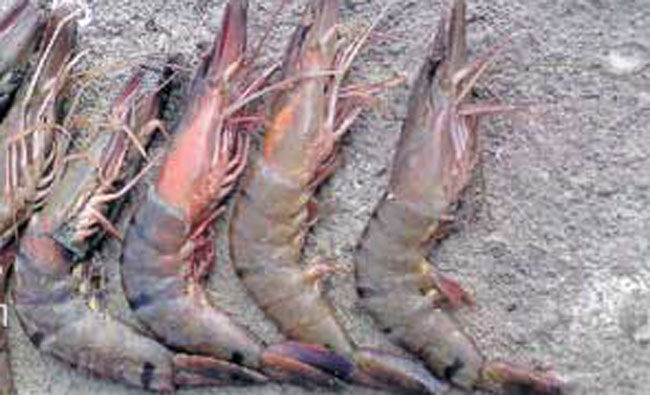
Varappuzha: Shrimp farms in Ernakulam district are witnessing an outbreak of the contagious White Spot Syndrome (WSS), putting farmers in a fix.
Exports as well as domestic markets earn top dollars for shrimp farmers and the spread of WSS and the resultant death of shrimp in large numbers have created panic among farmers. The spread of WSS was first spotted in 40-50 day old shrimp of 'Kara' breed in Paravoor, Kottuvalli, Varappuzha and Ezhikkara regions.

Fully grown shrimp of Kara breed fetches Rs 500-800 in market depending on the count. Fearing the outbreak of WSS, farmers are now bringing even shrimp, which are not yet fully grown, to the market, but they are unable to attract even one-third of the normal market rate. Unless they are fully-grown, shrimp cannot be exported also, putting farmers in a dilemma. The outbreak of WSS was first revealed after the examination of the shrimp samples conducted at Panangad Fisheries College under the aegis of Kerala Aqua Farmers Federation. There are no effective preventive measures to check the outbreak of WSS

Further examination of shrimp samples revealed the outbreak of the virus in farms located in southern regions of Thrippunithara, Kumbalangi and Chellanam, Kerala Aqua Farmers Federation State Secretary K X Sebastian said.