Earth ChangesS


Cloud Precipitation

Heavy hailstorm pelts beachgoers in Novosibirsk


Large hail on the city beach in Novosibirsk.

Snowflake Cold

But it's summer? Return of polar vortex to trigger midwest storms, chill

Rounds of thunderstorms, including severe weather, will affect the Midwest this weekend into Monday, ahead of a push of unseasonably cool air.See video here

While the effect of the July sun and warm landscape will cancel some of the cool air, it will become surprisingly cool during what is typically the hottest time of the year.

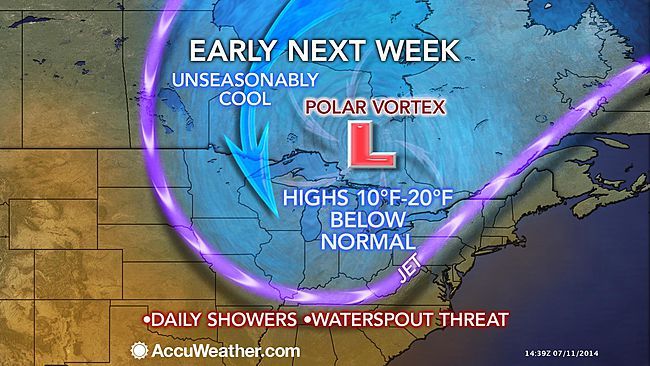
According to AccuWeather Meteorologist Carl Erickson, "The pattern is reminiscent of a major polar plunge that occurred this past winter, which was referred to as the Polar Vortex."
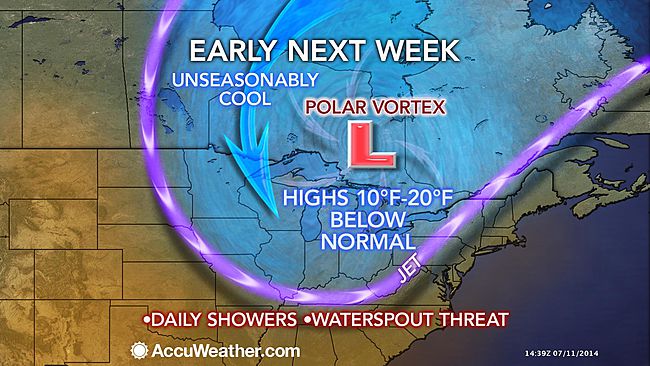
summer polar vortex
© Accuweather
A piece of the Polar Vortex, and a summertime version at that will break off from the Arctic and drop southward this coming week.

The pattern will not bring snow or sub-zero cold but it will bring angry clouds, cool air and the risk of waterspouts over the warmer portions of Great Lakes.
Comment: Can we now finally put the whole global warming nonsense to rest? This is going to be a summer without summer. Look for even higher food prices as crops fail all over the midwest.


Snowflake

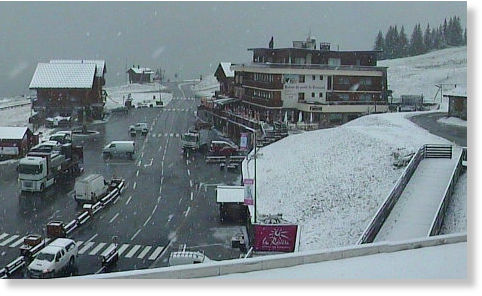
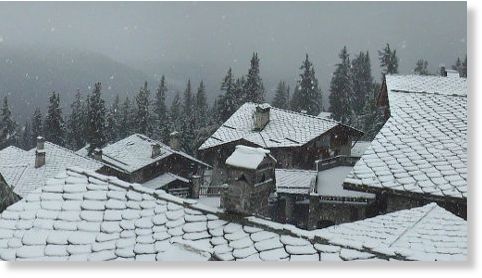
French Alps hit by some very unseasonal July snowfalls

Image
© WebcamThe French Alps looked more like a winter wonderland this week as the rotten summer weather continued in France.
Holidaymakers in the Alps in recent days would have been forgiven for thinking they had come in the wrong season after the region was hit by some very unseasonal snowfalls. There was bad news for sunseekers too with the sun set to stay away for much of July.

Parts of the Alps looked like a winter wonderland on Thursday as summer snow continued to fall, disrupting the usual holiday activities.

The regional newspaper Dauphiné Libere reported that tourists in the town of La Rosière were asking shopkeepers for toboggans so they could go sledging on the slopes.

At the resorts of Tignes and Val d'Isere, the snowfall ruined the chances of activities such as flyboarding and mountain biking.

Image
The resort of La Rosiere

Ice Cube

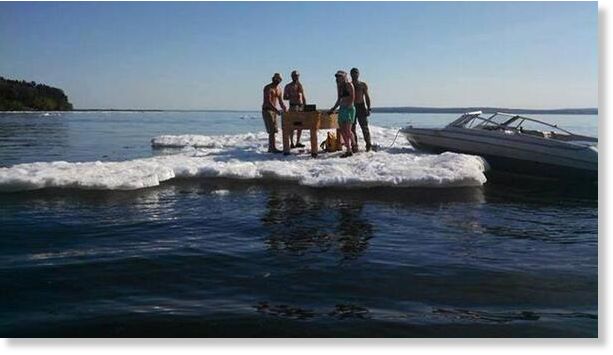
Ice still present on Lake Superior in July!

Image
The mainstream media tries to pretend that ice remained on Lake Superior "only" into June.

"How about July?"asks reader E Stephens.

"We should name icebergs still floating in Lake Superior in July after infamous AGW scientists. This one is Gavin," says Tilly LaCampagne via Twitter.

See photo dated 11 July 2014:

Thanks to E Stephens for this link

Cloud Lightning

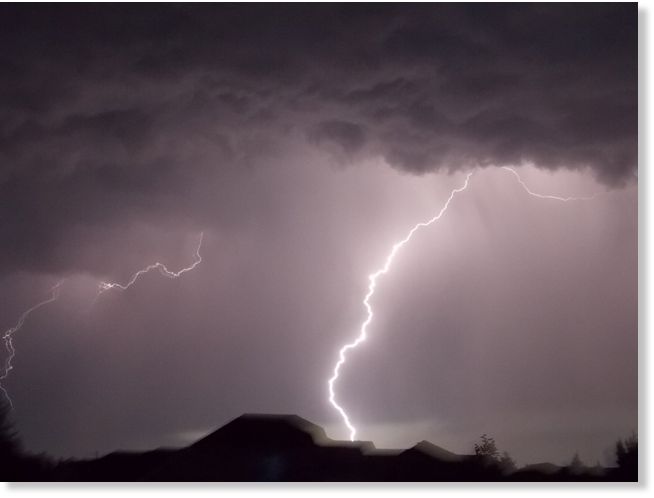
One killed and seven injured by lightning in Rocky Mountain National Park, Colorado

Image
© Ellen Haviland
A lightning strike killed one woman and injured seven other people inside Rocky Mountain National Park on Friday, park officials said.

The strike occurred shortly after 1 p.m. on the Ute Crossing Trail, officials said. Eight people suffered a variety of injuries, including one woman who died at the scene.

The people were all Colorado residents hiking together.

Of the remaining seven, two were transported by ambulance and five transported themselves to the Estes Park Medical Center, park officials said.

Four of the victims were treated and released. The other three remained hospitalized, but were expected to survive.


Snowflake Cold

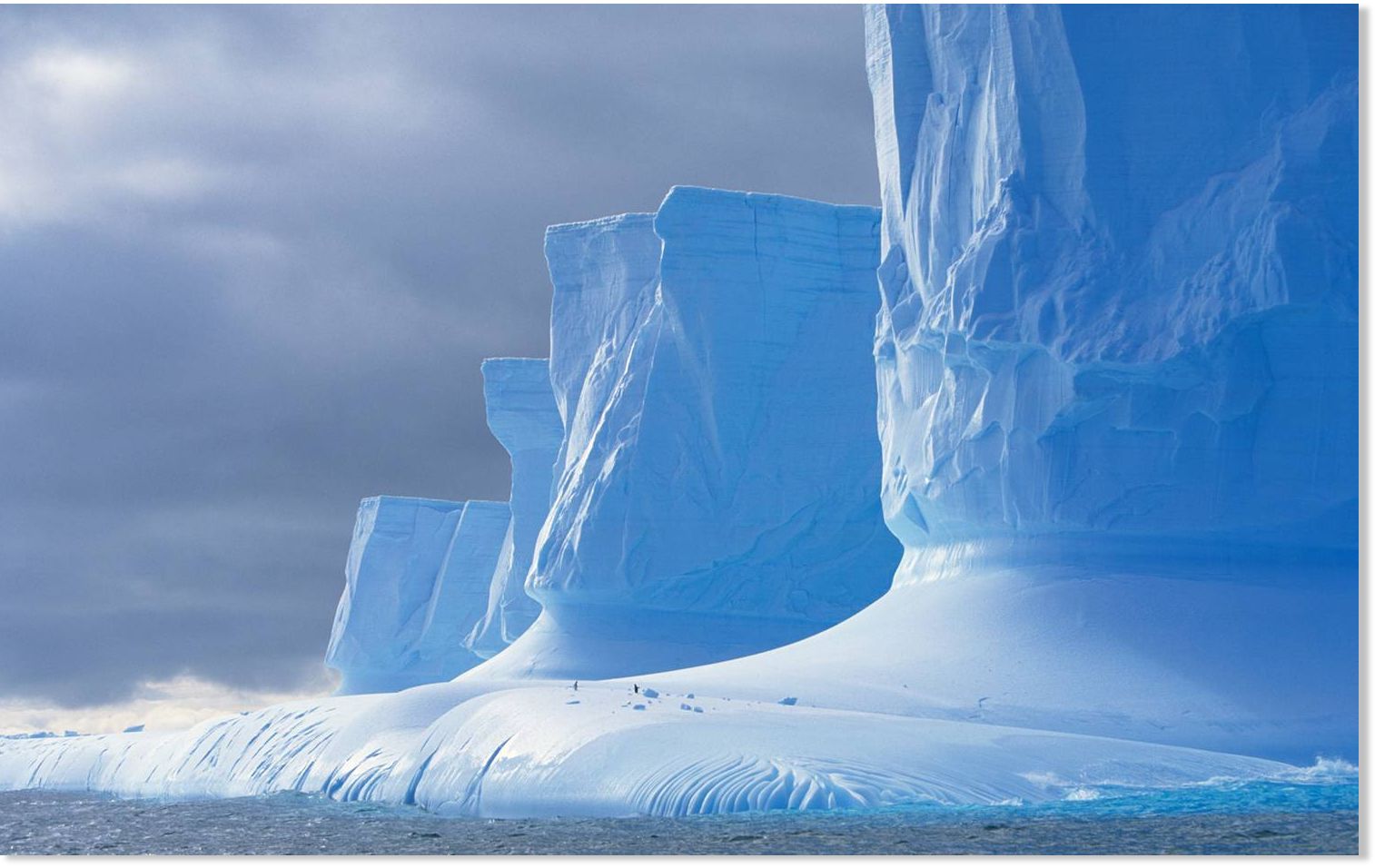
Coldest June ever recorded in Antarctica

Image
© John Weller
Antarctica continues to defy the global warming script, with a report from Meteo France, that June this year was the coldest Antarctic June ever recorded, at the French Antarctic Dumont d'Urville Station.

According to the press release, during June this year, the average temperature was -22.4c (-8.3F), 6.6c (11.9F) lower than normal. This is the coldest June ever recorded at the station, and almost the coldest monthly average ever - only September 1953 was colder, with a recorded average temperature of -23.5c (-10.3F).

June this year also broke the June daily minimum temperature record, with a new record low of -34.9c (-30.8F).

Other unusual features of the June temperature record are an unusual excess of sunlight hours (11.8 hours rather than the normal 7.4 hours), and unusually light wind conditions.

Nuke

Timebomb! Watch as 6.8 Magnitude quake shakes the Fukushima nuclear power plant

Fukushima map
© Unknown
Fast forward to 1 minutes 6 seconds into the clip (equivalent to 4:22am local time, and where every second is equvalent to 6 seconds in real-time) to see what the 6.8 magnitude earthquake, which we reported earlier, was all about. Luckily, this time, it was nothing to write home about. Let's hope it stays that way for all future earthquakes as well, or otherwise Abe will have much bigger problems on his hands than just a flaccid "third arrow."


Comment: USGS: Earthquake Magnitude 6.8 - 129km ESE of Namie, Japan


Alarm Clock

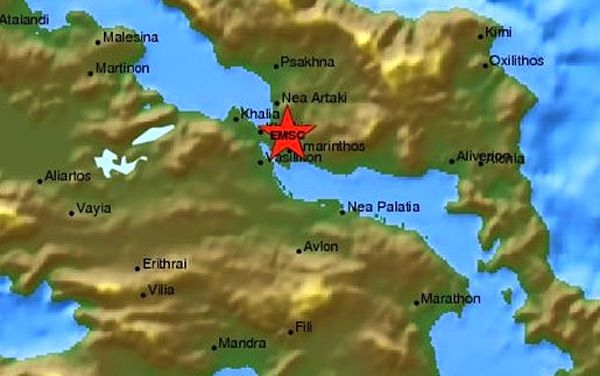
Earthquake Magnitude 4.3 in central Greece rattles Athens

Earthquake 4.3 hits central Greece
© Unknown
An earthquake of 4.3 magnitude on the Richter scale rattled Central Greece, today, July 11 at 12:46 pm. The areas where the earthquake was mostly felt were Chalkida and Eretria, while Athenians also felt its impact.

According to the Institute of Geodynamics the epicenter of the earthquake was in the city of Chalkida, Euboea, 54 kilometers north of Athens. The focal depth of the quake was detected at five kilometers.

Historically, earthquakes have caused widespread damage across central and southern Greece, the islands of the Ionian Sea, Crete, Cyprus, Sicily and other neighboring regions.

In January, a series of strong earthquakes on the western island of Kefalonia damaged hundreds of homes and injured more than a dozen people.

Alarm Clock

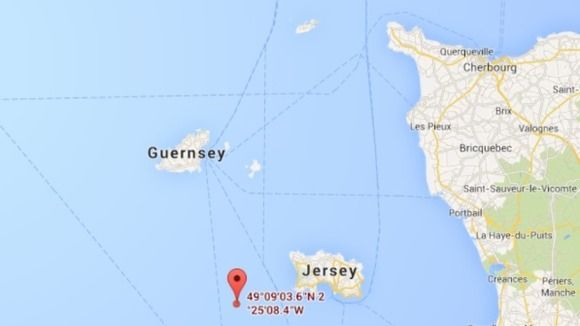
Channel Islands hit by biggest earthquake in 90 years

The biggest earthquake in Jersey and Guernsey on the Channel Islands for almost 90 years has struck, with a magnitude of 4.2.

Rumbles of sounds were heard as windows rattled when the quake struck at a depth of seven miles around 12 miles west of St Helier at 12.54pm.
Channel Islands earthquake
© GoogleJersey hit by biggest earthquake in 90 years.
The British Geological Survey (BGS) said it was the largest earthquake to have hit the region since a 5.6-magnitude quake on February 17, 1927.A spokesman for the BGS said it was also felt weakly on the South Coast of England, but only caused "very minor" damage.

One local thought a plane had crashed nearby, while another reported that the impact was enough to make them jump and go outside.

Alarm Clock

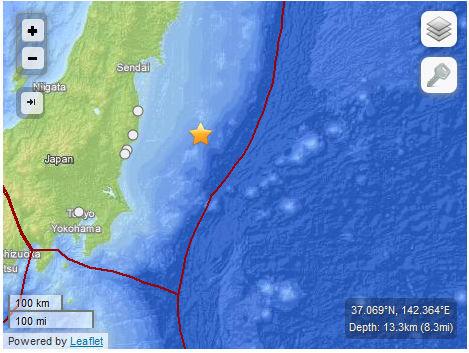
USGS: Earthquake Magnitude 6.8 - 129km ESE of Namie, Japan

Earthquake 6.8 Japan
© USGS
Event Time
2014-07-11 19:22:00 UTC
2014-07-12 04:22:00 UTC+09:00 at epicenter

Location
37.069°N 142.364°E depth=13.3km (8.2mi)

Nearby Cities
129km (80mi) ESE of Namie, Japan
131km (81mi) E of Iwaki, Japan
147km (91mi) ENE of Kitaibaraki, Japan
151km (94mi) ENE of Takahagi, Japan
284km (176mi) ENE of Tokyo, Japan

Scientific data

Comment: This is getting uncomfortably close to Fukushima! Namie lies in Fukushima prefecture.