Earth ChangesS


Attention

Elephant kills three people in West Bengal, India

Image
© Jagdeep RajputCharging Asian elephants.
Three people were killed and another injured Friday after they were attacked by an elephant in West Bengal's Jalpaiguri district, a forest official said.

The incident happened when the tusker strayed into the Kathambari village under the under the Apalchand range of Baikunthapur forest division.

"The elephant had strayed into the village and attacked people killing three of them and injuring another. While one person was killed on the spot, two others succumbed to their injuries in a hospital," Divisional Forest Officer (Baikunthapur) P.R. Pradhan told IANS.

The victims have been identified as Rabin Orao, Surajit Katham and Benoy De Sarkar.

Forest officials later managed to push the animal back into the jungle.

Locals staged a demonstration outside the forest official office seeking compensation for the dead.

Source: Indo-Asian News Service

Snowflake

Heavy snowfall traps over 200 motorists in Spain

Image
Some people could be stranded for days
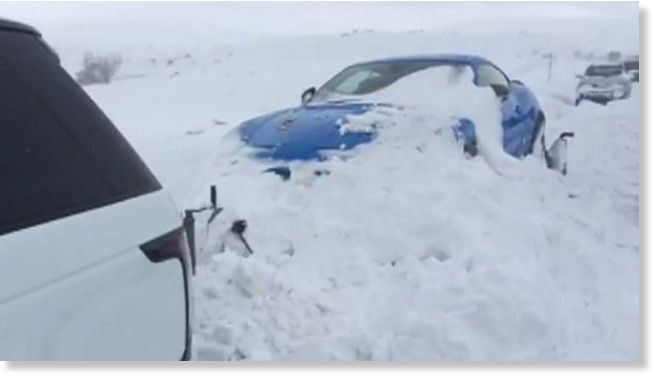
Spanish emergency services have rescued at least 220 people trapped by snow on roads in northern Spain.

Hundreds of cars were stuck for up to 17 hours overnight on roads between Cantabria and the province of Palencia.

Local media report temperatures of -15C (5F) and up 40cm (1.3ft) of snow.

Around 100 British expats and tourists were among those trapped. Spanish police rescued several stranded in their vehicles shortly after arrival in Santander by ferry from Portsmouth.

Many had come to Spain hoping for a warm-weather holiday, but ended up having to spend the night in the sports hall of a local school and the dining room of a hotel.

The country is in the middle of a cold spell that is expected to worsen over the next three days, with cold weather alerts issued for 20 provinces.


Snowflake Cold

Cold snap brings heavy snowfall to Italy

Image
© MeteoWeb
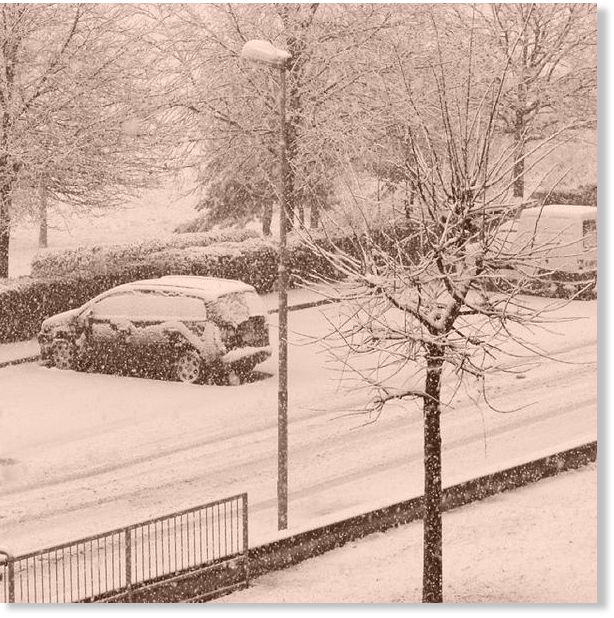
Heavy snow fell across northern and central Italy on Thursday, causing travel problems and some schools to close, while the south was hit by floods and landslides.

Snowfall blanketing parts of Italy hampered travel plans, causing trains in north-west Piedmont and Liguria to be cancelled. So far 35 trains have been affected, including those on the Genoa and Turin lines, Tgcom24 reported.

The cold snap has, however, been good news for skiers, with up to 60cm of snow falling in the mountainous Cuneo province by the French border. Schools in the area have been closed for the rest of the week, MeteoWeb said.

Magnet

Inconvenient study: Submarine volcano pulses may alter climate - models may be wrong

New data show strikingly regular patterns, from weeks to eons

Image
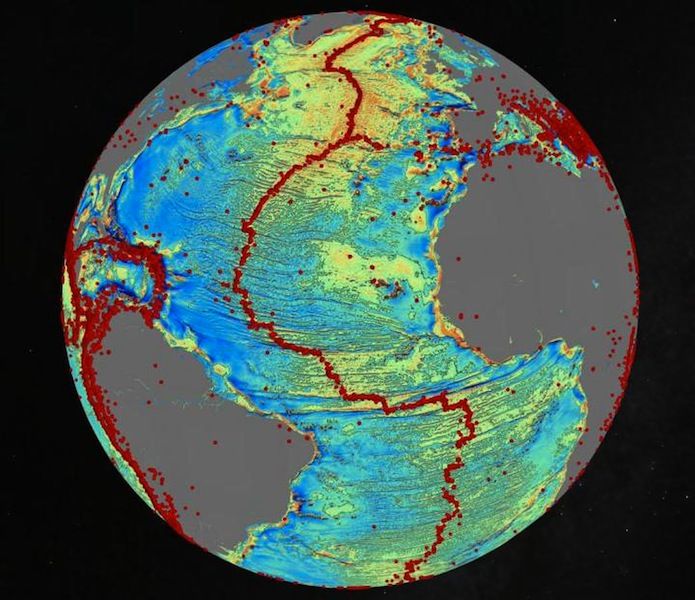
© Sciencemag.orgThis topographic map of Earth’s ocean floor in the Atlantic ocean reveals thousands of sub-oceanic volcanoes along the mid-Atlantic ridge.
From The Earth Institute at Columbia University:

Vast ranges of volcanoes hidden under the oceans are presumed by scientists to be the gentle giants of the planet, oozing lava at slow, steady rates along mid-ocean ridges. But a new study shows that they flare up on strikingly regular cycles, ranging from two weeks to 100,000 years - and, that they erupt almost exclusively during the first six months of each year. The pulses - apparently tied to short- and long-term changes in earth's orbit, and to sea levels - may help trigger natural climate swings. Scientists have already speculated that volcanic cycles on land emitting large amounts of carbon dioxide might influence climate; but up to now there was no evidence from submarine volcanoes. The findings suggest that models of earth's natural climate dynamics, and by extension human-influenced climate change, may have to be adjusted. The study appears this week in the journal Geophysical Research Letters.


Comment: The whole climate change (global warming) theory is based on man-made CO2 as a cause.


"People have ignored seafloor volcanoes on the idea that their influence is small - but that's because they are assumed to be in a steady state, which they're not," said the study's author, marine geophysicist Maya Tolstoy of Columbia University's Lamont-Doherty Earth Observatory. "They respond to both very large forces, and to very small ones, and that tells us that we need to look at them much more closely." A related study by a separate team this week in the journal Science bolsters Tolstoy's case by showing similar long-term patterns of submarine volcanism in an Antarctic region Tolstoy did not study.

Volcanically active mid-ocean ridges crisscross earth's seafloors like stitching on a baseball, stretching some 37,000 miles. They are the growing edges of giant tectonic plates; as lavas push out, they form new areas of seafloor, which comprise some 80 percent of the planet's crust. Conventional wisdom holds that they erupt at a fairly constant rate - but Tolstoy finds that the ridges are actually now in a languid phase. Even at that, they produce maybe eight times more lava annually than land volcanoes. Due to the chemistry of their magmas, the carbon dioxide they are thought to emit is currently about the same as, or perhaps a little less than, from land volcanoes - about 88 million metric tons a year. But were the undersea chains to stir even a little bit more, their CO2 output would shoot up, says Tolstoy.

Comment: A recent study has shown that volcanoes may have contributed to cooler temperatures.

See also: Climate Change Swindlers and the Political Agenda


Igloo

Chicago experiences 10th snowiest winter on record

Image
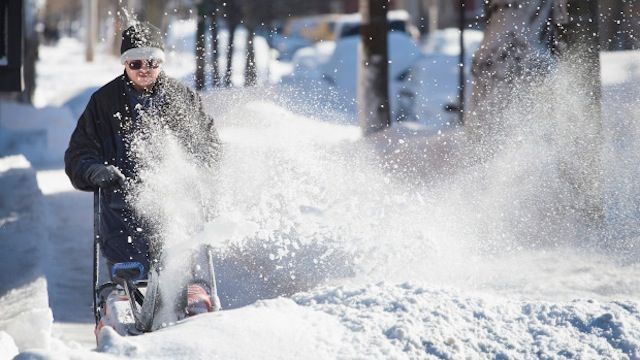
© Scott Olson/Getty ImagesA man clears snow from the sidewalk in front of an apartment building on February 2, 2015 in Chicago, Illinois. Snow began falling in the city Sunday morning and did not stop until early Monday morning, leaving behind more than 19 inches. It was the fifth largest snowfall in the city’s history.
Not only was this weekend's blizzard the 5th largest snowstorm in the city's history, it also made the past week the 8th snowiest week on record for Chicago.

According to the National Weather Service, a total of 21.3 inches of snow was measured at O'Hare from Jan. 29 through Feb. 4. Virtually all of that - 19.3 inches - came during the snowstorm that started Saturday night and ended Monday morning.

Also thanks to the blizzard, this February is already the 10th snowiest on record in Chicago, with more than three weeks left until the end of the month.

With 36.7 inches of snow so far this winter in Chicago, we've already reached the normal snowfall for the entire average winter season in Chicago, meaning - despite no measurable snow in December - Chicago is virtually assured of having above normal snowfall this winter.

There will be a nice break from the snow during the next couple days. CBS 2 Meteorologist Megan Glaros reports no precipitation is expected for the next 24 to 48 hours.

While Thursday is the first time in the past eight days that Chicago won't get any snow, temperatures plunged below zero overnight.

Shortly before 8 a.m., the temperature dipped to 2 below zero at O'Hare International Airport, with a wind chill of 10 below.

It was even colder in some outlying suburbs, Thursday morning, with temperatures of as low as 14 below in Kankakee, and 16 below in Aurora.

The frigid conditions won't last long though. While Thursday's high will be only about 16 degrees, temperatures will return closer to normal the next several days, with a high of 32 on Friday, 35 on Saturday, and 32 on Sunday. Next week will start about the same, with highs in the upper 20s or lower 30s through Wednesday.


Umbrella

Large river of atmospheric water vapor set to soak Sacramento

Image
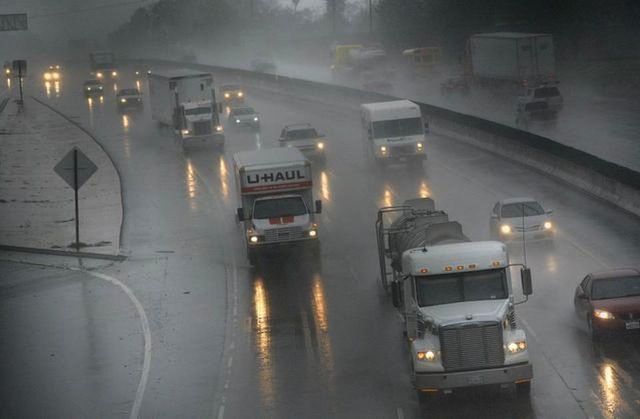
© Debbie Noda/Sac BeeTraffic travels north on Highway 99 in the rain Dec. 11, 2014. The major storm in December involved an atmospheric river – a phenomenon that top scientists are studying in Sacramento this week.
Water vapor - Mississippi River-size amounts of it flowing at hurricane speeds miles above the Earth - is hurtling across the Pacific, an atmospheric river poised to drench a parched Northern California and the Sacramento region as early as Thursday night.

A crack team of science experts is going along for the ride, part of an experiment known as CalWater 2015, many of whom gathered at McClellan Park near Sacramento on Tuesday in preparation for the major weather event and the vital information they hope to pull from the phenomenon.

"It's a real milestone for us. Nothing of this scope has happened," said Marty Ralph, director of the Center for Western Weather and Water Extremes at Scripps Institution of Oceanography in San Diego, of the project he's helping to lead. "One of the drivers of CalWater was the uncertainty of climate projections. We haven't had the data to measure the strength and structure of ARs. ... There's so much potential for the monitoring of atmospheric rivers."

They come from an alphabet soup of agencies, universities and scientific institutes, from NOAA to NASA, USGS and the DOE, to study atmospheric rivers and the role they play in water supply. The researchers will cast a wide net from the Sierra Nevada to the Coast Range and into the Pacific Ocean during a storm system that CalWater forecasters said will produce "copious" amounts of rain into Saturday.

"There will be ample opportunity to store this water, hopefully, and provide a little relief from the drought," said Allen White, a research meteorologist at the National Oceanographic and Atmospheric Administration.

The information the scientists glean, they hope, will help do nothing less than predict the future of water and weather in a California at the mercy of both. Think of atmospheric rivers as a massive water vapor pipeline, responsible for many of the major storms along the West Coast and about half of the rain and snow Northern California sees each year.

Knowing how atmospheric rivers are formed, how strong they are and where they will land can help communities and water experts in California and the West. They can better plan for water storage, storm and disaster preparedness, drought and climate change.

Attention

Dead Humpback whale found on Corolla beach, North Carolina

Image
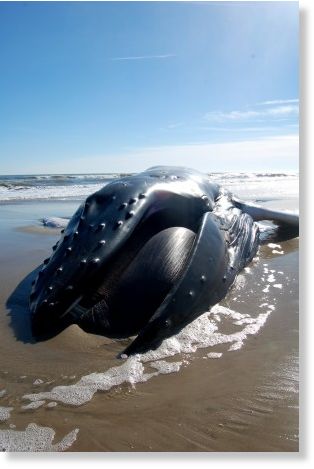
© Karen Clark | Outer Banks Center for Wildlife EducationA 29-foot female juvenile humpack whale was found near the Lighthouse Road beach access in Corolla, N.C.
Scientists today examined a dead female humpback whale that washed ashore Tuesday afternoon.

The juvenile was found near the Lighthouse Road beach access in Corolla with entanglement scars from fishing nets.

The whale, which was about 30 feet long and weighed 25,000 pounds, otherwise appeared healthy and had recently eaten menhaden, said William McLellan, the North Carolina State Stranding Coordinator.

Whale strandings -- especially this time of year -- are not uncommon and happen frequently on the Outer Banks, more so than anywhere else on the East Coast, he said. There have been 100 whale strandings in 15 years, he said.

Attention

Mass die-off of hundreds of pigeons alarm biologists in California

Image
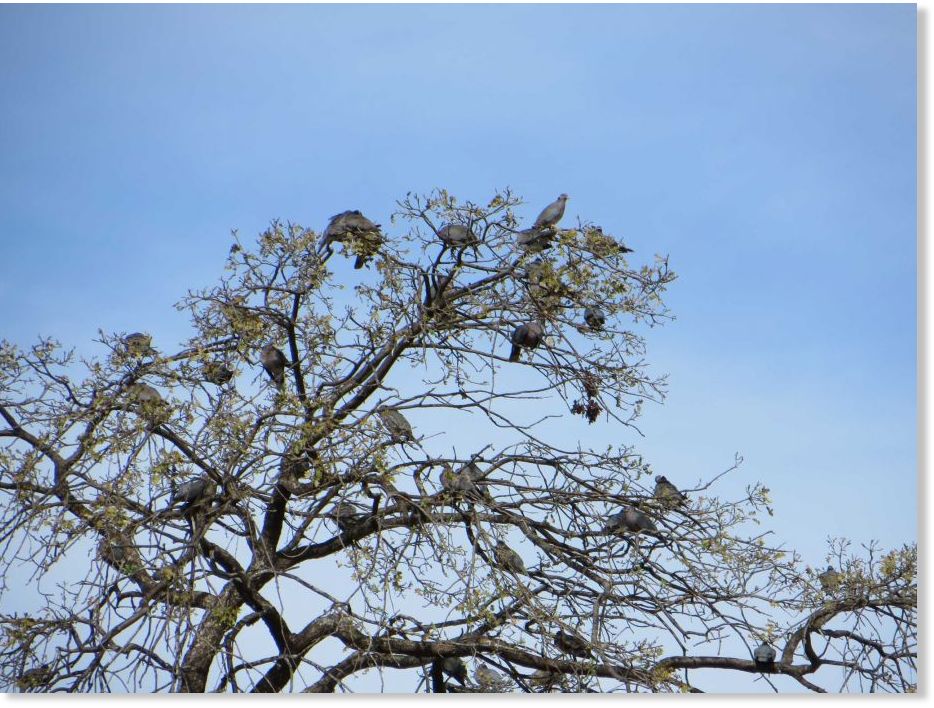
© Krysta RogersCalifornia's only native pigeon is the band-tailed pigeon, which spends springs and summer in the Bay Area and other parts of Northern California
An alarming increase in the number of dead and dying band-tailed pigeons along the California coast has prompted wildlife biologists to ask the public for help documenting the apparent decline of the only native pigeon left in the state.

At least 1,000 of the pigeons, which winter in Central and Southern California, have been found dead in Santa Clara and Santa Barbara counties since December, the apparent victims of a parasite spread by the common rock pigeon, said Krysta Rogers, an environmental scientist with the California Department of Fish and Wildlife.

The sudden increase in mortality is disturbing, Rogers said, because the closest living relative to the extinct passenger pigeon has been struggling for decades to recover from rampant hunting, habitat loss and other environmental problems.

Binoculars

Sea duck that is native to Northern Europe turns up off California coast

Image
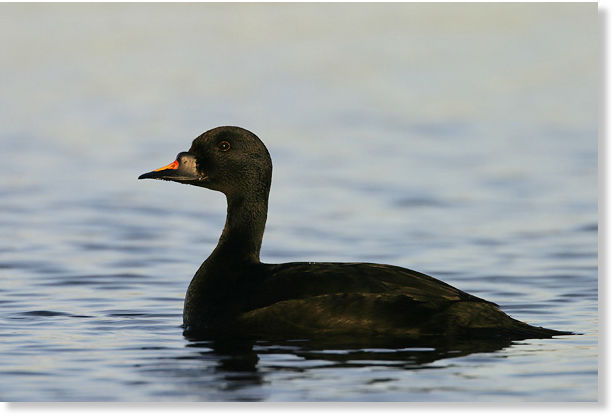
Common Scoter.
Bird watchers from across the country traveled to the Crescent City Harbor for the first North American sighting of the Common Scoter on Wednesday.

The Common Scoter is a sea duck that is native to Northern Europe. The rare North American Common Scoter sighting not only brought out local bird watchers, but bird watchers from North Carolina.

"This is very important for me; it's pretty much all I live for," Keith Camburn, a bird watcher who traveled from North Carolina, said.

Harbor Master, Charlie Helms of the Crescent City Harbor District, said the Common Scoter sighting brought a crowd he's never seen at the harbor.

Cloud Lightning

Lightning bolt kills dad out walking dog in Bayswater, Australia

Image
Belmont father Vincent Capriotti died after being struck by lightning while walking with his "best mate" Juke in a Bayswater park on Tuesday night.

The 58-year-old's son Grant said yesterday his family was struggling to believe that an "horrific act of nature" had taken his life.

"The family is absolutely devastated," he said. "We've lost the most loving and caring man in the entire universe.

"I don't think we'll ever recover from this."

But he said they were trying to draw some comfort from knowing that his daily walk with his black kelpie around local parks and the river was his favourite thing to do.