Earth ChangesS


Cloud Precipitation

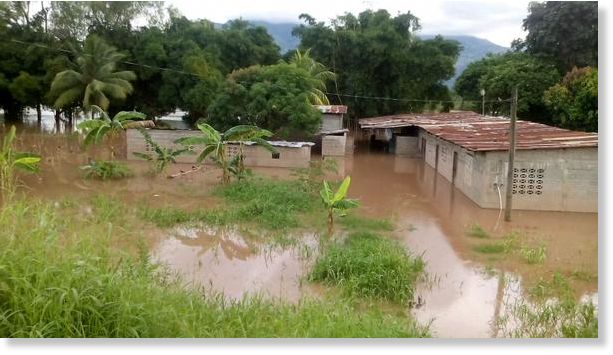
Central America flooding: Deadly floods kill 7 in Honduras; Belize receives 10 inches of rain in 36 hours

Image
© Bomberos de HondurasOverflowing río Ulua in El Progreso Yoro.
At least 7 people have died in floods in Honduras since heavy rain began to fall on 17 October.

Elsewhere in Central America, flooding has also been reported in Guatemala, Belize and Nicaragua.

Honduras

Heavy rain has been affecting parts of Honduras since 17 October 2015, triggering floods, landslides and rivers to overflow.

COPECO, (Comisión Permanente de Contingencias), the disaster management agency in Honduras, issued red alerts for several areas along the Ulúa river, including Potrerillos, Pimienta, San Manuel and Villanueva in Cortés; El Progreso, Negrito and Santa Rita in Yoro; and also some areas in Atlántida.

Yellow alerts were issued for for the town of El Rosario, in the department of Comayagua, and lower level green alerts for some areas of the departments of Choluteca, Valle and Francisco Morazán.

Local media report that at least 7 people have died in floods in Comayagua department. As many as 2,000 people have been left homeless in Siguatepeque and the local authorities there have declared a state of emergency.

Wolf

2 wolves killed following deadly dog attacks in Victoria Beach, Canada

Image
Heather Werner, a cabin owner in the area, said it is concerning to have so many wolves attacking family pets.
Manitoba Conservation and Water Stewardship confirmed it killed two wolves in Victoria Beach.

Residents have been on edge since several dogs from the area were killed.

Victoria Beach Police believe wolves were responsible for at least two deaths.

Heather Werner, a cabin owner in the area, said it is concerning to have so many wolves attacking family pets


"The more they catch, the better we can sleep. And not worry about the dogs," said Werner, who owns a small dog.

Conservation hired the Manitoba Trapper's Association to trap the problem wolves.

It believes there are four wolves total.

Wolf

Dog attacks increase in South Australia

Image
Dog attacks are on the rise in South Australia, with young children often the victims, the latest figures show.

The state's Dog and Cat Management Board says there were 1347 attacks in the past financial year, up from 1318 the previous year.

It says 479 attacks were on people, with 299 treated in hospital.

Environment Minister Ian Hunter says hospital admissions have been growing steadily over the past five years from 195 in 2010.

"Unfortunately, young children under nine year of age bear the brunt of these attacks, with 56 children in this age group hospitalised with dog bites last year," Mr Hunter said.

Source: AAP

Attention

Dead orca whale reported near Petersburg, Alaska

Image
© KFSKPortage Bay on northern Kupreanof Island near Petersburg.
A team of scientists is heading to Petersburg today to investigate a dead orca whale found on the Kupreanof Island shoreline.

Greg Lutton was moose hunting on Kupreanof Island this week and said he saw the dead whale on his way out of Portage Bay. Lutton said he was very surprised to see the dead whale. "I've been fishing for 40 years now and never seen a dead killer whale," he said.

Lutton said the large female orca has no signs of trauma and he measured it to be 17 feet and four inches long. The carcass is on the beach, right at the entrance to the narrow bay. Portage Bay is on the northern side of Kupreanof Island, between Petersburg and Kake. Lutton said the dead whale still looks pretty fresh and thinks it just washed up there.

Attention

Attacks by wild animals increase in Ganderbal, Kashmir

Image
The wildlife animals have wreaked havoc in Ganderbal with attacks on humans and livestock having witnessed a multifold increase here.

As per reports the wildlife animals particularly remain on prowl to attack the people in many areas of Ganderbal including Lar, Waliwar, Manigam, Wurpash, Wussan, Mamar, Thune and Gund areas.

The wildlife animal attacks particularly that of Bear have increased. Both the people and their livestock have been attacked due to which many were injured in the attacks and residents also suffered heavy financial losses.

"We are continuously living under the threat of bear attacks which have injured many people seriously in the past few months", Muhammad Ismail, a local resident said. He added that the people fear to move out of homes and the children were reluctant to go out and play due to the fear of attacks by wildlife animals.

The local residents alleged that the Wildlife department is, "acting as a mute spectator'' even as it was brought to their notice that the bear often stray into the residential areas.

The residents said the wildlife department was "ill equipped and understaffed" to deal with the increasing incidents of man-animal conflict in the district.

Arrow Down

Global Warming blamed for mystery kidney disease

Sugar Cane Fields
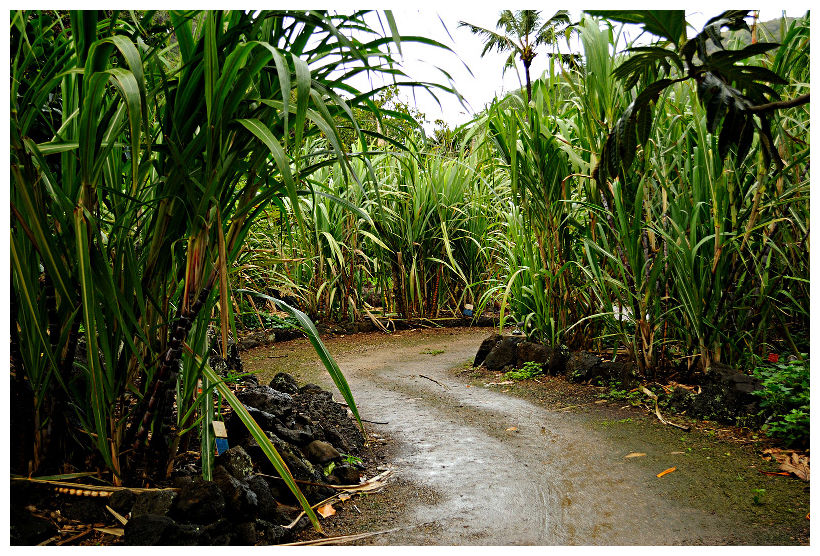
© Jacopo Werther/Daniel Ramirez/Wikimedia CommonsPath between the sugar cane.
Does global warming cause kidney disease? According to a study published in the American Journal of Kidney Diseases, the root cause of a mystery illness which has killed 10s of thousands of sugar cane workers in Central America might be chronic dehydration, as a result of frequent hard, manual labour in extreme heat.

According to the study;
... Despite limited resources, we documented widespread decreased kidney function in coastal communities related to years of work on coastal sugarcane/cotton plantations. The high prevalence of eGFR <60 mL/min/1.73 m2 in the coastal communities, 18% of men aged 20-60 years, indicates the severity of the epidemic in a region where there is little to offer to patients and where CKD often progresses to ESRD and death. It is noteworthy that decreased eGFR also is related to cardiovascular morbidity and mortality. The risk of premature death from cardiovascular disease at CKD stages 3-4 is higher than that for reaching ESRD.38, 39 This study from El Salvador, as well as the recent Nicaraguan studies,23, 24, 25 provides important clues for etiologic studies, particularly heat stress.

It is urgent to assess the causes of this severe public health problem with properly designed etiologic and clinical research. A thorough medical workup including kidney biopsies and histopathologic examinations from a small group of affected individuals in rather early stages of CKD is needed to confirm the interstitial nature of the disease and provide clues with regard to pathogenesis. Etiologic research would use random samples from a proper study base and repeated measurements of all pertinent exposures with emphasis on heat exposure, environmental and water pollutants (particularly pesticide residues and heavy metals), and amount of water intake during work and rest.

Precautionary preventive actions must be implemented already at this stage, providing sufficient water and rest for workers in hot environments. There is a threat that global warming will dramatically increase populations exposed to hard work in hot climates. If heat stress is a causal factor for CKD, this disease will be an added health risk related to climate change.
Read the full text of the above article

Boat

Typhoon Koppu makes landfall, brings massive flooding to Philippines

Image
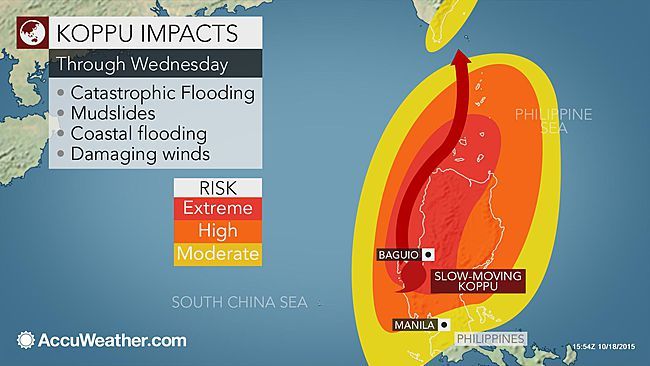
Typhoon Koppu will put lives and property across Luzon Island of the Philippines in danger through early this week.

Koppu developed into a typhoon early Friday morning local time and strengthened through the end of the week, reaching super typhoon status late Saturday evening. With wind gusts up to 295 km/h (180 mph), Koppu intensity was similar to that of a Category 4 hurricane in the Atlantic Ocean.

Very early Sunday morning, Koppu made landfall near Casiguran, Aurora on the eastern coastline of Luzon as a very dangerous cyclone the equivalent of a Category 4 hurricane. Koppu has weakened and is no longer a super typhoon, but still poses a significant threat to those in the Philippines.

In addition to Koppu's increased strength as it approached the Philippines, the system also has slowed down significantly. The combination of a powerful and slow-moving typhoon spells a disastrous situation for residents and communities in its path across northern Luzon.

Koppu crawled toward towards northern Luzon Island throughout the day Saturday, local time, making landfall early Sunday morning. Koppu is expected to move slowly northward along the west coast of Luzon through the first half of the week. While the threat for damaging wind will decrease during this time, life-threatening flooding will remain a major concern.


In Baguio, over 200 mm (8 inches) of rain had already fell by Sunday evening. The city could receive another 250 mm (10 inches) of rain before Koppu pulls away.

"A total of 300 to 600 mm (12 to 24 inches) of rain is expected to be widespread," AccuWeather Meteorologist Adam Douty said. There will even be localized amounts upwards or in excess of 900 mm (36 inches). Such rain is sure to trigger severe and life-threatening flooding and mudslides.
"The most significant rain will fall in the mountainous terrain of northern Luzon," Douty added.


X

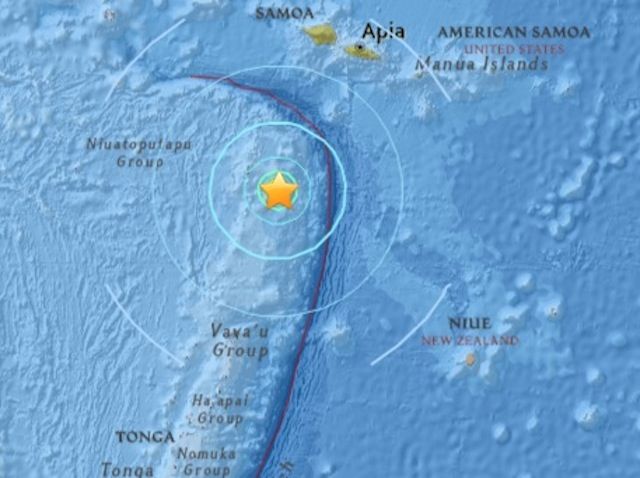
Second earthquake hits 33 miles southeast of Hihifo, Tonga; magnitude 5.1

Image
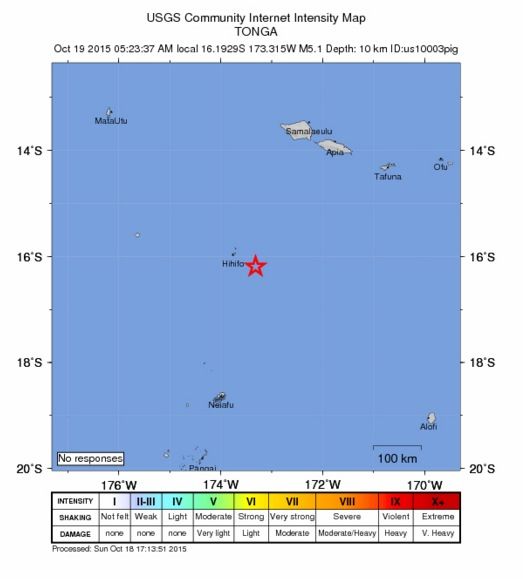
© USGS16.193°S 173.315°W depth=10.0 km (6.2 mi)
Time
  1. 2015-10-18 16:23:37 (UTC)
  2. 2015-10-18 12:23:37 (UTC-04:00) in your timezone
  3. Times in other timezones
Nearby Cities
  1. 53km (33mi) ESE of Hihifo, Tonga
  2. 309km (192mi) SSW of Apia, Samoa
  3. 346km (215mi) SW of Tafuna, American Samoa
  4. 351km (218mi) SW of Pago Pago, American Samoa
  5. 581km (361mi) NNE of Nuku'alofa, Tonga
Image

Comment: The first one occurred five minutes prior:

Magnitude 6.0 quake strikes 41 miles southeast of Hihifo,Tonga

Update: Two more have been reported since:
M4.8 - 47km ESE of Hihifo, Tonga
M5.1 - 38km ESE of Hihifo, Tonga


Attention

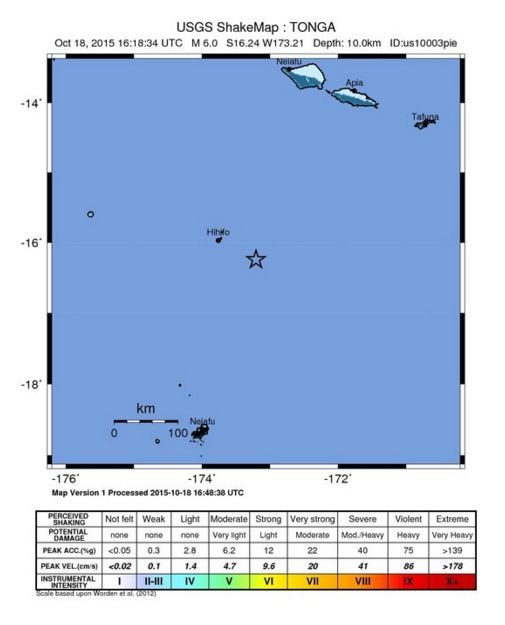
Magnitude 6.0 quake strikes 41 miles southeast of Hihifo,Tonga

Image
© USGS16.244°S 173.207°W depth=10.0 km (6.2 mi)
Time
  1. 2015-10-18 16:18:34 (UTC)
  2. 2015-10-18 12:18:34 (UTC-04:00) in your timezone
  3. Times in other timezones
Nearby Cities
  1. 66km (41mi) ESE of Hihifo, Tonga
  2. 308km (191mi) SSW of Apia, Samoa
  3. 340km (211mi) SW of Tafuna, American Samoa
  4. 345km (214mi) SW of Pago Pago, American Samoa
  5. 580km (360mi) NNE of Nuku'alofa, Tonga
Image

Wolf

London woman rushed to hospital with facial injuries from dog attack

Image
© Pontiacpro
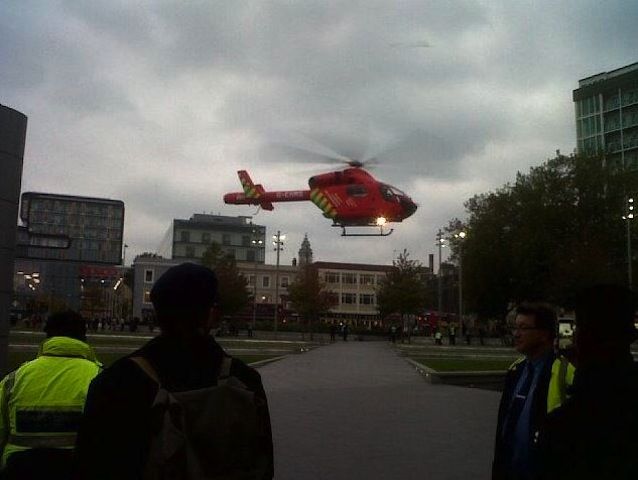
A woman is being treated in hospital after being attacked by a dog in south-east London. The woman, in her 30s, was found with severe injuries to her face after the attack in Woolwich, said police. An air ambulance was called but not needed, and the woman was driven to hospital by ambulance. She is in a "serious but stable" condition, the Met Police said.

Officers were called by paramedics at around 4.30pm on Friday to Wilmount Street. Police seized the dog and took it to a nearby kennel. No arrests have been made. A London Ambulance Service spokeswoman said: "We were called at 4.25pm to reports of an incident on Wilmount Street, SE18. We sent an ambulance crew, a single responder in a car, an incident response officer and London's Air Ambulance. The first of our medics were on scene in seven minutes.

"We treated a woman in her 30s for facial injuries and stabilised her at the scene. She was taken to a major trauma centre as a priority by ground ambulance - escorted by the doctor from the air ambulance."
Residents said there were "police everywhere".

One man, who only wanted to give his surname, said he knew the woman who was attacked. Mr Bates said: "There was more police here today than during the riots. I know her and her son - she's got a little Jack Russell dog. I would be surprised if it was that little dog." He said the woman lived on Wilmount Street, adding : "She was outside of her own flat. The police were everywhere - you would have thought she had been shot."