Earth ChangesS


Cloud Lightning

Lightning strikes kill 6 people and 6 goats in Marathwada, India

Lightning
As many as six people were killed after being struck by lightning in four districts in Marathwada.

Reports reaching here today said, two people killed identified as Arun Rupnar (30) at Telwadi area and another Rangnath Sonawane were killed near Brisk kiln near Paithan town. Two women sustained injuries in this accident. Two peope identified as Hari Koudgave (35) and Vijay Koudgave (40) were killed in Nanded district last night.

53 year-old Arjun Kale who was injured after lightning struck him, succumbed at Government medical college and hospital at Ambejogai.

Report from Jalna district stated that, a-26-year-old farmer identifed as Subhash Davande was killed due to lightning
in Partur taluka. Rains lashed Tirthpuri, Ankushnagar, Gondi and Kumbar Pimplagaon.

Arrow Down

Two cars fall into sinkhole in Omaha, Nebraska

 Sinkhole swallows two cars
Sinkhole swallows two cars
A man is now thanking his lucky stars he was not hurt after his car got swallowed up into a giant sinkhole. It happened around 10:15 p.m. Thursday night near Aksarben Village.

Investigators said the concrete ceiling above an underground parking garage gave way at 60th and Woolworth Avenue outside the "Tracks Bar".

As a result, two cars fell into the sinkhole.

The man was able to get out on his own.

Investigators are now trying to figure out what caused the sinkhole.

Cloud Lightning

At least 51 injured as lightning strikes music festival near Frankfurt, Germany

Rock am Ring music festival
© Volksfreund TV/YouTube
Dozens of festival-goers were left injured and 15 hospitalized at the world-famous Rock am Ring music festival near Frankfurt, Germany, after a bolt of lightning struck the crowd.

Lightning storms and bad weather have been threatening the entire continent, with the festival near Mendig, in Rheinland-Pfalz, the latest target. At least 51 people were injured by the lightning, according to Deutsche Welle, with the festival issuing a tweet.

The festival was interrupted for about half an hour on Friday, as rock and metal fans were told to seek shelter in their tents and steer clear of the stage. At least 15 people, however, have received serious injuries and had to be taken to hospitals, as of early Saturday. The police also told the AP two people had to be resuscitated on site. The figure of injured and hospitalized grew from 42/8 to 51/15 respectively overnight.

The rest of the three-day event is going on as planned, and the organizers said any rumors of a cancellation were untrue.


Comment: Lightning strikes children in Paris and Germany, over 40 injured; bolt kills man in Poland


Cloud Precipitation

Floods around the world: USA, Mexico, Russia, China, France, Germany, Belgium, Ukraine, Romania

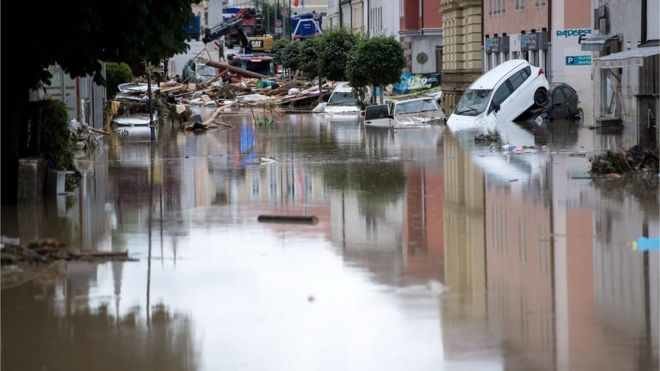
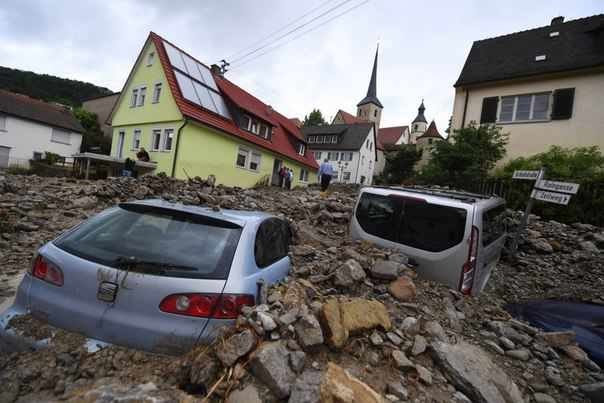
German floods
© EPARoads in the town of Simbach in Southern Germany have turned to rivers, with cars covered by the rising water......devastating scenes which are being observed all around the world.
The current flooding mayhem isn't just happening in Europe - it's also hitting countries worldwide. Here's a compilation of the worst floodings from around the world: the US, Mexico, Russia, China, France, Germany, Belgium, Ukraine, and Romania.

Just think, the worst is probably yet to come!

Let's start with the 'biblical' floods currently sweeping across western and eastern Europe. Days of downpours have caused ten deaths in Germany, two in France and Romania and one in Belgium. The River Seine in Paris is six meters higher than normal.

Germany

In Germany, 10 people have been killed, including four in Baden-Wuerttemberg in flooding that hit Sunday and Monday.

German flooding June 2016

Snowflake

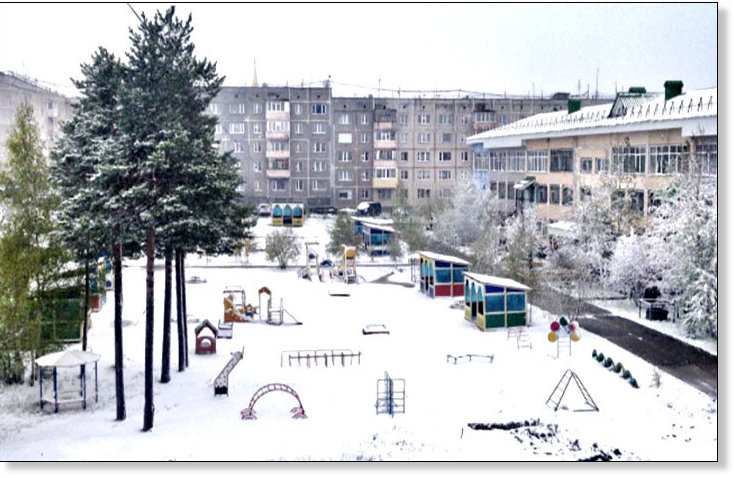
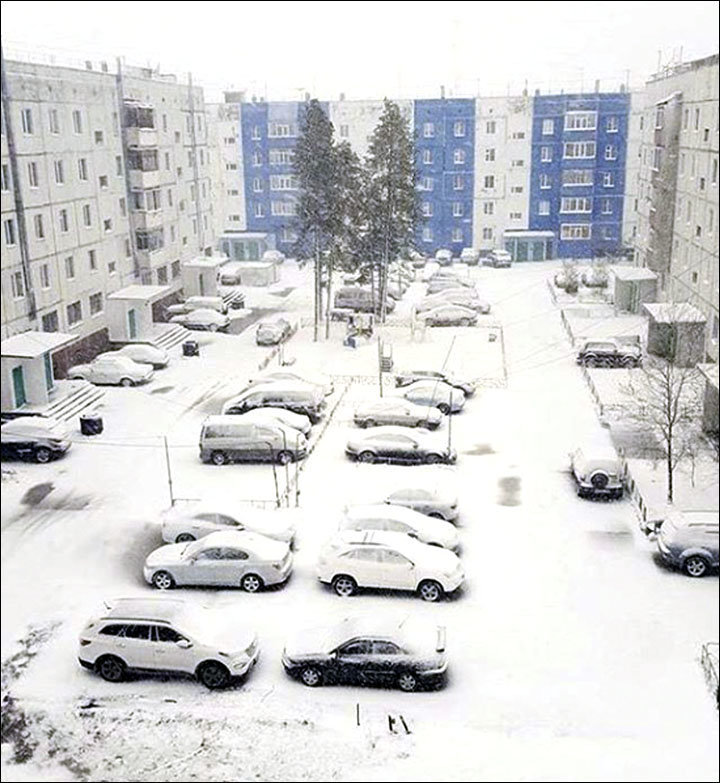
Global warming? Snowfall in Siberia marks the official start of summer

Residents of Surgut, Noyabrsk, Novy Urengoy and other cities woke on 1 June, the first day of summer, to find it looked more like Chirstmas.
© Vita GolovyukResidents of Surgut, Noyabrsk, Novy Urengoy and other cities woke on 1 June, the first day of summer, to find it looked more like Chirstmas.
Freak weather as winter returns to Khanty-Mansi and Yamalo-Nenets autonomous regions.

The Siberian stereotype says its always cold here, but this is a fallacy. Usually. Elsewhere, for example in Chita, the temperature is 24C, and in many regions there are growing risks for forest fires.

But as these pictures show, in some areas of western Siberia, the thermometers have plunged to around zero. Residents of Surgut, Noyabrsk, Novy Urengoy and other cities woke on 1 June, the first day of summer, to find it looked more like Christmas.

In some areas there were even snow drifts. In Noyabrsk, the local administration restarted heating supplies to homes.


Summer snow Siberia
© Linda Simonyan

Attention

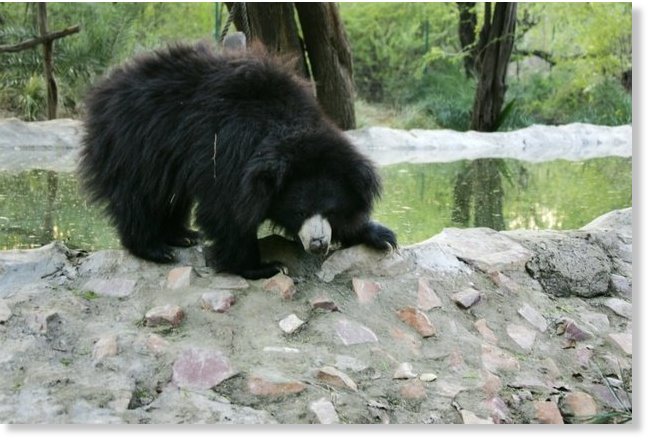
Pack of sloth bears attack and injure 3 in Chandrapur, India

Sloth bears are found in India, Nepal, Sri Lanka and Bhutan but shrinking habitats and rampant poaching have reduced their numbers
© Manpreet RomanaSloth bears are found in India, Nepal, Sri Lanka and Bhutan but shrinking habitats and rampant poaching have reduced their numbers
A pack of sloth bears attacked three persons and seriously injured them in agricultural fields near Kavthala village in Chimur tehsil on Friday. Sources said that Avinash Rajurkar was working in his farm, when he saw two adult bears accompanied by three cubs heading towards him. He immediately climbed up a tree, but a bear injured his leg while trying to pull him down.

The bears also injured two other persons in nearby fields. The bears attacked Sudhakar Rajurkar, who was working around 200 metres away in the same stretch of farm, and injured him. Hearing his cries other farmers from nearby farms rushed to his rescue and shooed away the bears. The pack however went to the fields in adjacent Shedegaon and attacked one more farmer Yogesh Ninawe in his farm.

Later as the news spread, local forester and villagers gathered in the fields and forced the pack of the bears to flee into the forest. The three seriously injured persons were rushed to Nagpur for emergency treatment. RFO, Chimur range, KR Akkewar has paid Rs5,000 each to the injured persons for treatment. Department will bear the cost of treatment, forest officials said.

Attention

Bear mauls 6 people in Odisha, India

Bear
At least six persons, including two forest personnel were injured when a wild bear mauled them at Belagaom today.

The injured persons were admitted to the MKCG Medical College and Hospital here and condition of three of them was stated to be critical.

The animal entered the village last night and became violent, when villagers teased it. It attacked the villagers one after other, injuring at least four of them.

Forest guards were injured when they tried to save the villagers from the animal, officials said.

Since the villagers panicked at the sight of the animal, around 30 forest personnel were deployed in the vicinity, said divisional forest officer (DFO) Berhampur A K Behera.

Attention

Sustainability of fish populations threatened by microplastic particles

microplastic waste fish
© Oona Lönnsted Larval perch from the Baltic Sea that has filled its stomach with microplastic waste particles.
In a new study, published in Science, researchers from Uppsala University found that larval fish exposed to microplastic particles during development displayed changed behaviors and stunted growth which lead to greatly increased mortality rates. The researchers discovered that larval perch that had access to microplastic particles only ate plastic and ignored their natural food source of free-swimming zooplankton.

Microplastic particles (defined as plastic particles <5mm in size) originate from large plastic waste products that fragment into smaller pieces, or from manufactured plastics of microscopic size (e.g., microbeads in personal care products). These microscopic waste particles reach oceans via waterways and lakes and accumulate in high concentrations in shallow coastal areas.

Today there is increasing concern that the accumulation of microplastic waste particles could affect the functioning of marine ecosystems, but our knowledge of the impacts of microplastic fragments on marine animals is limited. For the first time, scientists have now been able to show that development of fish is threatened by microplastic pollution.

'Fish reared in different concentrations of microplastic particles have reduced hatching rates and display abnormal behaviors. The microplastic particle levels tested in the current study are similar to what is found in many coastal habitats in Sweden and elsewhere in the world today' says marine biologist, Oona Lönnstedt, lead author of the article.

Larval perch exposed to environmentally relevant concentrations of microplastic polystyrene particles displayed stunted growth rates. The authors found that this was related to larval feeding preferences as perch that had access to microplastic particles only ate plastic and ignored their natural food source of free-swimming zooplankton.

'This is the first time an animal has been found to preferentially feed on plastic particles and is cause for concern', says Professor Peter Eklöv, co-author of the study.


Fire

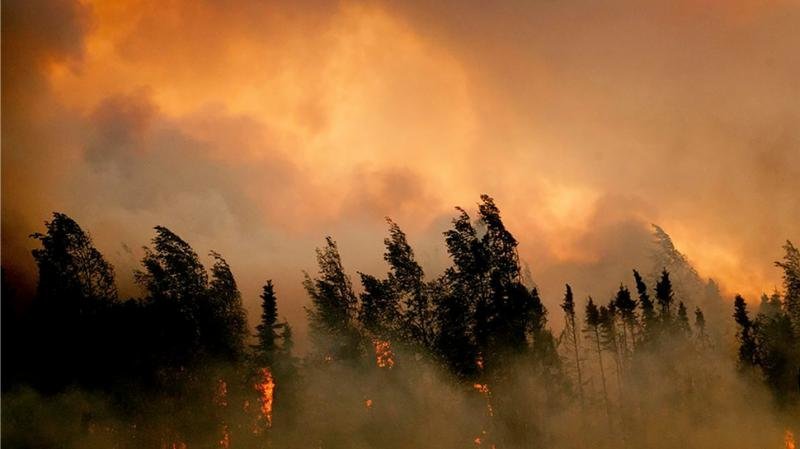
Reignited holdover 'zombie' wildfires have awakened in Alaska

Holdover wildfires in Alaska
© REUTERS/Mat-Su Borough/Stefan Hinman
As if we didn't have enough to worry about with the start of wildfire season, we now have to face the reality of zombie blazes: fires that never really die.

Last year's Alaskan wildfire season was the second-largest ever — and it seems it never entirely ended. A wildfire in southwest Alaska that swept more than 8,000 acres in the Medfra area over the course of this week is a continuation of a 2015 fire that never went out, despite having ceased to visibly burn. The Soda Creek Fire raged through 16,500 acres in the same area last summer, according to Alaska Dispatch News. It smoldered underground, survived the winter, and finally reignited on Sunday, spreading to an acre within an hour.

It's harder than it may seem to completely douse an established wildfire. Fire can burrow deep into the roots of old-growth trees, where it burns slowly, insulated by a thick, moisture-absorbing blanket of decomposing moss, leaves, and twigs on the forest floor. And once the ground freezes, the embers are sealed in, sometimes under feet of snow. Come spring, the ground warms up, the surrounding brush and trees dry out, and the fire can spring back to life.


Comment: Another contributory factor may be 'outgassing' of methane and other natural gases.


These reignited fires — called holdover fires — are becoming more common. Sixteen Alaskan wildfires have been attributed to holdovers this year alone. In the past, officials haven't even kept records of the number of holdovers, but they're rare enough that we know 16 is abnormally high. One of this year's wildfires was started by a holdover fire from two years ago.

In short: Fires are slumbering in the ground, and we have no idea when — and where — they'll wake up.

Comment: Wildfire seasons are more destructive and lasting longer almost everywhere on Earth


Cloud Precipitation

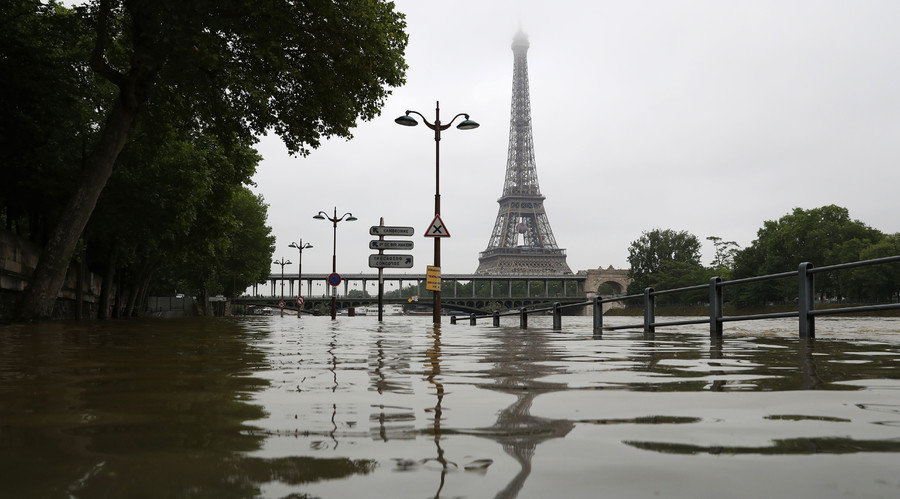
River Seine overflows causing the Louvre to close down, thousands flee homes amid state of emergency

Flooded river Seine
© Kenzo Tribouillard / AFPA picture taken on June 2, 2016 shows the river Seine bursting its banks next to the Eiffel Tower in Paris.
Torrential rains and severe flooding across France have forced thousands of people to flee their homes amid a state of emergency. Paris' iconic Louvre museum will stay closed on Friday to be ready to remove artworks if the River Seine rises too high.

French President Francois Hollande declared a state of emergency on Thursday due to the flooding, which has been caused by the Loire and Seine rivers bursting their banks following heavy downpours. The leader promised money to help local authorities deal with the damage.

Comment: UPDATE: Paris ready for 6m peak flood
Flood waters now predicted to reach 6.2m as red alert is lifted in last department, Seine-et-Marne

AS FLOODS started to ease in towns and villages upstream of Paris the capital is preparing for midday, when the waters should reach their highest at about 6metres.

That is about 10cm higher than had been expected and will further impact commuter transport with the RER C line that runs along the bank of the Seine already closed in the inner city plus the strategic St Michel Metro at the bottom of Boulevard St Michel, which was under water.

Already this morning there were reports of 240km of traffic jams on the roads into Paris instead of the 150km 'normally'.

The floods have claimed three victims - a 74-year-old horseman who was swept away in Grégy-en-Yerre, a three-year-old boy who was found drowned in the basement of his house at Sens and an 86-year-old woman found dead in her home at Souppes-sur-Loing - and Environment Minister Ségolène Royal fears more will be found as waters recede.

Yesterday morning flood levels on the Seine were at 4.88m above normal level at 10.00 and last night it had reached 5.37m at 21.00. This morning at 10.00 it was at 5.64m - that is nearly two storeys high - and the rising water had already started floods further downstream with Seine-Saint-Denis to the north-east and Essonne to the south-west also affected.

So far the water is below the last severe flood, in 1982 when it reached 6.18m and still two metres below the 100-year-flood of 1910, which was 8.62m.