OF THE
TIMES

AT least 25 people have been killed and nearly 300,000 evacuated as storms batter the Philippines.
A new tropical storm struck on Thursday night, unleashing winds up to 74 miles per hour and triggering devastating floods and landslides.
Typhoon Co-may struck the mountainous northern town of Agno, in Pangasinan province, as it swept through the Philippines on Thursday night.© TED ALJIBE/AFPAn aerial view shows flooded villages in Calumpit, Bulacan province, north of Manila on July 25, 2025, after a river over-flowed due to heavy rains brought about by Typhoon Co-May.
At least 25 people have died from flash floods, landslides and electrocution since last weekend, officials say, with eight more reported missing.
Seasonal monsoon rains have pounded a vast stretch of the country for over a week.
And more than a dozen tropical storms are forecast to hit the Southeast Asian country before the end of the year.
Schools in the capital, Manila, were closed on Friday for the third day in a row.
Classes were also suspended in 35 provinces across Luzon - the northern part of the country - where most of the 80 towns and cities that have declared a state of calamity are located.
278,000 people have been forced to seek refuge in emergency shelters or with relatives.
Nearly 3,000 homes have been damaged, according to the government's disaster response agency.
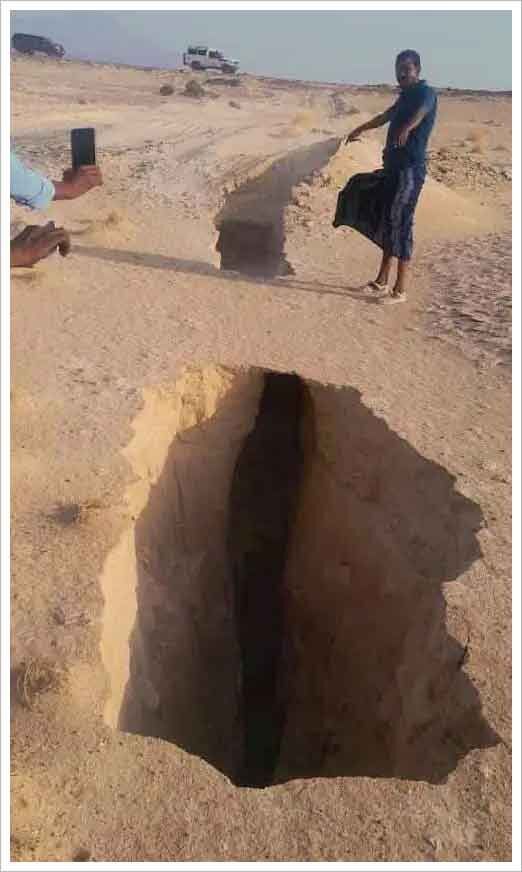
The true extent of the events taking place at the remote Erta Alé volcano since mid-July is gradually becoming clear. New images from the northern end of the caldera show that a massive pit crater several hundred meters deep has formed. The crater was formed as a result of collapse events as the magma reservoir beneath the volcano drained southward. This likely created a magmatic vein and rift approximately 40 kilometers long.(Translated by Google)
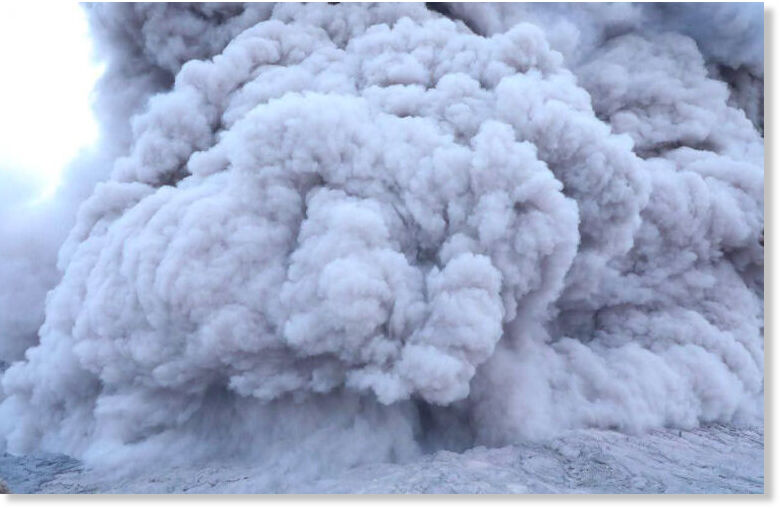
I know the north crater in the Erta Alé caldera as a slight depression, the edge of which dropped steeply by about 15 m in 2002. Over the past few years, the depression has filled with repeated lava flow eruptions until it even formed a dome. The resulting crater has likely returned to the dimensions it had at the beginning of the volcano's last cycle. As the volcano guides who took the photographs moved away from the volcano, they saw clouds of ash rising again, indicating further collapse events. This is a sign that crater formation, and thus the underground drainage of magma, may not yet be over. It cannot be ruled out that a lava flow could emerge at the end of the passage near the Afdera salt lake, where there is also a settlement.
The South Crater has also collapsed in recent days. Judging by satellite photos, it has returned to the size it was during my first visit. It's quite possible that a lava lake will form again in one or both of the pit craters. For tourists, direct contact with the lava has thus receded into the distance: Recently, several hornitos were seen, which had formed on the crater fillings or lids and were bursting with lava.
If the collapse events continue, the two closely located craters could merge into one. In this case, one could speak of caldera formation. But even so, this is an unusual occurrence.
Comment: Earlier: Shallow M6.2 earthquake hits west of Macquarie Island