Science of the SpiritS


Info

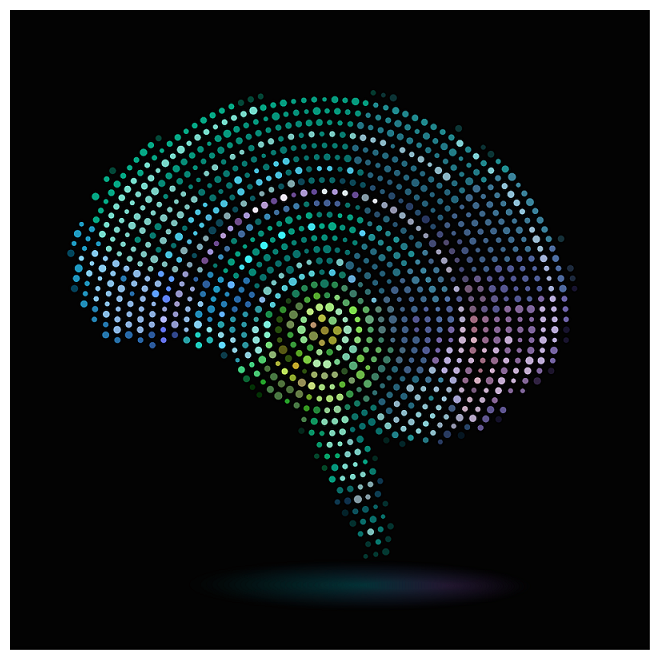
Cracking the code of how the brain processes emotions

Brain and emotions
© Cornell University
Feelings are personal and subjective, just like all of psychology, but the human brain turns them into a standard code that objectively represents emotions across different senses, situations and even people, according to a new paper.

The authors set out to gain insight into how the brain represents our innermost feelings - what they call the last frontier of neuroscience - and upend the long-held view that emotion is represented in the brain simply by activation in specialized regions for positive or negative feelings.

"We discovered that fine-grained patterns of neural activity within the orbitofrontal cortex, an area of the brain associated with emotional processing, act as a neural code which captures an individual's subjective feeling," says senior author Adam Anderson, associate professor of human development in Cornell University's College of Human Ecology.

"If you and I derive similar pleasure from sipping a fine wine or watching the sun set, our results suggest it is because we share similar fine-grained patterns of activity in the orbitofrontal cortex." Anderson says.

For the study, the researchers presented participants with a series of pictures and tastes during functional neuroimaging, then analyzed participants' ratings of their subjective experiences along with their brain activation patterns.
Info

US military developing brain implants to restore memory

Restoring Active Memory program
© DARPADARPA's Restoring Active Memory program aims to bridge memory gaps in veterans with Traumatic Brain Injury and others.
The U.S. military has chosen two universities to lead a program to develop brain implants to restore memory to veterans who have suffered brain injuries, officials said at a news conference yesterday (July 8).

The Restoring Active Memory (RAM) program is a project of the Defense Advanced Research Projects Agency (DARPA), the branch of the U.S. Department of Defense charged with developing next-generation technologies for the military. The initiative aims to develop wireless, fully implantable "neuroprosthetics" for service members suffering from traumatic brain injury or illness, DARPA Program Manager Justin Sanchez said at the news conference.

DARPA has selected two teams of researchers to develop the implants: The University of California, Los Angeles (UCLA) and the University of Pennsylvania, in Philadelphia.

Sherlock

Research shows children of same-sex couples physically and emotionally healthier than peers

Image
© JEAN-SEBASTIEN EVRARD/AFP/Getty ImagesKarine Hallier and her girlfriend Elodie Lucas pose walking with their children on Novembre 1, 2012 at their home in Nantes, western France. The couple had two children by artificial insemination and militate for the rights to same-sex parenting.
Children of same-sex couples fare better when it comes to physical health and social well-being than children in the general population, according to researchers at the University of Melbourne in Australia.

"It's often suggested that children with same-sex parents have poorer outcomes because they're missing a parent of a particular sex. But research my colleagues and I published in the journal BMC Public Health shows this isn't the case," lead researcher Simon Crouch wrote on the Conversation.

Crouch and his team surveyed 315 same-sex parents with a total of 500 children across Australia. About 80 percent of the kids had female parents and about 18 percent had male parents, the study states.

Children from same-sex families scored about 6 percent higher on general health and family cohesion, even when controlling for socio-demographic factors such as parents' education and household income, Crouch wrote. However, on most health measures, including emotional behavior and physical functioning, there was no difference compared with children from the general population.

2 + 2 = 4

Sleep deprivation leads to schizophrenia symptoms

sleep deprivation schizophrenia
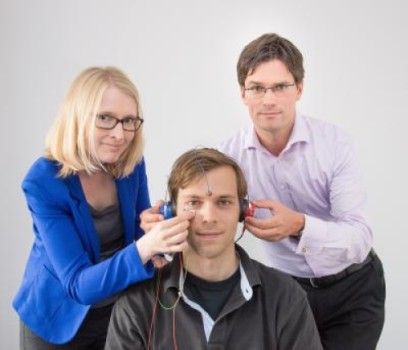
© Volker Lannert/University of BonnDr. Nadine Petrovsky and Professor Dr. Ulrich Ettinger from the Institute of Psychology of the University of Bonn measure the filtering function of the brain in a test subject (center) using the prepulse inhibition.
Psychologists at the University of Bonn are amazed by the severe deficits caused by a sleepless night.

Twenty-four hours of sleep deprivation can lead to conditions in healthy persons similar to the symptoms of schizophrenia. This discovery was made by an international team of researchers under the guidance of the University of Bonn and King's College London. The scientists point out that this effect should be investigated more closely in persons who have to work at night. In addition, sleep deprivation may serve as a model system for the development of drugs to treat psychosis. The results have now been published in "The Journal of Neuroscience".

In psychosis, there is a loss of contact with reality and this is associated with hallucinations and delusions. The chronic form is referred to as schizophrenia, which likewise involves thought disorders and misperceptions. Affected persons report that they hear voices, for example. Psychoses rank among the most severe mental illnesses. An international team of researchers under the guidance of the University of Bonn has now found out that after 24 hours of sleep deprivation in healthy patients, numerous symptoms were noted which are otherwise typically attributed to psychosis or schizophrenia.

Comment: Journal reference: N. Petrovsky, U. Ettinger, A. Hill, L. Frenzel, I. Meyhofer, M. Wagner, J. Backhaus, V. Kumari. Sleep Deprivation Disrupts Prepulse Inhibition and Induces Psychosis-Like Symptoms in Healthy Humans. Journal of Neuroscience, 2014; 34 (27): 9134 DOI: 10.1523/JNEUROSCI.0904-14.2014


Light Sabers

Excessive gaming linked to visual distortions in real life

tetris
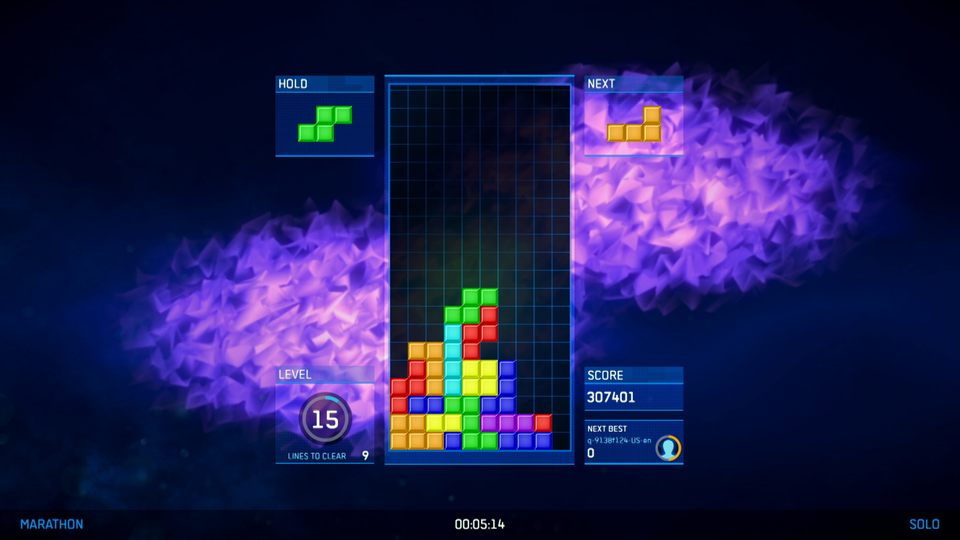
© ShutterstockTetris
A great video game, like any worthwhile piece of art, will stick with you. When you're playing it, nothing can pull you away; when you're not playing it, you can't think about anything else. The game will embed itself in your subconscious, so much so that you'll start to have literal visions of it: Gems on a Guitar Hero note highway scroll by your eyes as you listen to music; a Mass Effect dialogue wheel pops up during a conversation with a friend; while driving, you imagine running over pedestrians à la Grand Theft Auto.

Some people know this as the "Tetris effect," but regardless of familiarity, many find the episodes startling and even frightening. Did I just see what I think I saw? Is this normal? Am I in too deep? Should I see a doctor?

Comment: For more on the effects of gaming on the brain see: Brains of Excessive Gamers Similar to Addicts


People 2

New study: Narcissism correlated with internet porn use

Image
© Relativity Media
Sometimes science confirms the things we might have guessed: A new paper found that narcissists watch more online pornography, and the more internet porn people watched, the more narcissistic they tended to be.

The researchers, from the University of Houston - Clear Lake, tested narcissism levels on the participants, most of whom were heterosexual women between 18 and 61 years of age, using a standard 40-item questionnaire. They found that the higher respondents scored on the narcissism scale, the more likely they were to say they'd ever watched pornography; this held true even when excluding answers from men, who in this study and previous ones cop to watching more porn. And among the people who watched porn, higher narcissism was correlated with more hours watching internet porn.

Cult

Psychopathy: What you probably don't know about it

Have you ever worked for someone who you seriously thought might be crazy? About half of all workers have such an experience within a lifetime. The other half misses out on one of life's most perplexing and educational opportunities.

The subject is psychopathy. Knowledge and understanding of psychopathy is now advancing, and at an accelerating rate, after a decades-long period of no growth and slow growth. Good thing! Psychopathy is the very worst mental disorder; psychopathy and related conditions have cost millions of lives lost and trillions of dollars wasted, though it is still very poorly understood by most people. I am now speaking not as a medical or psychological professional, but as a professional project engineering manager who has been faced with numerous severe personnel and management problems not addressed in engineering or business school.

Image
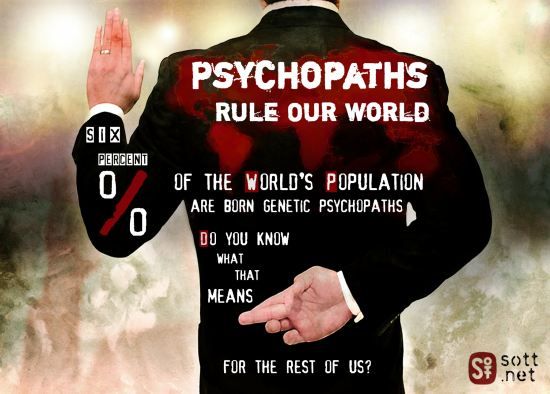
© sott.netPsychopaths rule our world. 6% of the world's population are born genetic psychopaths. Do you know what that means for the rest of us?
Psychopathy is without a doubt the most destructive, the most deadly, and the least comprehensible of mental disorders. So, to promote understanding of psychopathy, the following points are offered:

Comment:


Info

Consciousness on-off switch discovered deep in brain

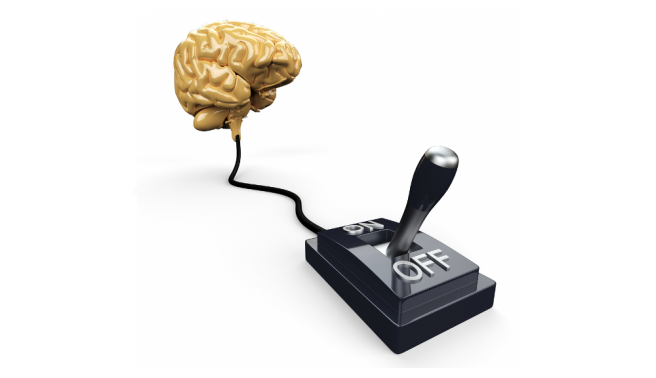
One moment you're conscious, the next you're not. For the first time, researchers have switched off consciousness by electrically stimulating a single brain area.
Off Switch
© styleuneed.de/Shutterstock

Scientists have been probing individual regions of the brain for over a century, exploring their function by zapping them with electricity and temporarily putting them out of action. Despite this, they have never been able to turn off consciousness - until now.

Although only tested in one person, the discovery suggests that a single area - the claustrum - might be integral to combining disparate brain activity into a seamless package of thoughts, sensations and emotions. It takes us a step closer to answering a problem that has confounded scientists and philosophers for millennia - namely how our conscious awareness arises.

Many theories abound but most agree that consciousness has to involve the integration of activity from several brain networks, allowing us to perceive our surroundings as one single unifying experience rather than isolated sensory perceptions.

One proponent of this idea was Francis Crick, a pioneering neuroscientist who earlier in his career had identified the structure of DNA. Just days before he died in July 2004, Crick was working on a paper that suggested our consciousness needs something akin to an orchestra conductor to bind all of our different external and internal perceptions together.

With his colleague Christof Koch, at the Allen Institute for Brain Science in Seattle, he hypothesised that this conductor would need to rapidly integrate information across distinct regions of the brain and bind together information arriving at different times. For example, information about the smell and colour of a rose, its name, and a memory of its relevance, can be bound into one conscious experience of being handed a rose on Valentine's day.

Recycle

'Materialism is baloney': Interview with scientist Bernardo Kastrup

materialism
Interview with philosopher and author, Bernardo Kastrup examines the limits of scientific materialism.

Join Skeptiko host Alex Tsakiris for an interview with Bernardo Kastrup, PhD., author of, Why Materialism Is Baloney. During the interview Kastrup discusses human consciousness as an emergent property of the brain: Download MP3 (47 min.)

click here for Bernardo's Website

Alex Tsakiris: Today we welcome Bernardo Kastrup back to Skeptiko. Bernardo has a PhD in computer engineering and has worked as a scientist in some of the world's leading research laboratories, including those particle smashing folks at CERN. He's here to talk about his new book, Why Materialism is Baloney. He's been a very popular guest on Skeptiko and it's great to have you back Bernardo. Thanks for joining me.

Bernardo Kastrup: Thanks for having me back. It was fun last time.

Alex Tsakiris: It's fun to have you here. Tell us about this book with this very provocative title that won't be surprising to a lot of our listeners but certainly will be provocative to a lot of people, Why Materialism is Baloney.

Bernardo Kastrup: The first time I disclosed this title, people were sure my publisher wouldn't accept it and I thought probably they won't, but they did and I'm very glad. It reflects the essence of the book. It's an effort I made over the past few years to organize my own thoughts about why materialism simply doesn't make sense. Why - it sounds so plausible because it's so embedded in the culture for so long for 300 - 400 years, since the beginning of the enlightenment. But if you really look into it you see that it doesn't add up. Not only does it not add up it's also not necessary to explain reality.

Bug

People would rather be electrically shocked than left alone with their thoughts

Image
At some point today you will disengage from the rest of the world and just think. It could happen any number of ways: if your mind wanders from work, while you're sitting in traffic, or if you just take a quiet moment to reflect. But as frequently as we drift into our own thoughts, a new study suggests that many of us don't like it. In fact, some people even prefer an electric shock to being left alone with their minds.

"I'm really excited to see this paper," says Matthew Killingsworth, a psychologist at the University of California (UC), San Francisco, who says his own work has turned up a similar result. "When people are spending time inside their heads, they're markedly less happy."


Comment: It is difficult to see a connection here but people are entitled to their own interpretation.