
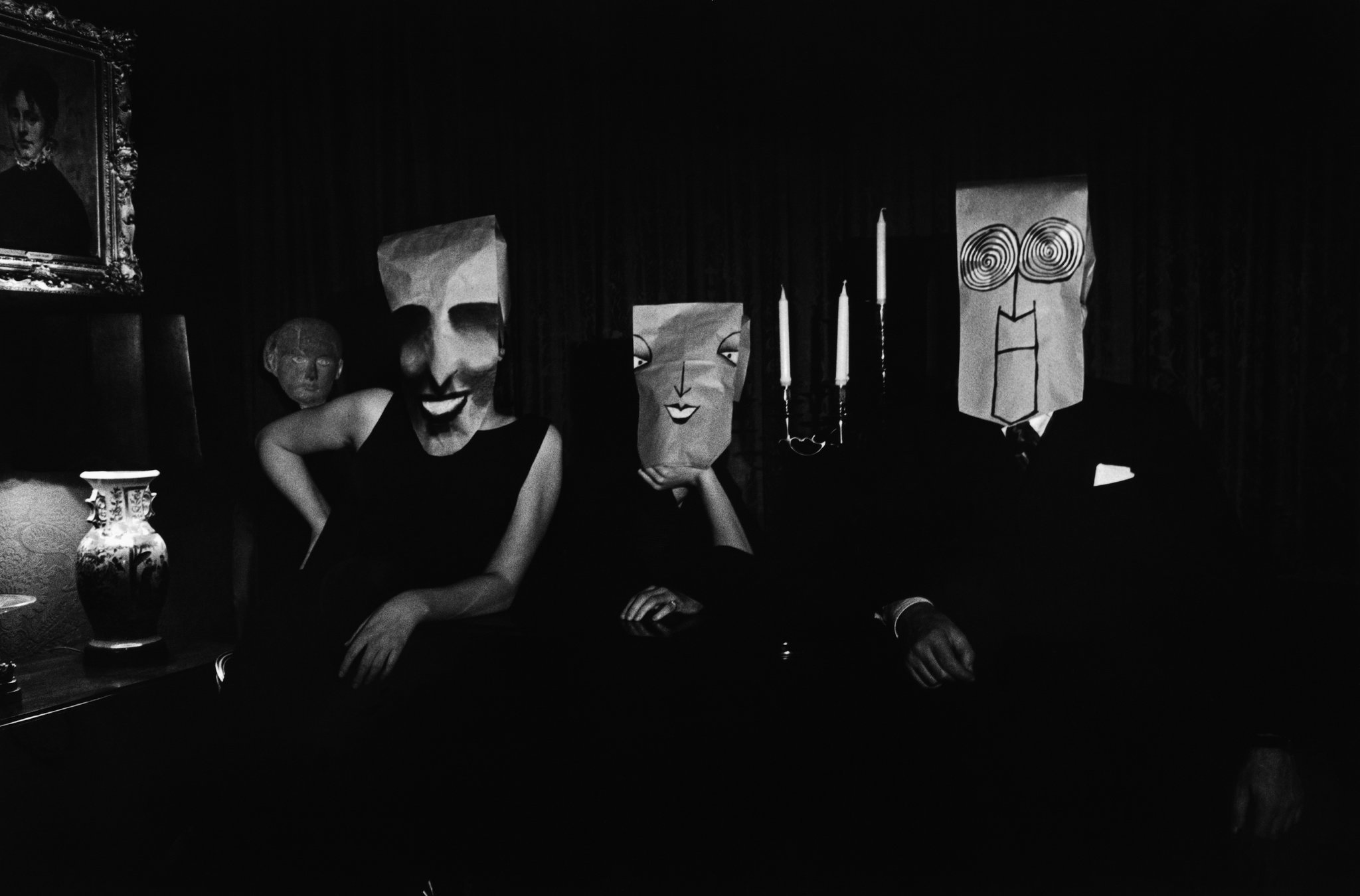
© Inge Morath /The Inge Morath Foundation/Magnum Photos. Masks by Saul Steinberg /The Saul Steinberg Foundation/ARS, NY
Ever since Plato, philosophers have, without much argument, shared common sense's confidence about the nature of its own thoughts. They have argued that we can secure certainty about at least some very important conclusions, not through empirical inquiry, but by introspection: the existence, immateriality (and maybe immortality) of the soul, the awareness of our own free will, meaning and moral value. In a Stone column Gary Gutting explained how this tradition continues to manifest itself in contemporary philosophy as the search for "a 'transcendental' or 'absolute' consciousness that provides the fuller significance of our ordinary experiences." Thomas Nagel has invoked the same source to trump science in this publication as well.
Introspection, "the mind's eye," assures us with the greatest confidence that it is the best, in some cases the only authority on how the mind works, because we all think it has direct, first person access to itself. We're all very confident that we just know what's going on in our own minds, from the inside, so to speak.



















Comment: Related articles: