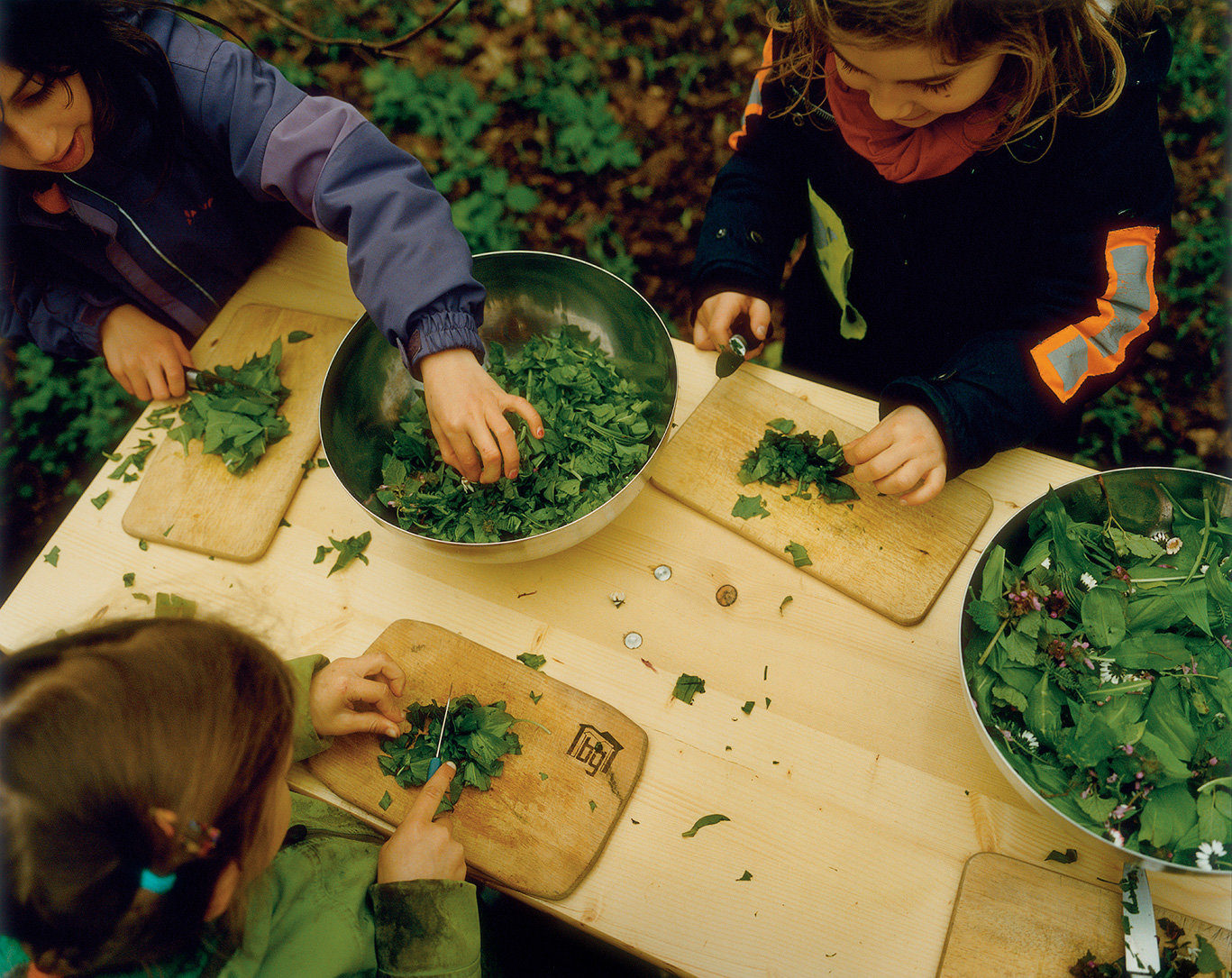
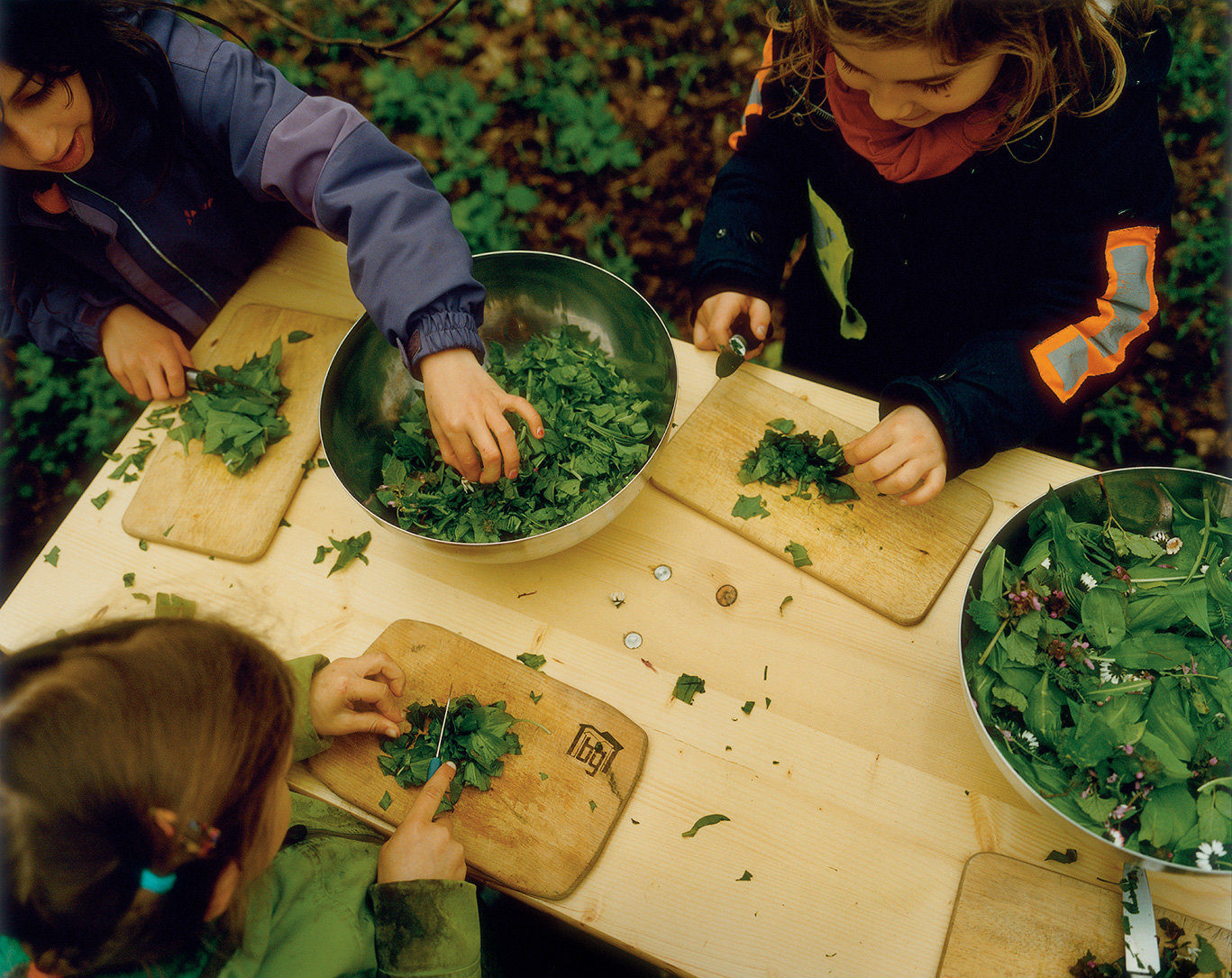
© Emma HardyStudents at a waldkita, or “forest kindergarten,” in Berlin, where uninhibited children play with sticks and mud. Here, they prepare a meal outside.
One early morning this past February, before the frost melted or the sun fully rose, 20 small children gathered in a scabby municipal park in Pankow, the northernmost borough of Berlin. The sky was gray and the ground was gray, but the children's cheeks were bright and so were their moods. They ran in circles, shrieked with delight and spent a great deal of time rolling around atop frozen soil as traffic whizzed by just meters away. Their parents, shivering and anxious to get on with the day, paid them little mind. They smiled absent-mindedly and took sips of coffee from environmentally friendly stainless steel to-go cups.
Cuckoo! Cuckoo!At the sound of the bird call, mimicked loudly and with eerie accuracy by a man in his early 40s named Picco Peters, the children gathered together and formed a tight circle. A spirited round of songs, sung in both English and German, began and was finished off by a chorus of wolf howls. The circle then dissolved and the group's 15 older children, ranging in age from 3 to 6, marched past a community garden and toward a busy intersection. (The remaining children, who were younger, stayed in the park.) A woman named Christa Baule led the way, carrying a backpack with a three-foot-long branch sticking dangerously out of it; Peters took up the back.
The children continued to chatter until the public bus came, at which point they wordlessly formed a single-file line and climbed in. Ten minutes later, the bus stopped. Everyone was deposited at the entrance of an 84-acre public park and proceeded to run amok.

















Comment: Social bonds improve physical and mental well-being at every stage of life