
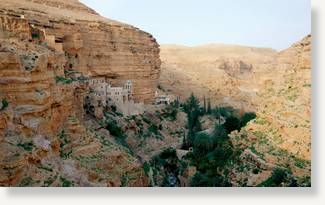
© Travelujah
The world's first skyscraper was built by early farmers, who were frightened into erecting a solar marker by mankind's early bosses, archaeologists say.
Long before its Biblical walls came tumbling down, Jericho's residents were being enticed to give up hunting and gathering and start farming for a living. They settled in this oasis next to the Jordan River and built a mysterious 8.5-meter (28-foot) stone tower on the edge of town.
When discovered by archaeologists in 1952, it was dated at over 11,000 years old, making it the first and oldest public building even found. But its purpose and the motivation for erecting it has been debated ever since.
Now, using computer technology, Israeli archaeologists are saying it was built to mark the summer solstice and as a symbol that would entice people to abandon their nomadic ways and settle down.
"The tower was constructed by a major building effort. People were working for a very long time and very hard. It was not like the other domestic buildings in Jericho," said Ran Barkai of the Department of Archaeology at Tel Aviv University, who was part of a team that did the computer analysis.














Comment: From the Superluminal Communication session dated 02 November, 1994:
Q: (L) Who were the original inhabitants of the city of Jericho?
A: Aramaic.
Q: (L) There was a stone tower at one of the lower levels, what was it built for?
A: Energy disbursement. Attempt to duplicate tower of Babel and Atlantean crystal towers.
Also read Origins of Agriculture - Did Civilization Arise to Deliver a Fix? to understand how introducing agriculture contributed to the gradual decline of our civilization.