
© Unknown
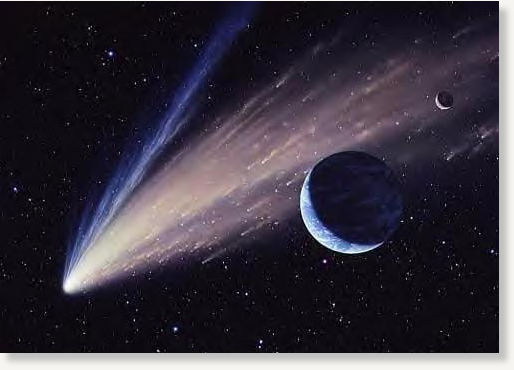
Although we cannot yet say specifically how our ancestors were affected by the interaction of Earth with a large, short period, comet over the past 12,000 or more years, there are certain aspects that can be discerned by combining elements of what we have discovered about our past. One thing that most of us are familiar with is a tradition that claims humanity once lived in a world of abundance and did not have to work very hard to live well. In most cultures that retain a notion of this land of happy and easy living the good times are brought to an end by the activities of some powerful serpent-like creature. Such a tradition of prior abundance is really not at odds with what we presently know of Pleistocene conditions and we have recently discovered through ice core and other time defining studies that this era of rich flora and fauna ended quite abruptly around 11,000 years ago. If we assume that a large comet had something to do with this rapid change then we have a pretty clear picture of why our ancestors' stories invoke an image of a serpent-like creature destroying this pleasant time.
What is interesting about this conjecture is the fact that we will be able to establish whether interaction with comet debris caused this deterioration of conditions and, if indeed this was the reason, then the basis for some of the tales that have come down to us becomes much more understandable. It seems very likely now that much of the lore dealing with gods of the sky are metaphorical descriptions of the history of this comet as it literally fell into pieces from being exposed to both the heat of the sun and the many gravitational forces tugging on it along its less than four year Earth-crossing orbit. Thus, seemingly nonsensical statements such as Athena being born fully formed from the head of Zeus can be seen as lore that interprets the splitting of a comet as the birth of a new god.

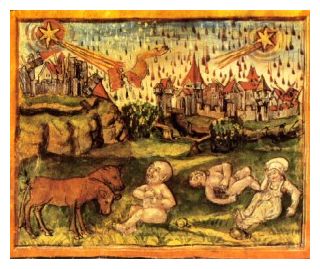
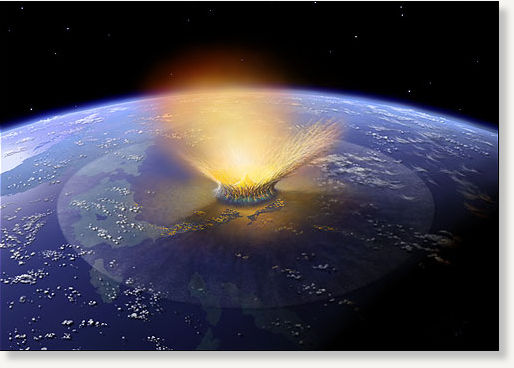














Comment: Although there are good reasons to question the established theory of evolution the way it is described in this article (like the story of human migration out of Africa, for example), the reality of the situation is, that evolution on this planet, exposed to a periodic bombardment from space, was indeed marked by the survival of the fittest of the luckiest. And it looks like it might happen again...and rather soon.