Secret HistoryS


Magnify

Drinking up at ancient Teotihuacan

Image
© iStockphoto/Thinkstock
Life was tough at Teotihuacan. The biggest city in pre-Columbian Mesoamerica depended on maize and beans to keep its 100,000 residents fed, but the unfortunate combination of low rainfall and high altitude in the highlands of central Mexico led to crop failure all too often.

So how did Teotihuacanos avoid starving in lean times? By drinking fermented agave sap, of course.

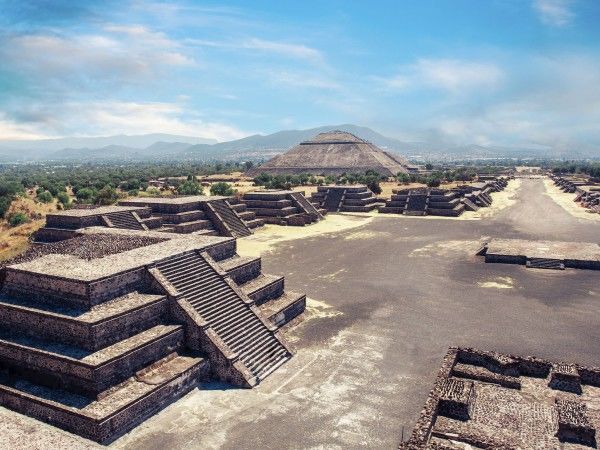
Pulque - a distinctly mucus-y beverage made by extracting sap from the heart of a mature agave plant and letting it sit around for a few days - was known to have been made and consumed by the Aztecs around the time of the Spanish conquest in 1521 C.E. But archaeologists weren't sure if the drink had also been popular in Teotihuacan, an earlier and culturally distinct city in central Mexico that thrived between 150 B.C.E. and 650 C.E. (Its ruins are pictured above.)

Excavations at the city had turned up several ceramic vessels waterproofed with tree resin that would have been perfect for storing pulque, however. When their surfaces were chemically examined, 14 of the vessels tested positive for byproducts of a bacterium called Zymomonas mobilis, a key ingredient in pulque production, researchers report online today in the Proceedings of the National Academy of Sciences.

Book 2

Generations of families have been guarding ancient libraries in Sahara Desert

Chinguetti, Mauritania
© Hemis/Alamy
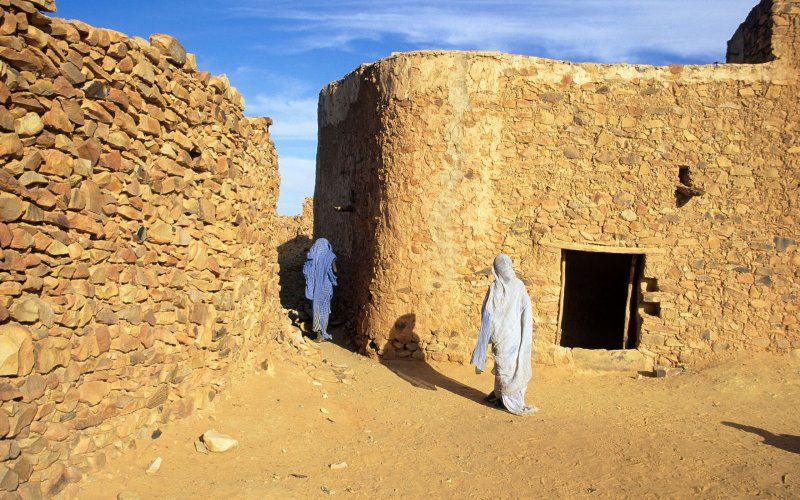
A once-bustling center of learning in the middle of the Sahara Desert is now a dry, sparsely populated town trying valiantly to save its ancient, extraordinary libraries.

In a mud-and-brick town that blends in with the rusty red sand of the vast Sahara, generations of families have been guarding ancient books - some perhaps 1,000 years old - and with them, the reputation of a once-legendary, enlightened city. These libraries - mostly simple, mud-packed shelves stacked high with bound manuscripts in ancient huts - are what remain of a place that in better times was the epicenter of Islamic learning and medieval trading in northern Africa. In Mauritania, Chinguetti once flourished with scholars, pilgrims, and religious leaders. But today, the few thousand people left have been fighting against the harsh desert to maintain control of their precious artifacts.‬

The remaining 10 or so libraries hold frayed remains of ancient books on Quranic studies, science, and law. They're tended to by the same families who've been passing down their literary treasures for generations. Some hold just a few shelves and boxes of manuscripts, but one contains an organized collection of 1,400 texts.

Hourglass

New research reveals civilization is older than previously thought

Gunung Padang
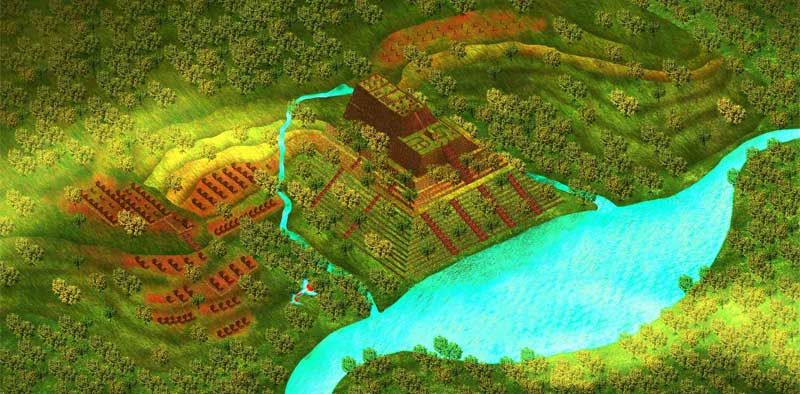
Artist's impression of Gunung Padang as it would have looked in antiquity by and courtesy of architect Pon S Purajatnika
What if everything you've been taught about the origins of civilization is wrong? Be it that certain pieces of our history have been intentionally hidden, or that we have yet to discover and realize the true story of our past, new archaeological and geological discoveries are revealing that sophisticated civilizations have likely existed in prehistoric times.

Until recently, the archaeological community has spread the view that the beginnings of human civilization started after the last Ice Age, which ended around 9,600 BC. All human ancestors prior to this time were recognized as primitive, uncivilized hunter-gatherers who were incapable of communal organization and architectural design. It was only after the Ice Age, when huge 2-mile deep ice caps that covered much of Europe and North America melted, that our human ancestors started to develop and perfect agriculture, forming more-complex economic and social structures around 4000 BC. Archaeologists believed that first cities started around 3500 BC in Mesopotamia and, shortly after, in Egypt. On the European continent, the oldest megalithic sites are dated around 3,000 BC, and the popular Stonehenge is dated between 2,400 BC and 1,800 BC.

Comment: For more on how high civilizations became lost civilizations see:
Comets and the Horns of Moses
Earth Changes and the Human Cosmic Connection: The Secret History of the World - Book 3


Magnify

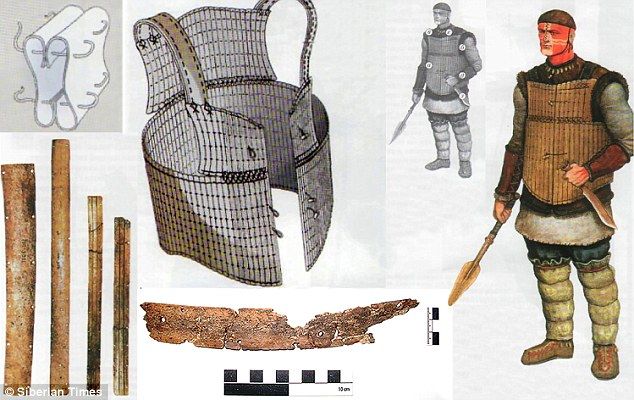
Bronze Age armor crafted from bones discovered in Siberia

bronze age bone armour siberia
Protective: The armour would have 'given good protection from weapons that were used at the time - bone and stone arrowheads, bronze knives, spears tipped with bronze, and bronze axes', experts said
Archaeologists in Siberia have unearthed Bronze Age armor crafted from bones in an outfit that George R.R. Martin's epic fantasy character "Rattleshirt" might have worn.

Dating to between 3,900 and 3,500 years old, the armor was buried without its owner at a depth of 5 feet near the Irtysh River in Omsk. Analysis is underway to determine what kind of animal bones were used for the protective outfit, but it was likely assembled with bones from elk, deer and horse.

A reconstruction of the Bronze Age bone armor. Polina Volf, Yuri Gerasimov, A.Solovyev-The Siberian Times

"At the moment we can only fantasize - who dug it into the ground and for what purpose. Was it some ritual or sacrifice? We do not know yet," Yury Gerasimov of the Omsk branch of the Institute of Archaeology and Ethnography told The Siberian Times.

Cow Skull

Shamans from around the world gather in Siberia for ceremony timed to coincide with cosmic cycles

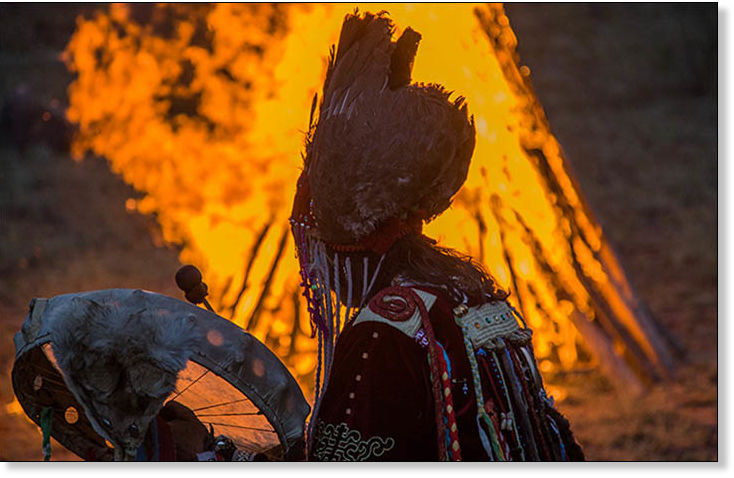
Stunning pictures as shamans from around the world gather in Sayan Mountains.
Image
© Alexander Nikolsky'I don't think I even came across a country with as many practicing shamans as Tuva'.
A shaman, in the dictionary definition, is 'a person regarded as having access to, and influence in, the world of good and evil spirits, especially among some peoples of northern Asia and North America. Typically such people enter a trance state during a ritual, and practise divination and healing.'

These images - giving an extraordinary glimpse inside this largely unknown world - have emerged of a conclave held this summer over nine days near the village Khorum-Dag in Tuva Republic.

Comment: Interestingly enough, research indicates that in the past shamans were mostly women, and the role of shamans was quite different from what is perceived today.


Flashlight

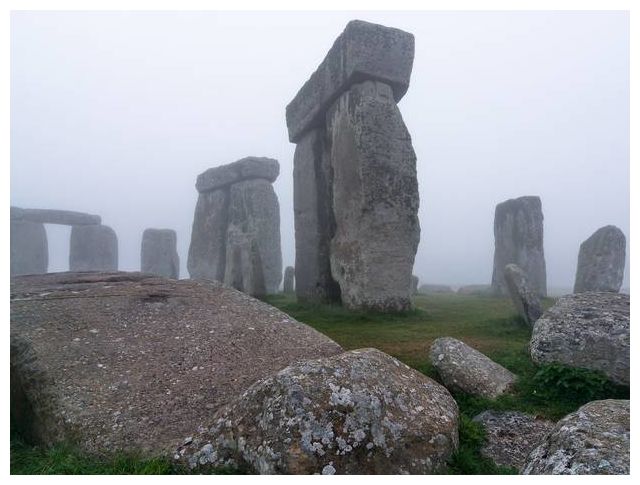
New digital map reveals hidden archaeology of Stonehenge

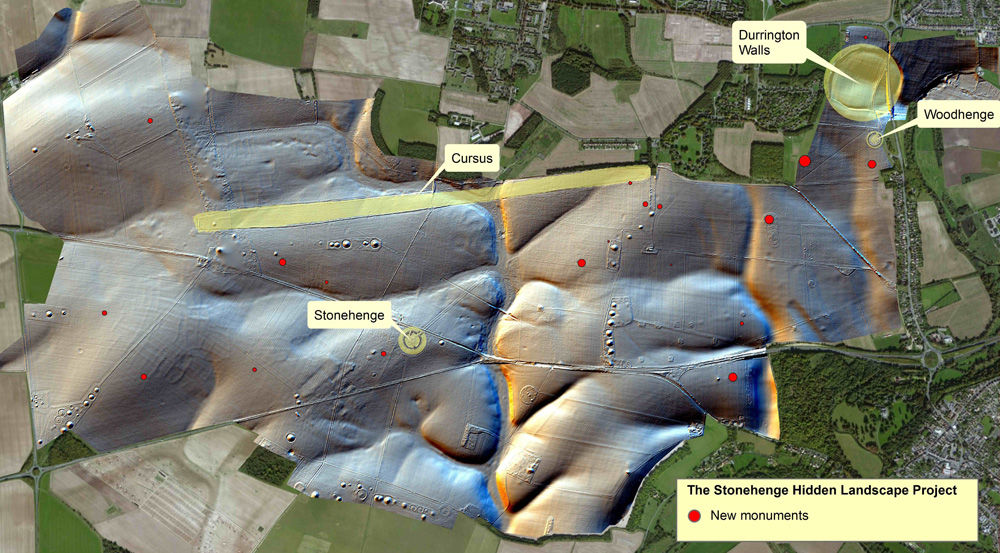
Stonehenge new monuments map
© University of Birmingham
A host of previously unknown archaeological monuments have been discovered around Stonehenge as part of an unprecedented digital mapping project that will transform our knowledge of this iconic landscape - including remarkable new findings on the world's largest 'super henge', Durrington Walls.

The Stonehenge Hidden Landscapes Project, led by the University of Birmingham in conjunction with the Ludwig Boltzmann Institute for Archaeological Prospection and Virtual Archaeology, is the largest project of its kind.

Remote sensing techniques and geophysical surveys have discovered hundreds of new features which now form part of the most detailed archaeological digital map of the Stonehenge landscape ever produced. The startling results of the survey, unveiled in full at the British Science Festival, include 17 previously unknown ritual monuments dating to the period when Stonehenge achieved its iconic shape. Dozens of burial mounds have been mapped in minute detail, including a long barrow (a burial mound dating to before Stonehenge) which revealed a massive timber building, probably used for the ritual inhumation of the dead following a complicated sequence of exposure and excarnation (defleshing), and which was finally covered by an earthen mound.

Info

Hidden henge: Archaeologists discover huge Stonehenge 'sibling' nearby

Stonehenge
© Ludwig Boltzmann Gesellschaft (Vienna)Scientists say they had no idea massive henge of 50 stones was just two miles away.
Archaeologists have discovered that Stonehenge had a huge stone sibling just two miles to the northeast.

Using powerful ground-penetrating radar, which can 'x-ray' archaeological sites to a depth of up to four metres, investigators from Birmingham and Bradford universities and from the Ludwig Boltzmann Institute in Vienna have discovered a 330 metre long line of more than 50 massive stones, buried under part of the bank of Britain's largest pre-historic henge.

"Up till now, we had absolutely no idea that the stones were there," said the co-director of the investigation Professor Vince Gaffney of Birmingham University.

Crusader

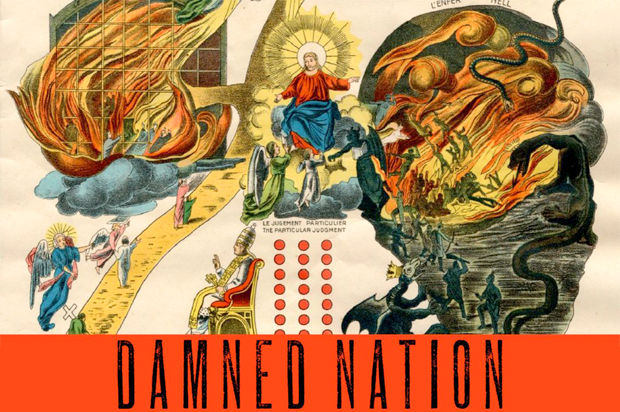
Fire and brimstone: How American preachers reinvented hell

Fire and brimstone survived the Enlightenment and prospered at the dawn of the American republic - but why?
Image
Among the many congratulatory letters George Washington received after assuming the presidency was one from "the Convention of the Universal Church, assembled in Philadelphia." "SIR," it began, "Permit us, in the name of the society which we represent, to concur in the numerous congratulations which have been offered to you." The letter reassured the president that "the peculiar doctrine which we hold, is not less friendly to the order and happiness of society, than it is essential to the perfection of the Deity." One of its signers, Universalist minister John Murray, had known Washington since serving as a chaplain in the Revolutionary War. The minister and his second wife, Judith Sargent Murray, had even stopped to dine with the Washingtons on their way to the Convention. Thanks in large part to their efforts, universal salvation was no longer an obscure creed espoused by a scattered few. Now the Convention sought to establish Universalism as a recognized, socially responsible faith.

Washington responded favorably. "GENTLEMEN," he began, thanking them for their well-wishes, "It gives me the most sensible pleasure to find, that in our nation, however different are the sentiments of citizens on religious doctrines, they generally concur in one thing: for their political professions and practices, are almost universally friendly to the order and happiness of our civil institutions. I am also happy in finding this disposition particularly evinced by your society." Such affirmation of the Universalists' civic friendliness, from none other than the first president of the newly United States, must have gratified the Convention. They were well aware that other Protestant clergy, especially the Calvinists, disdained their "peculiar doctrine."

Boat

Archeology team has discovered pieces from the long-lost 19th-century Franklin expedition ships in the Arctic

Image
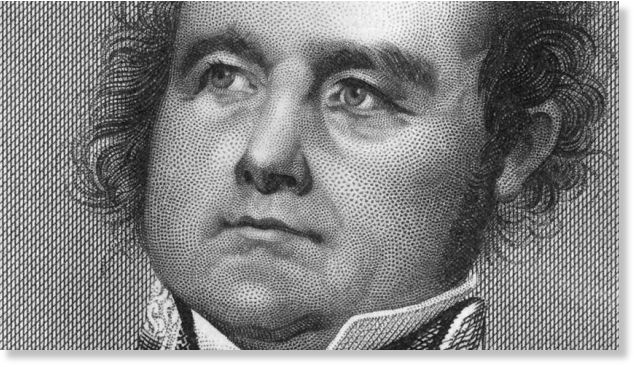
© Hutton Gallery/GettySir John Franklin led an ultimately doomed expedition in the mid-1840s to find the Northwest Passage.
An archeology team has discovered pieces from the long-lost 19th-century Franklin expedition ships - "the first discovery" of its kind in modern times, the government of Nunavut announced on Monday."An iron fitting from a Royal Navy ship, identified as part of a boat-launching davit, and bearing two broad arrows was found on an island in the southern search area," said the government of Nunavut in a news release.

"A wooden object, possibly a plug for a deck hawse, the iron pipe through which the ship's chain cable would descend into the chain locker below, was also discovered."

In 1845, Sir John Franklin and 128 sailors embarked from England to find the Northwest Passage aboard the ships Erebus and Terror.

Search parties later recorded Inuit testimony that claimed one ship sank in deep water west of King William Island and one ship went perhaps as far south as Queen Maud Gulf or into Wilmot and Crampton Bay.

Images

Red Flag

No empire rules forever: 10 great city-states now forgotten

Rome annihilated Carthage to ensure it would never again rise as a major threat. The Ottomans forever ended Byzantium's glory. The vast armies of Persia were repeatedly beaten back by the Greeks, subjugated by the might of Alexander, and destroyed by the rise of Islam. The fates of once great and proud nations fill the pages of history books - and then there are those forgotten powers even the history books seldom mention.

burgundy western europe
10 Burgundy Western Europe

France's greatest historical rivals are often considered to be England or Germany. Yet, for a time, Burgundy was arguably its greatest opponent.

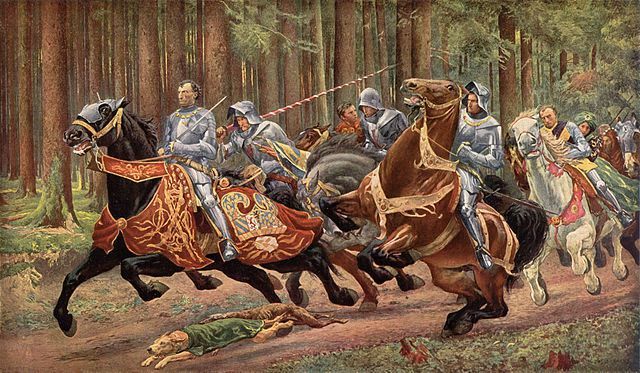
We've previously mentioned how Louis the Pious, son of Charlemagne, divided the Carolingian Empire among his sons. His eldest, Lothair, received a vast swath of land that included what would become Burgundy. Over time, a powerful duchy evolved, controlling Burgundy proper, Alsace, Lorraine, Flanders, and Holland. At its height during the 15th century, it was one of the richest and most powerful states in Europe. The Burgundian's rivalry with France knew no bounds - from betraying Joan of Arc to the English, to fighting on foreign soil during the War of the Roses.

For a time, it seemed that fortune favored Burgundy. Indeed, had history turned out differently, proper French might have been a mere dialect and Bourgignon the norm. The sudden death of Duke Charles the Bold on January 5, 1477 changed things entirely, raising the question of the Burgundian Inheritance. Charles's only heir was his daughter, who was supposed to marry into the French royal house. Instead, she married Maximilian I, the Holy Roman Emperor and head of the House of Habsburg. In the subsequent race to claim the Burgundian lands, France merely traded one great rival for two more - Austria and Spain.