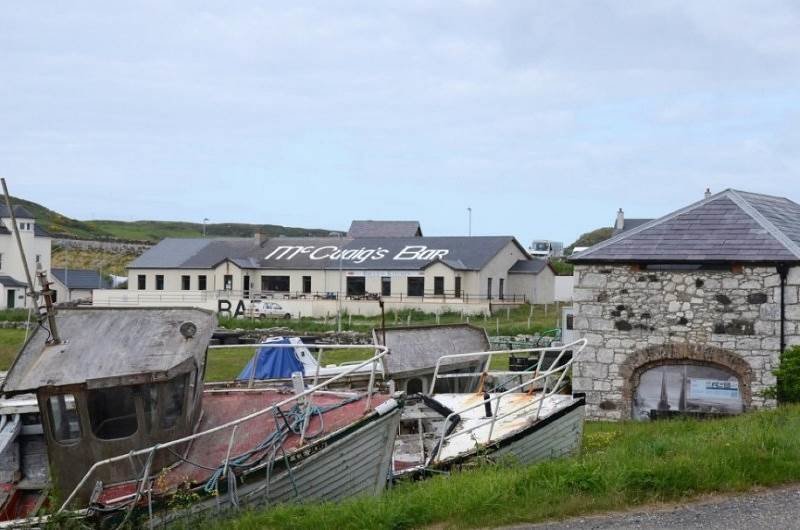
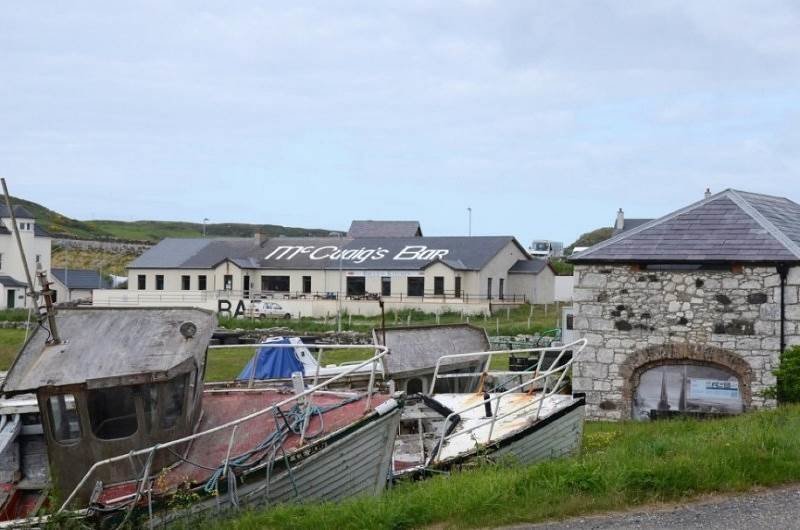
© Mairead Ni RodaighA photo of McCuaig's Bar on Rathlin Island. Co. Antrim in Northern Ireland. Ancient bones were unearthed on the property in 2006.
Ten years ago, an Irish pub owner was clearing land for a driveway when his digging exposed an unusually large flat stone. The stone obscured a dark gap underneath. He grabbed a flashlight to peer in.
"I shot the torch in and saw the gentleman, well, his skull and bones," Bertie Currie, the pub owner, said this week.
The remains of three humans, in fact, were found behind McCuaig's Bar in County Antrim, Northern Ireland. And though police were called, it was not, as it turned out, a crime scene.
Instead, what Currie had stumbled over was an ancient burial that, after a recent DNA analysis, challenges the traditional centuries-old account of Irish origins.
Geneticists from Trinity College Dublin and archaeologists from Queens University Belfast have sequenced the first genomes from ancient Irish humans. (Trinity College Dublin)
From as far back as the 16th century, historians taught that the Irish are the descendants of the Celts, an Iron Age people who originated in the middle of Europe and invaded Ireland somewhere between 1000 B.C. and 500 B.C.
That story has inspired innumerable references linking the Irish with Celtic culture. The Nobel-winning Irish poet William Butler Yeats titled a book "Celtic Twilight." Irish songs are deemed "Celtic" music. Some nationalists embraced the Celtic distinction. And in Boston, arguably the most Irish city in the United States, the owners of the NBA franchise dress their players in green and call them the Celtics.
Yet the bones discovered behind McCuaig's tell a different story of Irish origins, and it does not include the Celts.










Comment: See also: