Society's ChildS


Health

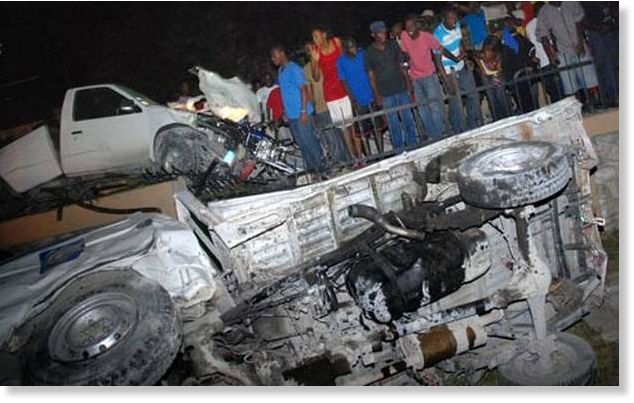
Bus crash kills 23, injures 17 in southwest Haiti

Image
A bus crash in southwest Haiti killed 23 people and injured 17 on Saturday, authorities said.

The mayor of the city of Jeremie, Ronald Etienne, told Reuters that the cause of the accident was not known.

The accident occurred near the coastal town of Roseau, east of Jeremie, according to media reports. Most of the dead were from the town of d'Anse d'Hainault on the far western tip of the southern peninsula, the reports said.

Haiti's rural road infrastructure is in poor shape though foreign assistance after the 2010 earthquake has led to improvements on the national two-lane highway in the southwest.

Source: Reuters

Ambulance

Gunman, 3 others killed in Arkansas shootings

Image
© The Jonesboro Sun, Rob Holt/AP PhotoPolice officers and crime scene analysts investigate a crime scene in Jonesboro, Ark., Saturday, May 3, 2014.
A gunman who shot and killed three people and injured four more in northeast Arkansas was an acquaintance or friend of the victims, police said Sunday, but noted the motive still is unknown.

Jonesboro Police Sgt. Doug Formon identified the shooter as Porfirio Hernandez, 40, who recently had been released from a mental health treatment facility. Formon did not give further details in an email to The Associated Press.

Formon said police responded to a shooting about 1 p.m. Saturday. Chrisanto Islas, 38, and Floza Davila, 12, were killed there and four others were injured. Survivors and witnesses at the house identified Hernandez as the sole gunman and provided a description of him and the vehicle he was driving.

Police said three people are in critical condition in hospitals in Memphis, Tennessee: Augusten Hernandez, 43; Ayde Davila, 36; and Anquel Islas, 8. A 10-year-old boy, Brayam Davila, is in stable condition.

Question

Spy plane blamed as air traffic control computers at LAX overload and fail, causing major delays and cancellations

Image
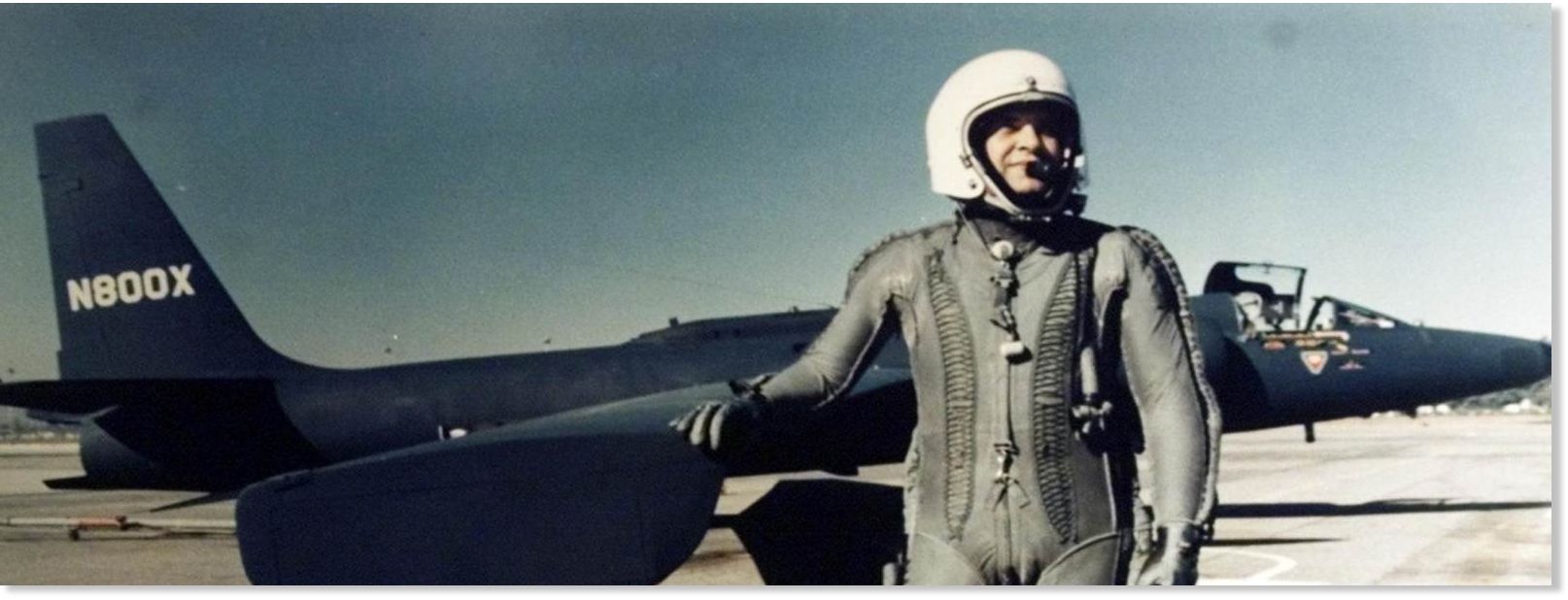
© APU.S. pilot stands in front of a U-2 photo reconnaissance plane
A relic from the Cold War appears to have triggered a software glitch at a major air traffic control center in California Wednesday that led to delays and cancellations of hundreds of flights across the country, sources familiar with the incident told NBC News.

On Wednesday at about 2 p.m., according to sources, a U-2 spy plane, the same type of aircraft that flew high-altitude spy missions over Russia 50 years ago, passed through the airspace monitored by the L.A. Air Route Traffic Control Center in Palmdale, Calif. The L.A. Center handles landings and departures at the region's major airports, including Los Angeles International (LAX), San Diego and Las Vegas.

The computers at the L.A. Center are programmed to keep commercial airliners and other aircraft from colliding with each other. The U-2 was flying at 60,000 feet, but the computers were attempting to keep it from colliding with planes that were actually miles beneath it.

Though the exact technical causes are not known, the spy plane's altitude and route apparently overloaded a computer system called ERAM, which generates display data for air-traffic controllers. Back-up computer systems also failed.

Comment: Something here doesn't quite add up. Presumably, the spy planes are flying over U.S. airspace regularly, so why is this incident being blamed on them? It seems quite likely that something else was the cause, and the PTB trotted out the U-2 planes as their lame excuse for the public. This begs the question, if it wasn't the spy planes causing the disturbances, what was the real cause?


Ambulance

Russia releases 'White Book' report on human rights violations in Ukraine

Image
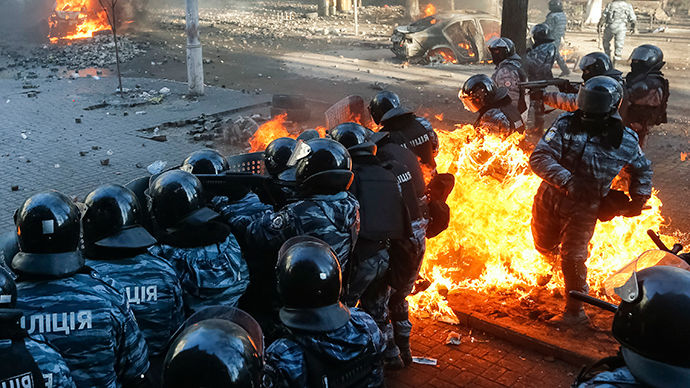
© Reuters / StringerRiot policemen stand guard as they are hit by fire caused by molotov cocktails hurled by anti-government protesters during clashes in Kiev February 18, 2014
A report on human rights violations, law abuses, use of torture, inhuman treatment and other crimes in Ukraine from the end of November 2013 to the end of March 2014, a so called 'White Book', has been presented by the Russian Foreign Ministry.

The authors compiled their facts by carefully monitoring Ukrainian, Russian and some Western media reports. The study also considered statements from Ukraine's "new government" and their supporters, and numerous eyewitness accounts, including those posted on the internet. They also recorded observations and interviews with people on the scene, and those collected by non-governmental organizations: The Foundation for Researching Problems in Democracy, and the Moscow Bureau for Human Rights.

The study accuses those "who cynically, in pursuit of their own selfish interests ...and pseudo-democratic demagogy, are plunging a multimillion multi-ethnic Ukrainian population into extremism, lawlessness, and a deep crisis of national identity."

According to the authors, the aim of the document is "to focus on facts which the international community and key international human rights bodies have not shown proper and impartial attention to."

"The onslaught of racism, xenophobia, ethnic intolerance, the glorification of the Nazis and their Banderite sycophants should be brought to a speedy end through the united efforts of the Ukrainian people and the international community," it adds.

The document states that the alternative may have "devastating consequences for peace, stability, and democratic development in Europe." That's why it's "necessary to prevent a further escalation of this situation," it adds.

Bomb

Gas pipe explodes amidst fierce fighting in Slavyansk

Image
Units of Ukraine's National Guard exchanged fire with self-defense forces at a checkpoint located just outside of Slavyansk. A gas pipe was also seen exploding in the distance as the firefight raged.

Fatalities reported among both Kiev loyalists and local militia members after governmental troops renewed their crackdown on the defiant eastern Ukrainian protester stronghold of Slavyansk. The death toll may be over 20.


Camcorder

South-East Ukraine Crisis Diary: Documentary with footage shot by ordinary people

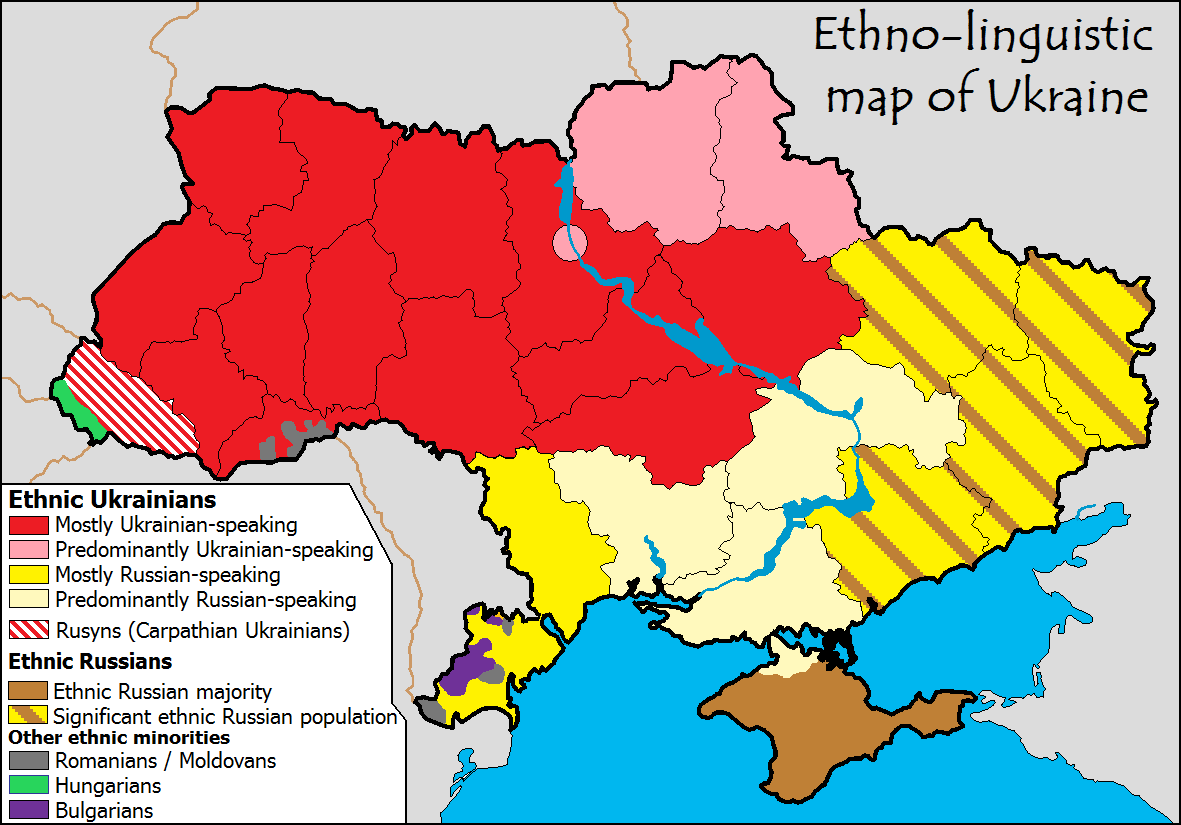
ethno-linguistic map of ukraine languages
© Wikimedia Commons
While Crimea has already had a referendum, the situation in other Ukrainian regions is still unstable. People want their voices to be heard and are demanding a vote. RT managed to get footage from people living in various cities in southeastern Ukraine. Many of the videos and interviews you will see in this film have never been shown on television.

Arrow Up

China outlaws the eating of endangered animal products

Endangered Products
© Flickr

Consumers of endangered animal products in China face a risk of considerable jail time after the Standing Committee of the National People's Congress reinterpreted existing criminal laws last week to put greater pressure on those who eat or purchase protected species.

Chinese law makes it illegal to hunt and buy any of the country's 420 protected endangered species, which include Asiatic black bears, South China tigers, golden monkeys, and giant pandas. But the statutory language is highly ambiguous.

The change adopted by the Standing Committee redefines what it means to purchase endangered species, making it illegal for anyone to knowingly buy or consume animals that were poached.

The aim of the law is to crack down on the demand for endangered species, which are widely used in traditional Chinese medicine. Various animal parts are thought to offer assorted health benefits, like preventing cancer or relieving back pain.

Many of these species are also valued as a mark of status. Consumption has boomed in tandem with the country's economy, and the demand has encouraged large-scale illegal hunting.

While activists would prefer the language of the protection statute to be strengthened, they welcome the new interpretation.

"This is very good in its own way," Grace Gabriel, the Asia director at the International Fund for Animal Welfare (IFAW), told VICE News. "This interpretation is finally making it illegal to knowingly consume endangered species and their products."

Heart - Black

Apathy: Ukrainian nationalists sneer at Odessa Trade Union House victims

Image
© RIA Novosti
The tragedy in Odessa has become the moment of truth when politicians speak without choosing words and nationalists kill without feeling shy of cameras. All this can be later found on line, so one can draw conclusions about the parties' true nature and intentions.

YouTube and social networks show nationalists shooting at those who found refuge in the Trade Union House. Young girls wearing headscarves the color of the Ukrainian national flag are diligently making Molotov cocktails that were later cast at the building. A group of people are bottling an explosive liquid right in the street, as if this were a picnic. Several hours later those bottles made people burn alive.

When the Trade Union House was engulfed in flames people hiding there had nowhere to expect assistance from. Eye-witnesses said that fire-engines took ages to arrive, almost 20 minutes, which was hardly accidental.

Pistol

Oklahoma parents say son needed help - sheriff's deputies gunned him down instead

Image
© Photo providedMah-hi-vist Goodblanket, 18, was shot and killed by Custer County sheriff's deputies on Dec. 21. The district attorney's office hasn't yet ruled whether the shooting was justified.
Mah-hi-vist Goodblanket, 18, died Dec. 21 in an incident with the Custer County Sheriff's Office. His parents say the shooting wasn't justified and dispute the Sheriff Bruce People's version of events

At 18 years old, the Goodblankets' eldest son stood larger than most grown men: 6-foot-8 and at least 215 pounds. Mah-hi-vist Goodblanket, 18, was shot and killed by Custer County sheriff's deputies on Dec. 21. The district attorney's office hasn't yet ruled whether the shooting was justified. Photo provided

And on the night of Dec. 21, a misunderstanding with his girlfriend spun Mah-hi-vist Goodblanket into a destructive fit, smashing windows and doors and knocking over the family's Christmas tree. Melissa and Wilbur Goodblanket feared he would hurt himself, so they called 911.

The law enforcement response that followed would leave their son lifeless on the floor of their Clinton home, riddled with gunshots.

Newspaper

NYT reports Slavyansk self-defense forces are not Russian

Image
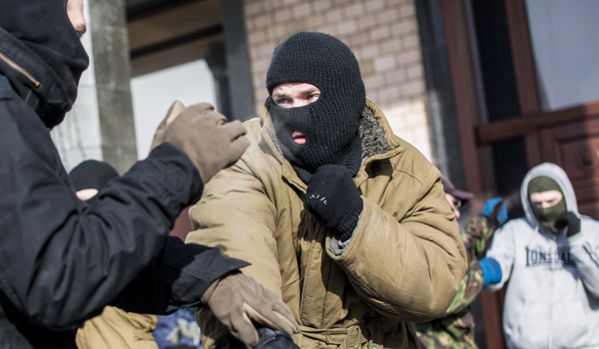
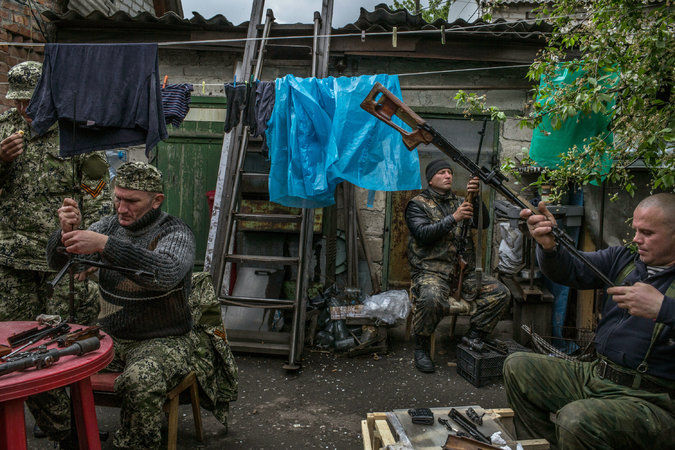
© Mauricio Lima for The New York TimesPro-Russian militiamen in the backyard of their base in Slovyansk, in eastern Ukraine, last week.
The rebel leader spread a topographic map in front of a closed grocery store here as a Ukrainian military helicopter flew past a nearby hill. Ukrainian troops had just seized positions along a river, about a mile and a half away. The commander thought they might advance.

He issued orders with the authority of a man who had seen many battles. "Go down to the bridge and set up the snipers," the leader, who gave only a first name, Yuri, said to a former Ukrainian paratrooper, who jogged away.

Yuri commands the 12th Company, part of the self-proclaimed People's Militia of the Donetsk People's Republic, a previously unknown and often masked rebel force that since early April has seized government buildings in eastern Ukraine and, until Saturday, held prisoner a team of European military observers it accused of being NATO spies.

His is one of the faces behind the shadowy paramilitary takeover. But even with his mask off, much about his aims, motivations and connections remains murky, illustrating why this expanding conflict is still so complex.