
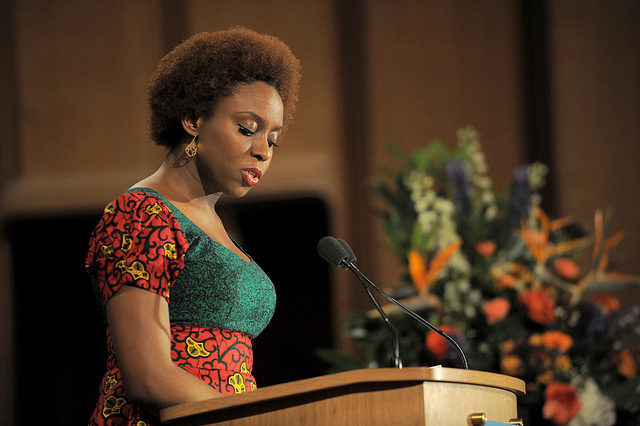
Ngozi Adichie
Speaking earlier this week with the U.K.'s Channel 4, Adichie, who is promoting her new book Dear Ijeawele Or a Feminist Manifesto in Fifteen Suggestions, said, "When people talk about, 'Are trans women women?' my feeling is trans women are trans women."
Her argument appears to stem from her idea that because many trans women have been assigned and raised male from birth until whatever point they decided to transition, she believes the male privilege they may have received fundamentally sets their experiences apart from those of cisgender women.
"I think the whole problem of gender in the world is about our experiences," she said. "It's not about how we wear our hair or whether we have a vagina or a penis. It's about the way the world treats us, and I think if you've lived in the world as a man with the privileges that the world accords to men and then sort of change gender, it's difficult for me to accept that then we can equate your experience with the experience of a woman who has lived from the beginning as a woman and who has not been accorded those privileges that men are."
















Comment: Jordan Peterson's response pretty much sums it up: