Fire in the SkyS


Meteor

How Likely Am I To Be Hit By an Asteroid?

Image
© Science Photo Library
A report suggests that there should be 91 deaths every year from asteroid strikes, but what are the chances of that actually happening?

Buy insurance. Tick. Health check. Tick. Drive sensibly. Tick. As a general rule, we humans like to control our lives. But let's face it, all of this caution is a complete waste of time if a huge rock from space has your name on it.

Take the recent 'near-miss' by the poetically-named asteroid 2012 BX34, which was only discovered two days before it sailed past within 40,000 miles (60,000km) of Earth. What if it had been heading straight for us?

A wonderful report from the US National Research Council (NRC) says that on average there should be 91 deaths per year from asteroid strikes - a remarkably precise figure and one that deserves some digging.

Try to think of when you last heard about an asteroid striking the earth. There really aren't that many of them, or at least that many that are noticed or reported in newspapers.
Comment: For more information on impact events, see these exclusive Sott articles:

Impact Hazards on a Populated Earth

Meteorites, Asteroids and Comets: Damages, Disasters, Injuries, Deaths and Very Close Calls


Meteor

Green Fireball Seen All Over Southeastern Canada

Similar reports were made throughout the northeastern U.S. Wednesday

A video of the meteor taken at 22:12 EST on 28 February 2012 in Dunrobin, Ontario, Canada:


Facebook and Twitter social media sites on the northeast Avalon were busy with reports of an unidentified, green object falling in the sky over Conception Bay South Wednesday night.

"It was turquoise in colour and was rounded on the bottom and tapered to a point on top. It looked big, but it was hard to tell how far away it was. It was moving extremely fast toward the ground," said a Facebook status update from the St. John's area.

"I've read about a couple of natural phenomena now that could explain it ... something called a green fireball and a meteor - which can apparently be blue, white or green," said another one.

Meteor

Meteorite discovery reported in Exeter, Northeastern US

Image
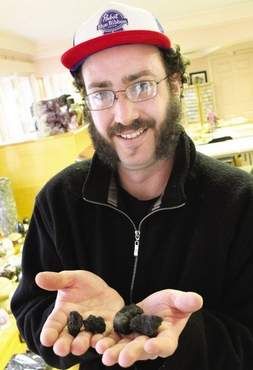
© Rich Beauchesne/rbeauchesne@seacoastonline.comAidan Ulery of Exeter holds several pieces of what are believed to be stony meteorites. He said that, after seeing a giant, green fireball in the sky at about 10:15 Tuesday night, he went in search of an impact site.
A town already known for its encounters with UFOs may have added another out-of-this-world chapter to its history on Tuesday night.

A piece of a meteoric fireball that was seen across the region may have landed on one of the town's streets.

The fireball, caused when debris burns up in the atmosphere, was spotted by numerous people in New England and Canada on Tuesday night, including Aidan Ulery, 32, of Exeter.

Ulery was at a friend's home on Main Street between 10 and 10:30 p.m., when he saw the light.

"I thought it was a spaceship at first, honestly," Ulery said. "It was a 10-foot, green ball that came suddenly down from the sky."

But unlike the others who reported sightings across the region, Ulery swore the object struck nearby on Park Street, and went looking for it. While he didn't find anything Tuesday night, Ulery said he knew something was different.

Meteor

Green Object Reported in the Sky Over Newfoundland

Fireball
© iStockphoto

Facebook and Twitter social media sites on the northeast Avalon were busy with reports of an unidentified, green object falling in the sky over Conception Bay South Wednesday night.

"It was turquoise in colour and was rounded on the bottom and tapered to a point on top. It looked big, but it was hard to tell how far away it was. It was moving extremely fast toward the ground," said a Facebook status update from the St. John's area.

"I've read about a couple of natural phenomena now that could explain it ... something called a green fireball and a meteor - which can apparently be blue, white or green," said another one.

No one has reported an alien abduction yet ... but the reports on Twitter and Facebook weren't isolated to eastern Newfoundland.

People from many parts of the northeastern U.S. also posted reports on astronomy internet forums all evening claiming they saw a green light in the sky.

Meteor

Leap Day New Asteroid Will Zoom By Earth

Asteroid 2012 DS32
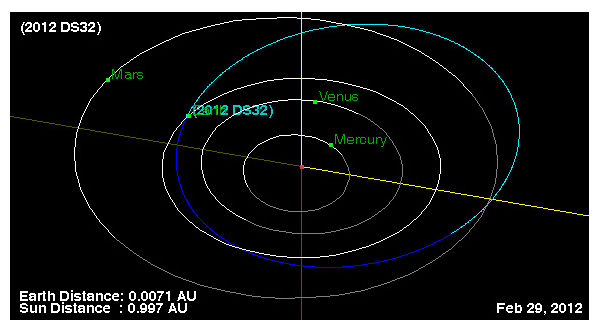
© NASA/JPLThis NASA graphic depicts the orbit of the small asteroid 2012 DS32, which zooms by Earth on Feb. 29, 2012.

A small asteroid about the size of a house will make one cosmic leap by Earth today, just in time for leap day.

The newfound asteroid 2012 DS32 poses no chance of hitting our planet, but will make an evening pass to mark this special day for Earth, NASA scientists said.

"Happy Leap Day! Small asteroid 2012 DS32 will safely pass Earth at 7:36 p.m. EST," astronomers with NASA's Asteroid Watch program wrote in a Twitter post. The Asteroid Watch program is part of the Near Earth Object office at NASA's Jet Propulsion Laboratory in Pasadena, Calif.

The asteroid 2012 DS32 is about 61 feet (about 18.5 meters) across and will still be a good distance away from Earth when it makes its closest approach. At the nearest point, the asteroid will zoom within about 446,000 miles (717,767 kilometers) of the planet, which is slightly less than twice the distance between the Earth and the moon. The average Earth-moon distance is about 238,000 miles (382,900 km).

Sun

Blue Flash Above Setting Sun

We've all heard of the green flash, the fleeting emerald light that sometimes appears just above the setting sun. Once thought to be a fable, the green flash was popularized by Jules Verne in his 1882 novel Le Rayon Vert (The Green Ray). Now it is generally known to be real.

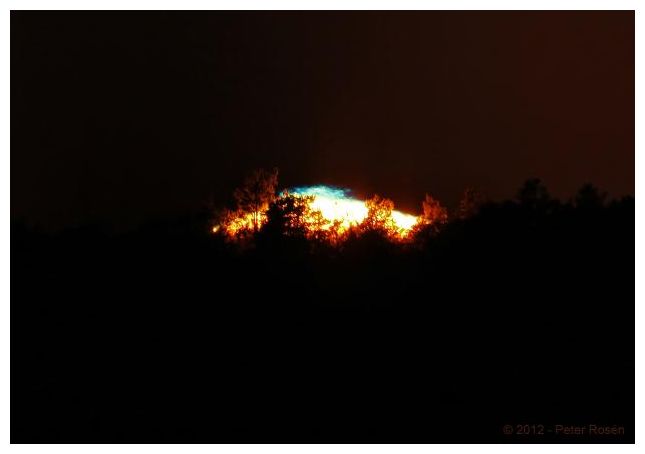
But what of the even rarer blue flash? Turns out, that's real too. Peter Rosén photographed one from Stockholm, Sweden, on Feb. 29th:

Blue Flash on Setting Sun
© Peter Rosén Image Taken: Feb. 29, 2012
Location: Central Stockholm, Sweden
"I was shooting the sunset when, suddenly, just as the sun was about to disappear behind the treetops, there was a mighty blue flash," says Rosén.

Blues flashes are formed in the same way as green flashes: a mirage magnifies tiny differences in the atmospheric refraction of red, green and blue light. Blue flashes are generally harder to see than green flashes, because blue flashes blend into the surrounding blue sky. When the air is exceptionally clear, however, the blue flash emerges.

Meteor

What Was The Bright Flash In The Sky Tuesday Night?

Fireball
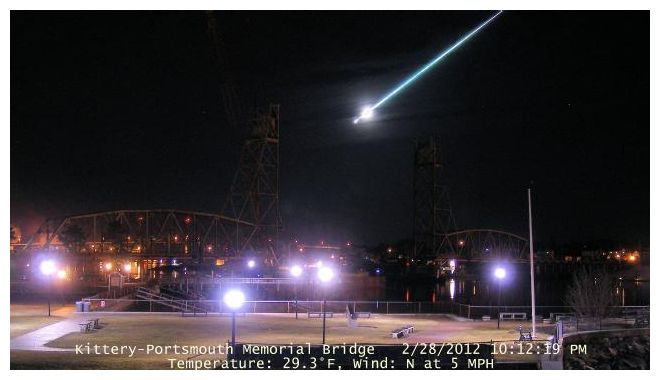
© Michael McCormackA webcam focused on the Memorial Bridge captured this image of a bright meteor reported by viewers across the region. The camera was set to a 4-second exposure.

Manchester, New Hampshire -- It was reddish-orange and only appeared in the sky for a moment or two, but it has a lot of people in the area asking questions.

Several people in New Hampshire reported seeing a bright object in the sky about 10 p.m. Tuesday.

Witnesses said it was a colored, glowing ball that was bright for few seconds and then vanished.

Melanie Wilson, of Concord, said she was driving home from work on Airport Road when she saw the object above her car. She said the thought it was going to land on the highway, and she slowed down.

But in a flash, it was gone.

"It was scary and neat," Wilson said.

Meteor

Incoming Fireballs: Man Claims Meteorite Find

Image
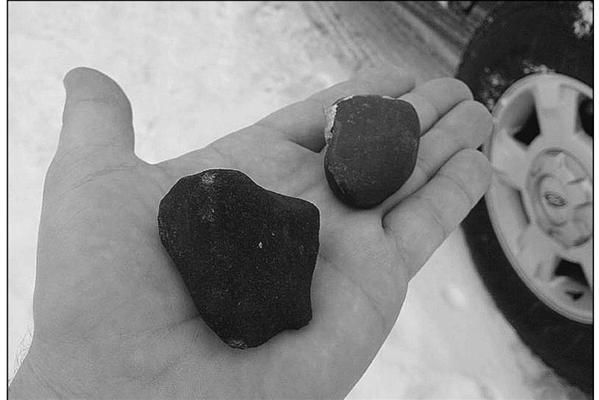
© Lana HaightThis photo shows rocks purported to be from a meteor that flashed across the Saskatchewan sky this week.
Rocks being offered for sale online

A man claims to have found the first known meteorites from a fireball that lit up the sky over Saskatchewan and Alberta Tuesday night.

A posting on Kijiji shows two roundish and blackened rocks a man says he found on the side of a highway north of Rockhaven. One of the rocks is listed for sale for an unspecified price and the other rock is shown suspended by a magnet.

Now geologists and astronomers who study meteorites are trying to get in touch with the man in an attempt to verify whether the rocks are connected to Tuesday's meteor sighting, which rattled houses as it zoomed over North Battleford.

Richard Huziak, a Saskatoon amateur astronomer and member of the Prairie Fireball Network, says the rocks in the picture look like chondrites, which match meteorites found after the Buzzard Coulee meteor crashed in central Saskatchewan in 2008.

Meteor

Raining Fire: February fireballs really shake things up


Meteorites seem to be dropping everywhere. First China and now today comes word of fresh cosmic booty on the ground north of the town of Rockhaven (a wonderfully appropriate name) left in the wake of a brilliant fireball that appeared over Alberta, Canada this past Tuesday evening.

The meteor was described as blue-white and as bright as the moon. Some went even further and compared it to the sun. Observers reported hearing low rumbling noises for several minutes after it broke up and disappeared. These are all good signs that material survived the fiery, high pressure flight through Earth's atmosphere. The first specimens of what appears to be a very fresh meteorite were picked up not long after the fall on a road north of Rockhaven and can be viewed HERE. Yes, one of them is already up for sale!

Satellite

Space Junk Falls on Brazilian Village: Reports

Space Junk
© NASA/Orbital Debris Program OfficeEach dot represents a bit of known space junk that's at least 4 inches (10 cm) in low-Earth orbit, where the space station and shuttles roam. In total, some 19,000 manmade objects this size or bigger orbit Earth as of July 2009; most are in low-Earth orbit. Countless smaller objects are also circling the planet.

A chunk of debris from an old European rocket apparently fell from space Wednesday (Feb. 22) and crashed in a small village in Brazil, according to Brazilian news reports.

The piece of space junk, a spherical object, crashed at around 6 a.m. local time in the village of Anapurus in the state of Maranhão, according to the Brazilian newspaper Jornal Pequeno.

The metal sphere, which measures roughly 3.3 feet (1 meter) across, landed near a house and damaged some trees as it plummeted to the surface, according to the Jornal Pequeno.

The newspaper reported that residents of the village heard a loud bang and saw a bright flash of light before the object made its impact. Dedicated satellite observers were quick to offer suggestions about what the object could be and where it may have come from.

Ted Molczan, of Toronto, is a respected satellite spotter and a member of a network of devoted amateur skywatchers around the world. On the online satellite-tracking community satobs.org, Molczan noted that the time of the crash and its location strongly indicate that the metallic sphere could be part of a spent European Ariane 44L rocket body.