© www.armstrongeconomics.com
Whenever the subject of
American foreign-policy catastrophes comes up, the word "Iraq" immediately comes to mind. But George W. Bush's ill-fated invasion of that hapless land
in reality did not do irreparable damage to the United States. That is not to trivialize the costs, including trillions of dollars and the deaths of thousands of Americans plus hundreds of thousands of Iraqis, but the reality is that
the U.S. homeland was not attacked and the economy has not collapsed, making Iraq a war that should never have been fought but
not a defeat in historic terms.One thinks of Russia less frequently when U.S. policy failures are examined. In 1991,
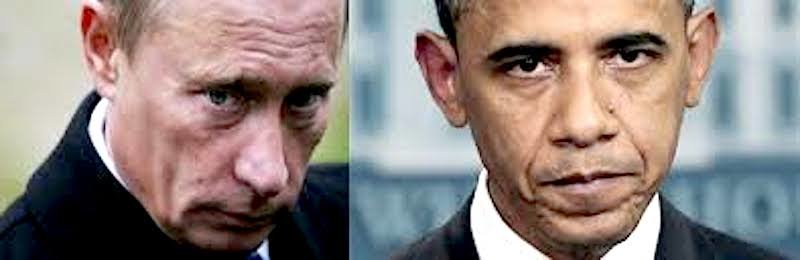
Russia was a superpower. Today it is a convenience, a straw man fortuitously produced whenever someone in power wants to justify weapons expenditures or the initiation of new military interventions in faraway places. Much of the negative interaction between Washington and Moscow is driven by the consensus among policymakers, the Western media, and the inside-the-beltway crowd that
Russia is again—or perhaps is still and always will be—the enemy du jour. But frequently forgotten or ignored is the fact that
Moscow, even in its much-reduced state,
continues to control the only military resource on the planet that can destroy the United States, suggesting caution should be in order when one goes about goading the bear.
Truly, the
unwillingness to takes steps after 1991
to assist Russia in its post-communism transformation into a stable, prosperous, and secure state modeled on the West is the
most significant foreign-policy failure by both Democratic and Republican administrations over the past 30 years. The
spoliation of Russia's natural resources carried out by Western carpetbaggers working with local grifters-turned-oligarchs under Boris Yeltsin, the
expansion of NATO to Russia's doorstep initiated by Bill Clinton, and the
interference in Russia's internal affairs by the U.S. government (including the Magnitsky Act) have
exploited Russian vulnerability and have produced a series of governments in Moscow that have become increasingly paranoid and disinclined to cooperate with what they see as a threatening Washington.








Comment: Failed coup in Turkey: Timeline of events