Puppet MastersS


Newspaper

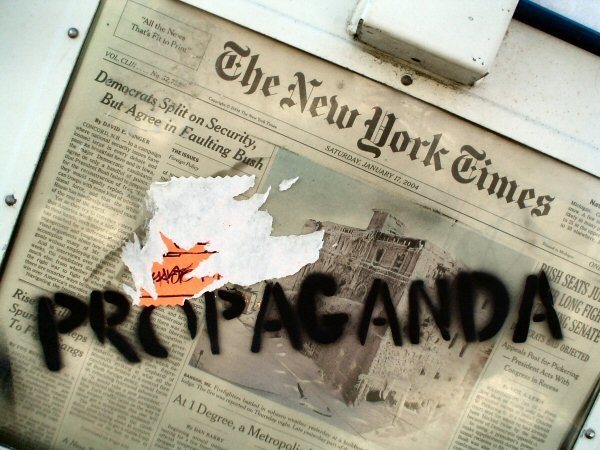
Hypocritical double standard: NYT suddenly embraces international law to condemn Russia

New York Times propaganda rag
© Russia Insider
As the Syrian Arab Army dug in for a fight against the self-declared Islamic State on September 17, they were struck by an air raid that killed 62 soldiers and injured 100 more. The culprit was a foreign military that has never been attacked by, and has not declared war on, Syria. Two weeks later, that same nation's military killed 22 soldiers in a strike inside Somalia, another country which it had never been attacked by nor declared war on. The very next day the New York Times published a stinging editorial decrying flagrant violations of international law by an "outlaw nation."

The Times, of course, was not referring to the perpetrator of both attacks: the United States government. Each act was a clear violation of Article 2 (4) of the UN Charter prohibiting the use of force against another nation and demanding respect for its sovereignty. But the "supreme international crime" of aggression did not merit mention in the Times, who saw something far more sinister than carrying out illegal massacres across countries and continents in the actions of "Vladimir Putin's Outlaw State."

Russia, according to the Times' righteous defenders of international law, is guilty of violating "not only the rules intended to promote peace instead of conflict, but also common human decency." The editorial board finds not only disregard for the law, but the absence of standard ethics accepted by civilized people and societies. It is a pretentious way of saying that Russia's leaders are sociopathic, lacking the humanism and benevolence of Americans and their allies.

Comment: The New York Times is consistent at ignoring history and facts: The New York Times has totally lost the plot on Russia. And rarely gets it right: New York Times op-ed: The Russians are not to be feared


Wolf

Suspect arrested in Cardiff carrying USB disguised as cufflink - contained ISIS terrorist plans

isis
© AFP
A Cardiff man has been charged with six terrorism-related offenses, including concealing plans for a terrorist attack on a USB stick disguised as a cufflink.

Samata Ullah, a computer technician from Grangetown, a suburb of the Welsh capital, stands accused of supporting Islamic State (IS, formerly ISIS/ISIL).

The 33-year-old, who has also been charged with the possession of written materials on guided missiles for "a purpose connected with the commission, preparation or instigation of terrorism," will appear at Westminster Magistrate's Court on Wednesday.

Ullah was arrested last month following an investigation by the Metropolitan Police counter terrorism command with support from the Welsh extremism and counterterrorism unit.

His alleged offenses took place between December 31, 2015 and September 22, 2016.

Dollars

Clinton Foundation suddenly decides to file three years of taxes

clintons
© Samantha Sais / Reuters
The Clinton Foundation refiled three years of tax forms after it emerged that the charity failed to disclose all of its donors.

Both the Foundation's Clinton Global Initiative (CGI) and Clinton Healthcare Access Initiative (CHAI) re-filed financial statements on Tuesday. Foundation officials told CNN that the charity may not have filed "certain supplementary financial information" for three years. The large charity has 10 offshoots, the largest of which is CHAI, which files its own financial statements in New York.

The news comes a day after New York Attorney General Eric Schneiderman ordered the Trump Foundation to cease soliciting donations as it had failed to register as a charity, which followed revelations that Donald Trump may have avoided paying taxes for up to 18 years.

While Clinton was quick to blast her rival on his tax returns, Republicans are likely to jump on her foundation's own apparent tax omissions.

"It has come to our attention that the copies of the Clinton Foundation's consolidated audit reports filed with the Charities Bureau from 2012-2014 may not have included certain supplementary financial information related to affiliates of the Foundation,"said foundation officials.

Missing from the filings are details of foreign donors to these affiliate arms of the foundation.

Comment: Considering Killary's own non-profit didn't file taxes for three years, it was rather hypocritical of her to criticize Trump during the first presidential debate for his refusal (so far) to release his filed tax returns.


Bell

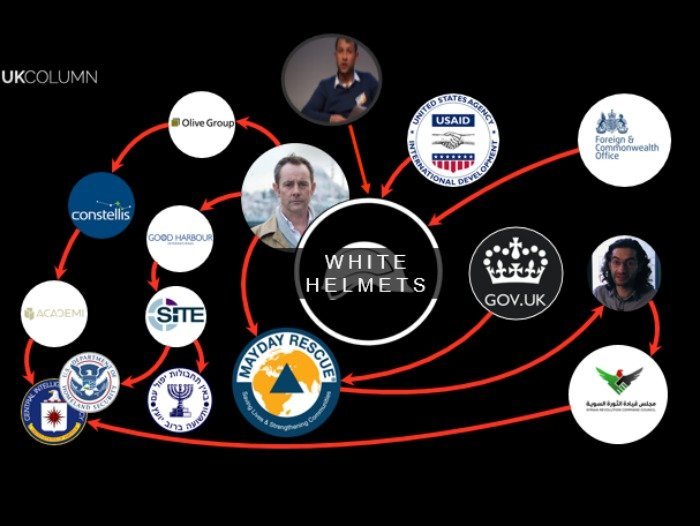
White Helmets Campaign for War NOT Peace - RLA & Nobel Peace Prize Nomination should be Retracted

white helmets
© 21st Century Wire
The awakened world is still reeling in shock from the Right Livelihood Award being given to the US and NATO state construct, the White Helmets. The White Helmets have been proven to be no more than a support network for Al Nusra Front and associated extremist terrorist groups. In many documented instances, the White Helmets are more than a support group and have been accused of carrying out criminal acts alongside the recognised US coalition armed and funded terrorist factions. Ultimately, the White Helmets contravene all international laws regulating the behaviour of a proclaimed humanitarian NGO.

Bad Guys

Top Washington officials discuss bombing Syria in order to protect al Qaeda

pentágono al-qaeda
Top Washington officials are discussing striking positions of the Syrian military without a UN Security Council resolution. Bombing air force runways with missiles fired from coalition planes and ships is being considered.

Barack Obama holds the keys to World War Three in his hands.

Top Washington Officials, the Clinton Campaign, and main stream media (including The Washington Post and New York Times) have thrown their full support behind Al Qaeda and ISIS in Syria, in an effort to not have the last terrorist strong hold of East Aleppo be liberated by the internationally recognized Syrian government.

The WaPo is talking about Russian war crimes. Talk about a parallel universe. Russia, the country that has been invited legally under international law, is being accused of war crimes because it is fighting to liberate Aleppo from Al Qaeda and ISIS control...while the uninvited (in Syria illegally) United States, Saudi Arabia, and Turkey fight to keep Al Qaeda alive.

Comment: Further reading: Al-Qaeda good or bad? U.S. is dead-set against fighting al-Qaeda in Syria - wants it safe and strengthened


Eye 1

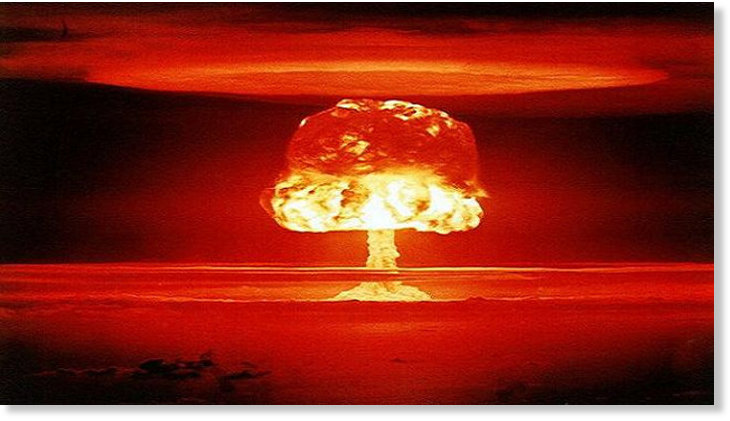
World War III is growing in Syria

bomba nuclear
© Google
The Syrian war is a world conflict involving all the Great Powers and all the ideologies of the modern world.

Whilst many are eerily forecasting the possibility of a Third World War which would begin in Syria, there is another question that ought to be asked.

Has the Third World War already begun there?

Syria is the crucible in which all of the major world powers are fighting and each is fighting for a specific ideology in addition to the more utilitarian matters of control over territory and the economic enrichment which this implies.

Comment: Further reading: Battle of Armageddon: Will it come on Obama's or Clinton's watch?


Bad Guys

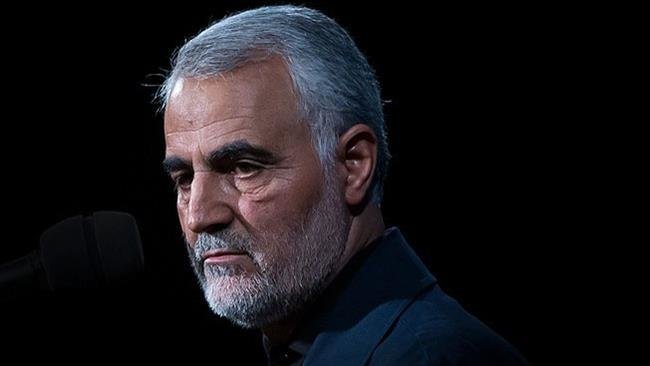
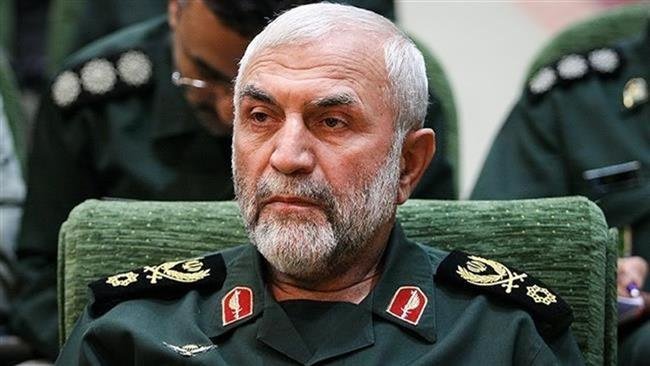
IRGC Commander Soleimani: Daesh is created to target Iran

Major General Qassem Soleimani
© Fars News AgencyMajor General Qassem Soleimani, the commander of the IRGC's Quds Force, delivers a speech in Tehran on October 5, 2016, during a ceremony commemorating the first anniversary of the killing of Brigadier General Hossein Hamedani by terrorists in Syria
Iran's Major General Qassem Soleimani says that Daesh and other Takfiri terrorist groups were created to weaken Iran.

The Commander of the Quds Force of Iran's Islamic Revolution Guards Corps (IRGC) made the remarks in Tehran on Wednesday during a ceremony marking the first anniversary of the killing of Brigadier General Hossein Hamedani (seen below) by terrorists in Syria.

Brigadier General Hossein Hamedani
The senior IRGC commander was killed by Daesh last year during an advisory mission on the outskirts of the Syrian city of Aleppo.


"Daesh and Takfiri terrorist groups were not created for war with Syria, they were established to target the Islamic Republic of Iran," Soleimani said.

Chess

Ankara's 'deafening silence' on Aleppo - Turkey cannot afford to antagonize Russia

damage Aleppo September 2016
© Abdalrhman Ismail/ReutersMen inspect the damage after an airstrike on the rebel-held al-Qaterji neighborhood of Aleppo, Syria, Sept. 25, 2016.
Reconciliation with Russia is preventing Turkish President Recep Tayyip Erdogan from blasting away at Syrian President Bashar al-Assad as he once did.

In the past, Turkish President Recep Tayyip Erdogan never missed an opportunity to thrash Syrian President Bashar al-Assad, calling him the "brutal dictator who kills his own people." These days, however, Erdogan has been noticeably low-key in his criticism of the Syrian leader as his regime pounds Aleppo and, according to independent observers, commits war crimes. It is not difficult to fathom the reason behind Ankara's reticence to take a tough line in keeping with its stance against such attacks in the past: Russia is also involved in the brutal operation against Aleppo.


During an Oct. 1 address to parliament marking the opening of the new legislative year, Erdogan only touched on the situation in Aleppo once in passing, without mention of anyone specifically while laying blame in general terms on the West.

"Those countries and societies that are merely watching the brutality as every innocent life is extinguished among the ruins of Aleppo will have to account for this in the face of history," Erdogan said. He made no other reference to Aleppo although it was the topic dominating world headlines.

Erdogan preferred instead to talk at length about the Turkish military's operation in northern Syria, where it is backing fighters from the Free Syrian Army (FSA) against the Islamic State (IS) and the Kurdish People's Protection Units (YPG), the military wing of the Democratic Union Party (PYD), which Ankara accuses of being a terrorist group linked to the outlawed Kurdistan Workers Party (PKK).

Binoculars

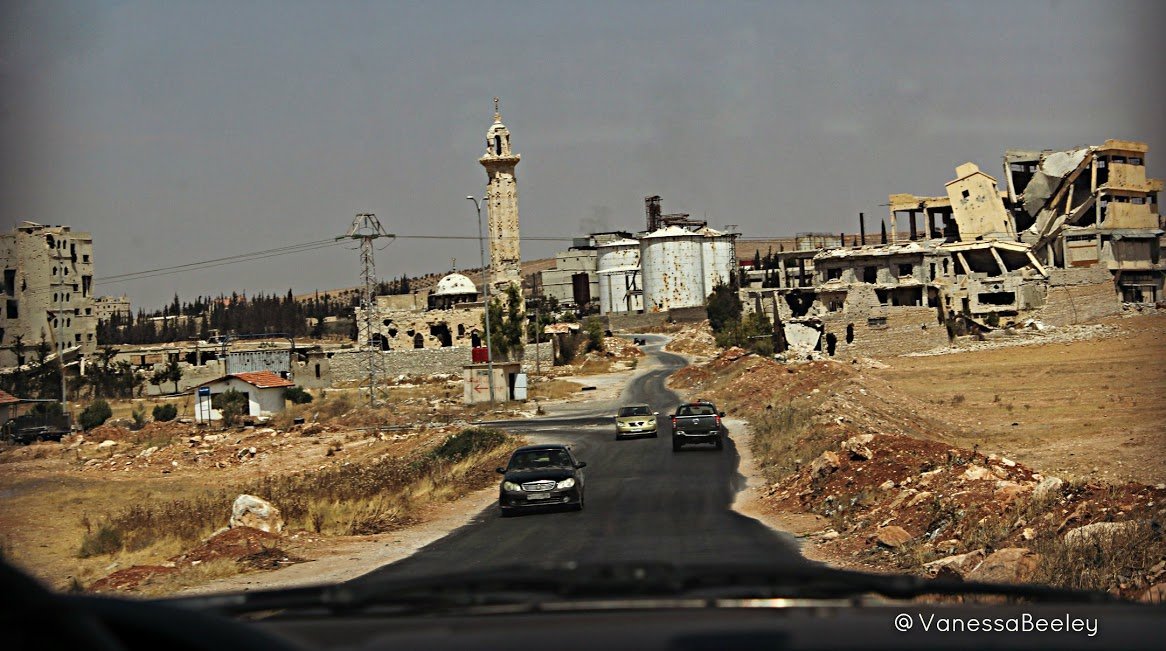
Best of the Web: Vanessa Beeley travels to Aleppo to expose the truth buried under NATO propaganda

road to Aleppo
Passing through Khanaser, al-Safira, and the industrial city of Sheikh Najjar on the road to Aleppo.
Editor's Note: This article is the first in a two-part series of one Western journalist's journey to Aleppo, a city ravaged by an insurgency supported by the United States, NATO member states, and their allies in the Gulf states and Israel.

In Part I, Vanessa Beeley lays out the mainstream narrative on Syria, revealing a neoconservative agenda promoted by NATO-funded NGOs. These NGOs paint the destruction of the historic city as being caused by the Syrian government under Bashar Assad, not the violent armed insurgents which receive arms, funding and training from Western governments and their allies.
Aleppo has become synonymous with destruction and "Syrian state-generated" violence among those whose perception of the situation in the war-torn nation is contained within the prism of mainstream media narratives.

The NATO-aligned media maintains a tight grip on information coming out of this beleaguered city, ensuring that whatever comes out is tailored to meet State Department requirements and advocacy for regime change. The propaganda mill churns out familiar tales of chemical weapons, siege, starvation and bombs targeting civilians - all of which are attributed to the Syrian government and military, with little variation on this theme.

The purpose of this photo essay and my journey to Aleppo on Aug. 14 was to discover for myself as a Western journalist the truth behind the major storylines in the U.S. and NATO narrative on Syria.

Network

Uzbekistan improves ties with Central Asian neighbors

Mirziyaev
Uzbek President Shavkat Mirziyaev's new softer line toward its fellow Central Asian states might be a signal that Tashkent is willing to try the "carrot" rather resorting to the "stick," as it has for many years now.
Uzbekistan's new leader, Shavkat Mirziyaev, is already making a difference in regional politics in Central Asia. In less than one month, Mirziyaev has moved to improve ties with Kazakhstan, Kyrgyzstan, and Tajikistan, and in so doing has sparked hopes for a new era of regional cooperation.

Under former President Islam Karimov, Uzbekistan was an obstacle to regional integration. Uzbekistan lies at the center of Central Asia, bordered by all the other Central Asian states and also sharing an approximately 160-kilometer border with Afghanistan. Uzbekistan has proven to be a knot at the heart of the region.

Tashkent's relations with its immediate neighbors have ranged from bad to horrible. Ties with Turkmenistan warmed after the country's first president, Saparmurat Niyazov, died in late 2006, and in the last decade Karimov seemed to finally find some common ground with Kazakh President Nursultan Nazarbaev, which eased Uzbek-Kazakh relations.

But the Uzbek government has always been hard on eastern neighbors Kyrgyzstan and Tajikistan.