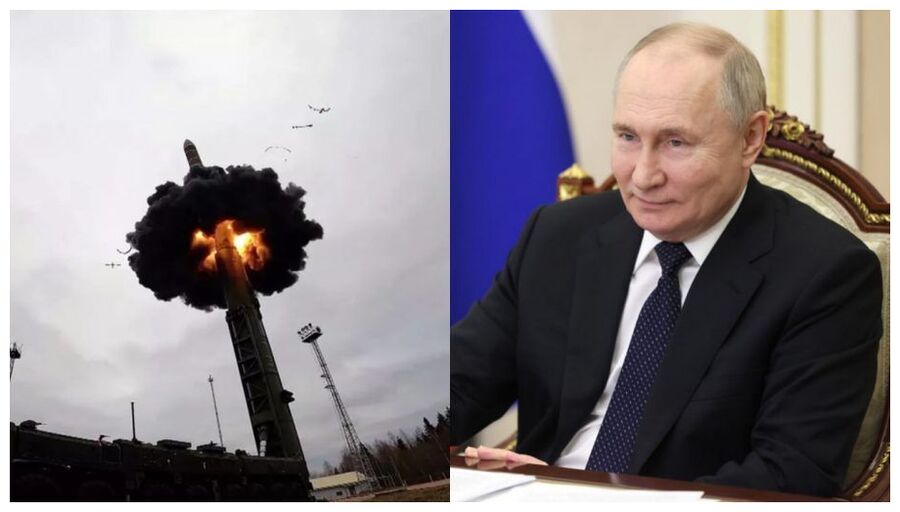
© Public Domain
The long war to reaffirm western and Israeli primacy is undergoing a shape-shift. On one front, the calculus in respect to Russia and the Ukraine war has shifted. And in the Middle East, the locus and shape of the war is shifting in a distinct way.
Georges Kennan's famed Soviet doctrine has long formed the baseline to U.S. policy, firstly directed toward the Soviet Union, and latterly, towards Russia.
Kennan's thesis from 1946 was that the United States needed to work patiently and resolutely to thwart the Soviet threat, and to enhance and aggravate the internal fissures in the Soviet system, until its contradictions triggered the collapse from within.More recently, the
Atlantic Council has drawn on the Kennan doctrine to
suggest that his broad outline should serve as the basis of U.S. policy towards Iran. "
The threat that Iran poses to the U.S. resembles the one faced from the Soviet Union after World War II. In this regard, the policy that George Kennan outlined for dealing with the Soviet Union has some applications for Iran", the
Atlantic report states.
Over the years, that doctrine has ossified into an entire network of security understandings,
based on the archetypal conviction that America is strong, and that Russia was weak. Russia must 'know that', and thus, it was argued, there could be no logic for Russian strategists to imagine they had any other option but to submit to the overmatch represented by the combined military strength of NATO versus a 'weak' Russia. And should Russian strategists unwisely persevere with challenging the West, it was said, the inherent contrariety simply would cause Russia to fracture.
American neocons and western intelligence have not listened to any other view, because they were (and largely still are) convinced by Kennan's formulation.
The American foreign policy class simply could not accept the possibility that such a core thesis was wrong. The entire approach reflected more a deep-seated culture, rather than any rational analysis - even when visible facts on the ground pointed them to a different reality.
So, America has piled the pressure on Russia through the incremental delivery of additional weapons systems to Ukraine; through stationing intermediate range nuclear-capable missiles ever-closer to Russia's borders; and most recently, by shooting ATACMS into 'old Russia'.















Comment:
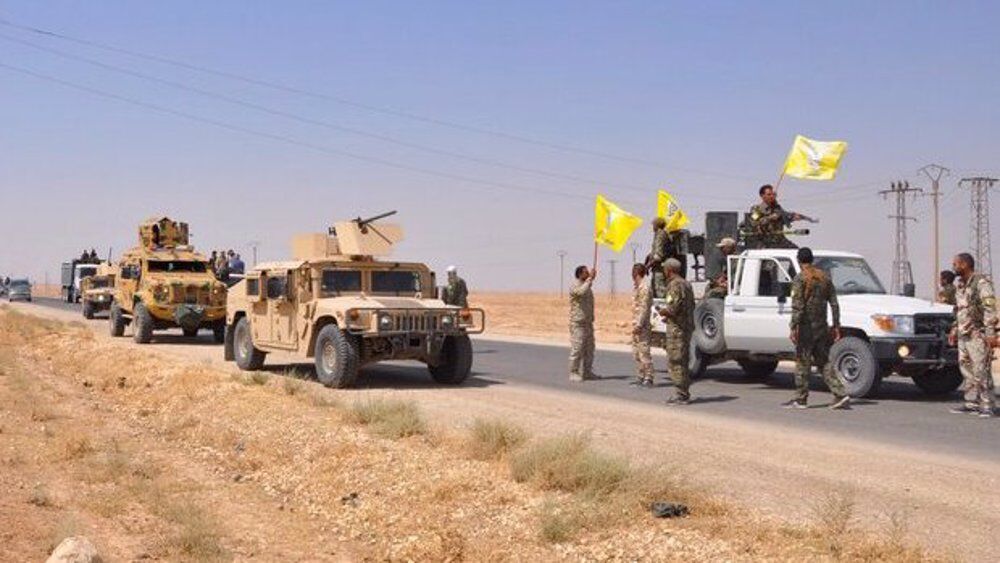
This maps of Syria shows the current partitions of the country, with the red being the Syrian Government and the rest being various groups backed by outside forces. Dayr al-Zawr is a town in the east on the border with the areas of Syria controlled by the US backed Kurdish forces.
See also: