Puppet MastersS


Jet2

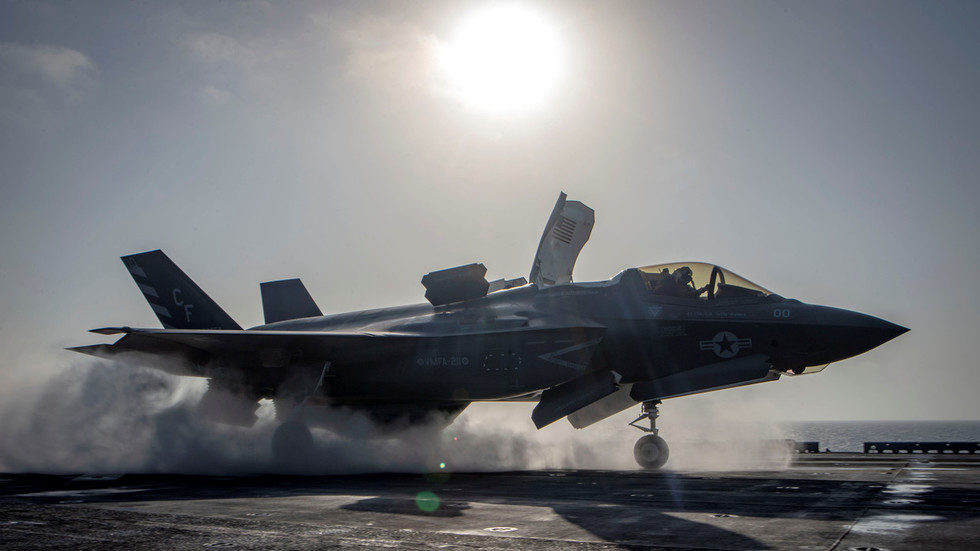
Oops! Core F-35 circuit board components are made by Chinese company

f-35 fighter jet f35
© Reuters/FileF-35 fighter jet
"We are not aware of any other Chinese-owned F-35 suppliers at this time," Lockheed Martin said after the U.K.'s Sky News reported that "a Chinese-owned company is making circuit boards for the top-secret next-generation F-35 warplanes flown by Britain and the United States." British MP Bob Seely, who sits on both the Foreign Affairs and Arms Export Controls Committees described the news as "breath-taking," warning that "it's not a question of is this bad, but how bad is it?" This was echoed by Sir Gerald Howarth, a former U.K. defense minister, who warned that "we have been completely and utterly naive about the role of China and it is only now that people are beginning to wake up."

In truth, though, this revelation has been hiding in plain sight. The U.K. company, Exception PCB, was acquired by Shenzhen Fastprint in 2013, "a company based in China and listed on the Shenzhen Stock Exchange." Exception openly heralds its global parent: "The Fastprint Group of Companies provides manufacturing sites in the U.K., U.S. and Asia, trading companies in the U.K., U.S., Israel, China and main EU Countries," as well as "truly global support... for all sectors including Aerospace."

Exception was founded in 1977 and claims online to supply technology to major players in the global defense industry, including BAE Systems, QinetiQ, GE Aviation, Leonardo, SAAB and Thales, as well as major electronics players such as ARM, Qualcomm, Motorola, Dyson, Siemens, McLaren, Bosch and Philips. Fastprint invested in Exception PCB in 2013 "as part of a long term plan and has provided funding to restructure the group over the past four years. The restructure has been successful with significant improvement in operational performance on all measures; and as a result, the financial results are improving in line with Fastprint's expectations." The company also heralds "synergy with Fastprint," delivering "global supplier and local culture."

Rocket

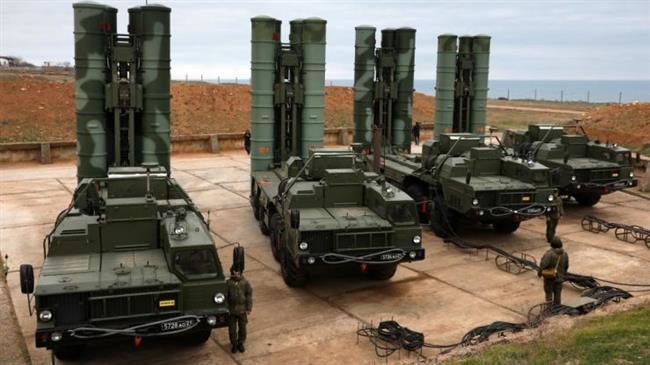
Crybabies: US warns India of 'serious implications' if it picks Russian S-400 over American defense promises

S-400 russia cohete
Sistema S-400
The US-India defense ties will be put at risk should New Delhi purchase Russian S-400 air defense systems, a senior American diplomat warned, noting that India should think very carefully about making such strategic choices.

"At a certain point, a strategic choice has to be made about partnerships and a strategic choice about what weapons systems and platforms a country is going to adopt," Alice Wells, US principal deputy assistant secretary for South and Central Asia, said this week at the hearings on US interests in South Asia and the budget for the fiscal year 2020.

India's procurement of the S-400s "effectively could limit India's ability to increase our own interoperability," she said, explaining that Washington has "serious concerns" about the implications of the $5 billion deal signed with Russia in October on India-US defense ties. "There is no blanket waiver, or a country waiver when it comes to S-400."

Washington wants to capture India's arms market, the diplomat told House Foreign Affairs Subcommittee for Asia, noting that US is now willing to sell equipment that previous administrations had refused to consider.

"Under the Trump administration, we've been very clear that we're ready to help meet India's defense needs and we are seeking a very different kind of defense partnership building on the 'Major Defense Partner' designation that India has received from Congress," she said.

Comment: It may seem petty and opportunistic - and it no doubt is to some degree - but it's also possible the Americans don't want their allies using the S-400 for very practical reasons as well, as is the case with Turkey:
There is a more secret aspect of the S-400 that is little disclosed, either within Russia itself or without. It concerns the S-400's ability to collect data through its radar systems. It is worth noting Department of Defense spokesman Eric Pahon's alarm over Turkey's planned purchase of the S-400:
"We have been clear that purchasing the S-400 would create an unacceptable risk because its radar system could provide the Russian military sensitive information on the F-35. Those concerns cannot be mitigated. The S-400 is a system built in Russia to try to shoot down aircraft like the F-35, and it is inconceivable to imagine."
Certainly, in the event of an armed conflict, the S-400's ability to shoot down fifth-generation aircraft is a huge concern for the United States and her allies who have invested so heavily in such aircraft. Similarly, a NATO country preferring Russian to American systems is cause for alarm. This is leaving aside the fact that the S-400 is spreading around the world, from China to Belarus, with dozens of countries waiting in line for the ability to seal their skies from the benevolent bombs of freedom. It is an excellent stick with which to keep a prowling Washington at bay.

But these concerns are nothing when compared to the most serious threat that the S-400 poses to the US arms industry, namely, their ability to collect data on US stealth systems.

Theoretically, the last advantage that the US maintains over her opponents is in stealth technology. The effectiveness of stealth has been debated for a long time, given that their costs may actually outweigh their purported benefits. But, reading between the lines, what emerges from US concerns over the S-400 suggests that Moscow is already capable of detecting US stealth systems by combining the radars of the S-400 with those of air-based assets, as has been the case in Syria (despite Washington's denials).

The ability of the S-400 to collect data on both the F-35 and F-22 - the crown jewels of the US military-industrial complex - is a cause for sleepless nights for US military planners. What in particular causes them nightmares is that, for the S-400 to function in Turkey, it will have to be integrated into Turkey's current "identification friend or foe" (IFF) systems, which in turn are part of NATO's military tactical data-link network, known as Link 16.

This system will need to be installed on the S-400 in order to integrate it into Turkey's defensive network, which could potentially pass information strictly reserved for the Russians that would increase the S-400's ability to function properly in a system not designed to host such a weapon system.

The final risk is that if Turkey were to fly its F-35s near the S-400, the Link 16 system would reveal a lot of real-time information about the US stealth system. Over time, Moscow would be able to recreate the stealth profile of the F-35 and F-22, thereby making pointless Washington's plans to spend 1.16 trillion dollars to produce 3,000 F-35s.
See also:


Birthday Cake

A cake, a vase and... a BOX of ice cream: Putin's birthday gifts that blew Xi Jinping away

Putin and  Xi Jinping
© RIA Novosti / Alexey Druzhinin
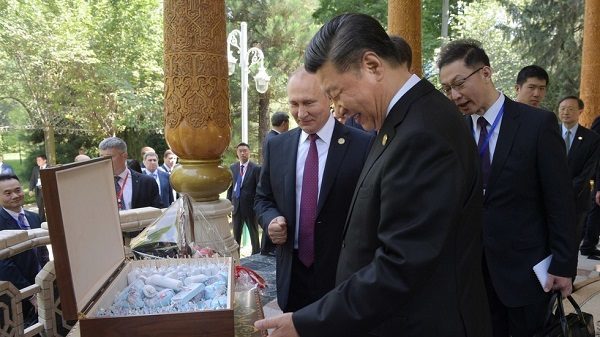
Vladimir Putin has delighted Xi Jinping, it seems, by giving him a stunning set of birthday gifts, one of which is said to be his favorite. That didn't leave the Chinese leader unimpressed, as he generously responded in kind.

Putin congratulated Xi on his 66th birthday while in Dushanbe, Tajikistan, wishing him "best of luck," warmly shaking his hand and saying: "I'm glad to have such a friend like you." He then teased his Chinese counterpart with "something that you could use when celebrating your birthday with your loved-ones."

The birthday cake came first, with Xi promptly noticing the Chinese inscription on it that read: "Great wellbeing." 66 "is a lucky number," Xi noted.

Card - VISA

Russian alternative to SWIFT gaining steam - foreign banks willing to join

Moscow International Business Center
© Sputnik / Maxim BlinovMoscow International Business Center
Banks based in several states are planning to participate in the Russian-developed money transfer network that serves as an alternative to the traditional SWIFT system, according to the head of the Central Bank of Russia (CBR).

"It is open for external connection, we are developing it for our trade partners if they want to join. This work is already ongoing and banks of several countries are going to join, test connections already exist," Elvira Nabiullina said at the first EU-Russia Student Conference in Moscow on Saturday. "We think it will be developing."

Moscow started working on its own payment service, which is dubbed the SPFS (System for Transfer of Financial Messages), amid threats that it could be disconnected from the internationally recognized SWIFT (Society for Worldwide Interbank Financial Telecommunication) system back in 2014.

The CBR governor said the Russian alternative network operates the same standards as SWIFT. It's convenient for those joining it as they do not have to change their internal mechanisms. Moreover, not just banks but also large businesses can join directly and some have already done so, she added.

Comment: Notice that bit at the end: "Joining the network allows foreign players to bypass Western sanctions, enabling them to cooperate with Russian companies hit by the restrictions." Washington's senseless and arbitrary choice of 'enemies' is only having the effect of making them stronger, together. That's good for those countries, of course, but it only demonstrates the lack of thought put into Washington's foreign policy.


Snakes in Suits

Graham claims 'We need points!' US must invade Venezuela to scare Iran and N. Korea

US amphibious
© Reuters / Mike Blake
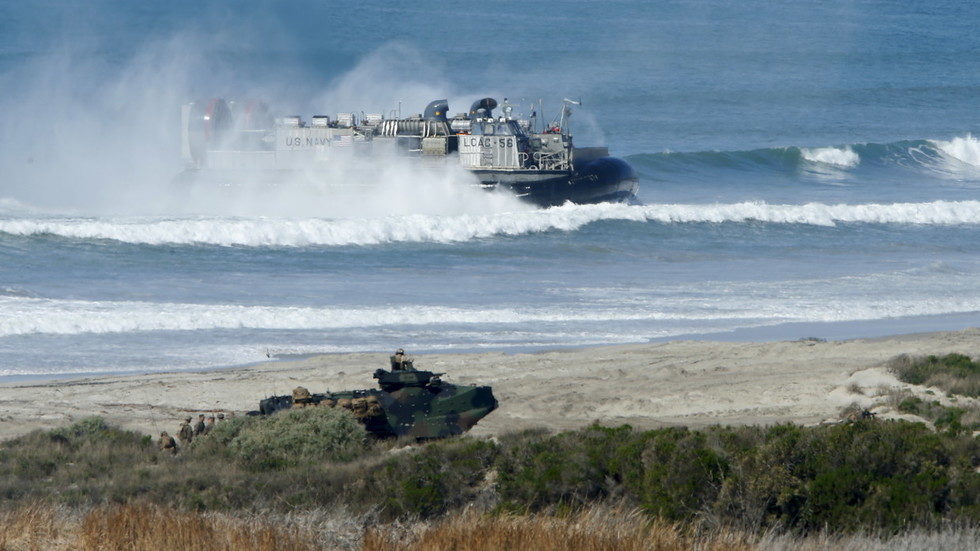
Sen. Lindsey Graham has suggested President Trump "put military force on the table" by invading Venezuela (and possibly Cuba) in order to scare North Korea and Iran into doing what they're told. What could possibly go wrong?

"Give Cuba an ultimatum - without Cuba, Maduro doesn't last one day - tell Cuba to get out of Venezuela. Do what Reagan did in Grenada - put military force on the table!" Graham told a Fox News host, going from zero to invasion in ten seconds flat in response to a question about how Trump should handle his foreign conflicts.

"We need points on the board," the South Carolina senator insisted. "Start with your own backyard... Fix Venezuela and everybody else will know you're serious." North Korea and Iran, he implied, would fall right into line after Venezuela was put in its place.

Comment: Beware the warmongers are itching for a fight.


Chart Pie

Putin: Russia opposes economic wars and 'fighting dirty' in world trade

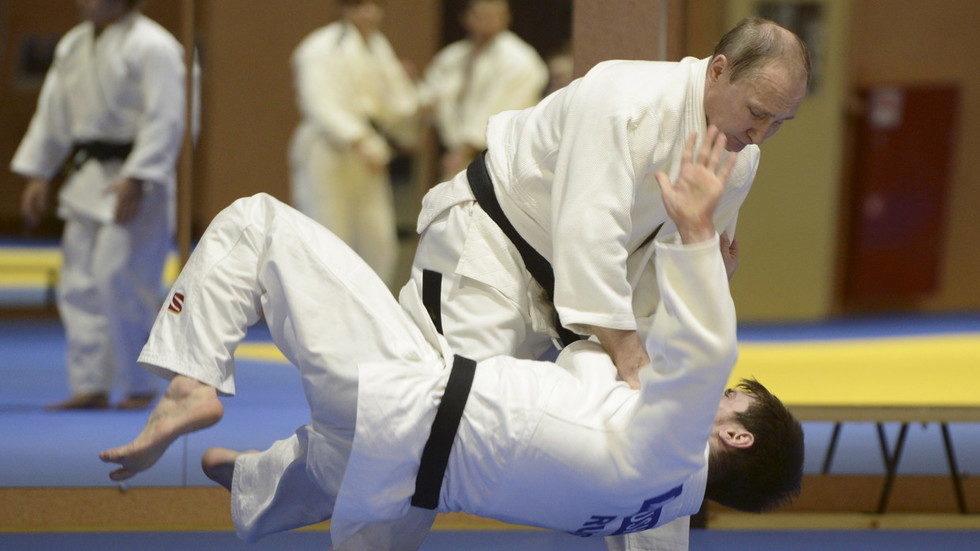
Vladimir Putin practises with national judo team
© Sputnik / Alexey Nikolsky
Moscow stands firmly against trade wars and "fighting without rules" in international commerce, Russian President Vladimir Putin has said.

There are "genuine trade wars" going on all across the world, Putin told the Conference on Interaction and Confidence Building Measures in Asia (CICA) in Dushanbe, Tajikistan, adding that restoring trust is essential among all countries.

"Unfortunately, [some nations] are fighting without rules, [they] intimidate and eliminate competitors through non-market means."

It is crucial to "find the way out of this situation" and "establish rules of fair economic cooperation," the Russian president said. "At the very least, social and humanitarian issues should be exempt from trade and economic restrictions, namely essential goods, medicine and medical equipment," he added.

Comment: Putin never rests trying to show the world a way out of the psychopathic rulers' dominion. A lofty goal but fraught with complex challenges.


Eye 1

Julian Assange to face US extradition hearing in UK next year

free Assange protest posters
© Reuters / Hannah Mckay
Julian Assange will face a five-day US extradition hearing in February next year, a judge has ruled.

The WikiLeaks founder faces an 18-count indictment, issued by the US Department of Justice, that includes charges under the Espionage Act.

At Westminster magistrates court on Friday, the chief magistrate, Emma Arbuthnot, ordered that a full extradition hearing should begin on 25 February.

Ben Brandon, representing the US, formally opened the case, a day after an extradition request was signed off by the home secretary, Sajid Javid.

Comment: Meanwhile Ecuador has taken the UK at its word that Assange won't be executed, but will 'merely' spend the rest of his life in prison for publishing the news. RT reports:
Julian Assange will not be executed if he's extradited to the US, Ecuador has reassured the world. This is good news for Assange, who will have a full life to live after completing his 175-year prison term.

The Ecuadorian Foreign Ministry announced that no matter what happens to Assange, the UK has promised that it would not extradite him to a country that will kill him. The soothing statement was issued ahead of the first London court hearing to decide if the Wikileaks co-founder will be shipped off to the US in shackles.

Amid so much doom over Assange's fate, it's refreshing to have a bit of optimism coming from Ecuador's conscientious diplomats. After revoking Assange's political asylum and allowing UK authorities to frog-march him out of their embassy, Ecuador is obviously deeply concerned about the journalist's well-being.

Instead of being executed for exposing war crimes, Assange currently faces up to 175 years in prison for publishing factual information that embarrassed powerful people.
Also see:


Bad Guys

Senators switched key votes on Gulf arms ban hours after tanker attacks

Rand Paul
© GettySen. Rand Paul has led the fight to ban US weapons sales to Saudi Arabia and other Gulf allies.
A brief report from AntiWar.com's Eric Garris suggests Thursday's tanker attack incident in the Gulf of Oman which the United States promptly blamed on Iran has directly impacted bills placed before the Senate which would ban US arms sales to Saudi Arabia, Bahrain, and Qatar.

Garris wrote of the vote which came hours after the Gulf tankers incident: "Both votes were considered highly likely to pass up until they were rushed to the floor today. The timing appears almost certainly to have been related to Thursday tanker bombings in the Gulf of Oman, and shifted a number of Senators' votes in favor of continuing the arms sales." He noted that "some senators switched sides to kill the bills" following news of the tanker attacks.

The vote, according to Defense News, indeed came very close:

Comment: From blaming Iran and endangering the Eurasian projects to empowering the US and Israel, the attacks on the tankers appear to have primarily benefited the war mongers and their allies: 7 Reasons to be Highly Skeptical of the Gulf of Oman Incident

See also:


Pocket Knife

'Intimidation attempt... against defenseless states': US Marines put on a show of air power

US Marine Corps helicopters 1
© YouTube / Ultimate Military Channel
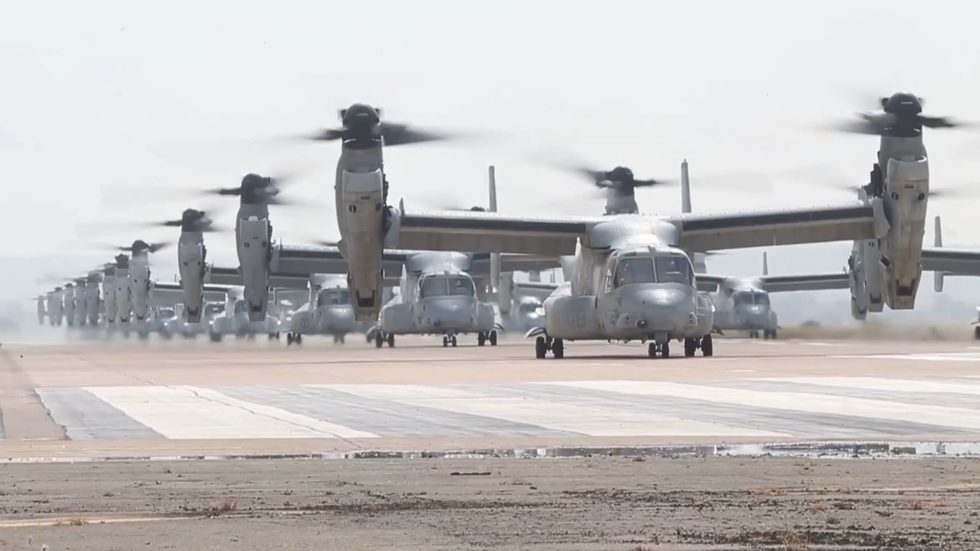
The recent 'elephant walk' of US Marine Corps helicopters and Osprey tilt-rotors is an impressive display of air power, but will likely intimidate only small countries without air defenses, a military expert tells RT.

In what the USMC called a "dynamic display of strength," aircraft from the Marine Aircraft Group 16 in Miramar, California staged a mass take-off last week. Video of two dozen MV-22B Osprey tilt-rotors and 16 CH-53E Super Stallion helicopters shows them in "elephant walk" formation on the tarmac before they take to the skies.

Light Saber

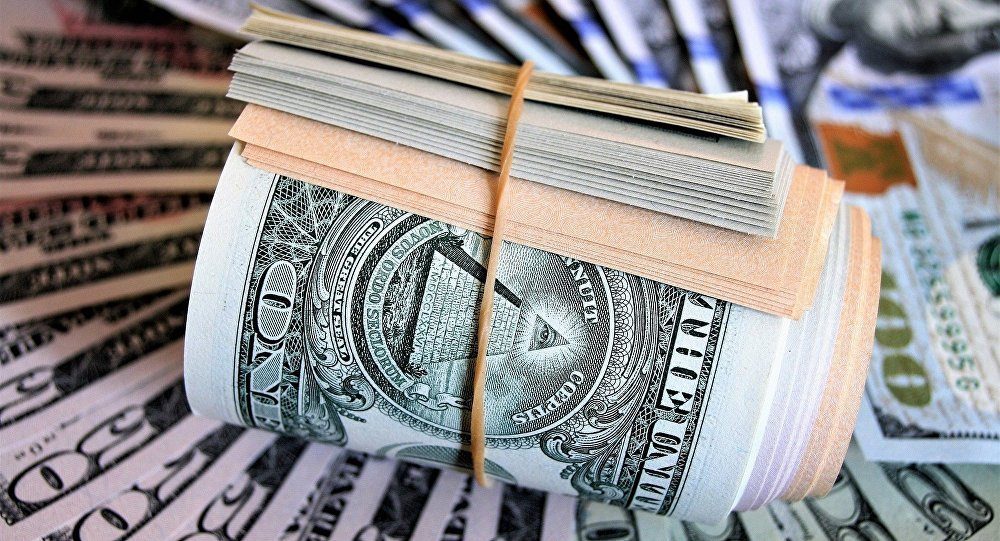
EU and Russia reportedly agree to ditch dollar in Bilateral Transactions

US dollar bundle
© CC0
The decision comes a few days after Russian President Vladimir Putin slammed the US dollar as a tool of pressure while speaking at the St. Petersburg International Economic Forum (SPIEF).

Russian Finance Minister Anton Siluanov and Maros Sefcovic, vice-president of the European Commission for the Energy Union, have agreed to set up a working group that will deal with a transition to using the rouble and euro in bilateral payments, Russian media outlets reported, citing Siluanov's spokesman, Andrei Lavrov.

Both sides have reportedly emphasised that the use of national currencies will be mutually beneficial, as it reduces certain risks for entrepreneurs in Russia and the EU.

Comment: See also: