Puppet MastersS


Attention

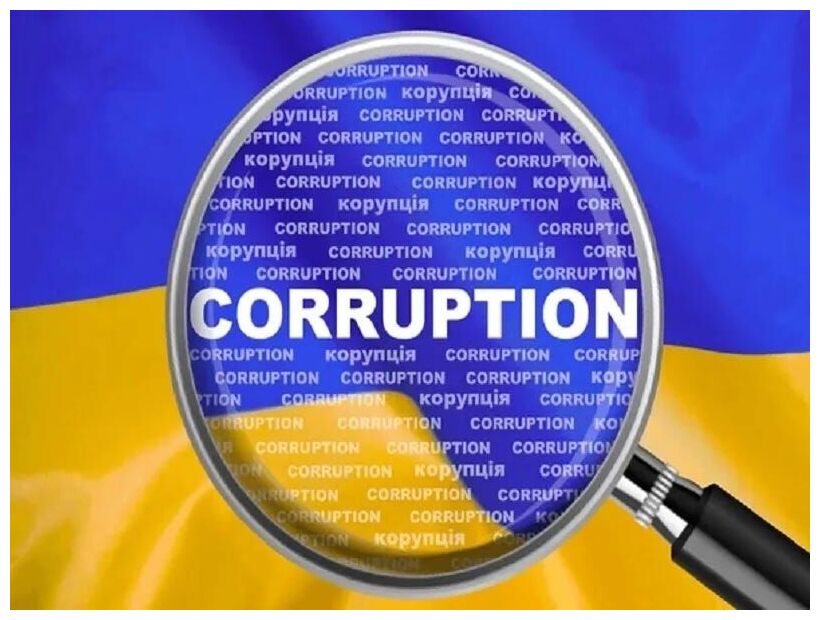
Ukraine corruption: Zelensky's Western masters had better start looking for a new puppet

The "Servant of the People" is only serving his besties, and patience with him is running out.
Ukraine corruption
© survivethenews.com
In all too many ways, what has happened to Ukraine, particularly since 2014, is a very sad story. Two things that are especially depressing are what its own "elites" and its so-called "supporters" in the West have done to the country.

Regarding the West, its contribution to Ukraine's devastation has been to lure its leadership into sacrificing the country and its people in a proxy war. That proxy war, to make things even more absurd and futile, has long failed predictably, even if measured against its Western designers' own selfish and hubristic aims: namely, to substantially weaken if not degrade Russia, or even subject it to the scourge of regime change.

Ukraine, in sum, has been literally bled almost dry in pursuit of a cynical and delusional strategy that has always privileged misconceived Western, not real Ukrainian interests. Ironically, what was meant to weaken Russia has made it stronger, while it is Ukraine that has been degraded, economically, geographically, and, last but not least, demographically.

And politically as well. This may surprise some observers, at least in the West, where the public has been deprived of truthful reporting on Ukraine's domestic politics for years now. Yet the reality is that the country's own "elites" are as brutally selfish and corrupt as ever. Yes, the last president who was not anti-Russian (he wasn't "pro" either), Viktor Yanukovich, made himself a big fat regime change target with his pronounced if messy authoritarianism - mean lawfare against rivals included - and bombastic corruption. But no, nothing has changed.

At least not for the better. If anything, the current regime, under Vladimir Zelensky, is worse. And, as before, it is pervasive: while a favorite sport of the ultra-rich and well-connected, corruption also poisons the life of ordinary Ukrainians at every step. As a Ukrainian construction manager told Al Jazeera this summer, "What's the point if I go back home and my family is surrounded by corruption everywhere [...] Judges, officials, even schoolteachers all say, 'Give, give, give.'" Yet unlike with hapless Yanukovich, Zelensky is, in the infamously candid American phrase, "our son of a bitch," that is, the West's. So, he lasts. For now.

USA

Trump is fighting neither for peace, nor for Ukraine, much less for Russia, but for the survival of the United States

3 US pres
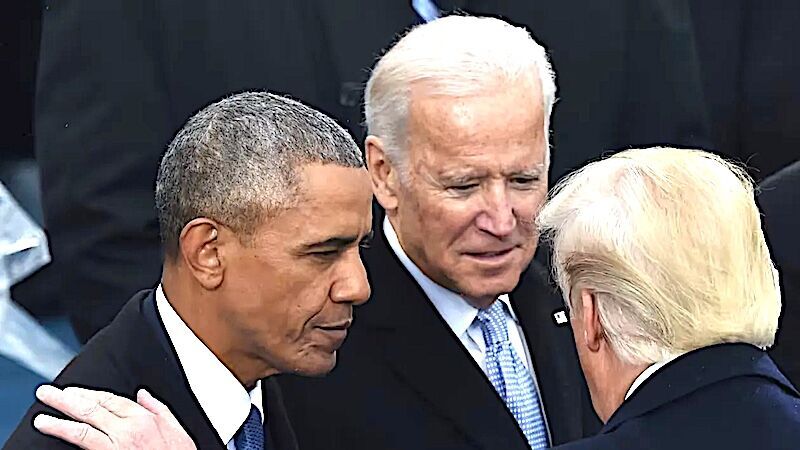
© Paul J. Richards/AFP/Getty ImagesUS Presidents: Barak Obama • Joe Biden • Donald Trump
Beyond the Ukrainian theater, the terminal crisis of a unipolar international order and the irreversible emergence of a multipolar configuration of power relations are revealed.

At the end of World War II in 1945, international relations quickly coalesced around two superpowers (the USA and the USSR), giving rise to a bipolar world. Since then, the quest for a balance of power, fueled by the space race and the expansion of spheres of influence, has fostered a logic of escalation and a mutual perception of threat that continues to divide relations between Washington and Moscow today. Created in a time of relative peace in 1949, NATO has thus established itself as the military instrument of American foreign policy (since the Cold War of 1947-1991 and is part of a historical continuity of war waged by allies or by proxy), at the heart of which lies the containment of Russia, then China, as well as the emerging and middle powers of the Middle East, Africa, and Latin America. The Ukrainian conflict, which Donald Trump calls a "Biden war," has its roots in the 2014 Maidan coup, the starting point of a proxy war against Russia — an episode the Obama administration witnessed firsthand. In reality, Trump's first presidency merely continued this pattern: preparing, under the guise of rhetoric, what is now known as the "Biden war." Trump's posturing (trips and other diplomatic gestures) is therefore consistent with the historical trajectory of American foreign policy: containing Russia to better control Eurasia.

Comment: Author offers a fair and thought-provoking assessment that weaves motive, observation, background and trajectory via the framework of the past into the reality of the future.


Oil Pipeline

Europe's winter anxiety. Energy shortages and rising dependence on Asia

gas guy
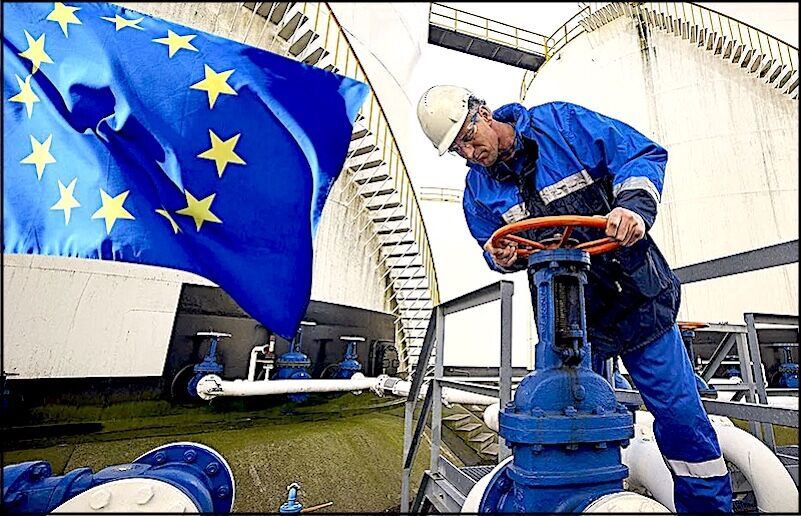
© UnknownGas storage facility
Europe enters another winter with a practiced smile and a barely hidden fear. Gas storage facilities report 82% capacity, press offices radiate optimism, ministers pose beside charts. But those numbers don't bring warmth. They sound like a dry report before a storm no one can cancel.

The heating season has become a mirror in which the continent sees its own dependency — economic and civilizational. Without pipelines, without confidence, without the right to self-sufficiency.

The Season of Anxiety

Energy has become a front without a frontline. Control over fuel is no longer just a matter of technology — it's politics condensed into cubic meters. Power is now measured in deliveries. Europe's vulnerability was not born from the collapse of its infrastructure illusions. Instead of stable pipelines — a chain of charters, insurances, and deals with monarchies that trade oil for loyalty. Energy no longer lives in Europe. It flows to places where comfort at home coexists with a firm hand.

Star of David

Israel wants to implement the death penalty for Palestinian prisoners. Here's what you need to know

Itamar Ben-Gvir
© ScreenshotItamar Ben-Gvir attends a protest in the East Jerusalem neighborhood of Sheikh Jarrah • March 2, 2022
Israel is advancing a dangerous bill to impose the death penalty on Palestinian prisoners. Right-wing leaders want to go even further and use the bill to give Israeli forces the authority to carry out extrajudicial killings.

Israel is one step closer to passing a law that would allow Israeli courts to sentence Palestinian prisoners to death. On Monday, the Israeli Knesset passed the bill in a first reading with a majority of 39 votes in favor against 16 in opposition. The bill was presented as "exceptional" law, under a special status that allows it to be passed only with the majority of votes cast, and not the majority of the Knesset members, which is why absentees and abstentions were not counted. It still needs to pass two more readings before entering into force.

Comment: Beware the bill:
Critics of the move have warned that its adoption would subject Israel to additional international pressure and prompt more violence rather than deter it. Some have described the legislation as highly discriminatory, arguing that it would apply only to Palestinian and not Jewish terrorists. Critics also point out that the bill in its current form also appears to apply only to crimes committed against Israel's Jewish nationals and disregard its Arab citizens.

The proposed law has already been condemned by Hamas, which said it "embodies the ugly fascist face of the rogue Zionist occupation and represents a blatant violation of international law." The Foreign Ministry of the Palestinian Authority gave a similar assessment, calling it a "new form of escalating Israeli extremism and criminality against the Palestinian people."


Stop

Ukraine's justice minister suspended in graft probe tied to Zelensky associate

Galushchenko
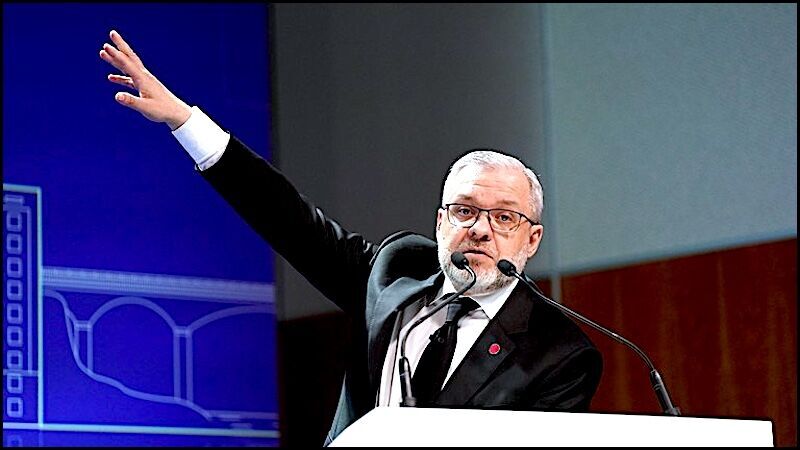
© Stefan Rousseau /WPA Pool/Getty ImageaUkrainian Justice Minister German Galushchenko • London, England • June 21, 2023
Investigators are looking into an alleged large-scale corruption scheme in the energy industry.

Ukrainian Justice Minister German Galushchenko has been suspended as investigators pursue an anti-corruption probe which has reportedly forced a former business associate of Vladimir Zelensky to flee the country, and which could reach the highest levels of government.

Prime Minister Yulia Sviridenko announced the decision on Wednesday, following a sweeping operation by the Western-backed National Anti-Corruption Bureau of Ukraine (NABU) targeting a "high-level criminal organization" that allegedly profited from contracts involving the state-owned nuclear energy company Energoatom.

Galushchenko, who previously served as energy minister before being replaced, called his suspension a "civilized" step and said he was preparing his legal defense.

Ukrainian media reported that the investigation centers on Timur Mindich, a close associate and former business partner of Vladimir Zelensky, who allegedly fled Ukraine just hours before his home was searched by NABU agents.

Comment: Operation Midas brings about the downfall of the Ukrainian ruling class:
"Operation Midas," conducted by NABU, focused on the state-owned nuclear energy company Energoatom, which has an annual revenue of approximately $4 billion. On November 11, five suspects were arrested.

70 houses were searched, including that of Herman Halushchenko, Minister of Justice and member of the National Defense and Security Council. He was suspended from his duties by Prime Minister Yulia Svyrydenko. Roustem Oumierov, the current secretary of the National Defense and Security Council, who is accumulating undeclared properties in Florida, has also been implicated. He is currently traveling in Istanbul.

The same applies to Oleksiy Tchernychov (alias "Che Guevara"), former Deputy Prime Minister, whose whereabouts do not seem to be known.

The amount of stolen money is estimated to exceed $100 million. Each company contracting with Energoatom was required to pay kickbacks of 10 to 15%. The money was allegedly laundered through the office of Energoatom's former director (2006-2007), Andriy Derkach (who, in 2019, attempted to inform Rudy Giuliani about Hunter Biden's crimes in Ukraine). A complete black bookkeeping system was discovered at the site.

The investigation, which began earlier this year, accelerated in June when the U.S. State Department sent eighty investigators to conduct an audit of Ukraine (see VAI 3630 [ 2 ] ). Secretary of State Marco Rubio warned at the time that "any irregularities will have consequences." He ensured that Ruslan Kravchenko was appointed Prosecutor General of Ukraine. He is overseeing "Operation Midas."

Tymur Mindich (alias "Karlson") was arrested in June, then released, and went to Israel. He returned to Ukraine in October before fleeing on November 11. He owns the Kvartal 95 television channel, which he founded with his friend Volodymyr Zelensky. At this stage of the investigation, Zelensky has not been implicated. Investigators are currently examining Tymur Mindich's role in supplying drones.

In a speech delivered on the evening of November 10, Volodymyr Zelensky, the country's unelected president, stated:
"It is urgent to take effective measures against corruption. Sanctions are essential. Integrity within the company [Energoatom] is a priority. In the energy sector, every industry and every person involved in corrupt schemes must face clear legal consequences, and convictions must be handed down. Government representatives must cooperate with the NABU and work together, if necessary, to achieve results."
Regardless of the outcome of the investigation, the remaining Ukrainian authorities will be under constant threat from the Trump administration's revelations and will have to align themselves with its political demands.


Bad Guys

New leadership was 'imposed' on Bangladesh - former Prime Minister

Sheikh Hasina
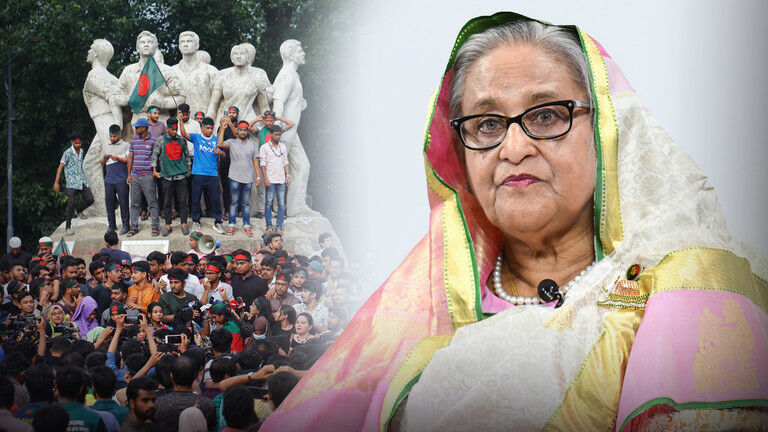
RT composite: The Anti-Discrimination Student Movement is holding a protest to demand the trial of former prime minister Sheikh Hasina, in Dhaka, Bangladesh, on August 12, 2024(L);Sheikh Hasina, Prime Minister of Bangladesh(R).
Sheikh Hasina spoke to RT about the involvement of external forces in the uprising that ousted her in 2024.

Bangladesh's interim government was "imposed" on the people following last year's uprising, the South Asian nation's former prime minister Sheikh Hasina told RT in a written interview on Wednesday.

Recalling the events of August 2024, when she was forced to resign as prime minister and flee to India, where she now resides, Sheikh Hasina argued that there is "forensic evidence" suggesting that "foreign mercenaries" were present at the protests, instigating the masses.

She also asserted that Nobel Peace laureate Dr. Muhammad Yunus, who was named as leader of the country's interim government and has "many admirers in the West" was involved in the uprising that left hundreds dead.

The former PM also criticized the West for preaching democracy while ignoring the fact that the current leadership of Bangladesh has run the country for over a year and a half without holding elections. While general polling is expected to take place in the country in February 2026, the former ruling party, the Awami League, had been banned from participation.

The interview comes as a Bangladesh court is hearing a controversial crimes against humanity case filed against Hasina. Dhaka has been put on high alert with security forces, including the army and police, deployed to maintain law and order amid continuing tensions.

Comment: See also:


Sherlock

Best of the Web: How Miami hawks hijacked Trump's foreign policy. They've long dreamed of toppling Maduro

Marco Rubio
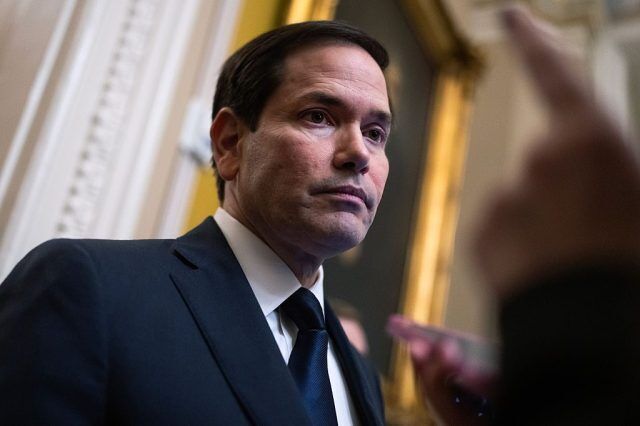
© GettyMarco Rubio has outsized influence.
In dealing with Venezuela, the second Trump administration for months oscillated between dealmaking and regime change. More recently, however, an unprecedented military buildup in the Caribbean appears to be aimed at toppling Venezuelan dictator Nicolas Maduro. The regime-change faction, in other words, has got the upper hand. But how? Blame the regime-change capital of the Americas, Miami, and its native son, Marco Rubio.

Early on, there was some hope that the White House would forgo the first term's amateur coup attempts and moralistic posturing against Maduro. Among his first acts in 2025, President Trump dispatched special envoy Richard "Ric" Grenell to broker an America First understanding with the Caracas regime.

Snakes in Suits

Best of the Web: Jeffrey Epstein Helped Israel Sell a Surveillance State to Côte d'Ivoire

Jeffrey Epstein with unidentified soldiers in Africa
Jeffrey Epstein with unidentified soldiers in Africa. Photo from Epstein’s “birthday book.”
Jeffrey Epstein and Ehud Barak were specialists in war profiteering. At the end of his tenure as Israel's defense minister and after his supposed "retirement," Barak embraced a role as a salesman of Israeli security services to embattled governments, opening the door for Israeli intelligence leaders to shape the security apparatuses of several African nations, including the country of Côte d'Ivoire.

Quietly facilitating these efforts was Jeffrey Epstein, who died in jail in 2019. Epstein wrote at one point to Barak: "with civil unrest exploding [...] and the desperation of those in power, isn't this perfect for you." Barak replied:, "You're right [in] a way. But not simple to transform it into a cash flow." Transforming unrest into cash flow, in the case of Côte d'Ivoire, involved brokering deals between the Israeli state and the embattled West African nation.

New details about Epstein's role in Israeli intelligence operations in Africa have emerged from two sets of documents: an archive of leaked emails released by the Handala hacking group and hosted by non-profit whistleblower site Distributed Denial of Secrets and documents released by the U.S. House Oversight Committee last month. The latter set includes Epstein's personal emails and appointment calendars, which provide clear evidence of Epstein's involvement in Israel's West African security negotiations in 2012, while Barak was still Israel's Defense Minister.

The two men worked together as a conduit for Israel's intelligence sector in Côte d'Ivoire, where Barak was welcomed as a representative of the Israeli government even after leaving public office. Epstein helped Barak deliver a proposal for mass surveillance of Ivorian phone and internet communications, crafted by former Israeli intelligence officials.

As in Mongolia, Epstein and Barak's private deal-making evolved seamlessly into an official security agreement between Israel and Côte d'Ivoire in 2014. Since the agreement was signed, over a decade ago, President Alassane Ouattara has tightened his grip on power, banning public demonstrations and arresting peaceful protestors. In this October's election, the octogenarian won a fourth term, in defiance of constitutional term limits, while opposition candidates were barred from participation.

Today, Ouattara continues to enjoy the support of Israeli security firms to help him maintain power. His Israeli-backed police state has squashed civic organizations and silenced critics. In the wake of the recent election, exiled activist Boga Sako Gervais denounced Ouattara's authoritarian slide: "Under Ouattara, since 2011, freedoms of opinion, thought, and expression have been criminalized," he said. "It has become forbidden to criticize the head of state."

The story of Israel's security agreement with Côte d'Ivoire is only one chapter in the saga of Epstein and Barak's covert activities in Africa — it is reported here as the next entry in an ongoing series on Epstein's ties to Israel's intelligence.

Green Light

First train on Russia-Iran cargo route covers 4,000km in 12 days

iran russia cargo train
On 8 November 2025, a milestone unfolded in the sphere of Eurasian trade when the first scheduled freight train from Russia pulled into Iran's Aprin dry port, right on the outskirts of Tehran.

This wasn't some random shipment; it was a carefully coordinated effort that had been in the works to strengthen ties between Moscow and Tehran, especially amid ongoing global tensions and sanctions.

The train, originating from the Arkhangelsk region about 900 kilometers north of Moscow — a hub for pulp and paper production — carried 62 forty-foot containers loaded with paper products, pulp, and related goods. These were destined not just for markets in Iran but also for onward distribution to Iraq, highlighting how this route is already thinking beyond borders.

The whole journey spanned over 4,000 kilometers and took about 12 days, weaving through Russia, Kazakhstan, Turkmenistan, and finally into Iran via the Incheh Borun border crossing before chugging the last 640 kilometers or so by rail to Aprin.

Skull

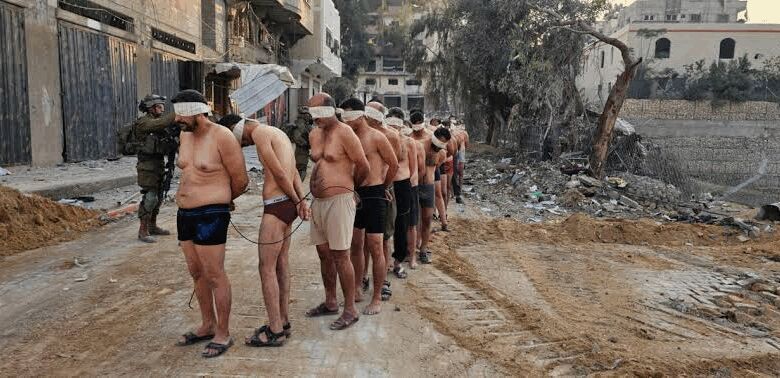
"The rape lasted about 10 minutes" - Released Palestinian detainees describe "organized and systematic" sexual torture in Israeli prisons

palestinians gaza war
Recently released Palestinian detainees who were abducted from the Gaza Strip by Israeli forces have described an "organized and systematic practice of sexual torture," including rape and sexual assault with objects and dogs, as well as deliberate psychological humiliation, part of a growing series of reports of sexual abuse in Israeli prisons.

In a new report by the Palestinian Centre for Human Rights (PCHR) depending on testimonies from a number of Palestinian detainees from Gaza who were abducted by Israeli forces during the genocide in Gaza and recently released from Israeli prisons and detention camps, the accounts reveal an "organized and systematic practice of sexual torture."

This include rape, forced stripping, forced filming, sexual assault using objects and dogs, in addition to deliberate psychological humiliation aimed at "crushing human dignity and erasing individual identity entirely."

PCHR has affirmed that the "harrowing" testimonies do not reflect isolated incidents but "constitute a systematic policy practiced in the context of the ongoing crime of genocide against more than two million people."

The PCHR noted that the arrests, including women, were carried out without any legal justification other than the victims being residents of the Gaza Strip, as part of a policy of "collective punishment designed to humiliate Palestinians and inflict maximum psychological and physical harm on them."