Puppet MastersS


Russian Flag

Russia rolls on: 'Confidently advancing' in Ukraine with over 30 settlements captured in December

shoigu gerasimov russia ukraine
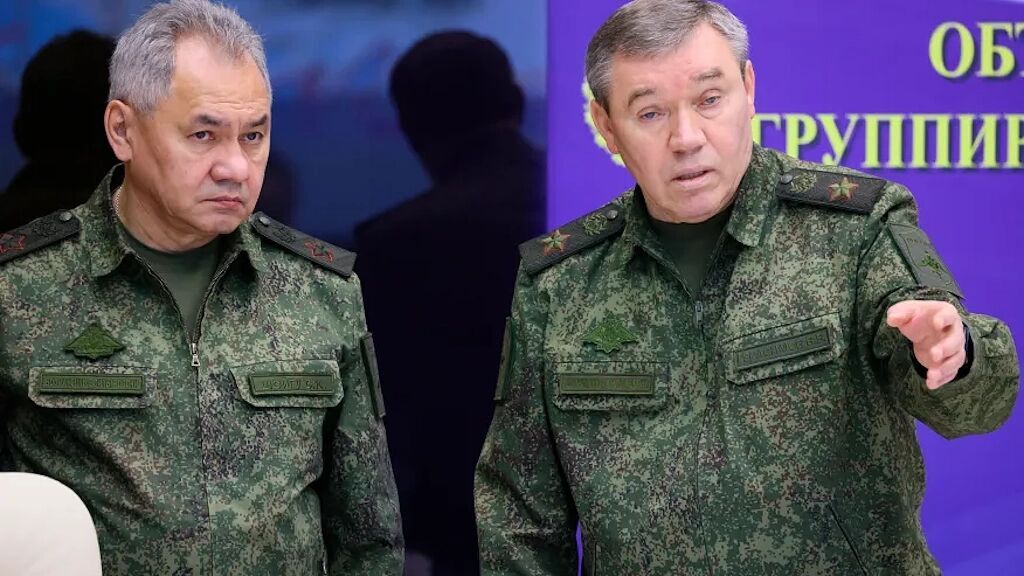
© Gavriil Grigorov, Sputnik, Kremlin Pool Photo via APRussian Defense Minister Sergei Shoigu, left, and Chief of the Russian General Staff Valery Gerasimov in 2022
Russian President Vladimir Putin has made clear to both his citizens and to the world that the 'special military operation' in Ukraine will continue on until all goals are achieved, and that his forces are advancing 'confidently'.

He chaired a televised meeting with the country's top military officials, focused on a status update regarding Ukraine, and crucially coming the day after Presidents Trump and Zelensky met in Florida in a failed effort to reach breakthrough on the proposed peace deal. Moscow is pressing ahead with its goal of fully capturing and pacifying the four Ukrainian regions it declared part of the Russian Federation in fall of 2022 via a 'popular referendum'.

"The goal of liberating the Donbas, Zaporizhia and Kherson regions is being carried out in stages, in accordance with the plan of the special military operation," Putin described before underscoring, "The troops are confidently advancing."


Comment: The map tells the story:
ukraine military situation december 2025


Arrow Down

Why is the EU sliding into complete irrelevance?

france protestors mercusor agreement
© Viory
Hint: It's structural. Trump has nothing to do with it.

The Creeping Death of the Single Market

Eurointelligence discussed the EU's Slide Towards Irrelevance
The EU has zero chance to emerge as a geopolitical power like the US or China. Strategic autonomy was only a slogan. It came with no strategy, and most importantly, with no financial commitments. The way EU countries are currently raising military spending, through debt mostly, and without common procurement, will reinforce their dependency on the US and US-dominated financial markets. At no point did the EU have an agreed end-game strategy for Ukraine - something that goes beyond wishful thinking.

But the EU has a few, sadly neglected, assets. It has a customs union, a single market and a single currency. They don't win wars, but they matter. If the EU had not fallen behind the US in productivity growth, and if it had not given up on 21st technologies, the EU would be a formidable soft power. The threat of being banned from the world's largest single market would have been a real choke-hold. The purpose of frugal fiscal policies is not to pay homage to a protestant work ethic, but to give financial headroom to act during emergencies.

Comment: Shedlock makes many good points about the necrotic European Union. However, the French farmer's protest is valid. EU countries and Britain are openly at war with those who feed their citizens.


Jet5

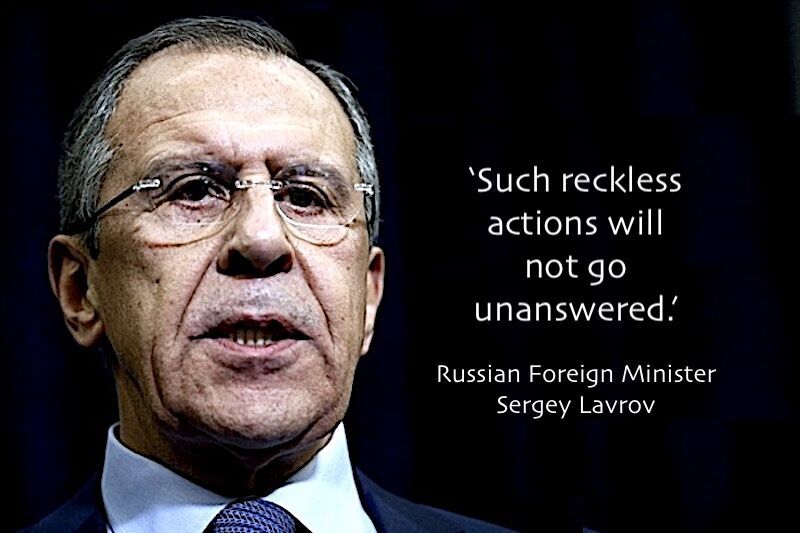
Lavrov accuses Ukraine of firing 91 drones at Putin's residence

Lavrov
© Novinite.com/KJNRussian FM Sergey Lavrov responds to Ukraine drone attack
Zelensky denied Ukrainian forces launched the attack, calling the claim 'another lie'.

Russian Foreign Minister Sergey Lavrov said on Monday that Ukrainian forces fired 91 kamikaze drones at President Vladimir Putin's residence in Russia's Novgorod region, and warned the attack would change Moscow's negotiating position. For his part, Ukrainian President Volodymyr Zelensky denied that his forces launched the attack.

Lavrov said that Russian air defenses intercepted all of the Ukrainian drones but warned Moscow would respond, saying that targets for retaliatory strikes have already been determined. "Such reckless actions will not go unanswered," Lavrov said.

According to Yury Ushakov, an aide to Putin, President Trump spoke with the Russian leader by phone on Monday and said he was "shocked" by the attack. "The US president, according to Putin, was shocked by this news and expressed outrage, stating that he could not have imagined such crazy actions on the part of Kiev," Ushakov said.

Comment: Who to believe...someone with 100% credibility or someone with zero? Russia does not need a pretext.


Attention

An ellipsis in Moscow-Seoul relations

Russia-SK flags
© UnknownRussian Flag • South Korean Flag • 'Dilemma'
The analysis of Seoul's actions leads to the conclusion that expectations for the improvement in Russia-South Korea relations under President Lee Jae-myung have not materialised. The reason for such a situation is not the external factors related to the US policy, but rather the deliberate course of the new South Korean leadership.

In his previous articles, the author expressed cautious pessimism regarding the prospects for relations between Moscow and Seoul. This often drew comments suggesting that the Democrat Lee Jae-myung, as a potential ally of Russia, was supposedly constrained in his actions by pressure from the United States. However, despite the presence of a significant number of pro-Russia figures among Democrats, including scholars, diplomats, and civil servants, such individuals, as it comes across, are beyond the president's inner circle. There are several illustrative cases to exemplify the assumption.

Glorifying Nazism? South Korea is In!

The UN General Assembly resolution condemning the glorification of Nazism was supported by 114 countries, with 11 abstaining and 52 states having voted against, including Ukraine, Moldova, and the Baltic states. South Korea also voted against the resolution — a symptomatic move for a nation that, were it not for the Soviet Army, might have lost its national identity.

Comment: Choosing sides does not make a country safer and walking the middle line can double the jeopardy.


Dollars

Your bank doesn't have your money - When infinite paper meets reality

Bank No Money
© Gold and Geopolitics
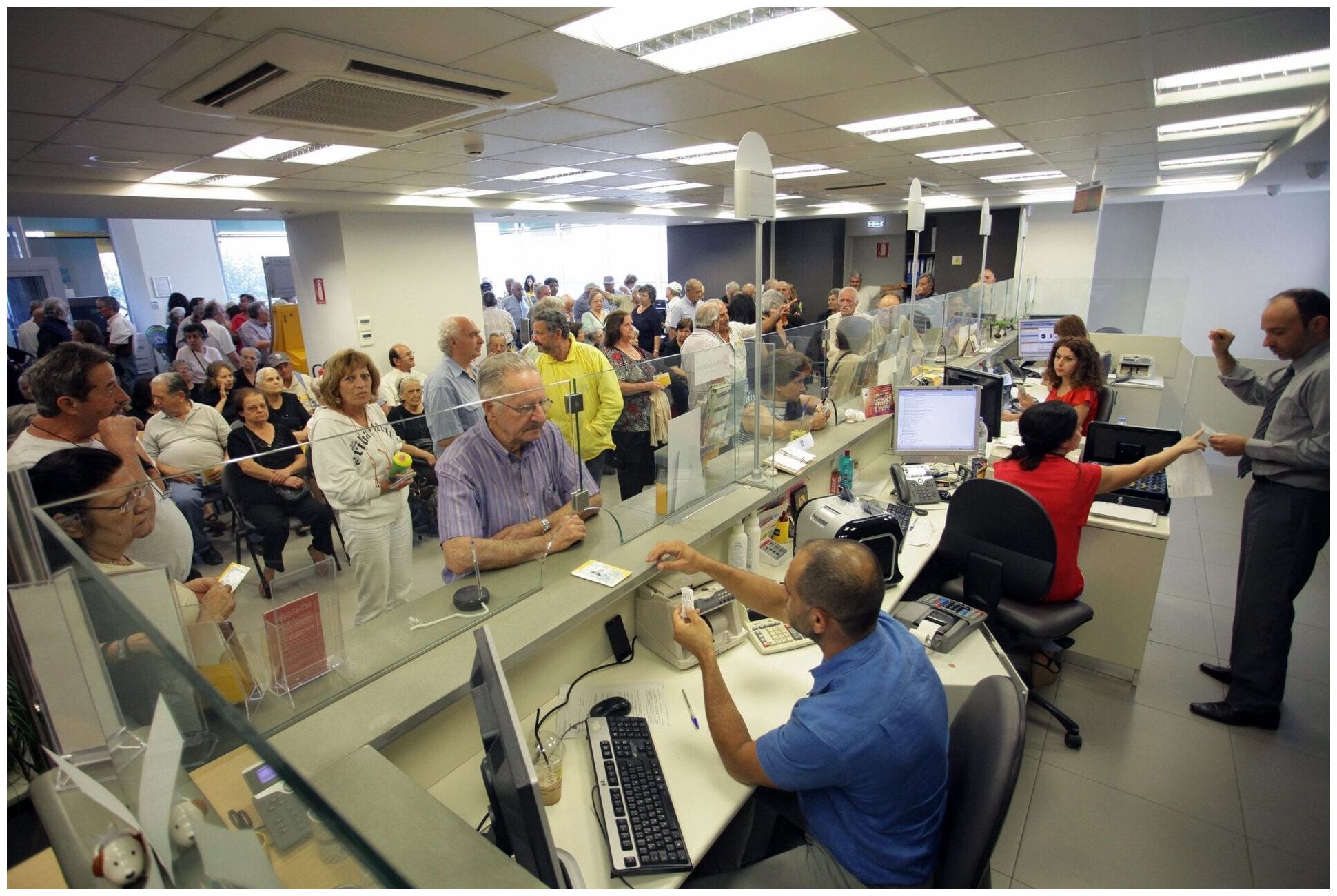
Remember Greece in 2015? Banks closed. ATMs limited to €60 per day. Then €50. People queuing for hours to withdraw their own money from their own accounts. Pensioners fainting in bank lobbies. Businesses unable to pay suppliers. The economy grinding to a halt because nobody could access cash.

That wasn't theoretical. That was real people discovering they were unsecured creditors in a banking system that had taken exorbitant risks with their deposits.

And I have a feeling it's about to happen again. Not specifically in Greece. In banks across Europe that you've never heard were in trouble. Because they made bets on the two most boring asset classes imaginable.

A metal. And bonds.

Your deposit isn't sitting in a vault with your name on it. It's part of a giant pool that banks use to make investments, provide liquidity, and generate returns. When those investments go bad, your deposit becomes a liability banks can't honor. You become an unsecured creditor standing in line behind secured creditors who get paid first.

The secured creditors are the big institutions. The prime brokers. The derivatives counterparties. They get the collateral pools. They invoke their legal priority. They take everything.

You get a number in a queue. And maybe €60 a day if you're lucky.

A tad dramatic maybe, but that might be what's coming... And silver might be the fuse that lits it.

Banks - both US and EU - have been sitting on this powder keg for years. Those bonds they bought when rates were near/sub zero? They've been underwater since central banks started hiking in 2022. The most recent comprehensive data - from September 2023 - showed unrealized losses on euro area bank bond portfolios averaged 30% of book equity. Some banks hit 60%. And with rates remaining elevated through 2024 and 2025, those losses haven't disappeared. They've just been quietly festering on balance sheets, hidden by "hold to maturity" accounting.

Cruise Missle

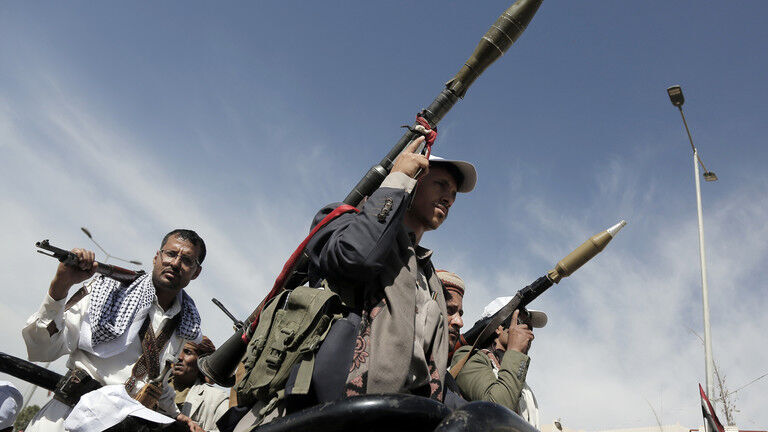
Houthis vow to strike Israeli targets in African territory

Yemeni Houthi Tribesmen Rally.
The rebel group has warned that it will treat any Israeli presence in the breakaway region of Somaliland as a legitimate military target

Houthi rebels in Yemen have declared any Israeli presence in the breakaway region of Somaliland a legitimate military target. The warning comes days after Israel became the first country to recognize the independence of the Somalian territory.

In a statement on Sunday, Houthi leader Abdulmalik al-Houthi stated that Israel's move constitutes "aggression against Somalia and Yemen, and a threat to the security of the region," stressing that the militant group will "consider any Israeli presence in Somaliland a military target for our armed forces."

The group, which has halted attacks on Israel since a Gaza truce in October, framed the threat as an act of solidarity, while accusing Israel of seeking to conduct "hostile activities."

Comment: While many have been critical of Israel's recognition of Somaliland, only the Houthis are ready to do something about it, should Israel put military installations in that separatist part of Somalia.


Star of David

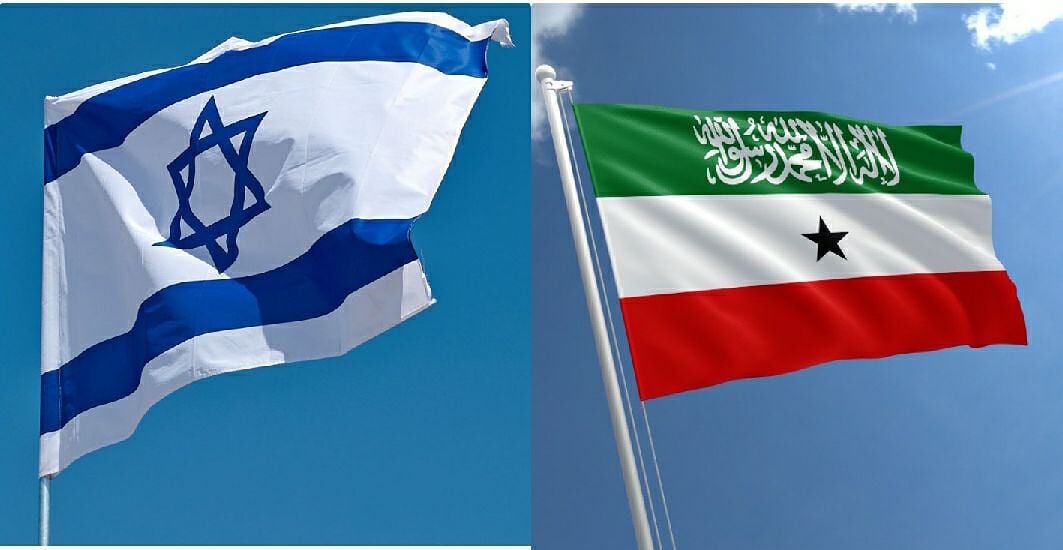
Israel becomes first country to formally recognise Somaliland as independent state

israeli flag somaliland flag
Right: Flag of the purported country of Somaliland, which has been recognized by Israel.
Israel became the first country to formally recognise the self-declared Republic of Somaliland as an independent and sovereign state on Friday - a decision that could reshape regional dynamics and test Somalia's longstanding opposition to secession.

Prime Minister Benjamin Netanyahu said Israel would seek immediate cooperation with Somaliland in agriculture, health, technology and the economy. In a statement, he congratulated Somaliland's president, Abdirahman Mohamed Abdullahi, praised his leadership and invited him to visit Israel.

Netanyahu said the declaration "is in the spirit of the Abraham Accords, signed at the initiative of President Trump."
The 2020 accords were brokered by U.S. President Donald Trump's first administration and included Israel formalising diplomatic relations with the United Arab Emirates and Bahrain, with other countries joining later.

Comment: Somalia proper, plus African Union officials have objected to Israel's move in the strongest terms. The Hill reports:
"The federal government of Somalia warns that illegitimate actions of this nature seriously undermine regional peace and stability, exacerbate political and security tensions in the Horn of Africa, the Red Sea and the Gulf of Aden, the Middle East and the wider region," Somali Prime Minister Hamza Abdi Barre's office posted on social platform X, alongside a video statement.

Barre's office called the recognition a "deliberate attack" on Somalia's autonomy.

"Somalia makes it clear that it will not permit the establishment of any foreign military bases or arrangements on its territory that will throw Somalia into proxy conflicts or import regional and international hostilities into this region," an official said in the video.

African Union Commission Chair Mahmoud Ali Youssou also rejected Israel's recognition of Somaliland "with deep concern" and cited the Constitutive Act of the African Union in calling for Somali unity.

"The Chairperson of the Commission @ymahmoudali firmly rejects any initiative or action aimed at recognizing Somaliland as an independent entity, recalling that Somaliland remains an integral part of the Federal Republic of Somalia," according to a union statement shared on X.

"Any attempt to undermine the unity, sovereignty, and territorial integrity of Somalia runs counter to the fundamental principles of the African Union and risks setting a dangerous precedent with far-reaching implications for peace and stability across the continent," the African Union stated.
And why has Israel so magnanimously extended recognition to this miniscule chunk of the Horn of Africa? Is it in solidarity, recognizing another nascent nation's struggle for existence? Hardly:


Better Earth

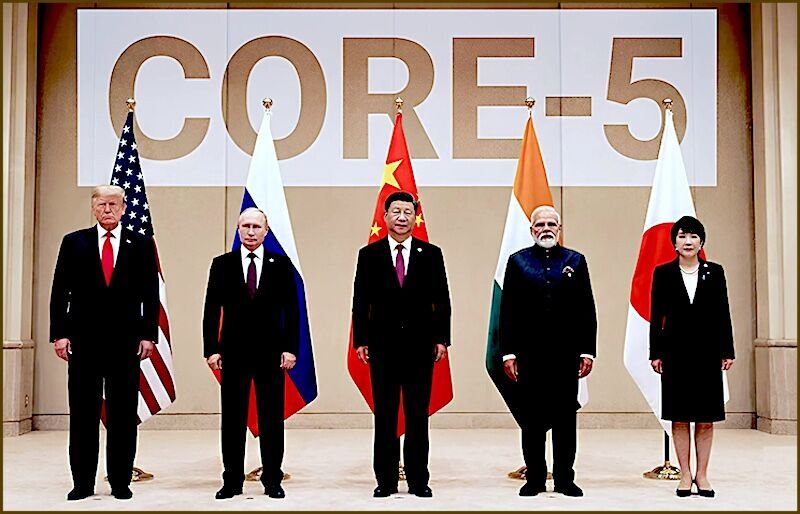
Some thoughts about the "Core Five" concept

Core 5
© UnknownUS President Donald Trump • Russian President Vladimir Putin • China President Xi Jinping
India Prime Minister Narendra Modi • Japan Prime Minister Sanae Takaichi
In early December, media reports started assuming that there was an idea potentially circulating in the American policymaking circles to form a new cooperation format, the "Core Five". The group will supposedly embrace the United States, China, India, Russia, and Japan.

The formation of such a grouping appears to be a logical step, considering the long-observed shift in global political and economic processes towards the Indo-Pacific region (IPR). The "Core Five" could become an effective platform for discussing and resolving emerging problems in the region, which are often serious and potentially perilous. An exchange of views among representatives of the region's leading countries would be extremely important, as the dynamics of developments in the IPR are largely determined by the state of their relations.

Before proceeding to a detailed analysis, it is worth making several preliminary remarks regarding the idea per se.

List of Participants

The proposed composition of participants appears quite representative. It unites five powers that significantly outpace other countries in the region in terms of "Comprehensive National Power," primarily in terms of national GDP volume.

Light Sabers

Ukraine takes part in NATO war games, further integrating into collective defense architecture

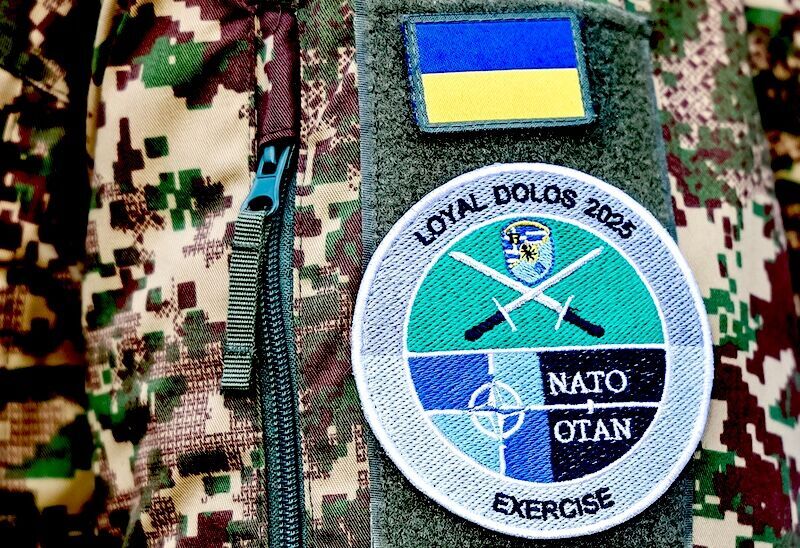
NATO Patch
© UnknownNATO patch
Ukrainian representatives participated in NATO war games simulating the alliance's response to an attack.

According to a NATO press release, 1,500 soldiers and civilians from multiple European countries participated in the Loyal Dolos 2025 drills that were conducted at the beginning of the month.

On Sunday, the General Staff of the Armed Forces posted on Facebook that Ukrainian officials participated in Loyal Dolos:
"Ukraine is becoming part of the collective defense architecture of NATO. Ukrainian JATEC experts have, for the first time, joined the work of the mechanisms of Article 5 of the NATO Treaty on the training LOYAL DOLOS 2025."
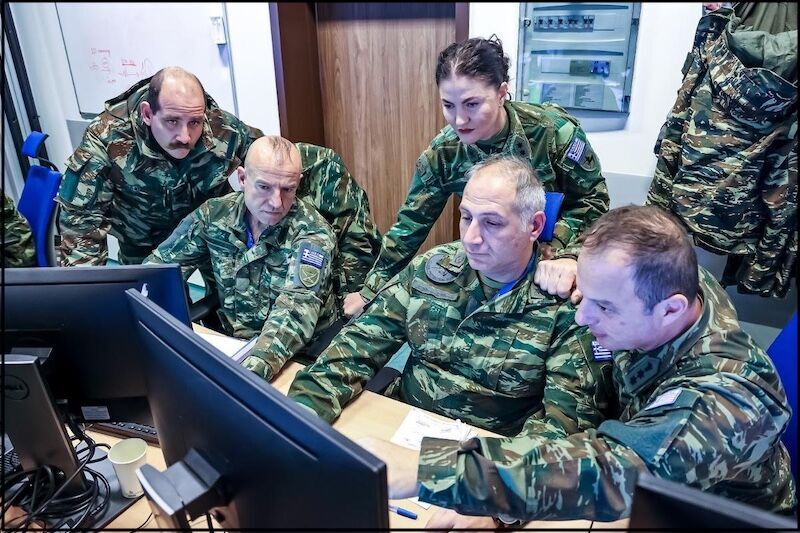
Military guys
© UnknownJoint Force Training Centre in Bydgoszcz, Poland

Comment: NATO's 'powerful demonstration of allied cohesion and interoperability':
Approximately 1,500 soldiers and civilians across multiple European locations worked side by side to assess the NATO Rapid Deployable Corps - Greece and its capabilities as a NATO Warfighting Corps. With dynamic play, day-and-night operational scenarios, Exercise LOYAL DOLOS stood out as a flagship event in NATO's 2025 training program, showcasing allied vigilance, readiness, and the ability to respond with speed and precision to any challenge the Alliance may face. The exercise ran from 2 to 11 December.

Col Andrea Stover, Head of the Training and Exercise Division at the NATO Joint Force Training Centre and Chief Exercise Control for LOYAL DOLOS 2025, said:
"This is how we ensure allied forces remain prepared and capable of prevailing against any potential threat. Our Exercise Control team, directing the event from the Joint Force Training Centre in Bydgoszcz, Poland, ensured the exercise was challenging, dynamic, and realistic."
More than 600 military and civilian experts formed the Exercise Control team, keeping the training audience fully engaged throughout the event. Under the expert guidance of Lieutenant General (ret.) Leonardo di Marco, Senior Exercise Control Advisor, and the leadership of Major General Bogdan Rycerski, Commander of the NATO Joint Force Training Centre and Director of LODO25, participants faced complex tasks and demanding operational dilemmas.

Designed to refine and validate the Alliance's ability to operate seamlessly across multiple domains, Exercise LOYAL DOLOS 2025 focused primarily on land operations while also integrating other domains in line with NATO's commitment to a more interconnected and adaptive force. Lessons drawn from Russia's war against Ukraine were incorporated to prepare the training audience to fight and win in a rapidly evolving environment. This was also the first time Ukrainian experts were directly involved in the execution phase of this type of NATO exercise.

With Allied Land Command acting as the Officer Scheduling the Exercise — its Deputy Commander, Lieutenant General Jezz Bennett, working closely with Exercise Control — and with support from the Multinational Corps South-East and the 1st United Kingdom Division, all participants received truly rigorous and ambitious training.

Throughout the exercise, the NATO Rapid Deployable Corps - Greece, the primary training audience, demonstrated its ability to plan and conduct multi-domain operations against a peer adversary, reaffirming its readiness to contribute to the defence of the Alliance.
A puff piece.


Vader

Best of the Web: New Year, new MSM Ukraine spin: Russia faces "exhaustion" in 2026

russian recruits
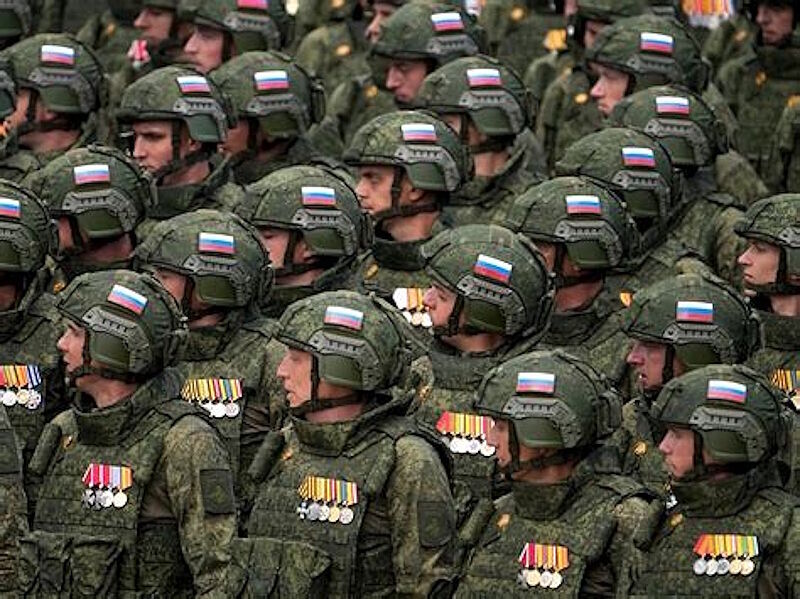
Do these guys look exhausted? Russia beat its 2024 recruitment goal and did so again in 2025.
We examine media claims and crunch some numbers to evaluate Russia's prospects for 2026.

The next media narrative is slowly taking shape that Russia is starting to get "exhausted", which will — naturally — culminate in some kind of breakdown in 2026. This is of course an old narrative repurposed anew now that Ukraine itself is in its least enviable shape ever, with no prospects at all of improvement.

Interestingly, for up to two years now, we have heard from top figures and publications that 2026 would be the "key year" beyond which Russia would no longer be able to sustain itself, and this from several different perspectives. Economically, Russia's so-called 'headwinds' would finally prevail, and its "overheating" economy would begin to see widespread 'structural breakdowns' or outright collapse.

Militarily, Russia would have run out of all armor by 2026 and would no longer be able to carry out "maneuver attacks", while troop recruitment capacity would dwindle, requiring Putin to finally launch that large-scale 'mobilization' he's been putting off for so long, resulting in mass social upheavals and even a coup.

Given that we're at the end of 2025, it is a fitting time to look ahead at some of these projections, and see where things truly stand for both sides leading into 2026.