Puppet MastersS


Arrow Up

Moveable multipolarity in Moscow: Ridin' the 'newcoin' train

The new currency should be able to become an "external money" storage of capital and reserves down the road, not just a settlement unit.
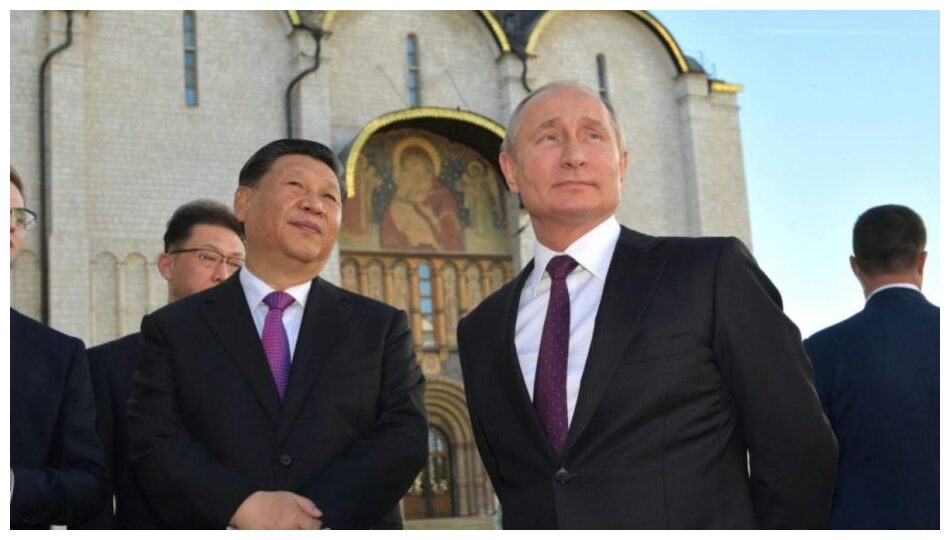
Xi and Putin
© Public Domain
Ah, the joys of the Big Circle Line (BKL, in Cyrillic): circumnavigating the whole of Moscow for 71 km and 31 stations: from Tekstilshchiki - in the old textile quarter - to Sokolniki - a suprematist/constructivist gallery (Malevich lives!); from Rizhskaya - with its gorgeous steel arches - to Maryina Roscha - with its 130 meter-long escalator.

The BKL is like a living, breathin', runnin' metaphor of the capital of the multipolar world: a crash course in art, architecture, history, urban design, tech transportation, and of course "people to people's exchanges", to quote our Chinese New Silk Road friends.

President Xi Jinping, by the way, will be ridin' the BKL with President Putin when he comes to Moscow on March 21.

So it's no wonder that when a savvy investor at the top of global financial markets, with decades of experience, agreed to share some of his key insights on the global financial system, I proposed a ride on the BKL - and he immediately accepted it. Let's call him Mr. S. Tzu. This is the minimally edited transcript of our moveable conversation.

Thank you for finding the time to meet - in such a gorgeous setting. With the current market volatility, it must be hard for you to step away from the screens.

S. Tzu: Yes, markets are currently very challenging. The last few months remind me of 2007-8, except instead of money-market funds and subprime mortgages, these days it is pipelines and government bond markets that blow up. We live in interesting times.

The reason I reached out to you is to hear your insights on the "Bretton Woods 3" concept introduced by Zoltan Poszar. You're definitely on top of it.

S. Tzu: Thank you for getting straight to the point. There are very few opportunities to witness the emergence of a new global financial order, and we are living through one of those episodes. Since the 1970s, perhaps only the arrival of bitcoin just over fourteen years ago came close in terms of impact to what we are about to see in the next few years. And just as the timing of bitcoin was not a coincidence, the conditions for the current tectonic shifts in the world financial system have been brewing for decades. Zoltan's insight that "after this war is over, 'money' will never be the same again..." was perfectly timed.

Sheriff

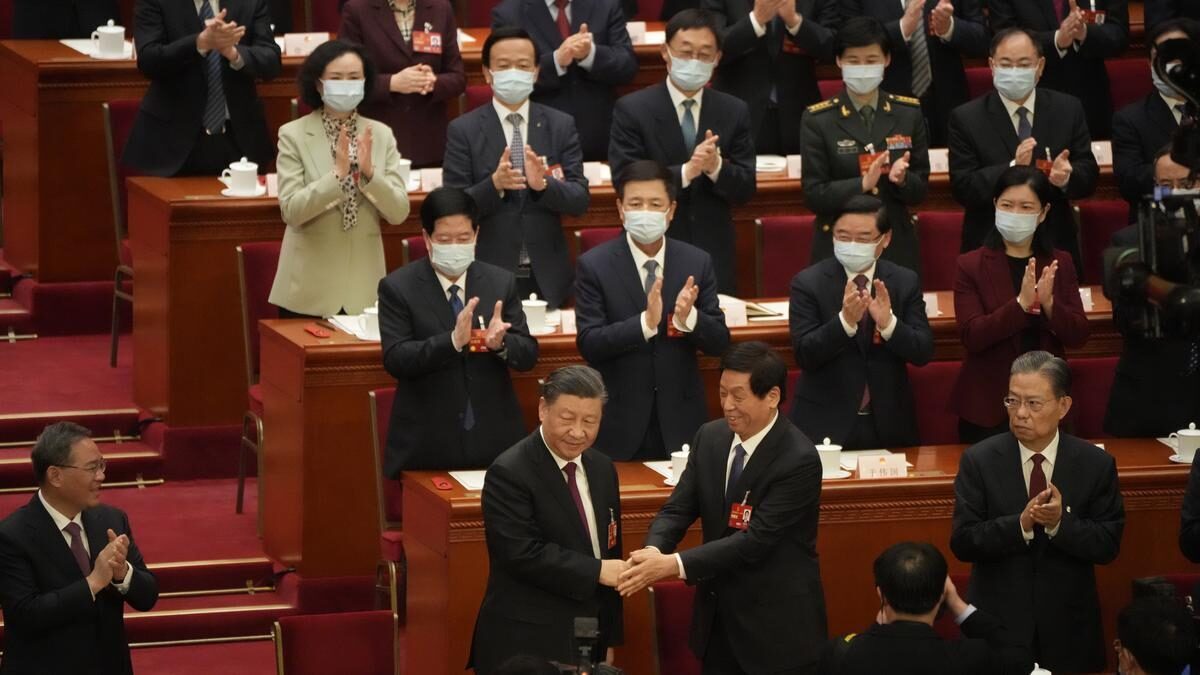
China's Xi unanimously re-elected as president for unprecedented 3rd term

Xi Jinping
© AP/KyodoChinese President Xi Jinping (2nd from R, front row) is congratulated by Li Zhanshu (R, front row) as other delegates applaud after he is unanimously re-elected to a third term at a plenary session of the country's parliament in Beijing on March 10, 2023.
Chinese President Xi Jinping was unanimously re-elected to a norm-breaking third term at a plenary session of the country's parliament Friday, with a new government leadership set to face challenges such as dealing with a deepening rivalry with the United States.

Last October, the 69-year-old started a historic third five-year term as general secretary of the ruling Communist Party. The party has supreme political power in China and senior government positions are held by party leaders.

In 2018, China removed the two-term limit for the president from its Constitution, essentially enabling Xi to retain power for life.


Comment: Russia did something similar, and Putin had an 81% confidence rating as of September 2022. Meanwhile the UK has staggered through three different leaders in just the last year, and a poll of France's citizens recently revealed that 56% support rolling strikes.


Bullseye

Georgia 'lost chance for sovereignty' - Moscow

tbilisi protest
© Vano Shlamov / AFPGeorgian opposition supporters rally in Tbilisi, March 9, 2023
The US opposed Georgia's "foreign agents" bill because Washington does not want the country to have political sovereignty, Vyacheslav Volodin, the speaker of the State Duma, the lower house of Russia's parliament, said on Friday.

He argued that the legislation, which was withdrawn after protests and clashes with police in Tbilisi, was aimed at limiting Washington's ability to meddle in Georgia's affairs.

"Washington has used the tools of soft power to lead people to the streets. The Georgian authorities were forced to submit - not to the will of the people, but to the United States," Volodin claimed in a post in his Telegram channel.

The politician said the bill was "unacceptable for the US" because it would have "restricted Washington's influence on the country's internal political affairs."

"With its withdrawal by the parliament, Georgia has lost the chance for sovereignty," Volodin said.

Popcorn

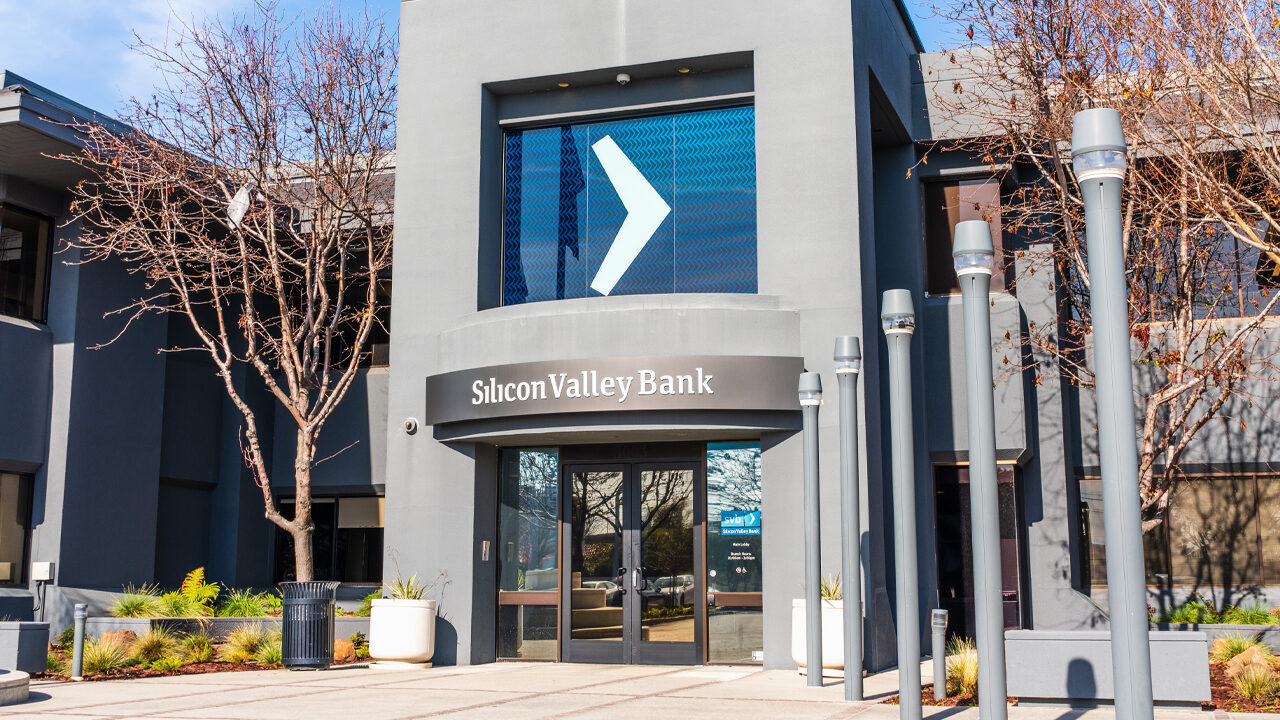
Best of the Web: Regulators seize Silicon Valley Bank in the second-biggest bank failure in US history

Silcone Valley Bank
I'm gonna throw a lot of stuff at ya here, so HOLD ONTO YOUR BUTTS.


Comment: Considering the dire state of Western economies, it was only a matter of time before a major bank went under, and it's only a matter of time before others are dragged down with it. That said, it's likely that the establishment in the US will likely do whatever it takes to maintain control, as well to reap the most benefits from the turmoil.

Meanwhile over at scandal ridden Credit Suisse, Reuters reports:
Credit Suisse delays annual report after SEC call, shares drop

Credit Suisse has postponed publication of its annual report after a last-minute call from the United States Securities and Exchange Commission (SEC), which raised questions about its earlier financial statements.

The unusual intervention by the U.S regulator is the latest blow to Credit Suisse as it attempts to rebuild investor confidence after a series of scandals and setbacks that have sent its shares plunging and led clients to withdraw billions.

Credit Suisse shares were close to their all-time low in Zurich on Thursday but later recovered much of a 6% loss.

The Zurich-brd bank said the SEC had called it late on Wednesday regarding "certain open SEC comments about the technical assessment of previously disclosed revisions to the consolidated cash flow statements in the years ended December 31, 2020, and 2019, as well as related controls."


So the SEC is calling into question years of previous reports.


The bank had revised how it booked a series of cash flows, including share-brd compensation and foreign exchange hedges.

Credit Suisse (CSGN.S) said that following the call it had decided to postpone publication of its 2022 annual report.

"Management believes it is prudent to briefly delay the publication of its accounts in order to understand more thoroughly the comments received," it said, adding that the 2022 financial results "are not impacted".

The SEC declined to comment on the matter, a spokesman for the organization said.

Other regulatory authorities were not involved, a person familiar with the matter said.

Swiss financial regulator Finma told Reuters that Credit Suisse had informed it of the delayed publication.

"We are in contact with the bank," Finma said.

It remains unclear when the annual report will be released. The delay was unusual, according to five attorneys and experts Reuters spoke to.

"The disclosure is strategically and carefully worded so as not to raise alarms," said Jacob Frenkel, a former SEC enforcement attorney who is now government investigations and securities enforcement practice chair for law firm Dickinson Wright.

It "lays the groundwork for the explanation for the revisions to the financial statements. Nothing about the release has an 'enforcement' centric tone."

Still, the Credit Suisse announcement concerned analysts.

"(It) does not help investor sentiment and it does not help in rebuilding trust," said Andreas Venditti from Vontobel.

Switzerland's second-biggest bank has begun a major overhaul of its business, cutting costs and jobs to revive its fortunes, including creating a separate business for its investment bank under the CS First Boston brand.

Daniel Bosshard from Luzerner Kantonalbank described Credit Suisse as "a major construction site" and said "the share is only suitable for turnaround speculators."

In February, Credit Suisse reported that 2022 brought its biggest annual loss since the 2008 global financial crisis after rattled clients pulled funds from the bank, and it warned that a further "substantial" loss would come this year.

Among a string of scandals, Credit Suisse was hard hit by the collapse of U.S. investment firm Archegos in 2021 as well as the freezing of billions of supply chain finance funds linked to insolvent British financier Greensill.

The bank was also rocked by a prosecution in Switzerland involving laundering money for a criminal gang.

Meanwhile, credit ratings agency Standard & Poor's downgraded Credit Suisse to just one level above so-called junk status in November last year.
The Daily Mail reports on the reaction to SVB in the US markets:
Dow closes down 345 points, Bank of America warns 'crashy vibes of March' set to worsen

The Dow dropped for a fourth consecutive day, closing down 345 points. The S&P 500 lost 1.45% and the Nasdaq shed 1.76%.

Earlier on Friday, analysts at the Bank of America have warned the 'crashy vibes of March', driven by high inflation, were set to worsen as markets suffered on Friday.

California state regulators shuttered the bank on Friday, and the Federal Deposit Insurance Corporation (FDIC) immediately took control of its $209 billion in assets and $175.4 billion in deposits.
Silicon Vally Bank
Silicon Vally Bank
Amid the turmoil, some of the market's sharpest drops were again coming from the financial industry, where stocks tanked for a second day. The dips came despite a highly anticipated report on Friday that showed signals inflation is cooling, including slower pay raises for workers.


Inflation may be 'cooling', for now, but it's not stopped, nor is it reversing, and there's no reason to believe the situation is going to improve.


Friday's struggles come amid what strategists in a Bank of America Global Research report called 'the crashy vibes of March'.

Markets have been twitchy recently on worries that high inflation is proving difficult to drive down, which could force the Federal Reserve to reaccelerate its hikes to interest rates. Such hikes can undercut inflation by slowing the economy, but they also drag down prices for stocks and other investments and raise the risk of a recession later on.


All signs point to much of the West already being in recession.


Brent Schutte, chief investment officer at Northwestern Mutual Wealth, said: 'There are starting to be cracks that are appearing. SVB is a warning for the Fed that their actions are beginning to have an impact.'

The Fed has already raised rates at the fastest pace in decades and made other moves to reverse its tremendous support for the economy during the pandemic. It's effectively pulling money out of the economy, something Wall Street calls 'liquidity', which can tighten the screws on the system.

'This is a warning sign that the liquidity is draining, and the most vulnerable areas are starting to show it, which tells me the rest of the economy is not too far behind,' Schutte said.

This number is crucial on Wall Street because the Fed is focusing on wage growth in particular in its fight against inflation. It worries too-high gains could cause a vicious cycle that worsens inflation, even though raises help workers struggling to keep up with rising prices at the register.

Among other signs of a cooling but still-resilient labor market, the unemployment rate ticked up and the percentage of Americans with or looking for jobs edged up by a tiny bit.

Such trends mean traders are swinging back their bets for the size of the Fed's next rate increase.

Some of the sharpest drops on Wall Street came from banking stocks on worries about who else may suffer a cash crunch if interest rates stay higher for longer and customers pull out deposits.

That would set up pain because a flight of deposits could force them to sell bonds to raise cash, right as higher interest rates knock down prices for those bonds.

Besides SVB Financial's struggles, Silvergate Capital also said this week it's voluntarily shutting down its bank. It served the crypto industry and had warned it could end up 'less than well-capitalized'.

Stock losses were heaviest at regional banks. First Republic Bank tumbled 25.8 percent. It filed a statement with regulators to reiterate its 'strong capital and liquidity positions.'

Losses were more modest at the biggest banks, which have been stress-tested by regulators following the 2008 financial crisis.


Whistle

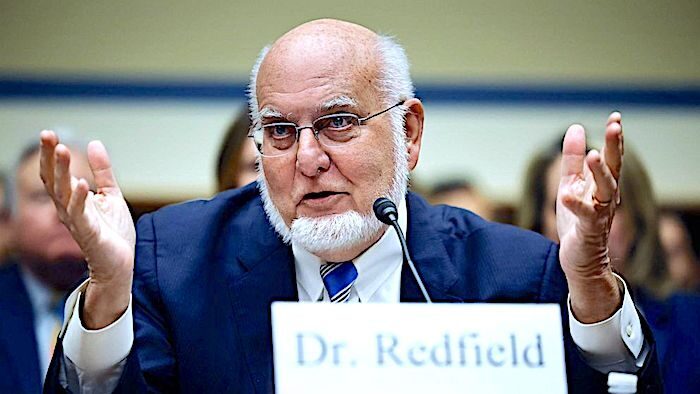
Dr. Redfield's bombshell testimony

Redfield
© Chip Somodevilla/Getty ImagesDr. Robert Redfield • Covid Hearing • House Select Subcommittee on the Coronavirus Pandemic
Capitol Hill • March 8, 2023
Yesterday, we witnessed the ex-director of the CDC, under oath, directly blame Dr. Fauci and the US Government for the deaths of millions of people. However, if you went to the headlines of Google News - there was nary a news story. I guess Google felt it wasn't important enough to warrant above-the-fold status. Seems like they had to make room for important news items, like these:
News stories
A keyword search of Redfield on Google news did come up with the following stories:

Comment: Why did it take so long for this expert to come forward? Dangerous to do so?


Syringe

Matt Hancock is a monkey. But who was the organ grinder?

cartoon
© screenshotHow to move the monkey
I find the Daily Telegraph's 'Lockdown Files' revelations about Matt Hancock's WhatsApp messages simultaneously reassuring and disturbing.

Reassuring, because over the many months I analysed Covid related data for Lockdown Sceptics (as this site was then called) I often had periods of self-doubt. Official announcements by politicians and senior civil servants were so discordant with publicly available information, I assumed I must be missing something, or misinterpreting the figures. Worse, I worried about inadvertently misleading our readership. Recent revelations suggest that my analyses were roughly correct - I'm not claiming any credit because the answers were hiding in plain sight. Anyone with a modicum of common sense and a basic training in biological sciences could have seen it - and many did.

On the other hand, the message trails are disturbing for what they tell us about the nature of decision making in government. It is easy to be misled by taking Hancock's adolescent WhatsApp messages at face value. Vain, shallow and self-obsessed, he was the perfect mark for manipulation by erstwhile 'advisors'. A political marionette parroting lines fed to him by others and a convenient fall guy when it all went wrong. I don't think Hancock is the major villain in the lockdown piece. He's too lightweight to have dreamt all that up on his own.

Comment: Conspiracies depend on gullibility and leverage. To this end, COVID worked quite well to lockdown the present, immunize against truth and reset the future. The 'organ grinder' is a well-oiled machine.


Bizarro Earth

Best of the Web: The Foreseeable End of Ukraine

russia military officers
© DOD Photo / AlamyRussian military honor guard.
Karl Richter asserts that Ukraine is facing an imminent end due to Russia's dominance in the ongoing conflict, weak Western military and economic support, and Ukraine's own nationalism, citing predictions by several Western military experts and predicting Western governments will soon have to justify the utter failure of their Ukraine policy.

The faces of Ukraine supporters are now visibly getting longer. In fact, things are getting interesting now. In the next few months, the central lie of Western politics will burst: Ukraine is coming to an end. No more billions of dollars sinking into the Kiev quagmire, and certainly no handful of Western battle tanks, should they ever come, will make much difference to events. Russia is in the driver's seat and has all the means of escalation at its disposal, while the West is on its last legs economically, militarily and not least morally.

At least four Western military experts who know something of their trade have contradicted mainstream reporting in recent weeks and are now predicting the decisive weeks of Ukraine's survival. Among them is Austrian Colonel Markus Reisner, a convinced Ukraine sympathiser. In one of his latest analyses, Reisner points to the considerable Russian resources and has to concede: 'Ukraine could win several rounds, but there has been no knockout yet.' The Russian side, he says, still has stocks of at least ten million artillery shells at its disposal, plus 3.4 million new shells produced each year. 'So they are in a position to fight this war even longer', while things are now getting tight for Kiev.

Comment: A blunt, succinct summary of the reality Ukraine and the West are facing. Very refreshing in the midst of the western mainstream media's tsunami of cope. The world is going to look very different by the end of 2023.


Star of David

Too late? Pentagon scrambles to save US interests in Middle East

Lloyd Austin Yoav Gallant israel
© AP/Maya AlleruzzoU.S. Secretary of Defense Lloyd Austin, left, and his Israeli counterpart, Minister of Defence Yoav Gallant make a joint statement following their meeting at Ben Gurion International Airport in Thursday, March 9, 2023.
The Defense Secretary's tour of the region shows Washington's unwillingness to evolve

Ahead of anticipated regional escalations in the coming months, US Defence Secretary Lloyd Austin landed in the Kingdom of Jordan on Sunday, kickstarting yet another high-profile Middle East visit this year. Despite Washington's efforts to impose its agenda, its current approach may prove to be too out of touch to make a tangible difference.

The Pentagon Chief arrived in the Jordanian capital on a tour aimed at assuring regional allies of US policy commitments, despite the Biden administration's focus on combating Russia and China. Austin's visit was originally tailored to be geared towards visiting Tel Aviv, Cairo and Amman, but has also included a surprise visit to Baghdad.

The visit is the second high-profile US Middle East tour this year, with Secretary of State Antony Blinken also leading a delegation to the Holy Land in late January. Unfortunately for Blinken, his delegation's visit, which partially focused on calming tensions in the occupied Palestinian territories, has so far proven to have been a flop, with violence continuing to escalate in the West Bank.

Attention

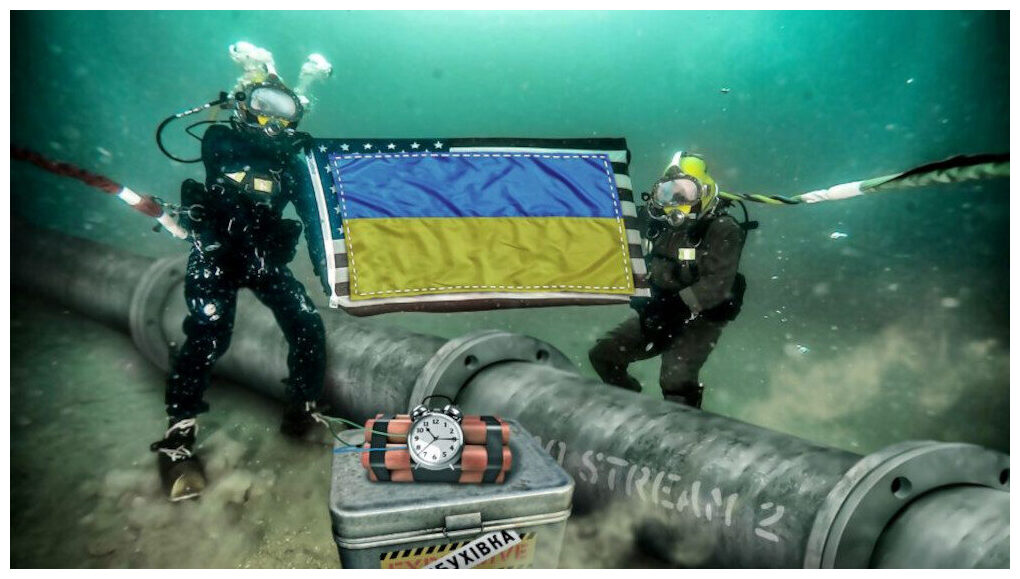
The empire of lies strikes back... Extraordinary cover-up of Nord stream terrorism

Ukraine Divers
© SCF
The New York Times and other Western news media ran with clumsy and blatantly diversionary claims this week, which in the end only serve to draw even more attention to the guilt of the United States in blowing up the Nord Stream gas pipelines.

Not only is the administration of U.S. President Joe Biden even more indictable over the criminal act; the absurd cover-up attempt this week exposes the Western media as nothing but a ministry of propaganda masquerading as journalism.

Four weeks ago, the eminent independent American journalist, Seymour Hersh, published a blockbuster investigative report that revealed how President Biden and senior White House staff ordered the explosive detonation of the natural gas pipelines connecting Russia to the European Union via the Baltic Sea and Germany. The legendary Hersh has an impeccable record of groundbreaking stories, from the My Lai massacre committed by U.S. troops in Vietnam in 1968 to the Abu Ghraib prison torture in Iraq under American occupation to the operation of ratlines to funnel weapons and mercenaries from Libya to Syria to fight Washington's proxy war for regime change in Damascus.

In his seminal report on the sabotage of the Nord Stream pipelines, Hersh relied on insider Washington sources. He published claims that the United States carried out the covert operation using a team of U.S. Navy divers under the cover of NATO war maneuvers known as BALTOPS 22 last summer. Explosives were planted on the seabed during the exercises held in June 2022 and then later detonated on September 26 with the help of Norwegian military aircraft.

The convincing aspect of Hersh's report was not just the credible detail of the operation, but that it confirmed what many independent observers had already concluded from strong circumstantial evidence about who had the motive and means to conduct the sabotage. Readers are referred to a recent editorial by Strategic Culture Foundation which compiles the background of why the United States is deemed to be the culprit.

Now here is a curious thing. While Hersh's report provoked shockwaves around the world, Western governments and the mainstream media chose to ignore his report. In a weird parallel universe sort of way, they pretended that Hersh's resounding revelations did not exist.

Arrow Up

The Censorship Industrial Complex

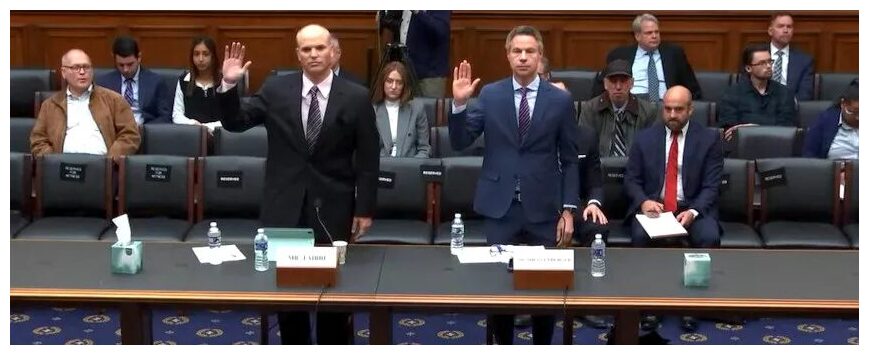
Matt Taibbi and Michael Shellenberger
© Substack
I think something is seriously wrong with my brain. Yesterday, I hallucinated that Matt Taibbi and Michael Shellenberger testified before a subcommittee of the US House of Representatives about the Censorship Industrial Complex, i.e., the US arm of the global official propaganda and disinformation apparatus that has been waging an all-out war on dissent for the better part of the last six years.

I know this couldn't have actually happened, and was just an extended hallucination (probably the result of the copious amount of drugs I consumed in my misspent youth, or the effects of a Commie bio-weapon with a fatality rate of less than one percent, because I've been writing about The War on Dissent (2018), and The Criminalization of Dissent (2021), and the global Corporate COINTELPRO op (2017), and The War on Reality (2021), and The Manufacturing of Reality (2021), and Manufacturing Truth (2018), and Manufacturing Normality (2016), and The Road to Totalitarianism (2022), and The Gaslighting of the Masses (2022) ... well, for quite some time. So, I'm sure it was just an hallucination, because there's no way Matt and Shellenberger were actually sitting there talking about how ...
"We learned Twitter, Facebook, Google, and other companies developed a formal system for taking in moderation 'requests' from every corner of government: the FBI, DHS, HHS, DOD, the Global Engagement Center at State, even the CIA. For every government agency scanning Twitter, there were perhaps 20 quasi-private entities doing the same, including Stanford's Election Integrity Project, Newsguard, the Global Disinformation Index, and others, many taxpayer-funded." (Matt Taibbi's Statement to Congress)
... and documenting the coordinated censorship of sources that interfered with certain official narratives, like "Russiagate" and "The Apocalpytic Virus" ...