
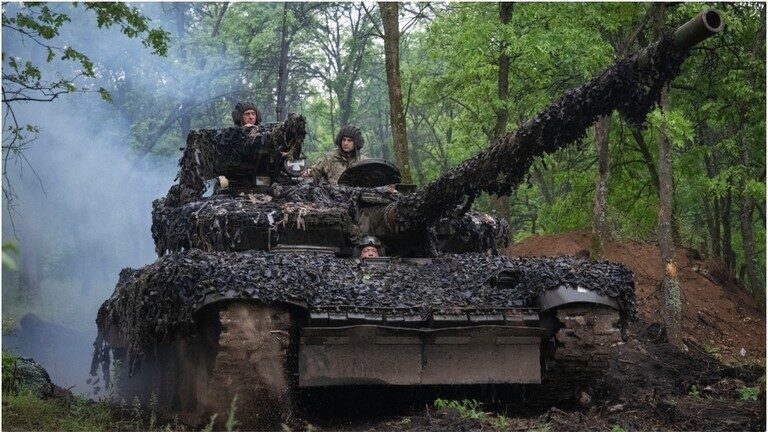
© AP Photo / Efrem LukatskyUkrainian soldiers on a tank ride along the road towards their positions in Donbass, May 23, 2023.
Russian forces have successfully repelled a "large-scale offensive" by Ukrainian troops along five sections of the front line in Donbass, the Russian Defense Ministry said in the early hours of Monday.
According to the ministry, the assault began on Sunday morning.
"The enemy's goal was to breach our defenses in what they assumed was the most vulnerable section of the frontline," it said in a statement.Russian officials said Ukraine had deployed the 23rd and the 31st mechanized brigades from its "strategic reserves," which were supported in battle by other units.
"The enemy has failed to reach its goals and was unsuccessful," the ministry added.
"The Ukrainian Armed Forces have lost more than 250 service members, 16 tanks, three infantry vehicles, and 21 armored vehicles," the Defense Ministry claimed.




















Comment: