Science & TechnologyS


Info

Record-breaking distance has been achieved in quantum teleportation

quantum teleportation
A record-breaking distance has been achieved in the bizarre world of quantum teleportation, scientists say.

The scientists teleported photons (packets of light) across a spool of fiber optics 63 miles (102 kilometers) long, four times farther than the previous record. This research could one day lead to a "quantum Internet" that offers next-generation encryption, the scientists said.

Teleporting an object from one point in the universe to another without it moving through the space in between may sound like science fiction pulled from an episode of "Star Trek," but scientists have actually been experimenting with "quantum teleportation" since 1998.

Quantum teleportation depends on capturing the fundamental details of an object — its "quantum states" — and instantly transmitting that information from one area to another to recreate the exact object someplace else.

Quantum teleportation relies on the strange nature of quantum physics, which finds that the fundamental building blocks of the universe can essentially exist in two or more places at once.

Einstein

Study: Intelligent brains wired differently to those with fewer intellectual abilities

intellgent brains
Scientists claim to have found a correlation between how well wired-up some individuals were to their cognitive abilities and general success in life

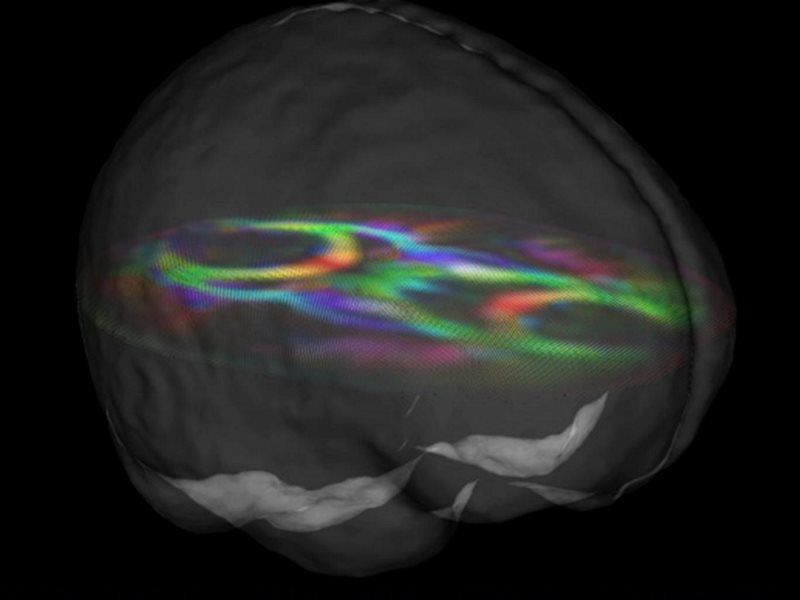
The brains of high-achieving individuals are wired up differently to those of people with fewer intellectual or social abilities according to one of the first studies to find a physical link between what goes in the brain and a person's overall lifestyle.

An analysis of the "connectivity" between different parts of the brain in hundreds of healthy people found a correlation between how well wired-up some individuals were to their cognitive abilities and general success in life, scientists said.

The researchers found that "positive" abilities, such as good vocabulary, memory, life satisfaction, income and years of education, were linked significantly with a greater connectivity between regions of the brain associated with higher cognition.

This was in contrast to the significantly lower brain connectivity of people who scored high in "negative" traits such a drug abuse, anger, rule-breaking and poor sleep quality, the scientists said.

"We've tried to see how we can relate what we see in the brain to the behavioural skills we can measure in different people. In doing this, we hope to able to understand what goes on 'under the bonnet' of the brain," said Professor Stephen Smith of Oxford University, who led the study published in Nature Neuroscience.

Comment: The good news is that connections between brain circuits can be improved.


Mars

Mars has liquid water: NASA confirms

Mars has water
© NASA / Greg Shirah / Handout / Reuters
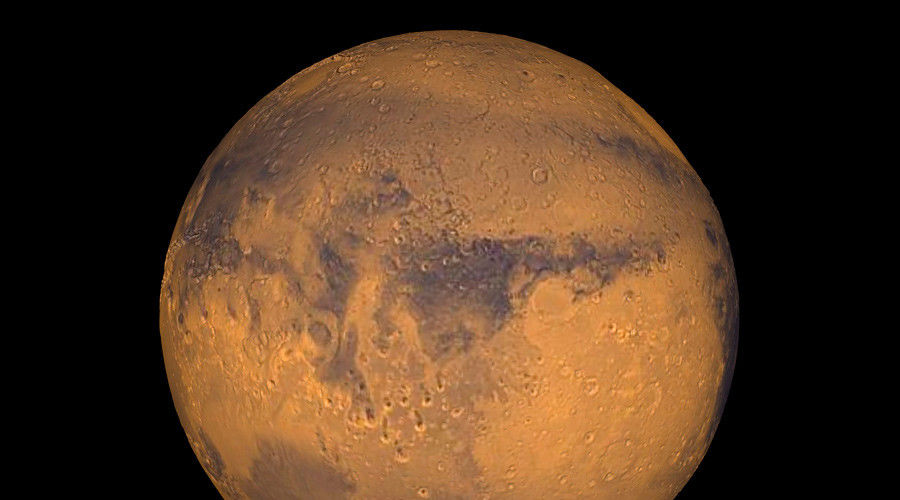
For the first time, NASA has confirmed the existence of liquid water on the surface of Mars, according to new research announced Monday. The finding stems from data and analysis by NASA's Mars Reconnaissance Orbiter.

The Mars Reconnaissance Orbiter (MRO) has verified that dark, seasonal streaks that have appeared on Mars' surface come from briny water flows.


Comment: Scientists hypothesized the presence of liquid water on Mars for years. This is from 2006:
[..] some studies have suggested the possibility that liquid water could be briefly appearing on the surface from an underground water source. If there was such a source, it would suggest both water and a stable heat source, two key conditions for supporting an environment favorable to life.
See also:


Info

New study suggests viruses are living entities sharing long evolutionary history with cells

viruses
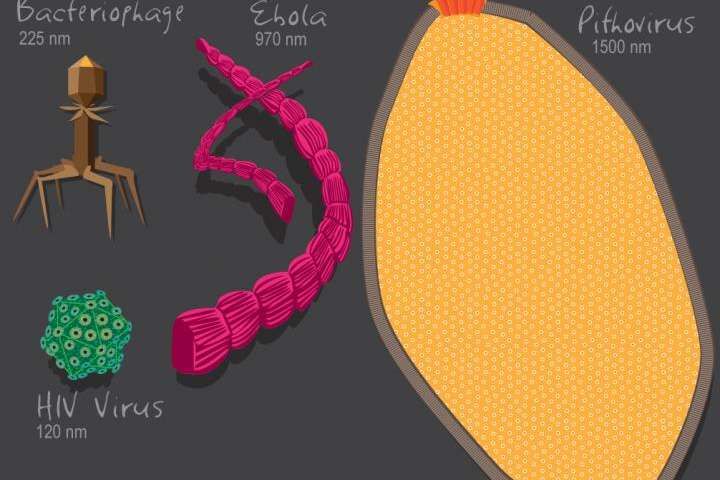
© Julie McMahaonThe diverse physical attributes, genome sizes and lifestyles of viruses make them difficult to classify. A new study uses protein folds as evidence that viruses are living entities that belong on their own branch of the tree of life.
A new analysis supports the hypothesis that viruses are living entities that share a long evolutionary history with cells, researchers report. The study offers the first reliable method for tracing viral evolution back to a time when neither viruses nor cells existed in the forms recognized today, the researchers say.

The new findings appear in the journal Science Advances.

Until now, viruses have been difficult to classify, said University of Illinois crop sciences and Carl R. Woese Institute for Genomic Biology professor Gustavo Caetano-Anollés, who led the new analysis with graduate student Arshan Nasir. In its latest report, the International Committee on the Taxonomy of Viruses recognized seven orders of viruses, based on their shapes and sizes, genetic structure and means of reproducing.

Comet

Solar system-wide 'climate change'? Comet surface changes before Rosetta's eyes

Imhotep region on Comet 67P/Chruymov-Gerasimenk
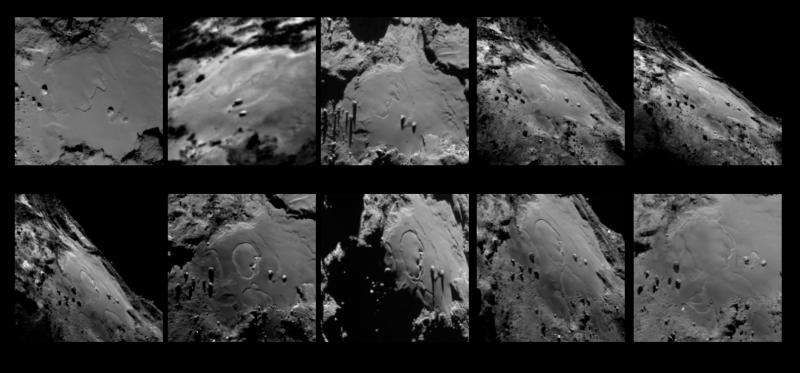
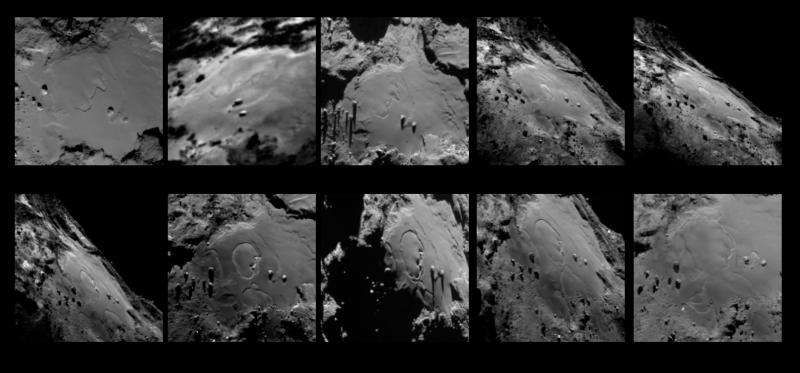
© ESA/Rosetta/MPS for OSIRIS Team MPS/UPD/LAM/IAA/SSO/INTA/UPM/DASP/IDASequence of ten images showing changes in the Imhotep region on Comet 67P/Chruymov-Gerasimenko. The images were taken with the OSIRIS narrow-angle camera on Rosetta between 24 May and 11 July 2015.
In the months leading to the perihelion of Comet 67P/Churyumov-Gerasimenko, Rosetta scientists have been witnessing dramatic and rapid surface changes on the Imhotep region, as reported in a paper to be published in Astronomy & Astrophysics

Since arriving at Comet 67P/C-G in August 2014, Rosetta has been witnessing an increase in the activity of the comet, warmed by the ever-closer Sun. A general increase in the outflow of gas and dust has been punctuated by the emergence of jets and dramatic rapid outbursts in the weeks around perihelion, the closest point to the Sun on the comet's orbit, which occurred on 13 August 2015.

But in June 2015, just two months before perihelion, Rosetta scientists started noticing important changes on the surface of the nucleus itself. These very significant alterations have been seen in Imhotep, a region containing smooth terrains covered by fine-grained material as well as large boulders, located on 67P/C-G's large lobe.

"We had been closely monitoring the Imhotep region since August 2014, and as late as May 2015, we had detected no changes down to scales of a tenth of a metre," comments Olivier Groussin, an astronomer at the Laboratoire d'Astrophysique de Marseille, France, OSIRIS Co-Investigator and lead author of the study.

"Then one morning we noticed that something new had happened: the surface of Imhotep had started to change dramatically. The changes kept going on for quite a while."

First evidence for a new, roughly round feature in Imhotep was seen in an image taken with Rosetta's OSIRIS narrow-angle camera on 3 June. Subsequent images later in June showed this feature growing in size, and being joined by a second round feature. By 2 July, they had reached diameters of roughly 220 m and 140 m, respectively, and another new feature began to appear.

Comment: The Rosetta mission scientists have already admitted, based on new information, that what they "have discovered is already starting to transform our understanding of Rosetta's target comet, 67P/Churyumov-Gerasimenko (C-G for short), and cometary science."

Wheres the ice 3 surprising comet facts we've already learned from Rosetta

When scientists begin to embrace the winning Electric Universe theory, it will help them to "piece together the origin of these curious features"; which would assist their understanding of sinkhole formations on comets, and they need not be 'puzzled' by the 'bright spots' on Ceres, facts from the Rosetta mission won't be so 'surprising', the alignment of quasars won't seem so 'spooky', and the giant ice mountains and 'bizarre' terrain on Pluto may not be so 'perplexing'.

The Electric Universe model is clearly explained, with a lot more relevant information, in the book Earth Changes and the Human Cosmic Connection by Pierre Lescaudron and Laura Knight-Jadczyk.


Question

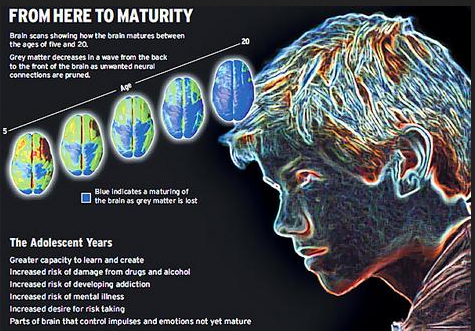
Is the teenage brain more sensitive to stimuli?

Image
A prevailing theory is that an adolescent brain has a heightened sensitivity to a variety of stimuli, much like that of an infant's.

Although new research does not entirely support the theory of heightened brain plasticity during teenage years, investigators did find evidence that memory formation, social stress, and drug use are processed differently in the adolescent brain compared to other periods of life.

University College London (UCL) researchers say additional studies are needed to confirm or deny the belief that a more moldable brain exists during adolescence.

Magic Hat

Ten years on, invisibility cloaks are close to becoming a manufacturable reality

Image
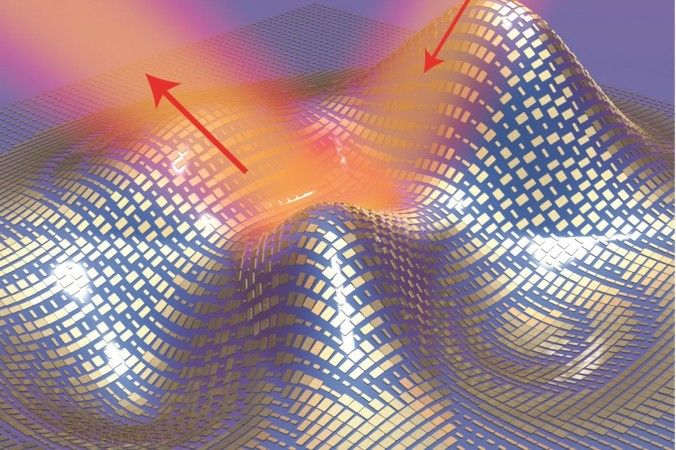
© Xiang Zhang group, Berkeley Lab/UC Berkeley, CC BY 4.0A new invisibility cloak can hide objects using an ultrathin layer of nanoantennas that reflect off light. Are humans next?
Invisibility has long been one of the marvels in science fiction and fantasy - and more recently in physics. But while physicists have figured out the concept for how to make invisibility cloaks, they are yet to build a practical device that can hide human-sized objects in the way that Harry Potter's cloak can.

Objects are visible to the human eye because they distort light waves according to their shape. We see the objects by registering these distortions when the light from the objects hit our eyes. In a similar way an object can also be visible to a radar, which transmits radio waves or microwaves that bounce off objects in their path.

So far, most invisibility cloaks are made from engineered materials that can bend light in a way that manipulates the eye - or another device such as a radar. However, these typically only work for tiny objects. But that may be about to change. A new experiment has created a cloak that, for the first time, can hide small objects of any shape completely from visible light. The cloak, which is thinner and more flexible than any of its predecessors, can also be scaled up to hide bigger objects - potentially transforming the science into something that can be manufactured and sold.

Info

Researchers send thoughts over the Internet using a brain-to-brain connection

brain to brain interface, send thoughts internet
Researchers have figured out how to send thoughts over the Internet using a brain-to-brain connection and a huge magnet. What could go wrong?

It sounds kind of cool, at face-value: two people can play a game over the Internet by reading each other's thoughts. They don't have to look at each other, and they don't have to talk to each other. The details of the experiment, and its findings, are published in the journal PLOS One:
"In the experiment, two participants (an 'inquirer' and a 'respondent') played a question-answering game similar to '20 Questions.' The respondent is given an object (e.g., 'dog') that is unknown to the inquirer and that the inquirer has to guess.

The inquirer asks a question about the object by selecting a question (using a mouse) from questions displayed on a screen. The question is then presented visually to the respondent through a web interface. The respondent answers 'Yes' or 'No'" directly through their brain signals by paying attention to one of two flashing LEDs ('Yes' = 13 Hz; 'No' = 12 Hz).

The BBI uses EEG to decode the respondent's answer, and a TMS apparatus to convey the answer to the inquirer by generating a visual percept through stimulation for 'Yes' and the absence of percept for 'No.' In the figure, the BBI system is highlighted in red."

Comment: Given the PTB's penchant for controlling the masses, it's probable that any technology that might enhance their efforts to get inside your mind and control you will be used to just that.


Bug

Flashback Telegony: Offspring can resemble mother's previous partner

neriid flies
© Russell BondurianskyNeriid flies are depicted. Scientists at UNSW Australia have studied the flies and discovered a new form of non-genetic inheritance, showing for the first time that offspring can resemble a mother's previous sexual partner.
Scientists have discovered a new form of non-genetic inheritance, showing for the first time that offspring can resemble a mother's previous sexual partner -- in flies at least.

This confronting idea, known as telegony, dates back to ancient Greek times, but was discredited in the early 20th Century with the advent of genetics.

To test it out, UNSW Australia scientists Dr Angela Crean, Professor Russell Bonduriansky and Dr Anna Kopps manipulated the size of male flies and studied their offspring.

They found that the size of the young was determined by the size of the first male the mother mated with, rather than the second male that sired the offspring.

Solar Flares

Studies suggest sun triggers massive earthquakes

The Sun
© Wikipedia Commons
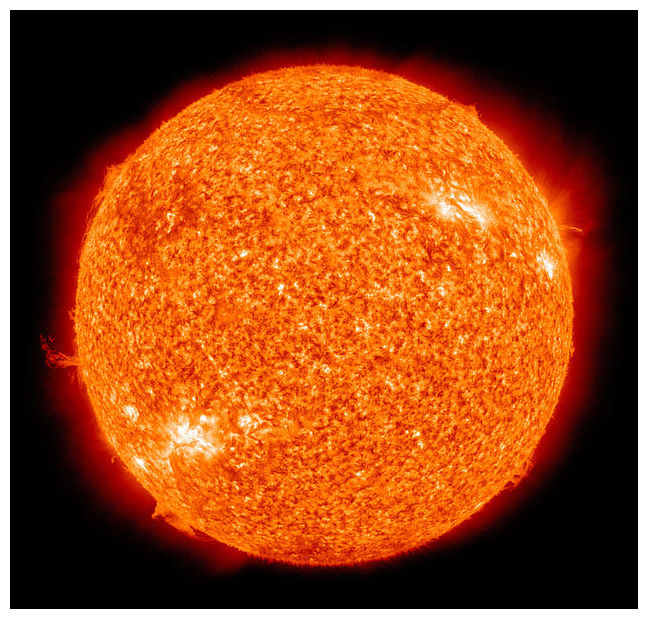
The sun is triggering the deadliest earthquakes on the planet, including the recent M8.3 earthquake in Chile on September 16, 2015 and deadly tsunami that followed, according to two papers to be published October 5th in New Concepts in Global Tectonics. The papers investigate fluctuations in the magnetic field activity of the sun and found a statistically significant relationship between M8+ earthquakes and the extremes and reversals in magnetism of solar polar magnetic fields.

The team first announced the results in August 2014, and recently used the methods proposed in that study to provide evidence that a recent major earthquake fit the patterns observed in the foundational study. In early 2014, Dr. Christopher Holloman's team of researchers at The Ohio State University Statistical Consulting Service was able to construct a model that exhibited very strong agreement between solar magnetism patterns and the occurrence of large earthquakes.

Dr. Holloman warned that formal testing of the model can only be performed by examining its performance over the next few years, but that the agreement was sufficient to suggest that a relationship likely exists between solar polar fields, or magnetic fields associated with the north and south poles of the sun, and large earthquakes. Now we have a subsequent event that appears to comport with the initial study.

"This type of confirmation is merely the first step, but it is certainly a positive one," notes lead author Ben Davidson of SpaceWeatherNews LLC, "we were already in the process of investigating large seismic events since the end-date of our initial study when the Chile disaster occurred, and we hope to have further publications covering those events in more detail in 2016." The second paper was submitted by Davidson alone, and was restricted to analysis of the Chile earthquake in order to accompany the initial study.