Science & TechnologyS


Health

The American College of Surgeons endorsed TraumaMan "as a complete replacement for animal use"

Image
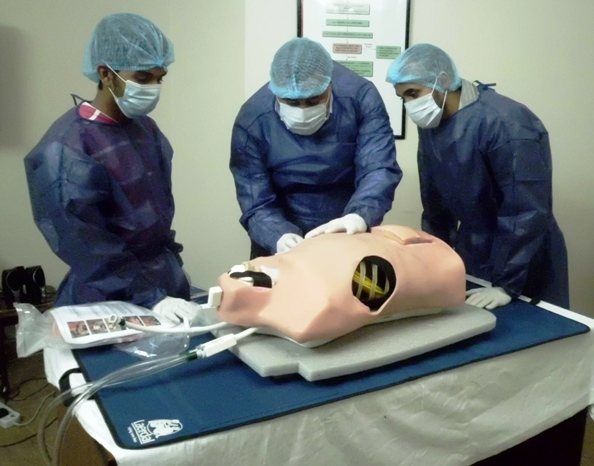
© www.peta.orgNumerous studies have shown that the TraumaMan simulator better prepares trainees to perform the lifesaving medical techniques taught in ATLS than cruel animal labs.
Doctors who need to operate on injured patients in emergencies have long practiced their lifesaving procedures on live animals, but now a replica of a human, called TraumaMan, is helping to modernize their training.

Thanks to a partnership between the manufacturer of TraumaMan - Seattle-based Simulab - and the animal rights organization People for the Ethical Treatment of Animals (PETA), more than 100 donated TraumaMan simulators are arriving at medical schools in Asia, Africa, Europe and the Americas.

All the schools offer the American College of Surgeons-approved course, Advanced Trauma Life Support (ATLS). The TraumaMan simulator was developed specifically for that course 13 years ago and is now used to train more than 35,000 medical professionals a year, according to Simulab.

The American College of Surgeons has endorsed TraumaMan "as a complete replacement for animal use in ATLS training," according to a 2010 report in the journal Anaesthesia.

Comment: More info: PETA caught on tape kidnapping dog and offers family a fruit basket after they've euthanized it


Magnify

Experts discover malaria infections may be transferred between humans and animals

Malaria Mosquito
© Unknown
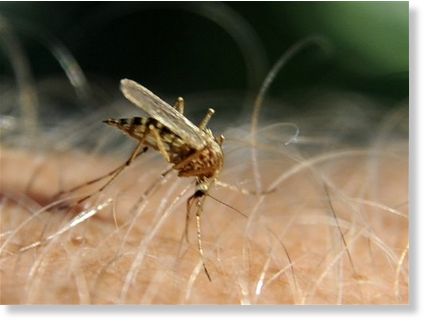
Tropical medicine experts from Tübingen have discovered malaria parasites of the Plasmodium brasilianum species in Yanomami indigenous Indians on the border between Venezuela and Brazil. These had only been found in monkeys in the past. The parasites are also described as quartan plasmodia, as they cause outbreaks of fever every four days. The infection can lead to complications and chronic sicknesses. This form of malaria is less well-known than the disease caused by the Plasmodium falciparum parasite, which is often serious and sometimes fatal.

Nevertheless, the quartan plasmodia also represent a risk that should be taken seriously. Scientists have long suspected that quartan parasites, which cause malaria in human beings (Plasmodium malariae), and the plasmodia of the Plasmodium brasilianum species may be identical. Working with colleagues from Venezuela and the USA, Albert Lalremruata and Wolfram Metzger from Benjamin Mordmüller's working group at the Institute for Tropical Medicine at the University of Tübingen have been investigating the genetics of the malaria parasites. They have managed to establish that the plasmodia from human beings and monkeys, which had been infected in the Amazon region, are genetically identical.

MIB

Government suppression of free energy technology

top secret
Have you ever wondered what the world would be like if better and cleaner energy sources were widely available and affordable to all of earth's people? If so, you're not alone, as the quest for a better energy existence has been the focus of many ingenious inventors, scientists, experimenters and even corporate and government scientists for generations.

We know it's possible, but for some reason, though, society just can't seem to get beyond 23.6 or so miles per gallon on average, highway. The gap between what science is clearly capable of and what is available to the consumer mass market is extraordinary, and here really is no need to be using up the world's fossil fuels at building nuclear plants as if there were no tomorrow, but we do.

Comment: Suppression of science: Seven inventions that would have changed the world


Mars

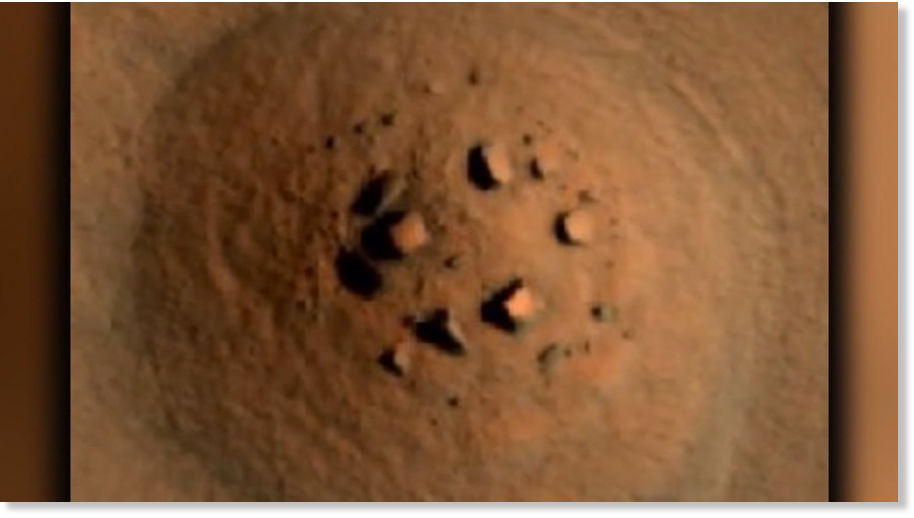
UFO hunter spots rock formation resembling Stonehenge on Mars

Image
© Mister Enigma / YouTube
A YouTube UFO hunter who calls himself Mr. Enigma, claims to have spotted a rock formation on Mars that allegedly "looks eerily similar" to one of the world's most famous and mysterious landmarks, the ancient English monument, Stonehenge.

"Now, I know the formation isn't an exact match [for Stonehenge]" Mr. Enigma notes in the video. "Nor am I saying this is indeed a Stonehenge set-up. I'm just saying there is something strange about this area, and it looks very much like the mysterious ancient stones of Stonehenge."

The UFO hunter adds: "Could the builders of Stonehenge have visited Mars and did they build the same thing there? Or did we have visitors teach us how to build these things and do the same for long-lost beings on Mars as well?"


Bulb

Prepping shelter: Scientists develop 'all-in-one' sleeping system

shelter, all in one shelter system
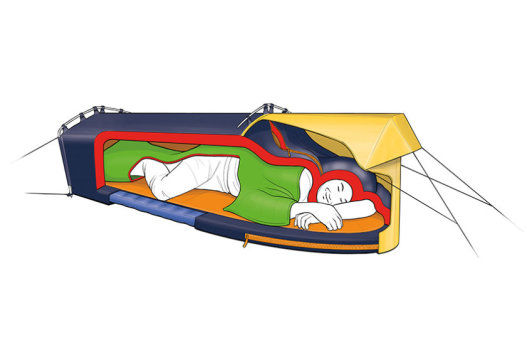
© PolarmondCross-section: sleeping cell shell (dark blue) with the zippered air opening and liner (green).
In collaboration with the start-up "Polarmond," scientists at Empa developed an "all-in-one" shelter system. Inside the shelter conditions remain comfortable whatever the weather outdoors, thanks to a sophisticated dehumidifying system and a fine-tuned temperature control mechanism.

At the Swiss Textiles Association's Innovation Day, the new start-up firm Polarmond presented its patented "all-in-one" sleeping system. This combines the functions of a sleeping bag, sleeping mat and bivouac in one product. What is particularly special about it is that the spacious inner room allows the user to sleep comfortably -- as if in their own bed -- at temperatures down to -30°C, and yet it is heated by nothing more than the occupant's body heat. Empa researchers Martin Camenzind and Matthew Morrissey assisted Polarmond in the search for suitable materials, and helped in finding a solution to the problems of thermal insulation and dealing with moisture.

Jupiter

Hi-res photos taken by 'New Horizons' of Pluto show elaborate "snakeskin" surface of diverse terrain similar to Earth

Image
© JHUAPL / SWRI / NASA
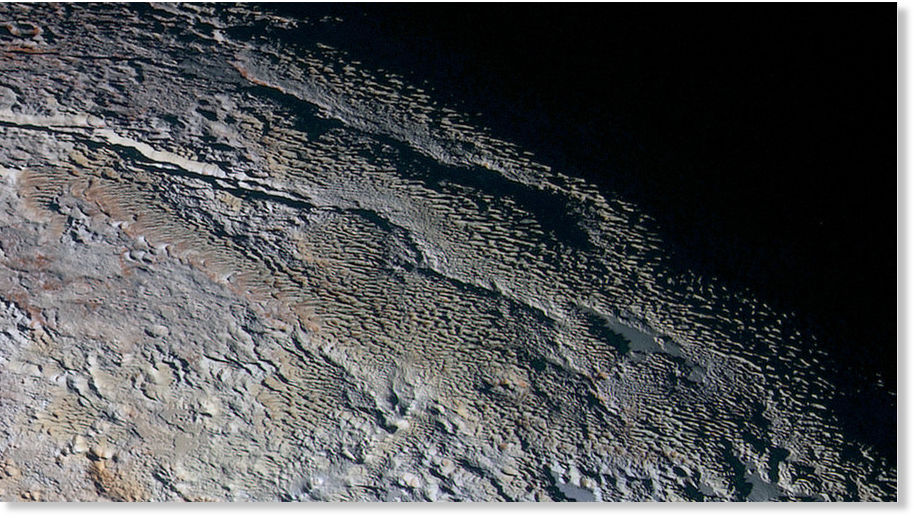
New hi-res photographs sent from NASA's space probe show Pluto's surface in detail and color, turning a page in the study of the dwarf planet. It appears Pluto has an extraordinarily rich palette and the pattern of the surface already dubbed 'snakeskin'.

It's difficult to resist staring at these brand-spanking new images direct from NASA's New Horizons space probe that reveal Pluto's surface in living color.

The elaborate 'snakeskin' pattern of the surface led the New Horizons team's deputy lead from Washington University St Louis to state that "It looks more like tree bark or dragon scales than geology. This'll really take time to figure out; maybe it's some combination of internal tectonic forces and ice sublimation driven by Pluto's faint sunlight."

This cylindrical projection map of Pluto, in enhanced, extended color, is the most detailed color map of Pluto ever made.

Bug

Blaberus Giganteus: Russian scientists invent robotic cockroach

cockroach
© Associated Press
While the proliferation of flying drones has been widely reported by the media in recent years, it's important to remember that quadcopters are just the tip of the iceberg. This technology can and will develop in strange and unexpected ways, and in the future, these devices won't just fly. They will crawl, swim and climb while disguised as innocuous creatures and objects.

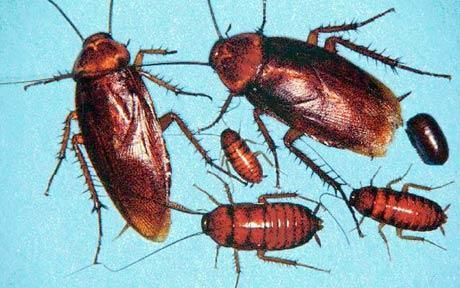
The most recent invention in that category, is a cockroach shaped robot that was unveiled by Russian scientists earlier today. The device is about 4 inches long and can scurry around on the ground at 12 inches per second. It contains photosensitive and obstacle tracking sensors, and can operate for 20 minutes on a single charge. The researchers based the robot's design on the Blaberus Giganteus cockroach from South America, and studied real cockroaches during its development.

Comment: American scientists are in the cockroach game too: Creepy cockroaches could be used for search and rescue


Camcorder

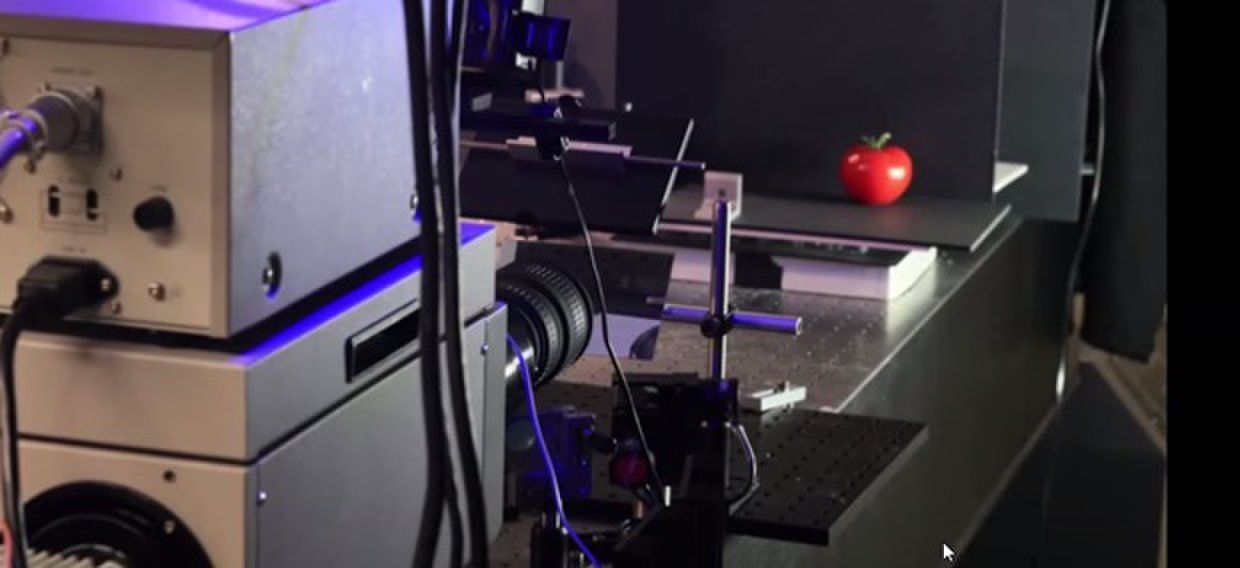
Trillion frames/sec: MIT's super-fast camera can capture light as it travels

slowest camera
© Unknown
A new camera developed at MIT can photograph a trillion frames per second. Compare that with a traditional movie camera which takes a mere 24. This new advancement in photographic technology has given scientists the ability to photograph the movement of the fastest thing in the Universe, light. In the video below, you'll see experimental footage of light photons traveling 600-million-miles-per-hour through water. The actual event occurred in a nano second, but the camera has the ability to slow it down to twenty seconds. For some perspective, according to New York Times writer, John Markoff, "If a bullet were tracked in the same fashion moving through the same fluid, the resulting movie would last three years."

Robot

Homeland Security funding Boeing to test brain chip for self-destructing smart phone

Image
© Shutterstock
The Department of Homeland Security is funding a Boeing company to create a "brain chip" for its self-destructing Black smartphone that could be adapted for any device, DHS officials say.

The technology powering the devices potentially could identify the user's walking style, for example. Officials would be alerted if the gait does not match the authorized user's walk - a red flag the phone might have fallen into the wrong hands, officials said.

The "secret sauce" of the mobile device is a so-called neuromorphic computer chip that simulates human learning, Vincent Sritapan, the program manager for DHS' mobile device security program, told Nextgov.

Gait recognition -- driven by the phone's accelerometer, GPS and the chip -- is but one of many kinds of continuous ID verification intended to tighten access controls on mobile devices.

Boeing and HRL Laboratories, a software firm jointly owned by Boeing and General Motors, are partnering under a DHS project worth $2.2 million over 2.5 years.

The companies "pretty much are leveraging user behavior information" from data gathered by sensors found on any standard consumer smartphone, Sritapan said. Those feelers could include microphones, cameras and touchpads, he added. The artificial intelligence could help agencies determine, "Are you who you say you are, and do we give you access to enterprise resources like email?" he said.

Comment:


Snowflake

Researchers cataloging Scottish language find Scots have more words for snow than Inuits

girl blowing snow
© Shutterstock.com
Snow joke — the Scots language has more words for snow than Inuit languages, a total of 421 including "snaw", "sneesl" and "skelf", researchers in Glasgow said Wednesday.

Other terms used to describe the white stuff that often coats Scotland's landscape during winter include "flindrikin" (a light snow shower), "feefle" (swirling snow) and "spitters" (small flakes of snow).

The finding came from researchers at Glasgow University who are compiling the first ever thesaurus cataloging every recorded word in the tongue that has been spoken in Scotland for hundreds of years.

Part of it is being put online for the first time Wednesday, starting with the sections covering snow and sport. The latter includes 369 words relating to the game of marbles.

"Weather has been a vital part of people's lives in Scotland for centuries," said Susan Rennie, a Glasgow University lecturer.