Science & TechnologyS


Comet 2

Bizarro comet challenging researchers

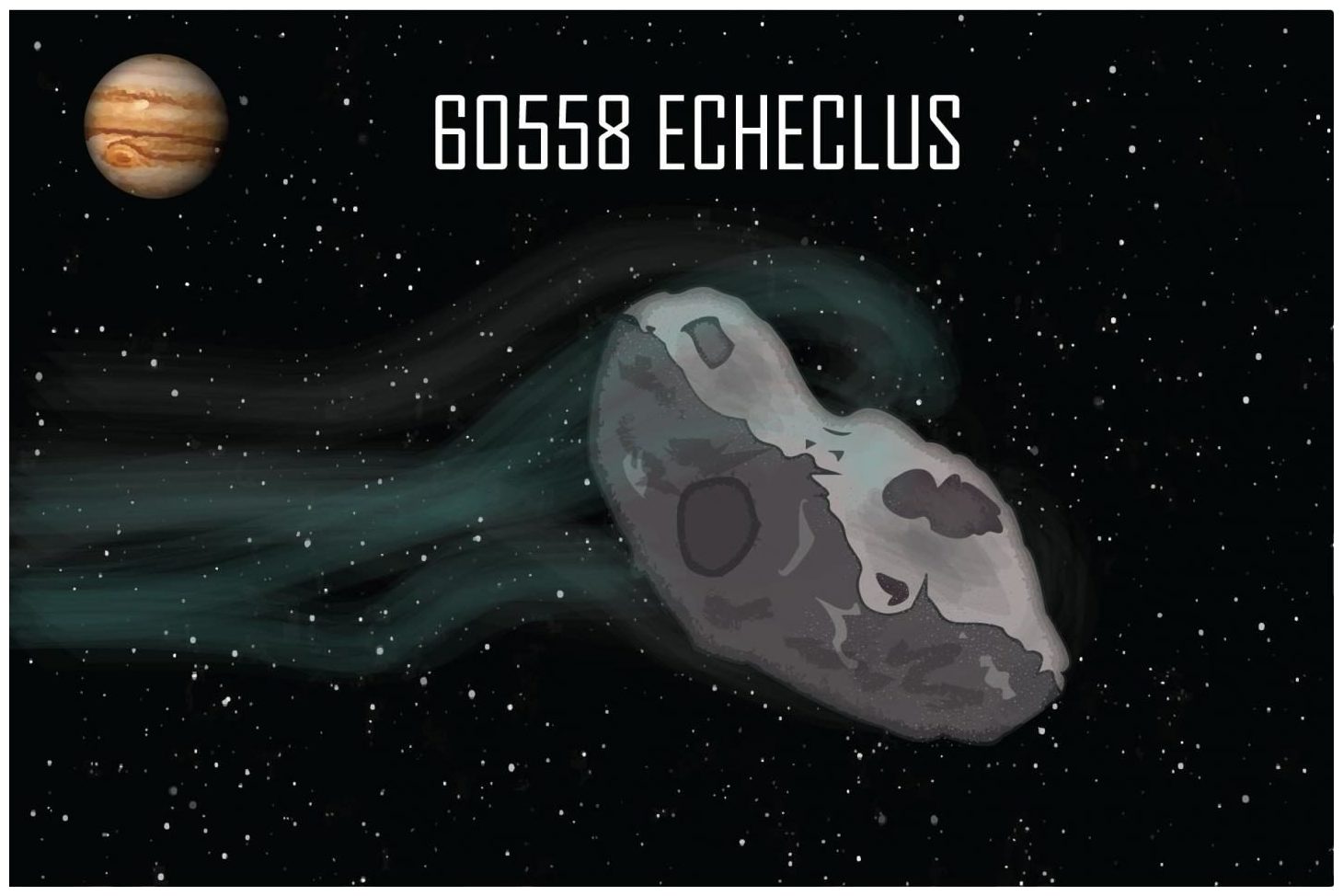
llustration of Echeclus
© Florida Space Institute at UCFllustration of Echeclus.
Scientists pursue research through observation, experimentation and modeling. They strive for all of these pieces to fit together, but sometimes finding the unexpected is even more exciting. That's what happened to University of Central Florida's astrophysicist Gal Sarid, who studies comets, asteroids and planetary formation and earlier this year was part of a team that published a study focused on the comet 174P/Echeclus. It didn't behave the way the team was expecting.

"This is another clue that Echeclus is a bizarre solar system object," said University of South Florida physics research Professor Maria Womack, who leads the team.

Comets streak across the sky and as they get closer to the sun look like bright fuzz balls with extended luminous trails in their wake. However, comets are actually bulky spheres of mixed ice and rock, many of them also rich in other frozen volatile compounds, such as carbon monoxide, carbon dioxide, hydrogen cyanide and methanol.

Comets heat up as they get closer to the sun, losing their icy layers by sublimation and producing emission jets of water vapor, other gases and dust expelled from the comet nucleus, Sarid said. Once they move away from the sun, they cool off again. But some comets start showing emission activity while still very far from the sun, where heating is low.

Info

Two veterans get DARPA-developed prosthetic "LUKE arms" after 40yrs (VIDEOS)

Veterans
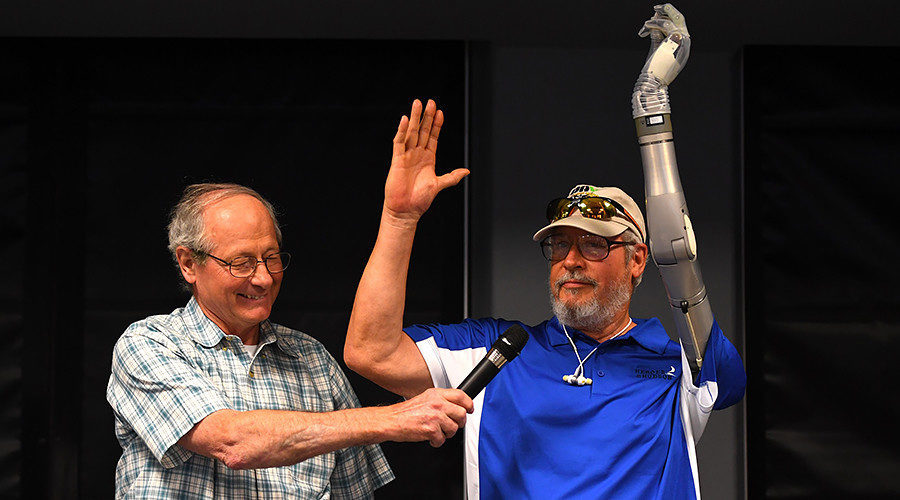
© Timothy A. Clary / AFPUS Army veteran Fred Downs smiles as US Army Veteran Artie McAuley(R) is shown with his LUKE prosthetic arm, New York June 30, 2017.
Two retired army veterans who lost their arms more than 40 years ago have received revolutionary prosthetic limbs developed by the Pentagon. Their new futuristic arms, which are named after Luke Skywalker, can pick up small objects as fragile as an egg.
"Stirring with this, I'm cutting with that, dicing," Fred Downs said, as cited by CBS news. Downs lost his left arm below the elbow after being injured in the Vietnam War.

"It's the fun part of being able to use two hands to get all the vegetables prepared, and the meat prepared, and start the grill, and hold plates," he continued.
The second recipient, Artie McAuley, a retired Army captain who lost his left arm in a car accident, was also thrilled to receive his new limb. In order to lift the arm, an amputee has to lift his foot. Sensors in the wearer's shoes then pick up the motion and put the prosthetic limb into action.
"You have to be smart to do this," McAuley said, as cited by AFP. "Once in a while, I make a mistake!"

Comment: See also:


Brain

Hackers can target EEG headsets

EEG headsets
© Michaela Rehle / Reuters
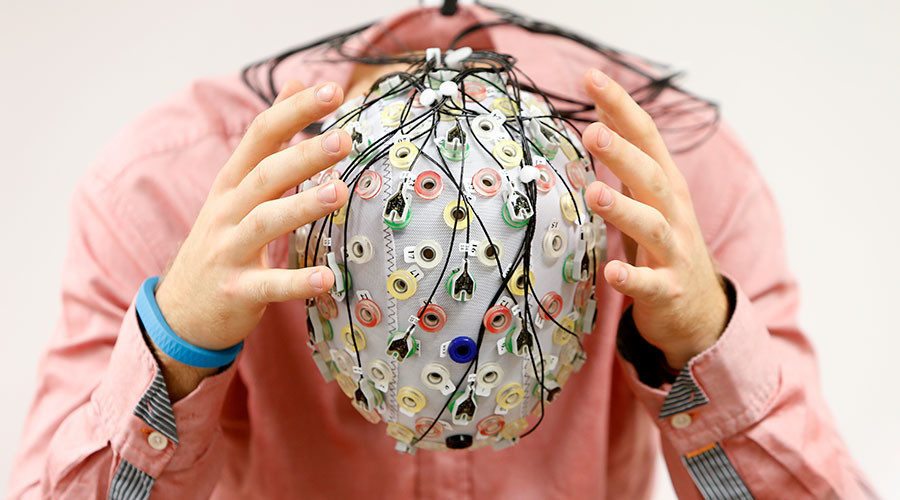
Electronic devices that harness the power of brain signals are one of the latest additions to the world of gaming. A new study has found, however, that hackers could also use such technology to access private information such as passwords and ATM pin codes.

A study by researchers at the University of Alabama at Birmingham has provided an example of how devices that operate using brain signal monitoring, like electroencephalography (EEG), may be a future tool for cyber thieves.

Using two EEG headsets, one clinical and the other a commercial product available to consumers, lead researcher professor Nitesh Saxena was able to devise a way to eavesdrop on people's neural signals.

The study details an attack strategy known as PEEP, described as an advanced type of keylogging, where hackers surreptitiously record via a virus, or determine through sound analysis, strokes on a keyboard.

Meteor

Flashback Chelyabinsk meteorite may have had previous collision or near-miss with other parts of solar system

Chelyabinsk meteor
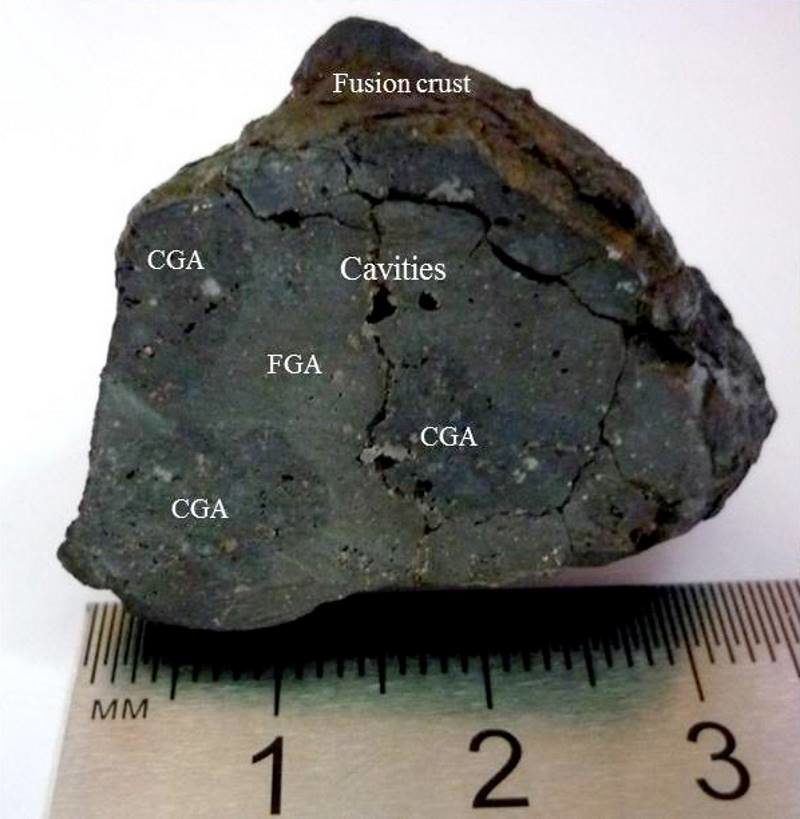
© Victor SharyginFragment of Chelyabinsk meteor currently being analyzed for mineral composition and signs of previous melting.
The meteor that starred in a thousand and one tweets as it shot across the Siberian sky last February apparently had a rough history.

The Chelyabinsk meteor, estimated to have been 55-65 feet in diameter before breaking up, may have had previous fiery encounters — either colliding into another body in the solar system or traveling too close to the Sun — before its spectacular crash to Earth, according to analysis of fragments from its crust and interior.

Hints of Heat

Presenting the new findings at a geochemical conference today in Florence, Italy, Victor Sharygin of Novosibirsk's Institute of Geology and Mineralogy said a detailed mineral analysis of fragments of the meteorite revealed some anomalies suggesting the rock had previously been melted.

Dividing the pieces into different gradations of color and structure, the team identified a concentration of dark fragments composed of fine-grained material formed by extremely intense melting. The dark fragments were distinct from the meteorite's fusion crust, a thin layer that melts and then solidifies as the rock travels through Earth's atmosphere. The dark fragments' structure included what the team described as "spherical bubbles," either encrusted with oxide, silicate and metal or filled with metal and sulfide.

Stormtrooper

Russian military lab unveils prototype Star Wars-like combat suit

Russia next-generation combat suit
© Ruptly
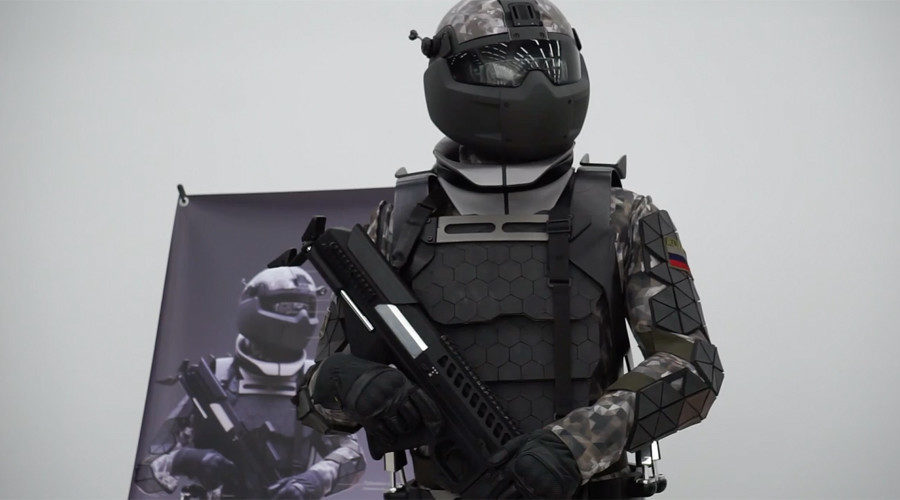
A major hi-tech Russian military research center has unveiled what appears to be a prototype of a next-generation combat suit. The stunning gear, resembling Star Wars outfits, will be worn by Russian soldiers on future battlefields.

The prototype features a helmet covering the soldier's face and cutting-edge body armor.

The next-generation combat gear also includes a powered exoskeleton to help increase performance and stamina while fighting.

The prototype was unveiled on Thursday at the opening of Russia's largest high-tech prototyping center at the National University of Science and Technology (MISIS) in Moscow.

Meteor

Top astrophysicist warns that 'the next Tunguska will take us by surprise'

asteroide 441987 2010 NY65
© Desconocido
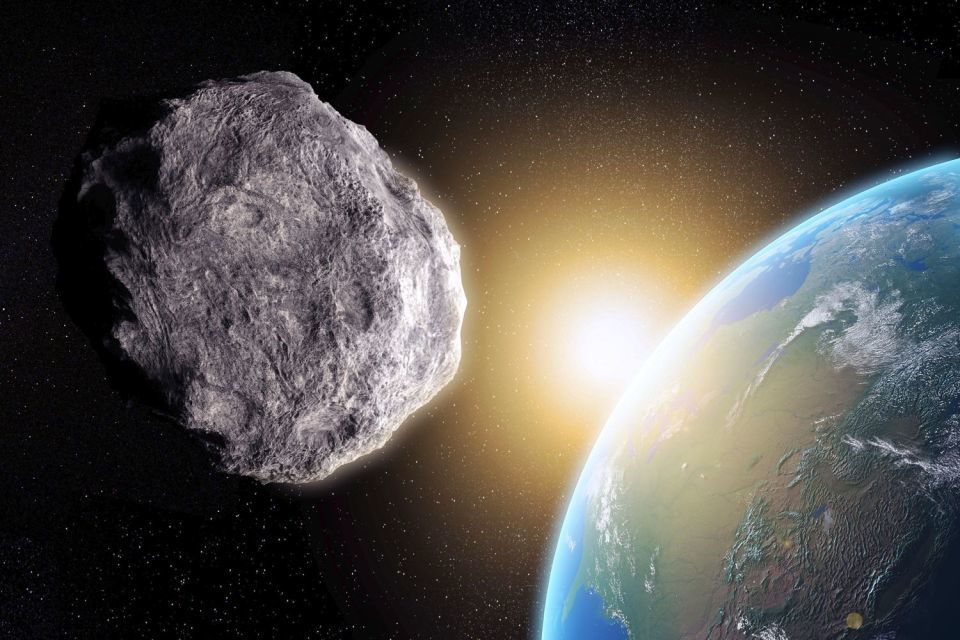
A top astrophysicist says a city-destroying asteroid strike could take us by surprise.

Profressor Alan Fitzsimmons says that an event similar to the 1908 meteoroid explosion over the Tunguska region of Russia could happen again.

The meteor exploded above the Earth, levelling 80 million trees across an area of 800 square miles. China to send people to live on asteroids. Because of the remote location, no-one was killed - but if it had happened over a city the devastation would have been huge.

Comment: Further reading: Do asteroids present the 'greatest challenge' to humanity?


Magnet

Uranus' magnetic fields flip open and closed on a daily basis

Uranus' magnetosphere
© Georgia Tech
Uranus is a strange place. Among many of its quirks is that it has the most unusual magnetic field in the solar system. Unlike Earth and many other planets, this field is not closely aligned with its rotational axis—it's tilted by 60 degrees. Added to this is the fact that Uranus rotates on its side as it circles the sun.

This strange arrangement causes Uranus's magnetic field, also known as its magnetosphere, to flip open and closed on a daily basis, new research suggests. When closed, it acts like an umbrella to deflect solar wind, the continual stream of charged particles produced by the sun that perpetually bombard Uranus and other planets. But when it's open, these energized particles rush in and get trapped there.

To help picture the arrangement, Georgia Institute of Technology professor Carol Paty suggests visualizing a child cartwheeling toward you—you'd see hands, then feet, then hands again, over and over. The hands represent an open magnetosphere, while the feet represents a closed orientation. And it keeps going like this, toggling back and forth about once every Uranian day, which lasts over 17 (earthly) hours.

Christmas Lights

NASA creates glowing, aurora-like clouds in the skies of the U.S.

Artificial auroras
© NASAArtificial auroras created by a NASA rocket.
After many delays that disappointed space fans around the U.S., NASA finally managed to launch its mission early Thursday to, for the first time, create ephemeral, glowing clouds.

In other words, NASA created human-caused auroras, of sorts.

The suborbital sounding rocket took flight at 4:25 a.m. ET Thursday from NASA's Wallops Flight Facility in Virginia and released its payload — which consisted of 10 vapor-filled canisters — shortly afterwards.

Once at altitude, those canisters produced green-blue and red artificial clouds that should allow scientists to learn more about how particles move through space.


Comment: Hmm... what else can NASA and other agencies do?


Archaeology

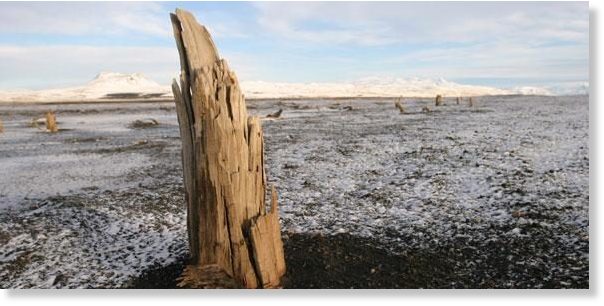
Tree rings pinpoint eruption of Iceland's Katla volcano to half a century before human settlement

Katla volcano tree rings
An international group of researchers has dated a large volcanic eruption in Iceland to within a few months. The eruption, which is the oldest volcanic eruption to be precisely dated at high northern latitudes, occurred shortly before the first permanent human settlements were established, when parts of the now mostly treeless island were still covered with forest.

The team, which included volcanologists, climatologists, geographers and historians among others, used a combination of scientific and historical evidence to pinpoint the eruption date of the Katla volcano between late 822 CE and early 823 CE, decades before the earliest settlers arrived. Their results are reported in the journal Geology.

In a similar way to how fossils can be used to understand the development and evolution of life on Earth, different types of environmental evidence can be used to understand what the Earth's climate was like in the past and why. The 'fingerprints' contained in tree rings and ice cores help scientists to estimate past climatic conditions and extend our understanding of the interaction between humans and the environment hundreds and thousands of years back in time.

Cell Phone

Brain Drain: Study finds presence of smartphones reduces cognitive capacity even when turned off

cellphones
Researchers at the University of Texas at Austin recently completed a comprehensive study illustrating the effects of smartphones on the human brain. What they found was that 'smart' phones actually make us dumb.

According to the study, Brain Drain: The Mere Presence of One's Own Smartphone Reduces Available Cognitive Capacity, having a smartphone around is a definitive way to lower our cognitive ability.

According to the study's authors, Adrian F. Ward, Kristen Duke, Ayelet Gneezy, and Maarten W. Bos, results from two experiments indicate that even when people are successful at maintaining sustained attention—as when avoiding the temptation to check their phones—the mere presence of these devices reduces available cognitive capacity. Moreover, these cognitive costs are highest for those highest in smartphone dependence. We conclude by discussing the practical implications of this smartphone-induced brain drain for consumer decision-making and consumer welfare.