

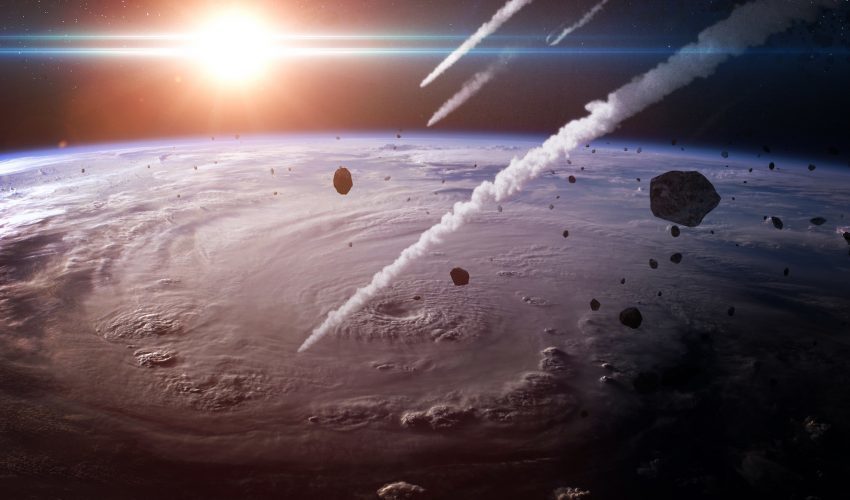
© ShutterstockThe asteroid is pass close to earth next week
The giant rock, known as 2016 NF23, is moving towards our corner of the solar system at around 20,000 miles an hour - faster than many rockets.
It is on track to pass nearest to our planet on August 29, according to NASA.
And the asteroid will come close enough for NASA scientists to place the object on the space agency's "potentially hazard asteroid" watch list.
NASA estimates the asteroid to be between 70 and 160 metres (230 to 525 feet) in diameter.
It is expected to pass within 0.03377 astronomical units (about 3 million miles) from Earth.
For comparison, the sun is 93 million miles away.
















Comment: NASA animation shows the dramatic increase in near-Earth asteroids entering solar system over last 20 years