Science & TechnologyS


Chalkboard

'UFOs' Disrupting Search for 'God Particle'

Image
© unknown
Physicists working at the Large Hadron Collider (LHC), a particle accelerator at CERN Laboratory in Switzerland, are trying to slam particles together hard enough to break them into never-before-seen pieces, which could solve some of the biggest puzzles in nature.

But UFOs - unidentified falling objects, that is - keep getting in their way.

The LHC is a 17-mile (27-km) circular tunnel lined with powerful magnets, which accelerate protons (particles in the nuclei of atoms) to 99.9999991 percent the speed of light. Beams of these super-brisk protons are accelerated clockwise around the ring and collide with beams traveling counter-clockwise, and, like a well-struck piñata, a dead-on hit produces a thrilling outburst of subatomic goodies. When they turn the proton beams up to full power, the physicists hope to find the Higgs boson, also known as the "God particle," which is believed to create the drag that gives everything else mass, among the collision debris. They'll also look for dark matter, the invisible substance that permeates the outskirts of galaxies.

Better Earth

Philips Bio-Light Concept Lights The Home Using Bacteria

Bioluminescent Lights
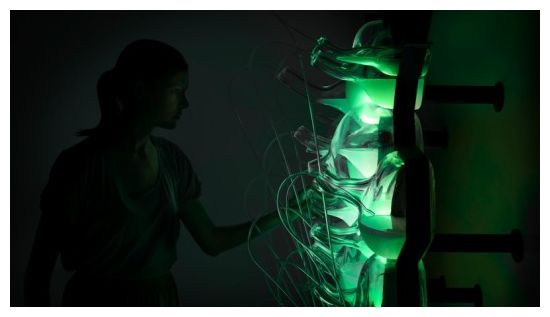
© PhilipsThe Philips bio-light is 'powered' by glowing bioluminescent bacteria.

The search for greener, more power-efficient lighting systems won't stop with compact fluorescents and LED systems if Dutch electronics giant Philips has anything to say about it. In an effort to embrace a truly natural approach to lighting, the company took a cue from fireflies and deep-sea creatures to create a (literally) green light powered not by electricity or sunlight, but by glowing bioluminescent bacteria.

As one of numerous systems in its Microbial Home (MH) concept, Philips tasked itself with creating a lighting system driven by the wastes typically generated in the average home. To feed the bacteria housed in the bio-light's unusual hand-blown glass compartments, methane - which could generated by the MH kitchen's bio-digester unit from composted bathroom solids and kitchen vegetable waste - is piped in through thin silicon tubes connected to a reservoir at the base.

Light produced by bacteria, or luminescence, is heat-free in contrast to incandescence, which is light generated by objects heated to glowing. A similar form of light, chemoluminescence, is given off by the familiar snap and shake glow sticks (a mixture of phenyl oxalate, fluorescent dye and hydrogen peroxide) but those are closed one-use systems with a limited light-production period.

Info

Even Babies Think Crime Deserves Punishment

8 Month Old
© Kiley Hamlin, University of British Columbia Center for Infant CognitionAn 8-month-old baby chooses a favorite puppet from a pair previously seen helping and hindering wrongdoers. By 8 months of age, babies prefer characters who punish antisocial individuals.
Babies as young as 8 months want to see wrongdoers punished, a new study finds.

In contrast, younger babies prefer to see individuals being nice to one another - even when that means that someone is nice to a character who deserves a slap on the wrist.

"This study helps to answer questions that have puzzled evolutionary psychologists for decades," Kiley Hamlin, a psychologist at the University of British Columbia, said in a statement. "Namely, how have we survived as intensely social creatures if our sociability makes us vulnerable to being cheated and exploited? These findings suggest that, from as early as eight months, we are watching for people who might put us in danger."

Sun

Mysterious Particles Shooting Through Earth Shed Light on Sun

Neutrino Detector
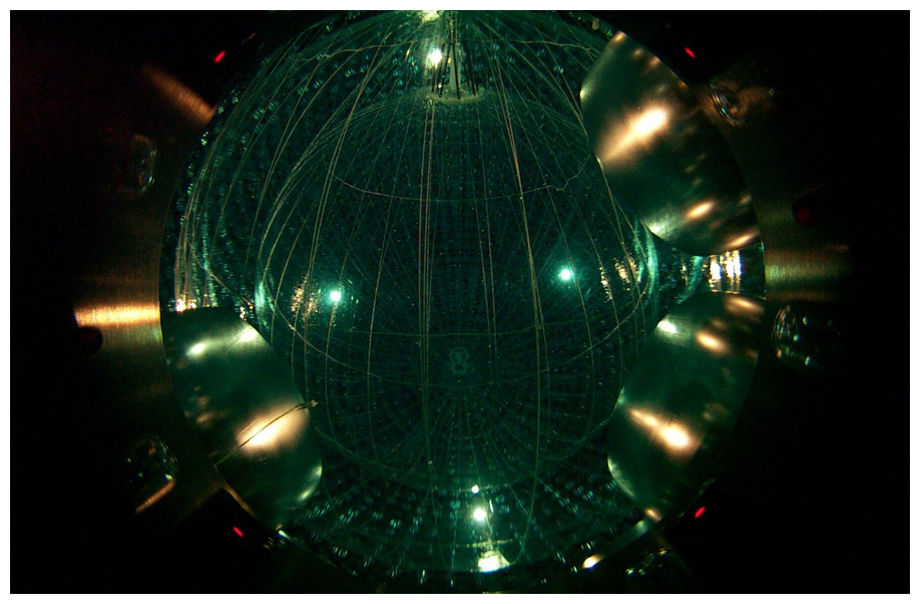
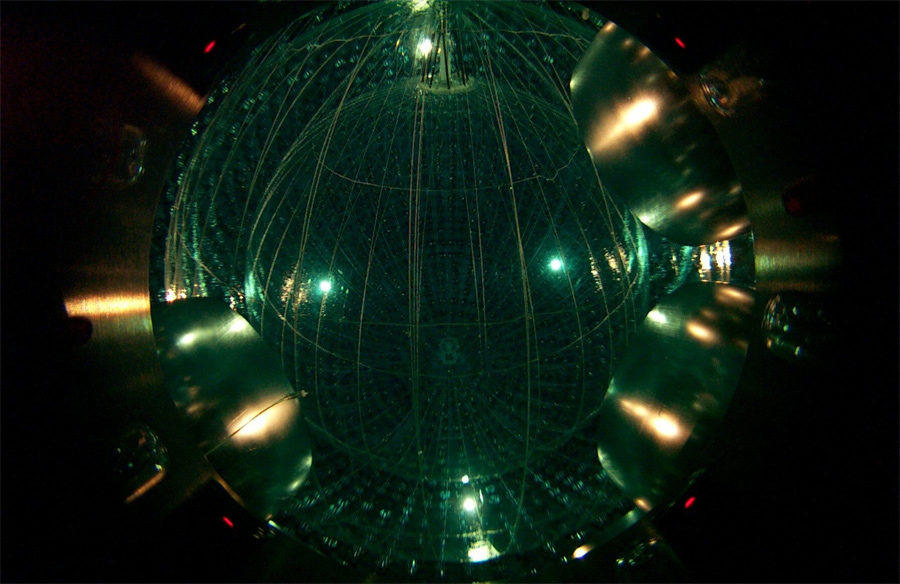
© Borexino CollaborationThe Borexino neutrino detector is located at Italy's Gran Sasso National Laboratory, about 5,000 feet (1.5 km) under Gran Sasso Mountain. The instrument detects anti-neutrinos and other subatomic particles that interact in its special liquid center, a 300-ton sphere of scintillator fluid surrounded by a thin, 27.8-foot (8.5-meter) diameter transparent nylon balloon. This all “floats” inside another 700 tons of buffer fluid in a 45-foot (13.7-meter) diameter stainless steel tank immersed in ultra-purified water. The buffering fluid shields the scintillator from radiation from the outer layers of the detector and its surroundings.

Billions of ethereal particles known as neutrinos pour through us every second from the sun. Lately, scientists have realized that these mysterious entities do possess mass, albeit a small amount, despite previous predictions that they had none.

Now a giant scientific experiment housed deep beneath mountains in Italy is analyzing neutrinos from the sun with unprecedented detail, which might one day help solve the enigmas neutrinos pose, as well as shed light on the inner workings of stars.

Neutrinos are generated by nuclear reactions and certain types of radioactive decay. They are created in great multitudes in the nuclear furnace of the sun, flowing through Earth's surface in numbers as high as 420 billion per square inch (65 billion per square centimeter) per second. However, they have a neutral electrical charge and almost never interact with other particles, which means they stream through regular matter virtually unaffected, only rarely slamming into atoms.

The new findings come from the Borexino experiment buried under the Apennine Mountains at the Gran Sasso National Laboratory in Italy, one of the most sensitive neutrino detectors on the planet.

Another experiment at Gran Sasso, called OPERA, also studies neutrinos, but looks for particles created in a lab in Switzerland, rather than those coming from the sun. OPERA's science team recently made headlines when it announced findings that suggest neutrinos may be traveling faster than the speed of light, which was thought to be the ultimate cosmic speed limit.

Eye 2

Genetically modified mutants 'safe for release' into the wild

'Underdominance' experiment on remote island

Remorseless German boffins say that the time may now be ripe for scientists to begin release of "transgenic individuals into populations". Concerns that this might result in those populations being completely replaced by the superior lab-developed individuals can be addressed, they say, by the use of cunningly selected mutants.

Rather than some kind of sinister play to replace unsatisfactory human beings with superior lab-grown varieties, this is actually aimed at helping people - for instance by wiping out the terrible menace of mosquito-borne malaria, one of the most potent threats to human health around.

Beaker

Graphene circuits from an inkjet printer

Magic material gets yet another surprising application

Long gone are the days when the inkjet printer was the consumable that people bought for school projects and family photographs: a group of researchers from Cambridge University has added graphene-based transistors to the list of things that you can take from the output tray.

The researchers, led by Andrea Ferrari of the university's Department of Engineering, created an ink able to deposit graphene on a flexible silicon substrate, using this year's favourite magic material to improve the efficiency and performance of an organic semiconductor material.

While inks able to produce printable electronics aren't new, they produce devices that are large (and therefore slow, since if electrons have to travel a bigger distance to traverse the transistor, it takes longer, and therefore switching speed is reduced).

Better Earth

Scientists probe Earth's core, make mystifying discovery

Colossal magnet we live on perhaps a Silicon roundabout

Scientists carrying out extreme boffinry into the makeup of the Earth's liquid core have announced that they are very puzzled to find it is not made of what they had thought it was.

The great bulk of the liquid outer core of the planet, of course, is made of molten iron. That's just as well for us and all life on Earth, as the spinning blob of superhot melted metal we all live on top of generates a tremendously powerful magnetic field which keeps off all the plasma storms and cosmic rays and suchlike deadly space radiation so that we aren't fried out of existence on a routine basis.

Meteor

Electric Universe: Where Do Asteroids Come From?

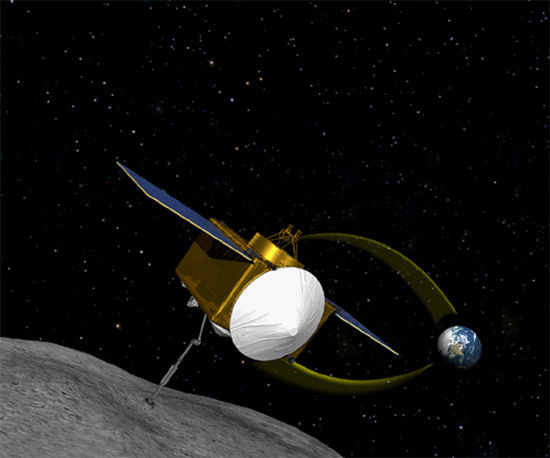
Artist's drawing of the OSIRIS-REx spacecraft.
© NASA/GSFC/The University of ArizonaArtist's drawing of the OSIRIS-REx spacecraft.

Are carbonaceous asteroids the precursors of life or the wreckage of life?

NASA plans to launch the Origins Spectral Interpretation Resource Identification Security Regolith Explorer mission, also known as OSIRIS-REx, in 2016. The spacecraft will orbit the Near Earth Object (NEO) 1999RQ36. After a year in close orbit, the probe will gather a sample of material from the object's surface and bring the sample back to Earth.

1999RQ36 is over 500 meters in diameter, about a third of a mile. Its orbital period around the Sun is 1.2 years. Observations indicate that its surface contains quite a bit of carbon, so astronomers classify it as a carbonaceous asteroid. Its orbit crosses the Earth's orbit, and it will come close to the Earth - a few times the Moon's distance - several times during the rest of this century. Mission scientists are hoping to gain some insight into how to deflect it if it should threaten to collide with the Earth.

MIB

Apple iTunes Flaw 'Allowed Government Spying for 3 Years'

An unpatched security flaw in Apple's iTunes software allowed intelligence agencies and police to hack into users' computers for more than three years, it's claimed.

Image
© Getty ImagesApple's iTunes software is installed on more than a quarter of a billion computers
A British company called Gamma International marketed hacking software to governments that exploited the vulnerability via a bogus update to iTunes, Apple's media player, which is installed on more than 250 million machines worldwide.

The hacking software, FinFisher, is used to spy on intelligence targets' computers. It is known to be used by British agencies and earlier this year records were discovered in abandoned offices of that showed it had been offered to Egypt's feared secret police.

Apple was informed about the relevant flaw in iTunes in 2008, according to Brian Krebs, a security writer, but did not patch the software until earlier this month, a delay of more than three years.

Robot

The future of airport security: Thermal lie-detectors and cloned sniffer dogs

checkpoint
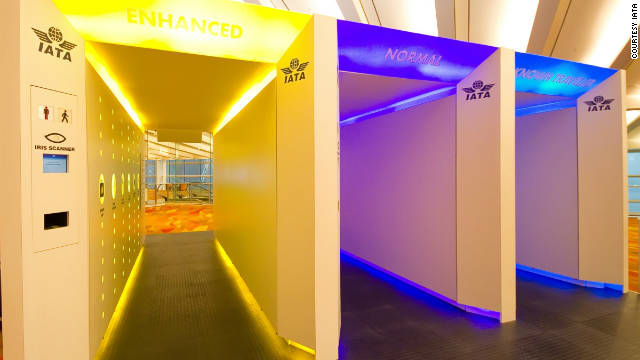
© CNNThe International Air Transport Association's "Checkpoint of the Future."
After the EU's announcement that it will ban "backscatter" x-ray body scanners, airports may have to look harder at alternative security measures. From Bluetooth tracking to thermal lie-detector cameras, we take a glimpse into the weird and wonderful future of airport security.

The check-point of the future

Earlier this year, the International Air Transport Association (IATA) demonstrated its vision for the "checkpoint of the future" -- a series of neon-lit tunnels, each equipped with an array of eye-scanners, x-ray machines, and metal and liquid detectors.

Heralding an end to "one size fits all screening," the association says that passengers will be assigned a "travel profile" and ushered into one of three corridors accordingly.