
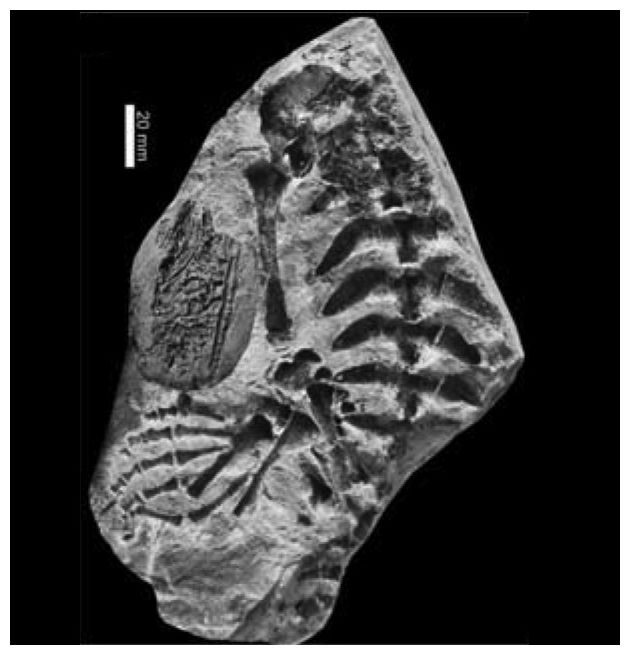
© Graciela PineiroThis composite photo shows an isolated mesosaur embryo with an adult mesosaur to show the size relation.
"These eggs are probably out there, but nobody has looked hard enough for them or they have not been recognized," says University of Bonn, Germany, paleobiologist P. Martin Sander, who details his analysis in the Aug. 17 issue of the journal Science.
Both mammals and reptiles envelop their developing embryos in protective layers, something that ultimately helped their ancestors conquer the land and that still helps their offspring survive.
Mammals often keep these membrane-bundled offspring within them, giving birth to live young, while reptiles generally lay their membrane-swaddled progeny in eggs.
The fact that mammals and reptiles wrap their embryos within these defenses makes them known as amniotes, which first evolved about 310 million years ago.
The fossil record of amniotic eggs and embryos is paltry, leaving scientists little knowledge about when, how and why they evolved.













Comment: Fire and Ice: The Day After Tomorrow