Science & TechnologyS


Robot

Could the human clones of 'Cloud Atlas' be in our future?

Sonmi
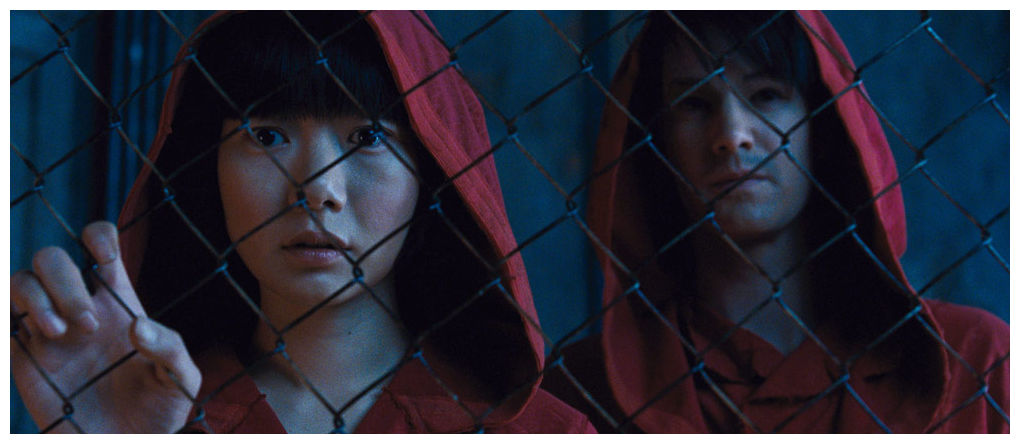
© Warner Bros.Sonmi-451 awakens to the horrific reality of her world that treats genetically-modified clones like robots.
A dystopian society supported by genetically modified clone workers stands out among the six stories that make up the sprawling film Cloud Atlas. The idea may seem far-fetched because of political opposition to human cloning and genetic modification in today's world, but the science is closer than many people may think.

The Cloud Atlas story focuses on a genetically-engineered "fabricant" clone named Sonmi~451 who is one of millions raised in an artificial "wombtank," destined to serve from birth. Such fabricants do practically every kind of manual or service labor, work as soldiers and prostitutes, and even act as "living doll" toys for "pureblood" kids in the futuristic society of Nea So Copros - an ultra-corporate version of a unified Korea that has grown to include much of Asia.

"Of course, any technology could be abused, but a nightmarish Cloud Atlas future would not flow inexorably from the deployment of human germline genetic modification," said Kevin Smith, a bioethicist at Abertay University in the UK.

Such genetic modification of the germline - the genetic material in eggs or sperm - already works in some animals. Researchers have made genetically modified animals and clones such as cloned pet dogs and gene-tweaked mice tailored to sniff out landmines. By comparison, similar research in humans has focused on cloning embryos to extract embryonic stem cells that could prove medically useful.

But the reality of safe, effective genetic modification of humans seems likely to come true in the "relatively near future", Smith and his colleagues wrote in the October issue of the journal Archives of Medical Research. They also argue that the technology's possible benefits for humanity should prevent countries from automatically passing bans or heavy restrictions on such emerging technologies.

Comet

Splitting event in comet 168P/Hergenrother

Over the past few weeks, comet 168P/Hergenrother has been under intense scrutiny due to its strange behaviour, namely a 6 magnitude surge in its brightness in a matter of several nights. Simultaneously the central condensation became markedly brighter and sharper, whilst the coma was also seen to grow in size. This has triggered the attention of amateur and professional astronomers alike.

Most of the time these brightening events (comets are among the most unpredictable astronomical objects from themselves) originate from some activity within, or associated with, the nucleus of the comet. There were strong assumptions in the astronomical community on the possible emergence of some visible fragments in the coma, the potential consequences of a break-up of in the comet's nucleus.

There have even been a few claims relating to a sighting within the comet hunting community, however these turned out to be most likely false alarms, due to the unfavourable combination of seeing/instrumental resolution within the amateur community. Our team have been monitoring the evolution of this comet with a variety of instruments including the research grade Faulkes Telescopes, with sub arcsecond imaging capability.

Today...we found the fragment...

Sun

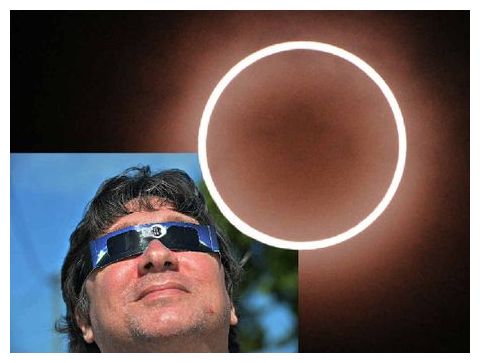
Next month's solar eclipse draws stargazers northwards

Solar Eclipse
© Peter Holt/Australian Associated PressWarren Maag prepares to journey north to view the total solar eclipse.
Next month, a rare migration will take place.

From the furthest reaches of the earth, more than 100,000 amateur astronomers will converge on Far North Queensland for the chance to witness a total solar eclipse.

And Mackay resident Warren Maag will be among them. A member of local astronomy group Tropical Stargazers, Mr Maag said planning was under way for his and wife Pam's cosmic pilgrimage.

"We've got all our camping gear ready," Mr Maag said. "We're going to leave a day before and spend two nights in Cairns, then spend two weeks coming home afterwards as a holiday."

A total solar eclipse occurs when the moon passes between the sun and the earth, temporarily blocking the sun's light. It will be viewable on November 14 from roughly Innisfail in the south to Port Douglas in the north.

The next time a total eclipse will take place is 2015. However, it will be visible only from within the Arctic Circle.

Saturn

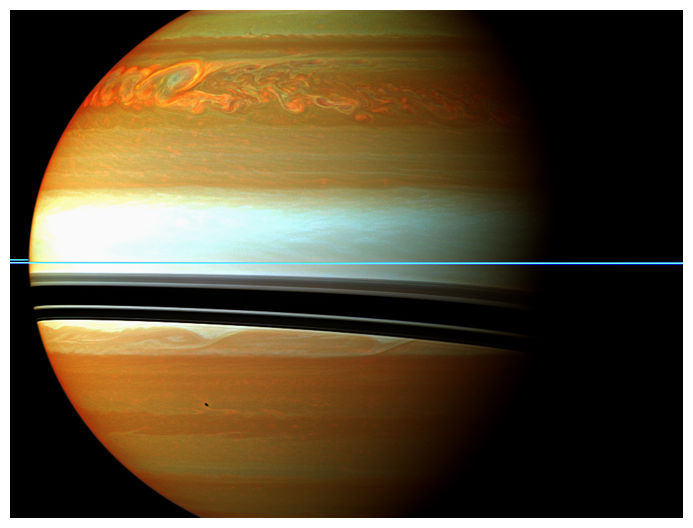
"It's extremely unusual, as we can only see the vortex at infrared wavelengths" - Giant 'invisible' vortex still remains on Saturn following huge storm

Saturn
© Universe Today
In 2010, a small, bright white storm emerged on Saturn's northern hemisphere. This storm grew until it wrapped around the planet in curly cloud structures, creating a colossal atmospheric disturbance that endured into the early part of 2012, becoming the largest storm seen on the planet since 1990. Being in orbit around the ringed planet, the Cassini spacecraft had a front row seat to watch the disturbance unfold, allowing planetary scientists an unprecedented look at this monster storm.

While the storm was visible even to amateur astronomers on Earth, much of its activity took place beyond the reach of visible-light cameras and telescopes, astronomers say. Not only did huge "beacons" of hot air chase each other around the planet, but infrared observations show a giant oval vortex is still persisting as a side effect from the storm.

"It's the first time we've seen anything like it on any planet in the Solar System," said Leigh Fletcher from the University of Oxford, UK, lead author of a paper describing the unprecedented storm. "It's extremely unusual, as we can only see the vortex at infrared wavelengths - we can't tell that it is there simply by looking at the cloud cover."

Fletcher and her team also used ground-based observations with the Very Large Telescope of the European Southern Observatory in Chile, and NASA's Infrared Telescope Facility at the summit of Mauna Kea in Hawaii.

Comment:
NASA scientists struggle to understand signs of massive climate shift on Jupiter as giant planet is bombarded with cometary debris


Info

Whitehead scientists identify major flaw in standard approach to global gene expression analysis

Genetic Analyses
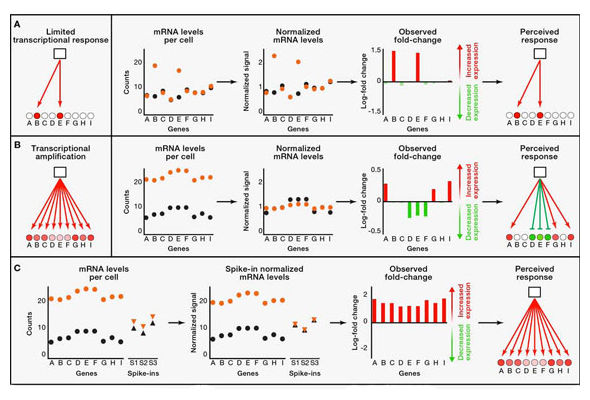
© Whitehead InstituteCharts of global genetic analyses.
Cambridge, Mass. - Whitehead Institute researchers report that common assumptions employed in the generation and interpretation of data from global gene expression analyses can lead to seriously flawed conclusions about gene activity and cell behavior in a wide range of current biological research.

"Expression analysis is one of the most commonly used methods in modern biology," says Whitehead Member Richard Young. "So we are concerned that flawed assumptions may affect the interpretation of many biological studies."

Much of today's interpretation of gene expression data relies on the assumption that all cells being analyzed have similar total amounts of messenger RNA (mRNA), the roughly 10% of a cell's RNA that acts as a blueprint for protein synthesis. However, some cells, including aggressive cancer cells, produce several times more mRNA than other cells. Traditional global gene expression analyses have typically ignored such differences.

"We've highlighted this common assumption in gene expression analysis that potentially affects many researchers," says Tony Lee, a scientist in Young's lab and a corresponding author of the article published in this week's issue of Cell. "We provided a concrete example of the problem and a solution that can be implemented by investigators."

Info

Ancestor Lucy spent time in trees

Lucy
© Zeray Alemseged / Dikika Research ProjectA model of Australopithecus afarensis from a Houston museum. New analysis shows this human ancestor was adapted both to walk on ground and swing from trees.
Our closest known relative 3.3 million years ago was a half-human, half-ape species that could both walk on the ground and swing through the trees, suggests a new study.

The research, published in the journal Science, sheds light on Australopithecus afarensis, the species of the well-known "Lucy" skeleton. In this case, remains of a three-year-old A. afarensis girl, named "Selam," were the focus of study. Selam represents the most complete skeleton of her kind to date.

She and other members of her species were "very human-like from the waist down -- the hip bone, the knee and the foot -- but looked ape-like above the waist -- the torso, long arms, gorilla-like scapula, jutting snout, small brain and a skull with no forehead," co-author Zeresenay Alemseged told Discovery News. "A sketchy depiction of it would be an upright walking ape."

Alemseged, curator of anthropology at the California Academy of Sciences, and David Green, an assistant professor in the Department of Anatomy at Midwestern University, made the determinations after thoroughly examining the well-preserved skeleton of Selam. In 2000, Alemseged unearthed her remains while excavating a site in Dikika, Ethiopia.

The researchers paid attention to Selam's two complete shoulder blades. These tend to be paper-thin, rarely fossilizing, so finding both "completely intact and attached to a skeleton of a known and pivotal species was like hitting the jackpot," Alemseged said.

Beaker

Oregon scientists make embryos with 2 women, 1 man

ebryos
© Oregon Health & Sciences University
New York - Scientists in Oregon have created embryos with genes from one man and two women, using a provocative technique that could someday be used to prevent babies from inheriting certain rare incurable diseases.

The researchers at Oregon Health & Sciences University said they are not using the embryos to produce children, and it is not clear when or even if this technique will be put to use. But it has already stirred a debate over its risks and ethics in Britain, where scientists did similar work a few years ago.

The British experiments, reported in 2008, led to headlines about the possibility someday of babies with three parents. But that's an overstatement. The DNA from the second woman amounts to less than 1 percent of the embryo's genes, and it isn't the sort that makes a child look like Mom or Dad. The procedure is simply a way of replacing some defective genes that sabotage the normal workings of cells.

The British government is asking for public comment on the technology before it decides whether to allow its use in the future. One concern it cites is whether such DNA alteration could be an early step down a slippery slope toward "designer babies" - ordering up, say, a petite, blue-eyed girl or tall, dark-haired boy.

Info

Death-defying trick: Cells return from the brink of death

Cell Apoptosis
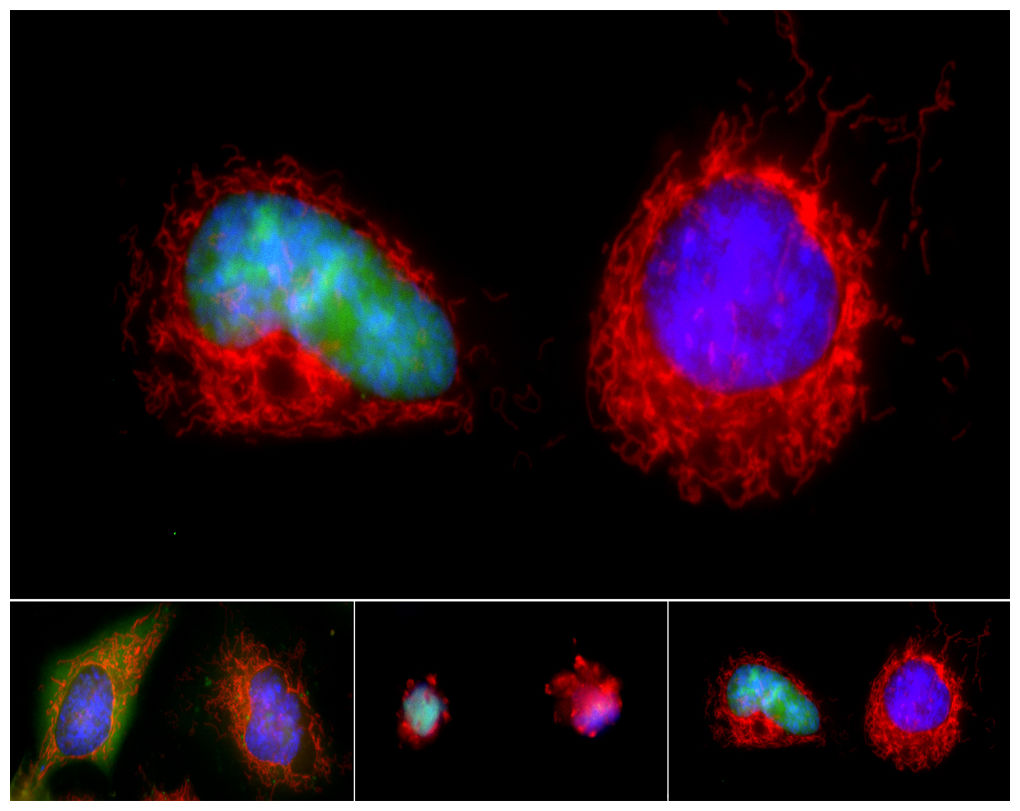
© Hogan Tang of the Denise Montell Lab, Johns Hopkins University School of MedicineTwo healthy cells (bottom, left) enter into apoptosis (bottom, center) but spring back to life after a fatal toxin is removed (bottom, right; top).
This Research in Action article was provided to LiveScience in partnership with the National Science Foundation.

Apoptosis, sometimes called "cellular suicide," is a normal, programmed process of cellular self-destruction.

It helps shape our physical features and organs before birth, and it rids our bodies of unneeded or potentially harmful cells, including cancerous ones. But apoptosis also can kill too many cells after a heart attack or stroke, causing tissues to die. For these reasons, scientists want to better understand the process.

Cells come equipped with the instructions and instruments necessary for apoptosis. They keep these tools - proteins that are called proteases - carefully tucked away until a signal inside or outside the cell triggers the apoptosis.

What does apoptosis look like? First, the cell shrinks and pulls away from its neighbors. Then the surface of the cell can bulge, with fragments breaking away. The DNA in the cell's nucleus condenses until the nucleus itself disintegrates, followed by the entire cell.

Do cells ever defy their fate? Yes, according to new research that shows many cell types on the brink of self-destruction can bounce back after their apoptotic trigger is removed.

Bulb

How the brain perceives direction and location

The Who asked "who are you?" but Dartmouth neurobiologist Jeffrey Taube asks "where are you?" and "where are you going?" Taube is not asking philosophical or theological questions. Rather, he is investigating nerve cells in the brain that function in establishing one's location and direction.

Taube, a professor in the Department of Psychological and Brain Sciences, is using microelectrodes to record the activity of cells in a rat's brain that make possible spatial navigation - how the rat gets from one place to another - from "here" to "there." But before embarking to go "there," you must first define "here."

Survival Value

"Knowing what direction you are facing, where you are, and how to navigate are really fundamental to your survival," says Taube. "For any animal that is preyed upon, you'd better know where your hole in the ground is and how you are going to get there quickly. And you also need to know direction and location to find food resources, water resources, and the like."

Not only is this information fundamental to your survival, but knowing your spatial orientation at a given moment is important in other ways, as well. Taube points out that it is a sense or skill that you tend to take for granted, which you subconsciously keep track of. "It only comes to your attention when something goes wrong, like when you look for your car at the end of the day and you can't find it in the parking lot," says Taube.

Rocket

Boeing announces successful test of electronics destroying Champ missile


Missile uses microwaves to destroy electronics

Boeing has announced the first ever test of a new missile system known as Champ. Champ stands for Counter-electronics High-powered Advanced Missile Project. The goal of the project is to create a missile that can defeat any electronic target with little or no collateral damage.

The missile test was conducted on October 16 at 10:32 AM at the Utah Test and Training Range. The Champ missile was launched, and as it approached its first target, it fired a burst of High Power Microwaves into a two-story building built on the test range. Inside the building were rows of personal computers and electrical systems that were turned on to help gauge the effects that the missile would have on the electronic equipment.

According to Boeing, seconds after the missile passed over its target the PC monitors went dark as Champ knocked out computer and electrical systems in the target building.