Science & TechnologyS


Comet 2

New type of 'space weathering' observed on asteroid Vesta

Image
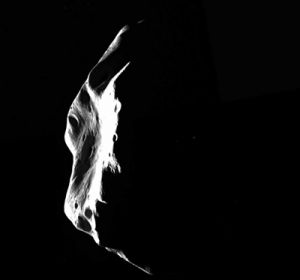
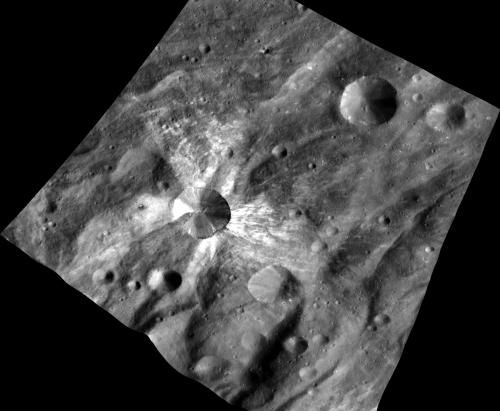
© NASA/JPL-Caltech/UCLA/MPS/DLR/PSI/BrownThis image from NASA's Dawn spacecraft features the distinctive crater Canuleia on the giant asteroid Vesta. Canuleia, about six miles (10 kilometers) in diameter, is distinguished by the rays of bright material that streak out from it. There is also a more subdued unnamed crater of about the same size to the northeast. A comparison of these two craters illustrates how freshly excavated materials on Vesta appear quite different from background soils. The image was taken by Dawn's framing camera on Oct. 20, 2011, from an altitude of about 420 miles (680 kilometers).
The surface of the giant asteroid Vesta is weathering in a way that appears to be completely different from any other asteroid yet visited, according to new data recorded by NASA's Dawn spacecraft. This new type of space weathering suggests that there's something about Vesta - perhaps its mineral composition or its position in the solar system - that makes its surface environment fundamentally different from other asteroids studied thus far.

The new data are presented in a paper published Nov. 1, 2012, in the journal Nature.

Space weathering is the term used to describe how the surfaces of airless bodies like asteroids and some moons change over time. The phenomenon was first identified on our own Moon. Soil ejected from fresh impact craters looks brighter than the surrounding background soil, often forming bright rays streaming away from the crater. It wasn't clear at first why newly exposed soil would look different.

As laboratory equipment improved, scientists eventually showed that soils darken over time on the lunar surface because they are exposed to a constant barrage of tiny meteorites as well as energetic particles from the sun known as the solar wind. As these materials interact with the surface, they produce a fine coating of metal nanoparticles that builds up on soil grains over time, darkening the soil. Deeply buried material lacks that coating, so when it's churned up by a large meteorite impact, it has a brighter appearance than the weathered soil.

Question

Scientists offer quantum theory of soul's existence

Cell
© news.com.auScientific proof: according to the quantum consciousness theory, the soul lives within structures called microtubules that live inside brain cells.
A pair of world-renowned quantum scientists say they can prove the existence of the soul.

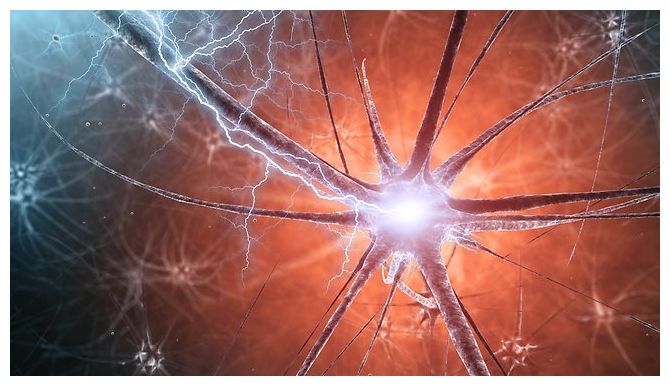
American Dr Stuart Hameroff and British physicist Sir Roger Penrose developed a quantum theory of consciousness asserting that our souls are contained inside structures called microtubules which live within our brain cells.

Their idea stems from the notion of the brain as a biological computer, "with 100 billion neurons and their axonal firings and synaptic connections acting as information networks".

Dr Hameroff, Professor Emeritus at the Departments of Anesthesiology and Psychology and Director of the Centre of Consciousness Studies at the University of Arizona, and Sir Roger have been working on the theory since 1996.

They argue that our experience of consciousness is the result of quantum gravity effects inside these microtubules - a process they call orchestrated objective reduction (Orch-OR).

In a near-death experience the microtubules lose their quantum state but the information within them is not destroyed. Or in layman's terms, the soul does not die but returns to the universe.

Info

Leaks found in Earth's protective shield

Magnetosphere
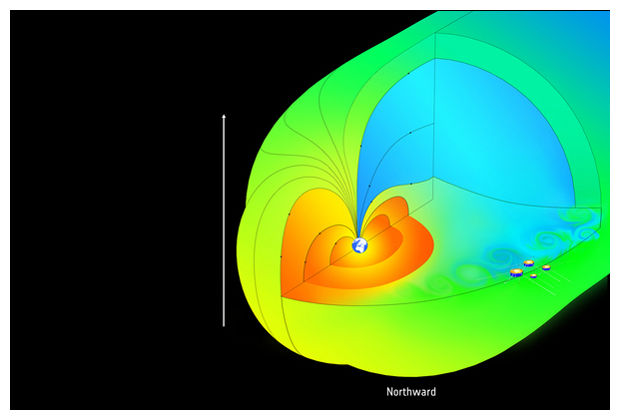
© AOES MedialabWhen Earth’s magnetic field and the interplanetary magnetic field are aligned, for example in a northward orientation as indicated by the white arrow in this graphic, Kelvin–Helmholtz waves are generated at low (equatorial) latitudes.
Our planet's protective magnetic bubble may not be as protective as scientists had thought. Small breaks in Earth's magnetic field almost continuously let in the solar wind - the stream of magnetic, energized plasma launched by the sun toward the planets - new research has found.

"The solar wind can enter the magnetosphere at different locations and under different magnetic field conditions that we hadn't known about before," Melvyn Goldstein, an astrophysicist at NASA's Goddard Space Flight Center, said in a statement.

Charged particles in the solar wind can interrupt GPS signals and power systems, as well as create dazzling auroras.

The magnetosphere is the planet's first line of defense against the solar wind. Scientists knew that this plasma stream occasionally breached the magnetosphere near the equator, where the Earth's magnetic field is roughly parallel to the magnetic field in the solar wind. The new study, published Aug. 29 in the Journal of Geophysical Research, found that these breaks can happen under a wider range of conditions.

"That suggests there is a 'sieve-like' property of the magnetopause [the outer edge of the magnetosphere] in allowing the solar wind to continuously flow into the magnetosphere," Goldstein said.

Galaxy

Voyager 1 detects weirdness at Solar System edge

Heliosphere
© NASA
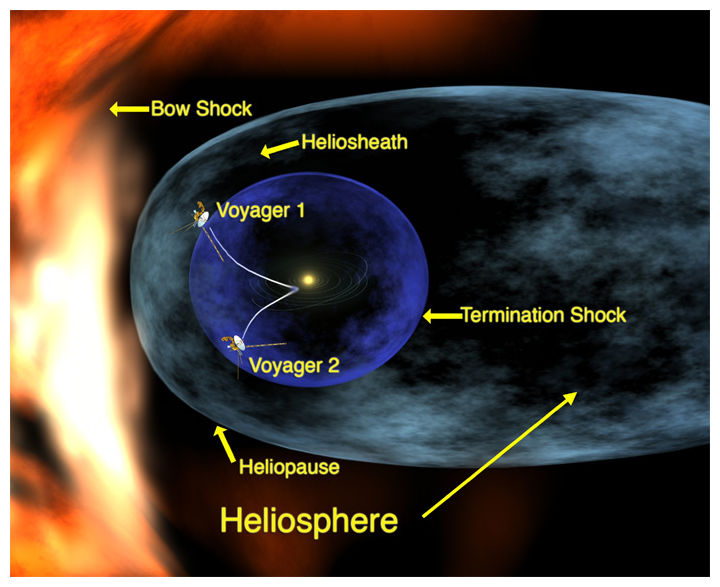
Voyager 1 is the most distant man-made object and is thought to have recently escaped the sun's sphere of influence. The probe, launched 35 years ago, is therefore mankind's first interstellar vehicle careening into the vast expanse of space between the stars.

Needless to say, as one of two deep space probes launched in 1977, Voyager 1 has explored previously unknown regions of the solar system, making groundbreaking discoveries as it went. Now, in a new paper published in the Journal of Geophysical Research, scientists analyzing data streaming from the spacecraft have uncovered a small mystery right at the solar system's magnetic boundary with the interstellar medium. She may be old, but you can't keep a good probe down.

As the sun travels through the galaxy, it carries its magnetic field with it, creating a magnetic "bubble" -- the heliosphere -- that all planets, spacecraft and people live inside. Until recently, Voyager 1 (and her sister probe Voyager 2) have also existed completely inside the sun's environment. Both probes could detect the high energy particles streaming from the sun and they 'felt' the solar magnetic field. At time of writing, Voyager 1 is nearly 122 AU from the sun (over three times the average Pluto-sun distance) and it takes over 17 hours for a signal to travel from the probe to Earth.

So, in an effort to detect when the Voyager probes might exit the heliosphere, scientists have kept a watchful eye on two key pieces of data -- particle energy counts and magnetic field strength (and orientation).

Comet 2

Incoming! Tunguska-class bolide to miss Earth by just 22,500km on 15 February 2013

Image
© ESAAsteroid 2012 DA14 will pass by Earth at a distance of 22,500km on 15 February 2013. How long before one of these things hits?
An asteroid the size of a city block is due to come whizzing past Earth closer than any other of its size in recorded history in February next year, according to astronomers.

The asteroid, referred to as 2012 DA14, has a diameter of approximately 45m and an estimated mass of 130,000 tonnes. It was discovered at the start of 2012 and is set to travel between the Earth and our geostationary communication satellites on 15 February 2013. At a distance of just 22,500km this will be the closest asteroid 'fly by' in recorded history.

Asteroid and comet researchers will be gathering at the University of Central Florida (UCF) in Orlando, U.S., to watch the event, but experts say there is no chance of a collision - this time.

Info

Man in the moon is unmasked as giant asteroid crater

Procellarum Basin
© National Institute of Advanced Industrial Science and TechnologyThe Procellarum basin, the dark, flat part marked here.
Tsukuba, Ibaraki Prefecture -- Scientists say a flattened section of the moon, 3,000 kilometers wide, was likely caused by a collision with an asteroid the size of Austria.

The moon's Procellarum basin, the dark part as seen from Earth, is what remains of the impact crater, they said. Its vast size is apparent in relation to the moon's diameter: 3,476 km. (The basin is likened in Japanese folklore to the shape of a rabbit pounding rice cakes.)

The research team from the National Institute of Advanced Industrial Science and Technology (AIST) in Tsukuba and other institutions was headed by the institute's Ryosuke Nakamura. It studied the distribution of minerals in mapping data obtained by the Kaguya moon exploration orbiters, satellites which are internationally known as Selene.

The researchers analyzed light reflection data recorded by Kaguya at 70 million locations across the moon's surface. They concluded that one of the minerals present is low-calcium pyroxene, likely generated when rock melted under the heat of an impact, and that the mineral is concentrated in a near-circle around the Procellarum basin.

Stop

Think Before you 'Like' - Why 'Liking' Facebook virals makes scammers rich

Facebook
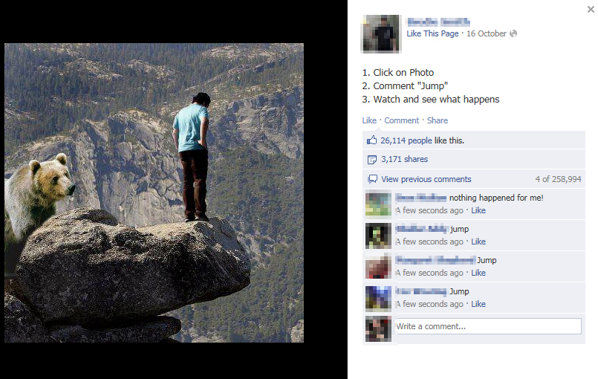
© Facebook'Viral' links such as this do nothing - and are just used to harvest 'Likes' to be sold on

Facebook users who've clicked viral links such as 'Click This if You Hate Cancer' could be in for a nasty surprise.

The links - and others such as 'click this picture and see what happens' do nothing except make cyber-scammers rich.

Once the pages have collected huge numbers of 'Likes', they are then sold, for cash, to other businesses who use them to make their page appear popular.

A blog post by Daylan Pearce, a search-engine expert at Next Digital in Melbourne, explains how the nonsense posts scam works - and shows how the pages are sold on.

Magic Wand

Far from random, evolution follows a predictable genetic pattern, Princeton researchers find

Image
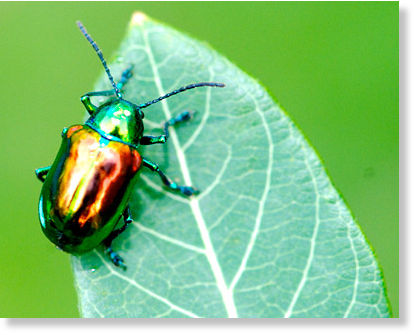
© Peter AndolfattoThe Princeton researchers sequenced the expression of a poison-resistant protein in insect species that feed on plants such as milkweed and dogbane that produce a class of steroid-like cardiotoxins called cardenolides as a natural defense. The insects surveyed spanned three orders: butterflies and moths (Lepidoptera); beetles and weevils (Coleoptera); and aphids, bed bugs, milkweed bugs and other sucking insects (Hemiptera). Above: Dogbane beetle
Evolution, often perceived as a series of random changes, might in fact be driven by a simple and repeated genetic solution to an environmental pressure that a broad range of species happen to share, according to new research.

Princeton University research published in the journal Science suggests that knowledge of a species' genes - and how certain external conditions affect the proteins encoded by those genes - could be used to determine a predictable evolutionary pattern driven by outside factors. Scientists could then pinpoint how the diversity of adaptations seen in the natural world developed even in distantly related animals.

Comet 2

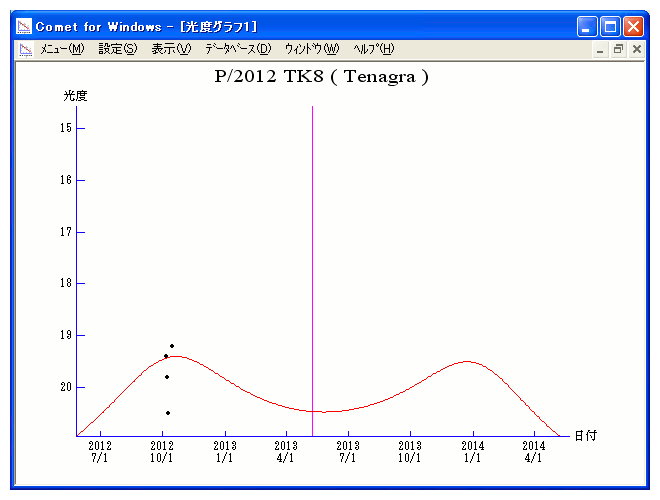
New Comet: P/2012 TK8 (Tenagra)

Discovery Date: October 6, 2012

Magnitude: 19.7 mag

Discoverer: Michael Schwartz (Nogales, AZ, U.S.A.), P. R. Holvorcem (Tenagra II Observatory)

P/2012 TK8
© Aerith NetMagnitude Graph.
The orbital elements are published on M.P.E.C. 2012-U41.

Palette

Cosmic propaganda alert! Asteroids headed to Earth could be diverted with paintballs, says PhD student

paintball, asteroid
Given sufficient warning, an asteroid headed on a collision course with Earth could be diverted by firing paintballs at it, an MIT graduate student has calculated. While the idea might seem facetious or amusing on its face, it was good enough for Sung Wook Paek of MIT's department of aeronautics and astronautics to win the 2012 Move an Asteroid Technical Paper Competition sponsored by the United Nations' Space Generation Advisory Council, which solicits creative solutions from young professionals. Paek presented his paper this month at the International Astronautical Congress in Naples, Italy.

Paek's proposal would work on two different levels. The paintballs themselves would impart a slight momentum change to the incoming asteroid, diverting it slightly -- but probably not enough to avoid a collision. But using white paint or other light color in the paintballs would increase the asteroid's albedo, or reflectivity. The pressure of photons of sunlight bouncing off the asteroid could, over time, provide a much greater shift in course. A similar effect is behind using solar sails for spacecraft: Light striking the sails and being reflected would provide impetus to move the craft.

Comment: What is this, Idiocracy?! Can Bruce Willis save us from asteroid 'Armageddon'? No, and neither can your government

If Apophis came anywhere NEAR earth, cataclysm would ensue. So if this student's paintballs couldn't even prevent a collision, what is the point of hyping this story?

To try to reassure people that during these times of mass fireball sightings, the government has everything under control.

(It doesn't.)