Science & TechnologyS


Question

Could this 'Star Trek' headband help banish migraines?

Image
The device is hooked over the ears and worn across the forehead like futuristic sunglasses
  • Migraine sufferers who wore the band for 20 minutes a day saw headache days reduce from seven to five a month
  • Around one in four women and one in 12 men experience migraines
  • The device costs around £260 and is available in Europe
A band worn across the forehead for twenty minutes a day could zap migraines that blight the lives of millions.

The device - which 'looks like something out of Star Trek' - delivers electric impulses to the supraorbital nerve that controls sensation in and around the eye.

A study found those who used it were suffering about a third fewer debilitating headaches after a couple of months.

The number of people whose migraines were reduced by half or more were also tripled, according to the findings published online in Neurology.

Professor Jean Schoenen said: 'The device consists of a thin silver band that looks like something out of Star Trek.

'It is hooked over the ears and worn across the forehead like futuristic sunglasses. Patients don it once daily for 20 minutes.'

A similar technique has worked on patients with pain in other parts of the body such as the back.

It involves connecting the device to the nerve responsible and sending an electronic pulse to prevent it from causing pain.

Prof Schoenen, of Liege University in Belgium, was also pleased there were no side effects from the treatment.
Question

Hubble telescope captures strange flashes of light from protostar

Protostar
© NASA/ESA
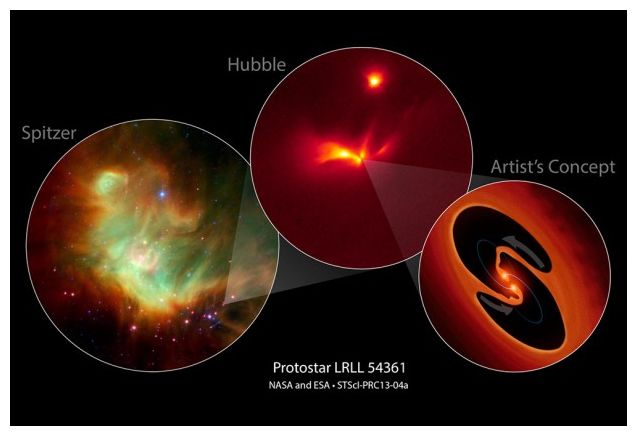
A strange beacon of light has been captured, for the third time, using NASA's Hubble Space Telescope.

Far away, on a protostar called LRLL 54361, a flashing light takes place every 25.34 days, like fireworks. New images and video released by NASA and taken by the Hubble show the cause of these fireworks can bee seen hidden behind a dense disc and an envelope of dust.

Astronomers believe the strobe effect is due to periodic interactions between two newly-formed stars that are gravitationally bound to each other. These stars drag material inward from a surrounding disc of gas and dust, and astronomers believe the light flashes seen are due to the material being dumped onto the growing stars as they near each others orbit.

"This protostar has large brightness variations with a precise period that it is very difficult to explain," James Muzerolle of the Space Telescope Science Institute in Baltimore, who has recently studied this fascinating object using Hubble and NASA's Spitzer Space Telescope, said in a statement.

Comet 2

Comet ISON sprouts a tail

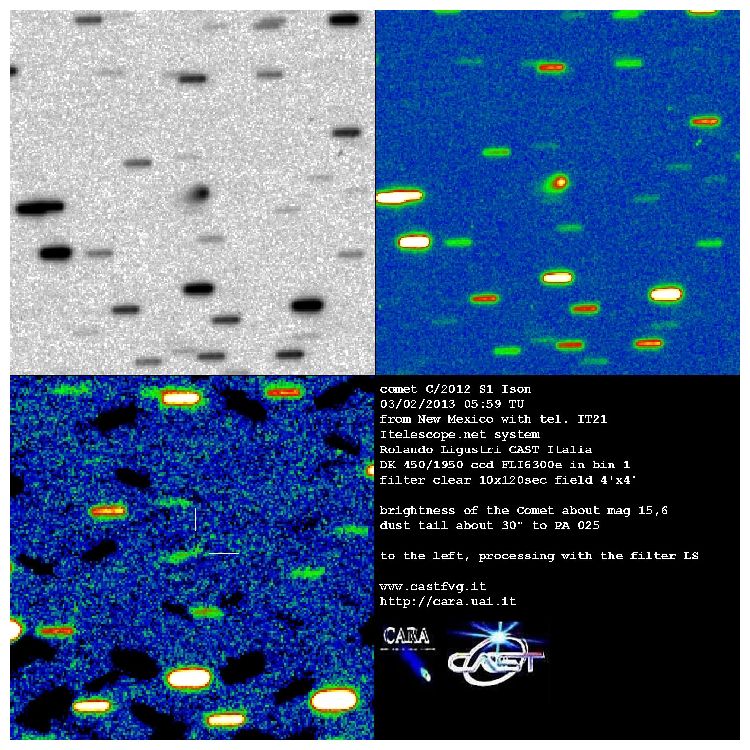
Comet ISON, which is plunging toward the sun for a bright and fiery encounter in late 2013, has just sprouted a tail. It's not much--yet--but that is because the comet is still in deep space near the orbit of Jupiter. On. Feb. 3rd, amateur astronomer Rolando Ligustri photographed the development using a robotic telescope in New Mexico:
Comet ISON
© Rolando Ligustri
Comet ISON doesn't look very impressive now as it glides through the cold vacuum more than 600,000 km from Earth, but its appearance will improve later this year. On Nov. 28th, ISON is going to glide through the sun's atmosphere only 1.1 million km above the stellar surface. It could emerge from the encounter glowing as brightly as the full Moon, visible in broad daylight near the sun. If so, today's budding tail would likely grow into a garish appendage that wows observers in both hemispheres--no telescope required. Stay tuned for updates.

Update: NASA's Deep Impact spacecraft has also observed Comet ISON's sprouting tail. Click here for a video.

Fireball 3

Chicxulub asteroid impact: The dino-killer that scientists laughed at

Asteroid Impact
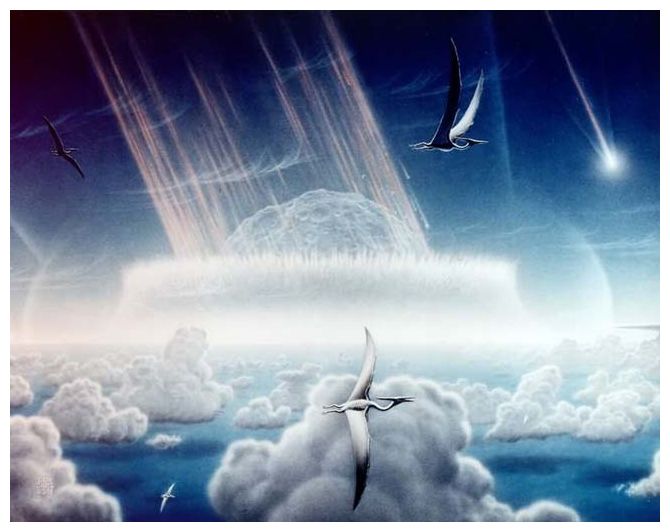
© NASA/Donald E. DavisAn artist's impression of a giant space rock slamming into Earth 65 million years ago near what is now Mexico's Yucatan Peninsula. A consortium of scientists now says this was indeed what caused the end of the Age of Dinosaurs.
The main culprit behind the end of the dinosaurs is now widely accepted to be an extraterrestrial collision of epic proportions, one that left behind the gargantuan crater of Chicxulub at Mexico. Evidence for this theory grows more ironclad over time - yet only 30 years ago it was often thought to be nonsense.

It took a long battle to win many scientists over, researchers say. One of those researchers is University of California at Berkeley geologist Walter Alvarez, who recalls the resistance to his team's claim that such a major change could happen abruptly instead of gradually.

This reasoned skepticism "is exactly what should happen in science," Alvarez told SPACE.com. "Radical new ideas must be challenged and tested, and that really happened extensively with this idea."

Dinosaurs ruled the planet for a staggering 135 million years. Their age came to a dramatic end about 65 million years ago in the most recent and most familiar mass extinction - the end-Cretaceous or Cretaceous-Tertiary extinction event, often known as the K-T boundary. But the Chicxulub asteroid impact scenario was not immediately accepted when it was proposed.

The notion that a cosmic impact from an asteroid or comet triggered this mass extinction began with the discovery of a layer of clay enriched with iridium. This metal is rare on Earth's surface but relatively common in space rocks. Given this "iridium anomaly," the father-son duo of Luis and Walter Alvarez, along with Frank Asaro and Helen Michel, proposed in 1980 that an extraterrestrial collision finished the age of dinosaurs. The elder Alvarez was a Nobel Prize-winning physicist; Asaro and Michel are nuclear chemists.

"It flew in the face of the position that geologists and paleontologists at the time had for gradual explanations for everything that happened in the Earth's past, a position that went by the name of uniformitarianism," said Walter Alvarez. "The notion that this mass extinction was caused by an impact, or even the notion that there was a sudden mass extinction, raised a lot of dispute at the time, and people strongly challenged the idea."

Airplane

FAA releases new domestic drone list - Is your town on the map?

Map of Domestic Drone Authorizations
© EFFMap of Domestic Drone Authorizations
The Federal Aviation Administration has finally released a new drone authorization list. This list, released in response to EFF's Freedom of Information Act (FOIA) lawsuit, includes law enforcement agencies and universities across the country, and - for the first time - an Indian tribal agency. In all, the list includes more than 20 new entities over the FAA's original list, bringing to 81 the total number of public entities that have applied for FAA drone authorizations through October 2012.

View EFF's updated Map of Domestic Drone Authorizations in a larger window. (Clicking this link will serve content from Google.)

Some of these new drone license applicants include:

HAL9000

Quantum crypto still not proven, claim Cambridge experts

quantumj cryptology
© scientific American
Thirty years of experiments still haven't proven quantum entanglement

Two killjoy researchers from the University of Cambridge have cast doubt on whether quantum cryptography can be regarded as 'provably secure' - and are asking whether today's quantum computing experimentation is demonstrating classical rather than quantum effects.

Computer scientists Ross Anderson and Robert Brady have published their discussion at Arxiv, here. In the paper, they examine two key issues in quantum research. As well as looking at the cryptography question, they also examine why quantum computing research is finding it hard to scale beyond three qubits.

Galaxy

Black hole spawns bizarre four-armed galaxy

Image
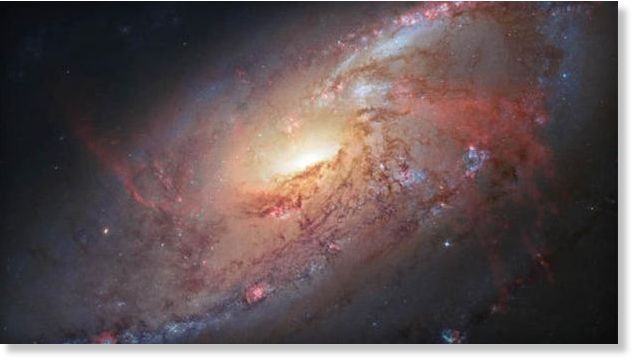
© NASA/ESA/Hubble Heritage Team (STScI/AURA)/R. GendlerThis image combines Hubble observations of the nearby spiral galaxy Messier 106 with additional data captured by amateur astronomers Robert Gendler and Jay GaBany. The galaxy lies about 20 million light-years away, and harbors a giant central black hole.
Where most spiral galaxies have two twisting arms, a neighbor of the Milky Way is a four-armed monster. A new photo snapped by the Hubble Space Telescope, combined with observations by amateur astronomers, reveals these arms in stunning detail.

The galaxy Messier 106 lies about 20 million light-years from Earth in the constellation Ursa Major (the Great Bear). Hubble scientists released a video of the four-armed galaxy in addition to the new photo.

Beneath its pretty pink appearance, Messier 106 is harboring a monster black hole that is hungrily gobbling up matter at the galaxy's center.

This black hole, scientists say, may be the key to the galaxy's mysterious extra arms.

Spiral arms are bands of material that swirl out from the center of spiral galaxies. Most spiral galaxies have two, but Messier 106 has four. In addition to its prominent pair of main arms made of stars, this galaxy has two thinner wisps of reddish gas spiraling from its center.

Telescope

Earth-like planets may be closer than thought: study

Image
© AFP Photo
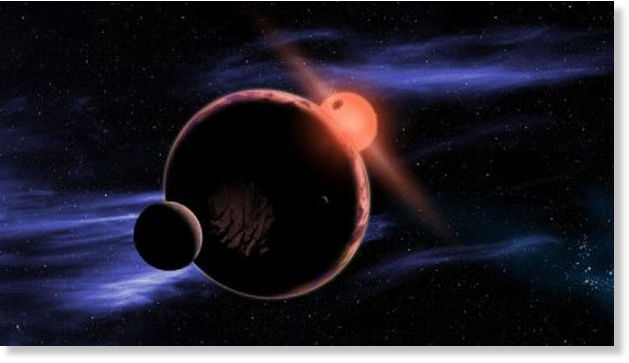
Scientists looking for habitable planets may not have to stray far from our galactic neighborhood, said a new study Wednesday, which calculated an Earth-size planet could be orbiting a red dwarf as near as 13 light years away.

"We thought we would have to search vast distances to find an Earth-like planet. Now we realize another Earth is probably in our own backyard, waiting to be spotted," said Harvard astronomer and lead author Courtney Dressing.

The researchers based their calculations on planets already discovered by the US super-telescope Kepler, focusing on the question of which "red dwarf" stars could have potentially habitable Earth-size planets in their orbits.

Red dwarfs are smaller, cooler and fainter than our solar system's sun - and they are also the most commonly found stars in our galaxy, making up about three of every four stars in the Milky Way.

Fireball 2

Close approach of Asteroid 2013 CL22

M.P.E.C. 2013-C24, issued on 2013 Feb. 6, reports the discovery of the asteroid 2013 CL22 (discovery magnitude 16.7) by J75 OAM Observatory, La Sagra on images taken on February 05.06 with a 0.45-m f/2.8 reflector + CCD.

2013 CL22 has an estimated size of 30 m - 68 m (based on the object's absolute magnitude H=24.7) and it had a close approach with Earth at about 1.2 LD (Lunar Distances = ~384,000 kilometers) or 0.0031 AU (1 AU = ~150 million kilometers) at 0743 UT on 2013 Feb. 02. This asteroid reached the peak magnitude ~13.1 on February 02 around 1600 UT.

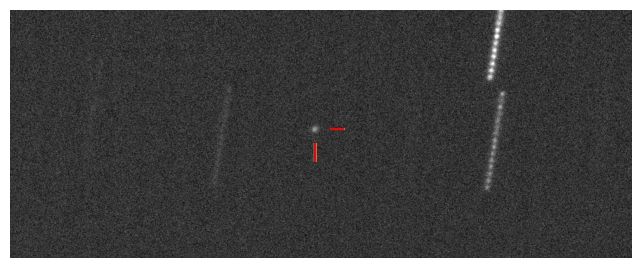
We performed some follow-up measurements of this object, from the H06 ITelescope network (near Mayhill, NM) on 2013, Feb. 05.4, through a 0.51-m f/6.9 reflector + CCD. Below you can see our image, stack of 15x15-second exposure, taken with the asteroid at magnitude ~16.9 and moving at ~6.07 "/min. At the moment of the close approach 2013 CL22 was moving at ~ 259"/min.
Asteroid 2013 CL22
© Remanzacco Observatory

Stock Down

Best of the Web: Be afraid, very afraid, of the tech crisis: Social media will not save us from a cosmic rock on course to hit Earth

Image
What are you doing here?" The software billionaire choked in astonishment when I told him I was a physicist. The reaction was informative: it was as if he had encountered a seasonal labourer at our meeting place, the World Economic Forum in Davos.

Between networking, self-promotion and all the other things politicians and financiers normally do (including skiing), the distinguished crowd at Davos last month discussed the poor health of the global economy. Heads of state saw the cure in better governance; central bankers, in better financial controls; investment bankers, in the markets. Economists offered new theories and internet entrepreneurs put their trust in social media. The only thing they shared was a belief that a quick fix was available.

The advantage of ivory towers is that they allow a view beyond immediate problems. Where one sees banking crisis, debt crisis, currency crisis or some other crises, academics may see even more worrying developments. We are in the midst of a technology crisis. Disruptive technologies now appear less frequently than steady economic growth requires. Even bankers complain about a dearth of new technologies in which to invest.

Look back to the second half of the last century and it was packed with technological advances. The silicon revolution led to computers, microchips, mobile phones and the web. There was also Sputnik, lasers, the Moon race, the Global Positioning System. In the past two decades, apart from social media, it has been less about disruption, more about honing the same gadgets.