Science & TechnologyS


Einstein

Is scientific genius extinct?

Image
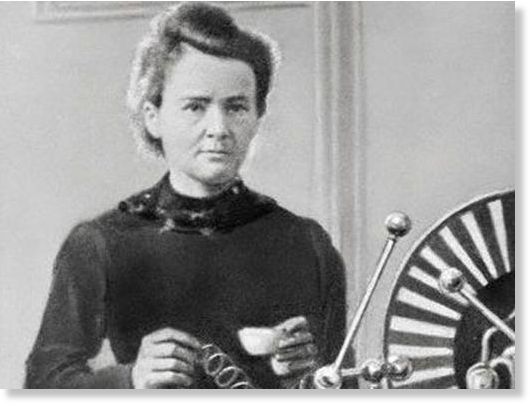
© CorbisMarie Curie
Modern-day science has little room for the likes of Galileo, who first used the telescope to study the sky, or Charles Darwin, who put forward the theory of evolution, argues a psychologist and expert in scientific genius.

Dean Keith Simonton of the University of California, Davis, says that just like the ill-fated dodo, scientific geniuses like these men have gone extinct.

"Future advances are likely to build on what is already known rather than alter the foundations of knowledge," Simonton writes in a commentary published in today's (Jan. 31) issue of the journal Nature.

Moon

Mystery mini moons: How many does Earth have?

Image
© NASA/Goddard
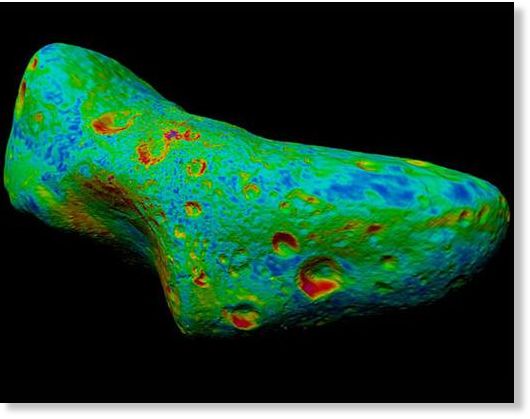
Earth's gravity may not have the gravitas of Jupiter, but the planet regularly plucks small asteroids passing by and pins them into orbit. The mini-moons don't stay for long. Within a year or so they resume their looping, twisting paths like crazy straws around the sun. But others arrive to take their place.

Simulations show that two asteroids the size of dishwashers and a dozen half-meter (1.6 feet) in diameter are orbiting Earth at any given time. Every 50 years or so something the size of a dump truck arrives. So far, there's been just one confirmed sighting.

"We'd eventually like to see a mission to a mini-moon," astronomer Robert Jedicke, with the University of Hawaii, said this week at a workshop in Huntsville, Ala., to discuss proposals for two spare Hubble-class spy telescopes donated to NASA by the National Reconnaissance Office.

Blue Planet

Study: Plate tectonics modulates volcanic activity, which in turn modulates climate forcings

From Rice University comes this study that tries to equate an analog circuit component onto a climate forcing component. It is an interesting approach. The idea that plate tectonics serves to modulate episodic volcanic activity also makes sense.

Volcano location could be greenhouse-icehouse key

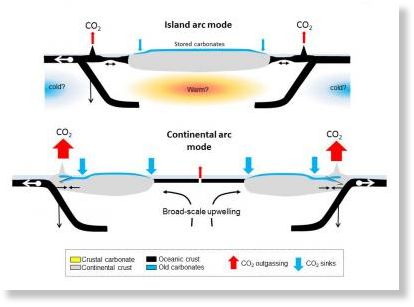
Study: Episodic purging of 'carbonate capacitor' drives long-term climate cycle, greenhouse-icehouse oscillations are a natural consequence of plate tectonics.

Carbonate Capacitor

Image
© Credit: C. Lee/Rice UniversityThis diagram illustrates how fluctuations between continental-arc states and island-arc states could lead to episodic deposition and purging of carbon dioxide in Earth’s continental crust.

Fish

Regeneration - The secret to running repairs

Mexican Walking Fish
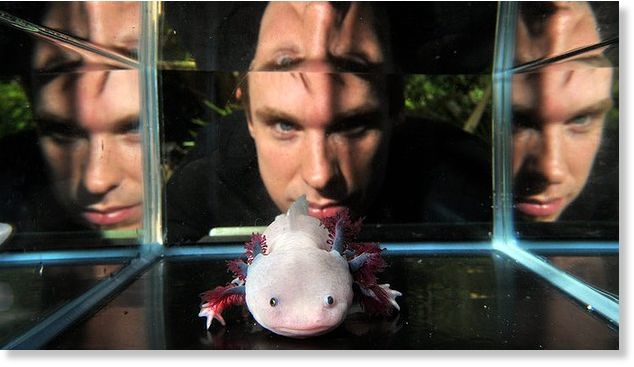
© Joe ArmaoJames Godwin at Monash University's Australian Regenerative Medicine Institute with a Mexican walking fish
A new leg? New heart? No problem. They will just grow one. Scientists think the Mexican walking fish may hold the key to regeneration in humans.

They are masters at regenerating their own limbs, tails, jaws, retina and heart. They can recover from spinal cord and brain injury and can easily tolerate organ transplants. And to top things off, they don't get cancer. Meet the axolotl, otherwise known as the Mexican walking fish..

''This animal guards so many interesting biological secrets,'' says James Godwin, a senior research fellow at Monash University's Australian Regenerative Medicine Institute. ''Things that would leave humans in a wheelchair or dead they can just repair in no time at all.''

And there's more to this extraordinary amphibian, which was named after an Aztec god who transformed into a water animal to avoid being sacrificed. The skin of the albino axolotl is transparent enough so that you can actually watch the organs and blood vessels as they pump and pulse under the surface. In juveniles, it is possible to distinguish between the left and right hemispheres of the brain when peering thorough the translucent skin.

But what most excites researchers working with the Mexican walking fish is the amphibian's regenerative capabilities. Regeneration - the faithful replacement of damaged or missing tissue - is not uncommon in invertebrates. Worms and starfish are just some that can re-grow body parts and organs. But axolotls are in a league of their own because they, like us, are vertebrates. This makes them the closest thing to humans that are able to regenerate.

Fireball 5

Dinosaur deaths: Meteorite did do it

Tragedy for dinosaurs, opportunity for mammals

New research pinpoints how the torch passed from one dominant type of creature on Earth to another


It's the world's coldest case.

For decades scientists have argued over what caused the almost overnight demise of land roaming dinosaurs 66 million years ago. Was it climate change, a violent volcanic eruption, a giant meteorite impact - or a combination of all three?

Arrow Down

Philadelphia courts begin using computer forecasts to predict future criminal behavior

Gavel and Computer
© CBS Philly
Judges in the Philadelphia court system are now taking advantage of powerful new computer models to help determine how much jail time an offender should get.

Computers have been forecasting weather and economic trends for years, but applying algorithms to human behavior is relatively new.

"This all comes about because of new developments in statistics and computer science that are available to us that really weren't five or ten years ago," says University of Pennsylvania professor Richard Berk, a pioneer in the field.

His forecasts, which use an algorithm to predict whether someone will offend again, have been used by city probation and parole officers for about three years, to decide how much supervision a defendant needs.

Philadelphia Common Pleas Court administrative judge Pamela Dembe says the results there convinced her that the computer model could also be a useful tool in determining sentences.

"It's not an automatic sentencing project or anything like that," she explains. "We're just looking for additional sources of information in hopes that we get the sentencing right."

Berk, the Penn professor, says the process is not perfect but he believes it will be better than current court practice.

Laptop

Future news predicted now

Newspapers
© Jane M. Sawyer
Anyone remember that TV show Early Edition, where the main character mysteriously received the following day's newspaper every morning? That was pure fiction, but present day computer scientists are working on a real version.

A team from Microsoft Research and the Technion-Israel Institute of Technology recently created powerful software that mines decades of old newspaper articles along with online data to predict future disasters. Their prediction system was able to forecast significant numbers of deaths with 70 percent to 90 percent accuracy, Tom Simonite reported in MIT Technology Review.

The scientists, led by Microsoft Research co-director Eric Horvitz, fed New York Times articles from 1986 to 2007 into their system. They also mixed in crowd-sourcing and other data from the sites DBpedia, WordNet and OpenCyc. Mining that data brought patterns to light, such as droughts preceding cholera epidemics in Bangladesh during the 1970s and 1980s.

Then the scientists tested the pattern they uncovered on other data and found it was remarkably accurate in forecasting large numbers of deaths. Unlike past work in this area that focused on mining the past, the BBC pointed out that this has the potential to be used in real time to forecast future events. The methodology and algorithm descriptions can be found in their research paper (PDF).

Although the group doesn't have current plans to commercialize the research, Horvitz told Simonite that a refined version of their system could eventually be used by government aid agencies and groups involved in disaster response. That could make for some incredibly useful government alerts: "Hey citizen, you might want to put some protective gear on right now."

Fish

Salmon use Earth's magnetic field to navigate ocean to river, says study

Salmon
© Shuttestock/Shannon Heryet
Scientists examined 56 years of fisheries data documenting the return of sockeye salmon to the Fraser River in British Columbia - and the route they chose showed a correlation with changes in the intensity of the geomagnetic field.

The mystery of how salmon navigate across thousands of miles of open ocean to locate their river of origin before journeying upstream to spawn has intrigued biologists for decades, and now a new study may offer a clue to the fishes' homing strategy.

In the study, scientists examined 56 years of fisheries data documenting the return of sockeye salmon to the Fraser River in British Columbia - and the route they chose around Vancouver Island showed a correlation with changes in the intensity of the geomagnetic field.

Results of the study, which was supported by Oregon Sea Grant and the National Science Foundation, were published this week in the journal Current Biology.

"What we think happens is that when salmon leave the river system as juveniles and enter the ocean, they imprint the magnetic field - logging it in as a waypoint," said Nathan Putman, a post-doctoral researcher at Oregon State University and lead author on the study. "It serves as a proxy for geographic location when they return as adults. It gets them close to their river system and then other, finer cues may take over."

Earth has a predictable, consistent geomagnetic field that weakens as you move from the poles toward the equator. The magnetic North Pole has an intensity gradient of roughly 58 microtesla, while the equator is about 24 microtesla.

Better Earth

Best of the Web: Bell's Superstorm and The Death of Millenniumitis

Image
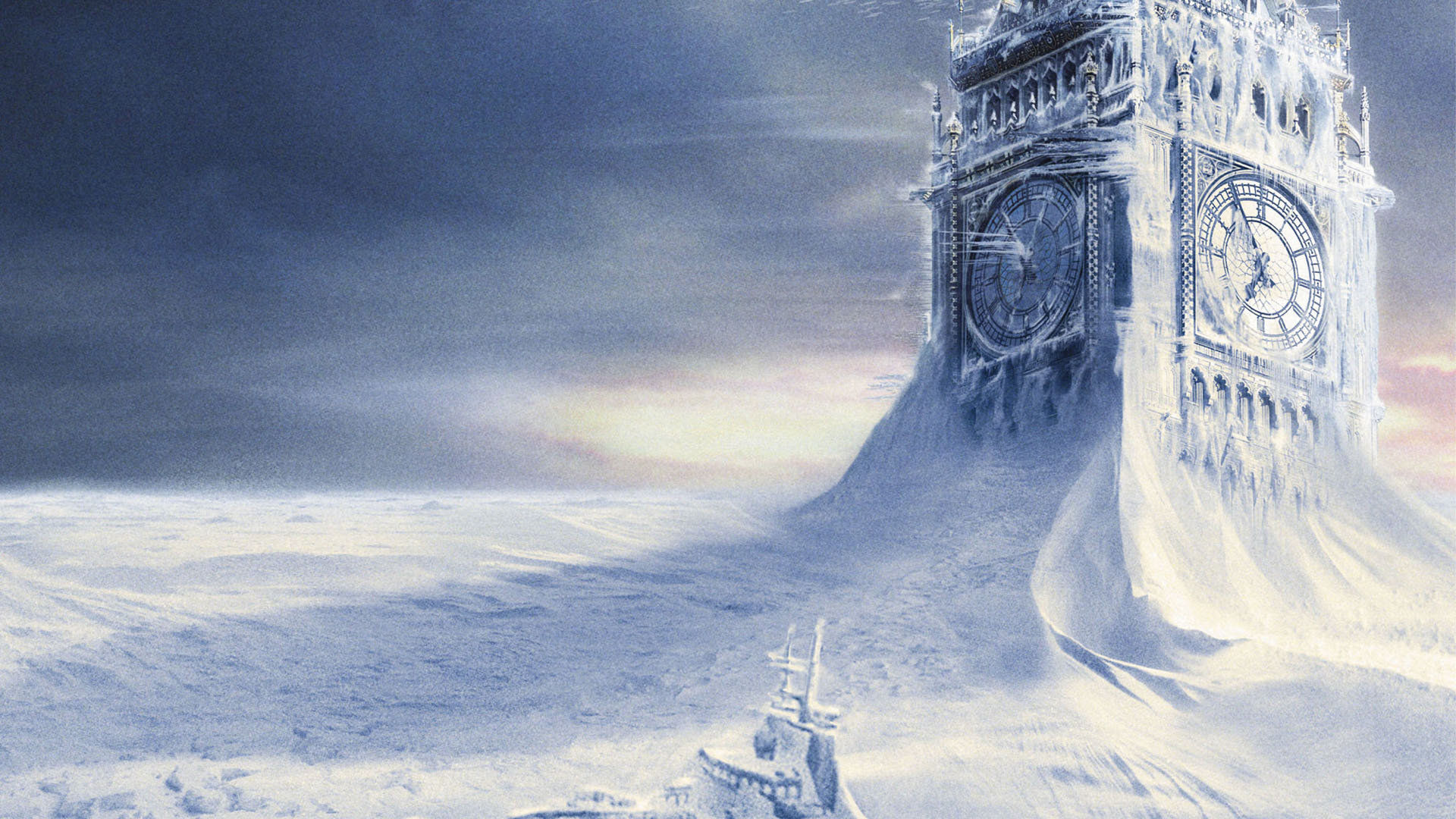
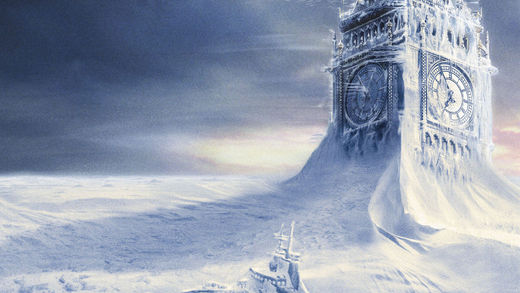
The day after tomorrow... might only have been a movie but it has happened repeatedly in the past.
This weekend I happened upon a publisher's closeout sale at a local mall. A Tom Clancy hard cover dominated the first clearance table past the front door and his 500-page Into the Storm was slashed to $2.00 (publisher's price $27.50.) On the next table, another thick stack of fire sale hard cover books rose above all others. It was the The Coming Global Superstorm by Art Bell, Whitley Strieber for $7.00 (publisher's price $23.95.) In terms of effort and value, Clancy deserved a better break because Superstorm is long on speculation and short on value. However, the rapidly fading interest Superstorm is more than a failed publishing venture, because it also serves as a fitting tombstone for the cold corpse of millenniumitis.

The Decade of Millenniumitis

During the last decade, the prospect of end-times catastrophes in the year 2000 plagued many with fear about an uncertain future. Yet, there was a tangible public concern that the year 2000 would bring disaster.

This fostered a consensus of fear that was aptly coined "millenniumitis" by the media and this social event was focused on a set date. As we came closer our fears escalated at a geometric rate.

In the midst of all this came books like Superstorm, which offered a loosely structured, populist speculation that relied more on the public notoriety of the authors for credibility than upon quality research and organization. Nonetheless, the central premise of Superstorm still remains a valid point of discussion for those interested in the process view of catastrophe, as opposed to those who prefer the populist event-driven view.

Fireball

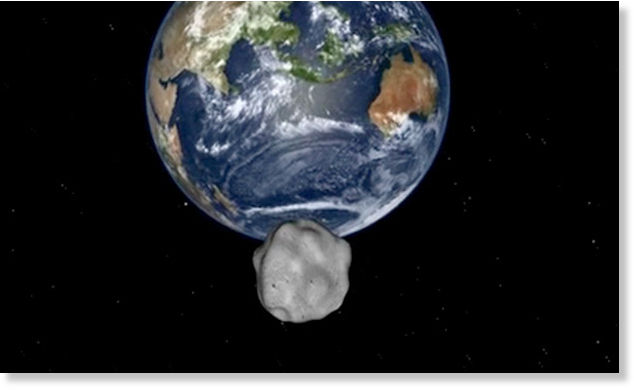
Asteroid to pass closer to Earth than TV satellites

Image
Rock measuring 46 metres across is expected to come within 17,100 miles but will not hit Earth, says Nasa

A small asteroid will pass closer to Earth next week than the TV satellites that ring the planet, but there is no chance of an impact, Nasa has said.

The celestial visitor, known as 2012 DA14, was discovered last year by a group of amateur astronomers in Spain. The asteroid is about the size of an Olympic swimming pool at 46 metres (150ft) in diameter and is projected to come as close as 17,100 miles (27,520km) from Earth during its approach on 15 February.

That would make it the closest encounter since scientists began routinely monitoring asteroids about 15 years ago.

Television, weather and communications satellites fly about 500 miles (800km) higher. The moon is 14 times farther away.